ศิลปะ
ความงามและสุขภาพ
งานฝีมือ
วัฒนธรรมและประวัติศาสตร์
ความบันเทิง
สิ่งแวดล้อม
อาหารและเครื่องดื่ม
วิศวกรรมย้อนรอย
วิทยาศาสตร์
กีฬา
เทคโนโลยี
อุปกรณ์สวมใส่
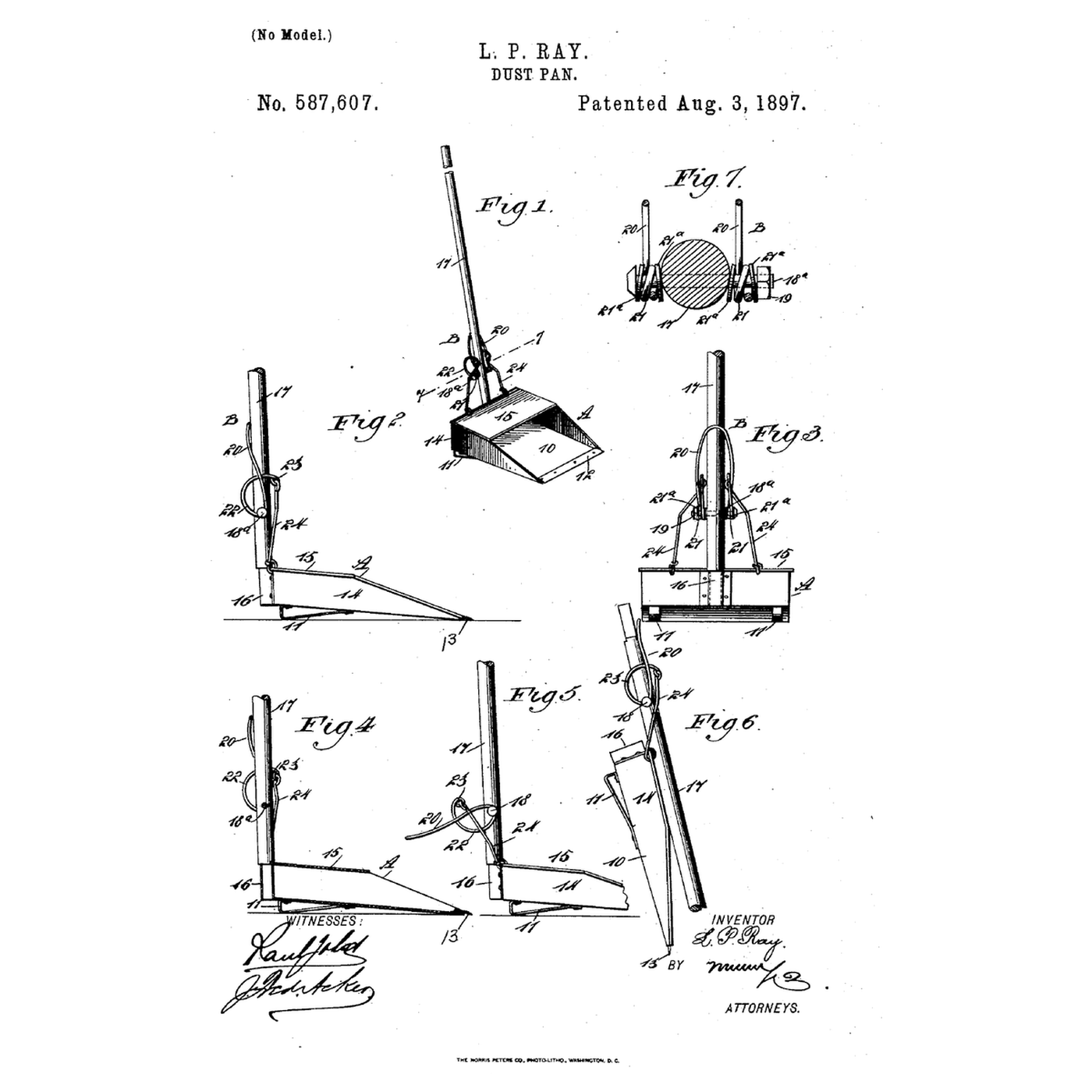


The Low-Lipped Dustpan: A Hard Thin Edge Pressed to the Floor
Every dustpan leaves a line of dust in front of it: the grains too small to climb its edge. The thinner the edge and the closer it lies to the floor, the less is left.
Lloyd P. Ray of Seattle, Washington, received US 587,607, dated 3 August 1897 (filed 25 March 1897), for a dust-pan "so constructed as to lie close to the floor or surface from which the dust is to be taken up and wherein the receiving edge of the pan will be of a stronger material than the body portion", with a removable handle held at an angle by a spring fastening.
This rung computes how much dust a lip of a given height leaves behind, then weighs what a real dustpan picks up as its lip is raised.
เริ่มต้น
About 1 hour
คำแนะนำ
1
1
What the lip leaves behind
What the lip leaves behind
กำลังโหลดสมุด Jupyter…
2
2
The broom that pushes the dust
The broom that pushes the dust
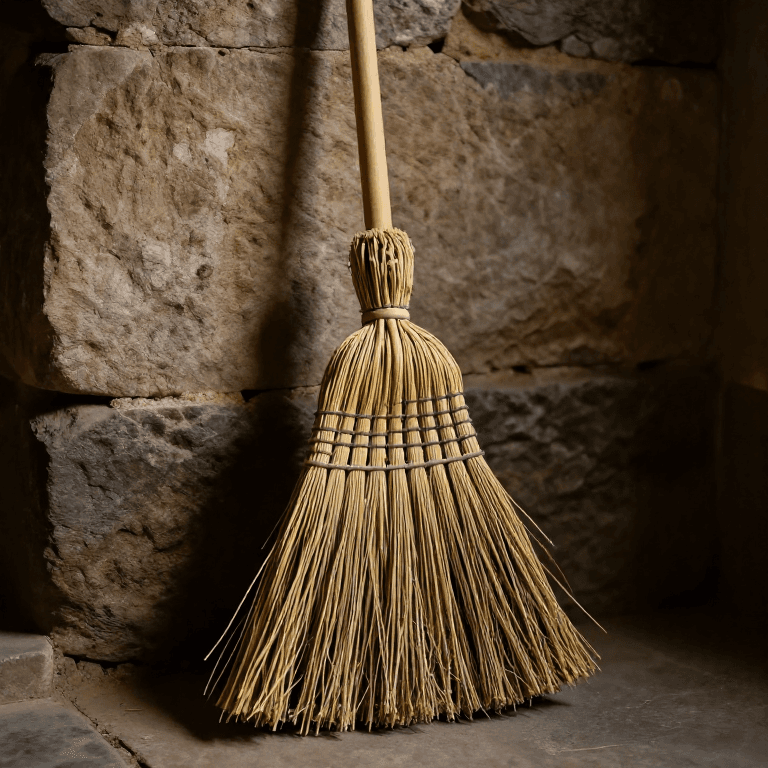
The embedded blueprint binds a birch besom; the dustpan is what the broom sweeps into.
3
3
Read US 587,607
Read US 587,607
"The object of my invention is to provide a dust-pan which will be so constructed as to lie close to the floor or surface from which the dust is to be taken up and wherein the receiving edge of the pan will be of a stronger material than the body portion."
The pan has "feet 11, which give a forward tip or inclination to the bottom of said pan", and at the front "a plate 12 is secured, made of steel or like material or a material which is harder than that from which the body of the pan is constructed. The plate 12 is made to taper from its back in direction of its forward edge, which is quite thin and bent downward to form a curved surface 13, capable of being brought in close engagement with the surface from which the sweepings are to be removed."
A spring-wire fastening holds the handle upright in use; folded down over the pan, the same loop serves "as a means for hanging the handle and the pan from any convenient support."
4
4
Weigh what the pan picks up
Weigh what the pan picks up
Weigh out 50 g of fine sand and spread it evenly over a square about 30 cm across on a smooth, hard floor. Sweep it into the dustpan with five strokes of the broom, then weigh what is in the pan.
Stick one layer of masking tape along the underside of the dustpan's front edge so the lip stands higher, measure the height with the caliper, and repeat with fresh sand. Add a second and a third layer. Plot sand collected against lip height and compare the trend with the notebook.
วัสดุสำหรับขั้นตอนนี้:
 ทรายละเอียด200 ก.
เครื่องมือที่ต้องใช้:
 ที่ตักผง
 ไม้กวาด
 เครื่องชั่งดิจิทัลสำหรับครัว
 เวอร์เนียร์ดิจิทัล 6 นิ้ว
 ไม้บรรทัด
 เทปกาวย่นบังพื้นที่
5
5
A dustpan that leaves a line or spills
A dustpan that leaves a line or spills
Dustpan troubleshooting.
Flow
Loading...
6
6
History and honest limits
History and honest limits
**Lloyd P. Ray** of Seattle, Washington, filed US 587,607 on 25 March 1897; it is dated 3 August 1897. His claims cover the spring fastening that holds the handle.
**Honest limits.** The notebook treats every grain as a sphere that climbs only a step lower than its radius; real grains are angular and broom bristles lift some of them. The size mix and lip heights are examples. The sand you weigh is the measurement.
วัสดุ
1- 200 ก.ตัวยึดตำแหน่ง
พิมพ์เขียวนี้สร้าง
บลูพริ้นท์ที่เกี่ยวข้อง
บลูพริ้นท์เหล่านี้แบ่งปันความรู้ — เทคนิค วัสดุ หรือหลักการ

CC0 สาธารณสมบัติ
พิมพ์เขียวนี้เผยแพร่ภายใต้ CC0 คุณสามารถคัดลอก แก้ไข แจกจ่าย และใช้งานผลงานนี้เพื่อวัตถุประสงค์ใดก็ได้ โดยไม่ต้องขออนุญาต
สนับสนุนเมกเกอร์โดยซื้อสินค้าผ่านพิมพ์เขียวของพวกเขา ซึ่งพวกเขาจะได้รับ ค่าคอมมิชชันเมกเกอร์ ที่ผู้ขายกำหนด หรือสร้างเวอร์ชันใหม่ของพิมพ์เขียวนี้และรวมเป็นการเชื่อมต่อในพิมพ์เขียวของคุณเพื่อแบ่งรายได้