ศิลปะ
ความงามและสุขภาพ
งานฝีมือ
วัฒนธรรมและประวัติศาสตร์
ความบันเทิง
สิ่งแวดล้อม
อาหารและเครื่องดื่ม
วิศวกรรมย้อนรอย
วิทยาศาสตร์
กีฬา
เทคโนโลยี
อุปกรณ์สวมใส่
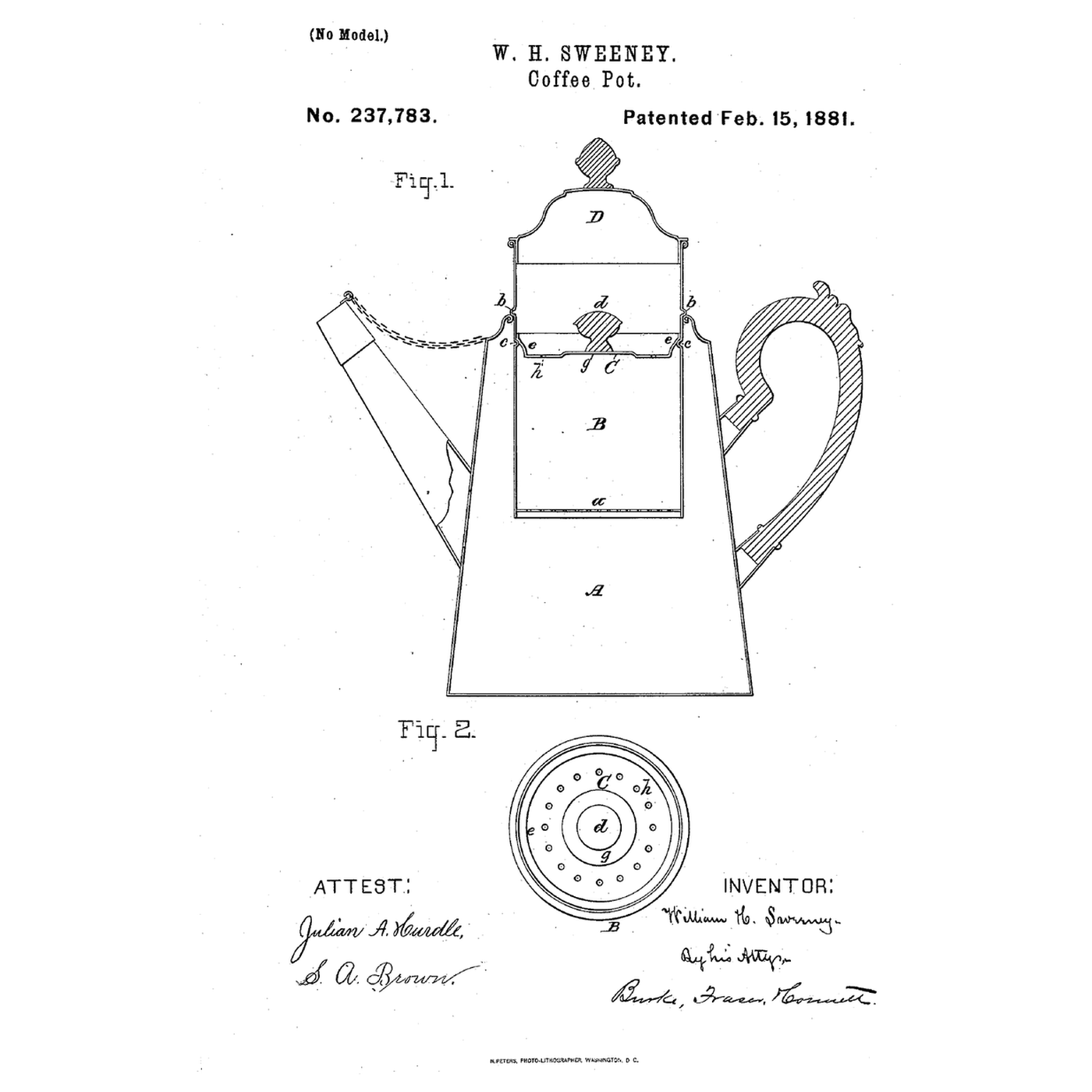


The Ring-Distributor Drip Pot: Holes in a Trough, Water Everywhere at Once
Drip coffee is made by pouring hot water over ground coffee in a filter. Pour it in one spot and it tunnels through, making coffee that is bitter and weak at the same time.
William H. Sweeney of New York received US 237,783, dated 15 February 1881 (filed 26 May 1880), for a coffee-pot whose filter carries a distributing plate with "the perforations arranged in a circle concentric with the axis of the pot, and in a depressed concentric trough", so the water will "flow around and distribute itself evenly as it passes through the perforations."
This rung computes how uneven wetting skews the brew, then brews with and without a distributor and looks at the spent bed.
เริ่มต้น
About 1 hour
คำแนะนำ
1
1
Wetted share and brew ratio
Wetted share and brew ratio
กำลังโหลดสมุด Jupyter…
2
2
Spreading water through holes
Spreading water through holes
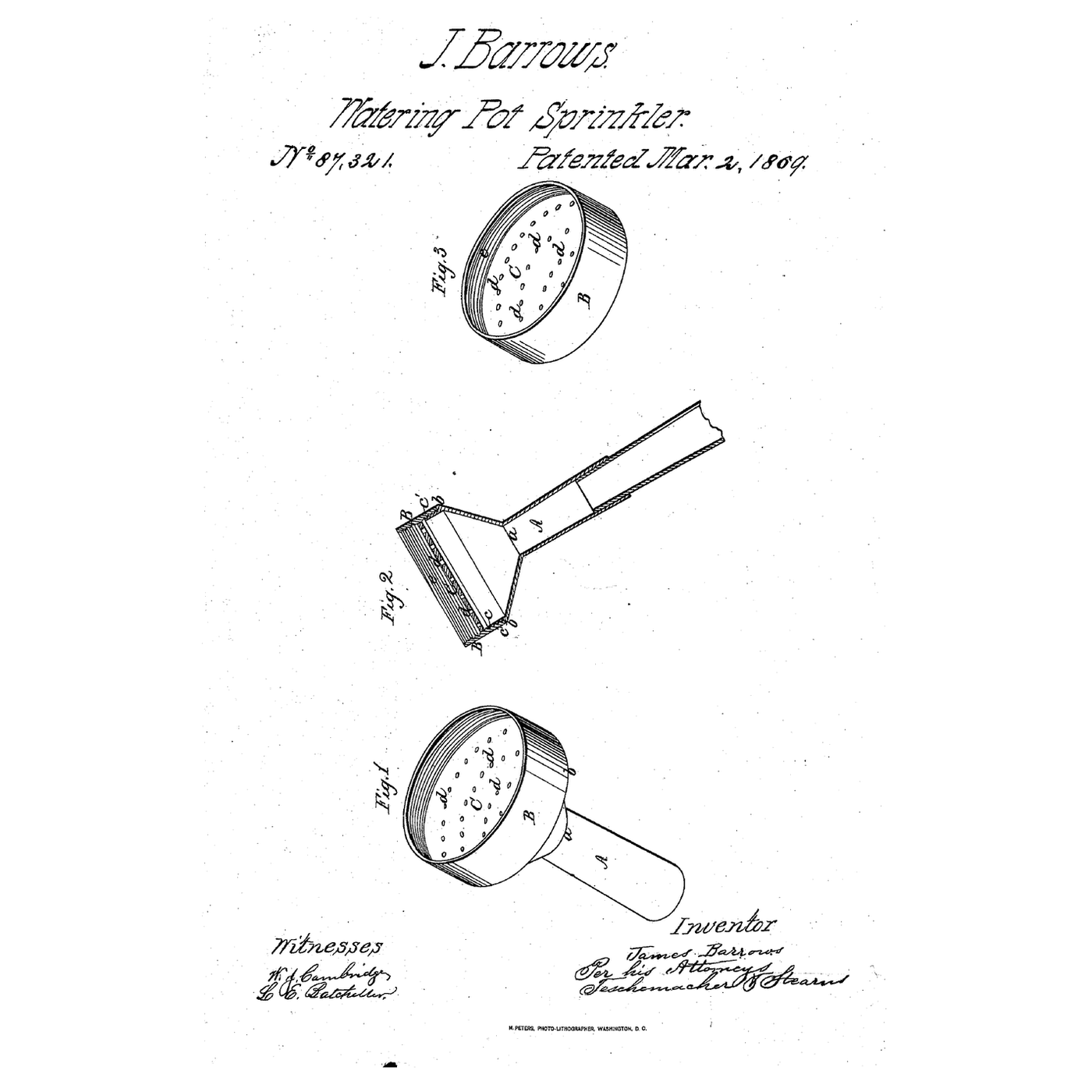
The embedded blueprint is an 1869 watering-can rose; Sweeney's plate spreads water through a ring of holes for the same reason.
3
3
Read US 237,783
Read US 237,783
"This invention relates to that class of coffee-pots in which the ground coffee is placed in a filter in the pot and boiling water is poured over it. The water percolates through the mass of coffee and eventually falls into the pot through the foraminous bottom of the filter."
Earlier distributing plates were meant "to prevent the force of the water, when poured in, from washing through the finer particles or dust of the coffee and rendering it 'muddy.'" But "In a pot where a concave distributing-disk is employed the stream of water is apt to pass through at the center, and where a flat or level plate is used it is apt to pass through at the point where the stream impinges."
"The trough-like character of the depression h causes the water, when poured in, to flow around and distribute itself evenly as it passes through the perforations."
4
4
One spot against a ring
One spot against a ring
Brew two cups the same way, 20 g of ground coffee in a paper filter and 320 g of water just off the boil. For the first, pour in a thin stream onto one spot. For the second, pour onto a small plate with holes in a ring (a jar lid pierced round its edge works) set on the coffee.
Time how long each takes to drain, taste them side by side, and look at the spent grounds: a crater or a flat bed. Compare with the notebook's picture.
วัสดุสำหรับขั้นตอนนี้:
 กาแฟบด40 ก.
 กระดาษกรองกาแฟ / กระดาษกรอง2 ชิ้น
 น้ำ1 ชิ้น
เครื่องมือที่ต้องใช้:
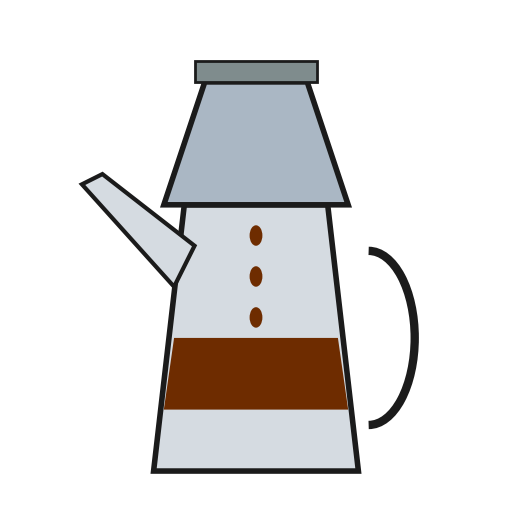 กาดริปกาแฟ
 กาต้มน้ำไฟฟ้าแก้ว
 เครื่องชั่งดิจิทัลสำหรับครัว
 นาฬิกาจับเวลา
 ถ้วยชาและจานรอง - พอร์ซเลน
5
5
Drip coffee that is bitter, weak or slow
Drip coffee that is bitter, weak or slow
Drip coffee troubleshooting.
Flow
Loading...
6
6
History and honest limits
History and honest limits
**William H. Sweeney** of New York, a subject of the Queen of Great Britain, filed US 237,783 on 26 May 1880; it is dated 15 February 1881.
**Honest limits.** The notebook splits the bed into wetted and dry parts; real flow spreads sideways in the grounds, and extraction depends on grind and temperature too. Amounts and fractions are examples. Your times, taste and the spent bed are the measurement.
วัสดุ
3- 40 ก.ตัวยึดตำแหน่ง
- ตัวยึดตำแหน่ง
- 1 ชิ้นตัวยึดตำแหน่ง
เครื่องมือที่จำเป็น
5- ตัวยึดตำแหน่ง
- ตัวยึดตำแหน่ง
- ตัวยึดตำแหน่ง
- ตัวยึดตำแหน่ง
- ตัวยึดตำแหน่ง
บลูพริ้นท์ที่เกี่ยวข้อง
บลูพริ้นท์เหล่านี้แบ่งปันความรู้ — เทคนิค วัสดุ หรือหลักการ
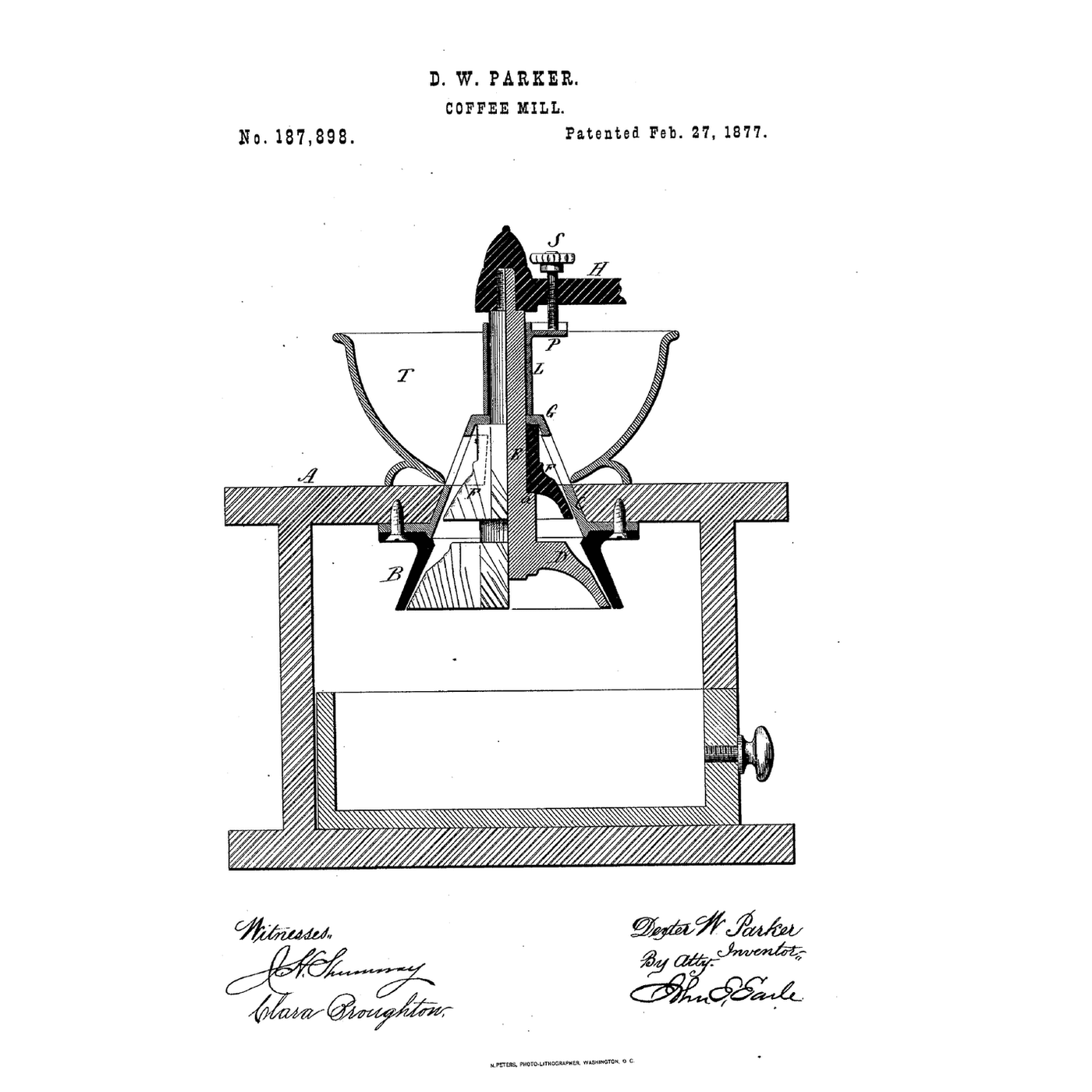



CC0 สาธารณสมบัติ
พิมพ์เขียวนี้เผยแพร่ภายใต้ CC0 คุณสามารถคัดลอก แก้ไข แจกจ่าย และใช้งานผลงานนี้เพื่อวัตถุประสงค์ใดก็ได้ โดยไม่ต้องขออนุญาต
สนับสนุนเมกเกอร์โดยซื้อสินค้าผ่านพิมพ์เขียวของพวกเขา ซึ่งพวกเขาจะได้รับ ค่าคอมมิชชันเมกเกอร์ ที่ผู้ขายกำหนด หรือสร้างเวอร์ชันใหม่ของพิมพ์เขียวนี้และรวมเป็นการเชื่อมต่อในพิมพ์เขียวของคุณเพื่อแบ่งรายได้