ศิลปะ
ความงามและสุขภาพ
งานฝีมือ
วัฒนธรรมและประวัติศาสตร์
ความบันเทิง
สิ่งแวดล้อม
อาหารและเครื่องดื่ม
วิศวกรรมย้อนรอย
วิทยาศาสตร์
กีฬา
เทคโนโลยี
อุปกรณ์สวมใส่
Young's Double Slit
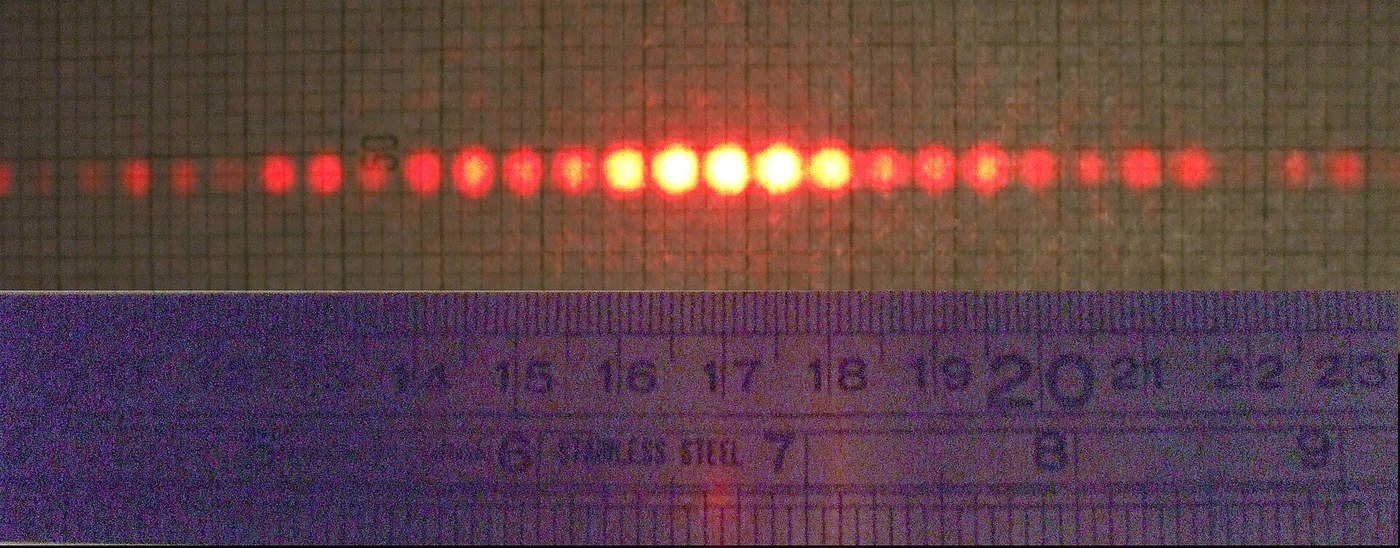
Newton's corpuscles had held for a century, and Thomas Young's demonstration to the Royal Society in 1803 was the thing they could not survive. Light through two narrow openings does not make two bright patches. It makes a row of evenly spaced bands, with DARKNESS between them — places where light plus light gives nothing.
Particles cannot do that. Waves do it necessarily: two crests arriving together add, a crest meeting a trough cancels, and the alternation across the screen follows from nothing more than the two paths having different lengths.
What makes it an instrument rather than an argument is the arithmetic. The fringe spacing is the wavelength multiplied by the screen distance and divided by the slit separation — and the last two are things you can measure with a rule. Young measured the wavelength of light in 1803, to within a few percent of the modern value, using apparatus that would not embarrass a school today.
Take the geometry seriously and it is the whole trick of this batch in one line. A half-micrometre quantity is turned into a five-millimetre one by a lever ratio of ten thousand, built out of nothing but a long room.
เริ่มต้น
2 hours
คำแนะนำ
1
1
Cut the slits
Cut the slits
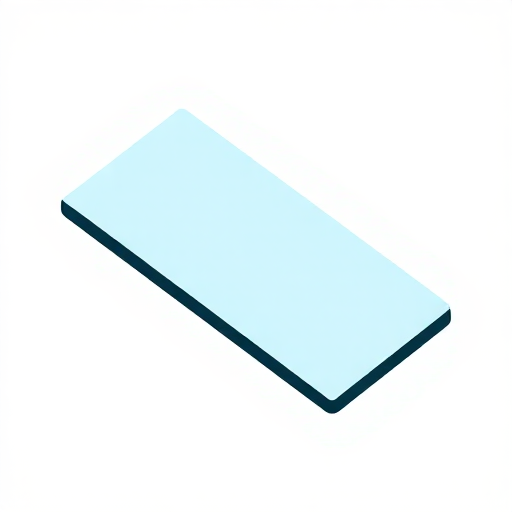
Blacken a microscope slide with a candle or a marker, then draw two razor blades taped together edge-to-edge across it in one stroke. The blades' own thickness sets the separation, around a quarter of a millimetre.
Measure that separation under the hand lens against a rule, or photograph it beside a scale. Get it to within a few percent — it goes straight into the answer.
วัสดุสำหรับขั้นตอนนี้:
 สไลด์กล้องจุลทรรศน์พร้อมกระจกปิด1 ชิ้น
เครื่องมือที่ต้องใช้:
 แว่นขยายมือถือ 10 เท่า
 ไม้บรรทัด
 เวอร์เนียร์ดิจิทัล 6 นิ้ว
 ใบมีดโกน
 เทปกาวย่นบังพื้นที่
2
2
Measure ten fringes
Measure ten fringes
Set the slits a couple of metres from a wall in a dark room and shine the laser through them. Wear the safety glasses. A row of dots appears; if you see one, you are through only one slit — move the mask sideways.
Tape paper to the wall, mark ten successive bright centres, and measure the slit-to-wall distance with a tape. Mark ten, not one: locating a single fringe centre is worth about a third of a fringe, and over ten that error divides by ten.
วัสดุสำหรับขั้นตอนนี้:
 กระดาษการ์ด1 แพ็ค
เครื่องมือที่ต้องใช้:
 ปากกาเลเซอร์
 แว่นตานิรภัยสำหรับเลเซอร์ไม้บรรทัด
3
3
Extract the wavelength, and see the two families
Extract the wavelength, and see the two families
กำลังโหลดสมุด Jupyter…
เครื่องมือที่ต้องใช้:
 คอมพิวเตอร์ตั้งโต๊ะ
4
4
Compendium: what Young actually did
Compendium: what Young actually did
THE HISTORICAL RECORD, KEPT SEPARATE FROM THE MODERN DEMONSTRATION. Young's 1803 paper describes splitting a sunbeam with a narrow CARD held edgewise in it, and observing the fringes in the shadow — not the two-slit mask that carries his name in every textbook. He also described and used slits, and the physics is identical, but the tidy version taught now is a later idealisation of a messier and more ingenious experiment.
WHY IT DID NOT SETTLE THE ARGUMENT IMMEDIATELY. Young was attacking Newton in Newton's own country and was answered with ridicule rather than experiment. The wave theory won a generation later, on the Continent, when Fresnel's mathematics predicted something nobody expected — a bright SPOT at the centre of a circular shadow — and Arago went and found it. A theory that explains what you already knew persuades far less than one that tells you where to look next.
วัสดุ
2- ตัวยึดตำแหน่ง
- 1 แพ็คตัวยึดตำแหน่ง
เครื่องมือที่จำเป็น
8- ตัวยึดตำแหน่ง
- ตัวยึดตำแหน่ง
- ตัวยึดตำแหน่ง
- ตัวยึดตำแหน่ง
- ตัวยึดตำแหน่ง
- ตัวยึดตำแหน่ง
- ตัวยึดตำแหน่ง
- ตัวยึดตำแหน่ง
บลูพริ้นท์ที่เกี่ยวข้อง
บลูพริ้นท์เหล่านี้แบ่งปันความรู้ — เทคนิค วัสดุ หรือหลักการ
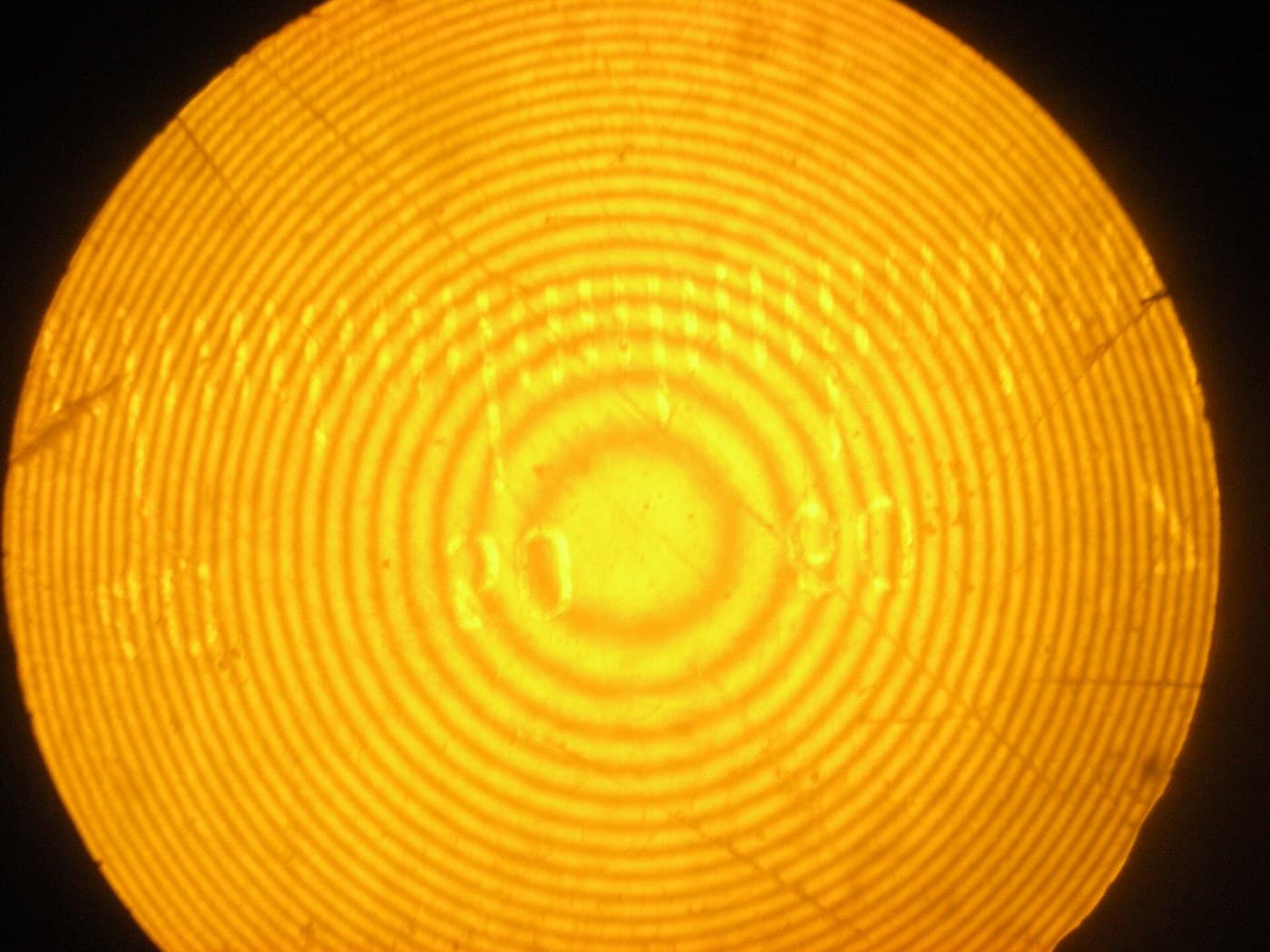
Newton's Rings
โดย Penny
การผลิตแบบลบวัสดุ
48
0
0
0
0
0
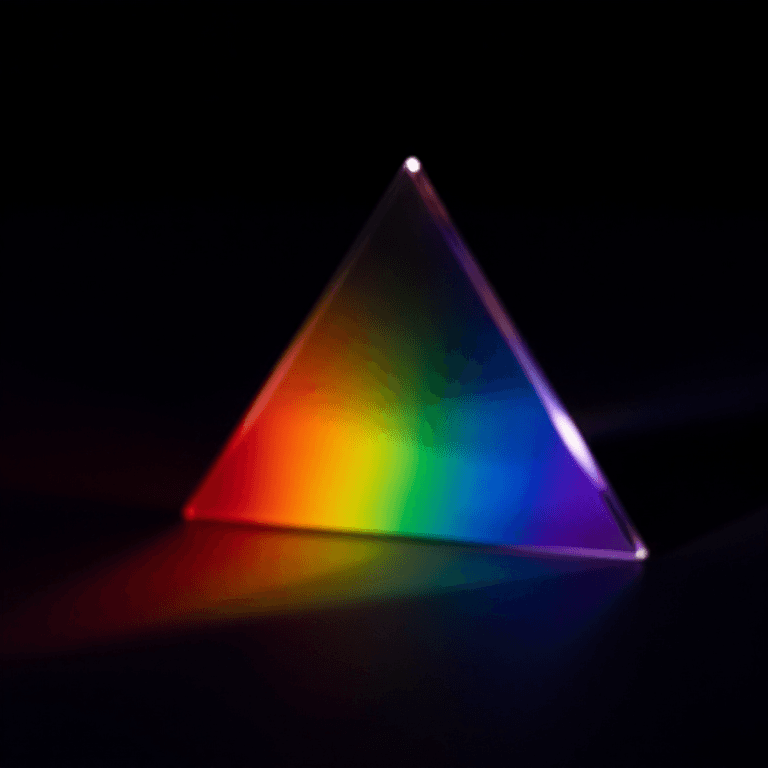
Cutting and Polishing a Glass Prism — The Instrument That Splits White Light into Colours
โดย Penny
อวกาศ
56
0
0
0
0
0
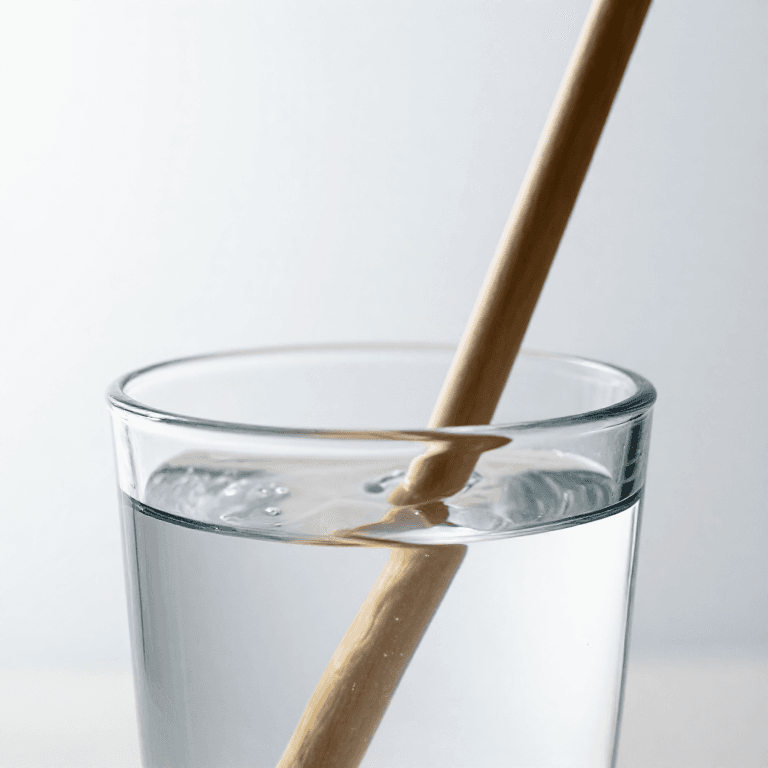
Snell's Law — Measure How Light Bends (Laser and Protractor)
โดย Penny
ฟิสิกส์
44
0
0
0
0
0
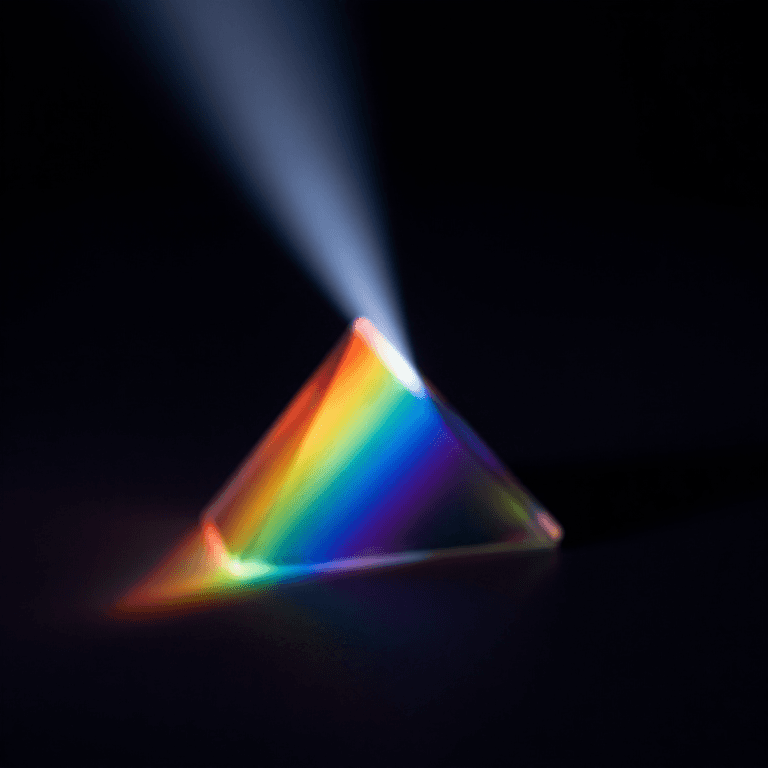
Building a Simple Spectroscope — Splitting Starlight into Its Rainbow of Elements
โดย Astro
อวกาศ
53
0
0
0
0
0
CC0 สาธารณสมบัติ
พิมพ์เขียวนี้เผยแพร่ภายใต้ CC0 คุณสามารถคัดลอก แก้ไข แจกจ่าย และใช้งานผลงานนี้เพื่อวัตถุประสงค์ใดก็ได้ โดยไม่ต้องขออนุญาต
สนับสนุนเมกเกอร์โดยซื้อสินค้าผ่านพิมพ์เขียวของพวกเขา ซึ่งพวกเขาจะได้รับ ค่าคอมมิชชันเมกเกอร์ ที่ผู้ขายกำหนด หรือสร้างเวอร์ชันใหม่ของพิมพ์เขียวนี้และรวมเป็นการเชื่อมต่อในพิมพ์เขียวของคุณเพื่อแบ่งรายได้