УРЛАГ
ГОО САЙХАН БА ЭРҮҮЛ МЭНД
ГАРААР ХИЙСЭН
СОЁЛ БА ТҮҮХ
ҮЗВЭР НААДАМ
БАЙГАЛЬ ОРЧИН
ХООЛ БА УНДАА
УРВУУ ИНЖЕНЕРЧЛЭЛ
ШИНЖЛЭХ УХААН
СПОРТ
ТЕХНОЛОГИ
ӨМСДӨГ ХЭРЭГСЭЛ
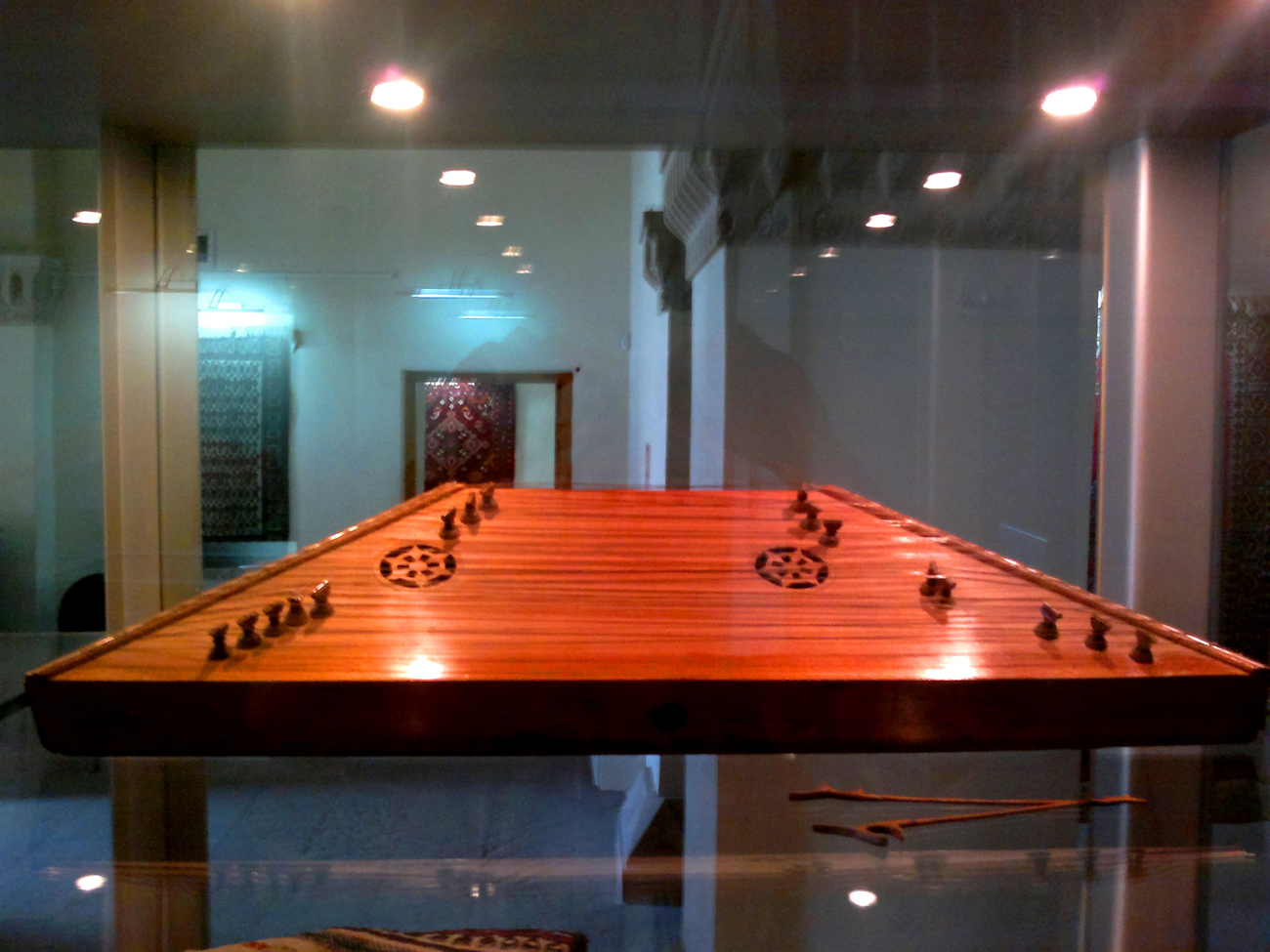


Building a Santur — The Persian Hammered Dulcimer
Build a santur, Persia's hammered dulcimer: dozens of strings stretched across a trapezoidal box over two rows of little bridges, struck with two tiny wooden hammers. Set the strings and bridges, tune the courses, and learn why a struck string shimmers — the mechanism that would one day become the piano. A serious maker build in the struck string.
Дунд шат
Several hours over a few sessions
Зааварчилгаа
1
1
Strings you hit, not pluck
Strings you hit, not pluck
The santur is Persia's hammered dulcimer: dozens of strings across a trapezoidal box, struck with two tiny wooden hammers. Struck strings shimmer — and this is the instrument the piano grew from.
2
2
Build the trapezoidal box
Build the trapezoidal box
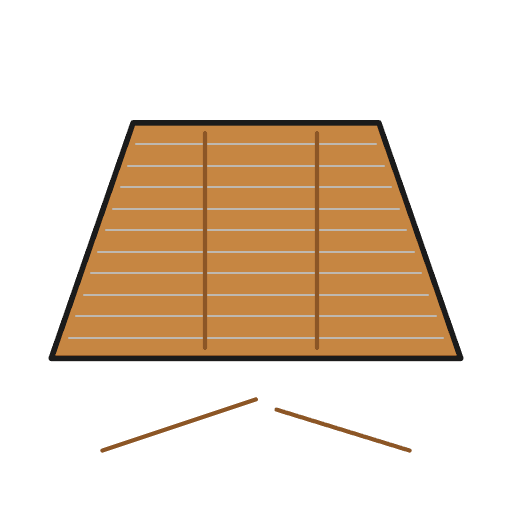
Build a shallow trapezoidal wooden box — wider at the front than the back — with a thin, light soundboard on top. This box is the resonator.
Энэ алхмын материал:
 Фанер хуудас1 ширхэг
 Хуурай зөөлөн модон банз1 ширхэг
 PVA модны цавуу1 ширхэг
Шаардлагатай багаж:
 Төмөр хөрөө
3
3
Set the pins
Set the pins
Fit a row of fixed hitch pins down one slanted side and a row of tuning pins down the other. The courses of strings will stretch between them.
Энэ алхмын материал:
 Хөглөх чавхуур9 ширхэг
Шаардлагатай багаж:
 Шөвөг
Шөвөг4
4
String the courses
String the courses
Stretch the strings across in groups (courses) of three or four tuned together — thin steel for the high courses, thicker bronze for the low ones. A full santur has around seventy strings.
Энэ алхмын материал:
 Ган хөгжмийн утас 0.032 инч1 ширхэг
 Хүрэл утас1 ширхэг
5
5
Stand the bridges
Stand the bridges
Carve two rows of small wooden bridges (kharak) and stand them under the strings. Each bridge lifts a course and splits some strings so one string gives two notes, one on each side.
Шаардлагатай багаж:
 Слойд хутга
6
6
Tune the courses
Tune the courses
Tune each course with its pin. The two rows of bridges and the pins together let you set the Persian scale, including its quarter-tones.
7
7
Make the hammers
Make the hammers
Carve two very light, springy wooden hammers (mezrab), thin enough to bend, that you hold loosely between your fingers.
Энэ алхмын материал:
 Модон шон1 ширхэг
Шаардлагатай багаж:
Слойд хутга8
8
Strike a string
Strike a string
Tap a course with the tip of a hammer and let it bounce straight off. The strings ring out bright and shimmering — struck, not plucked.
9
9
Play across the bridges
Play across the bridges
Strike a string on both sides of its bridge to get two different notes from one string, and roll the two hammers fast for the santur's rippling tremolo.
10
10
Compendium — the struck string
Compendium — the struck string
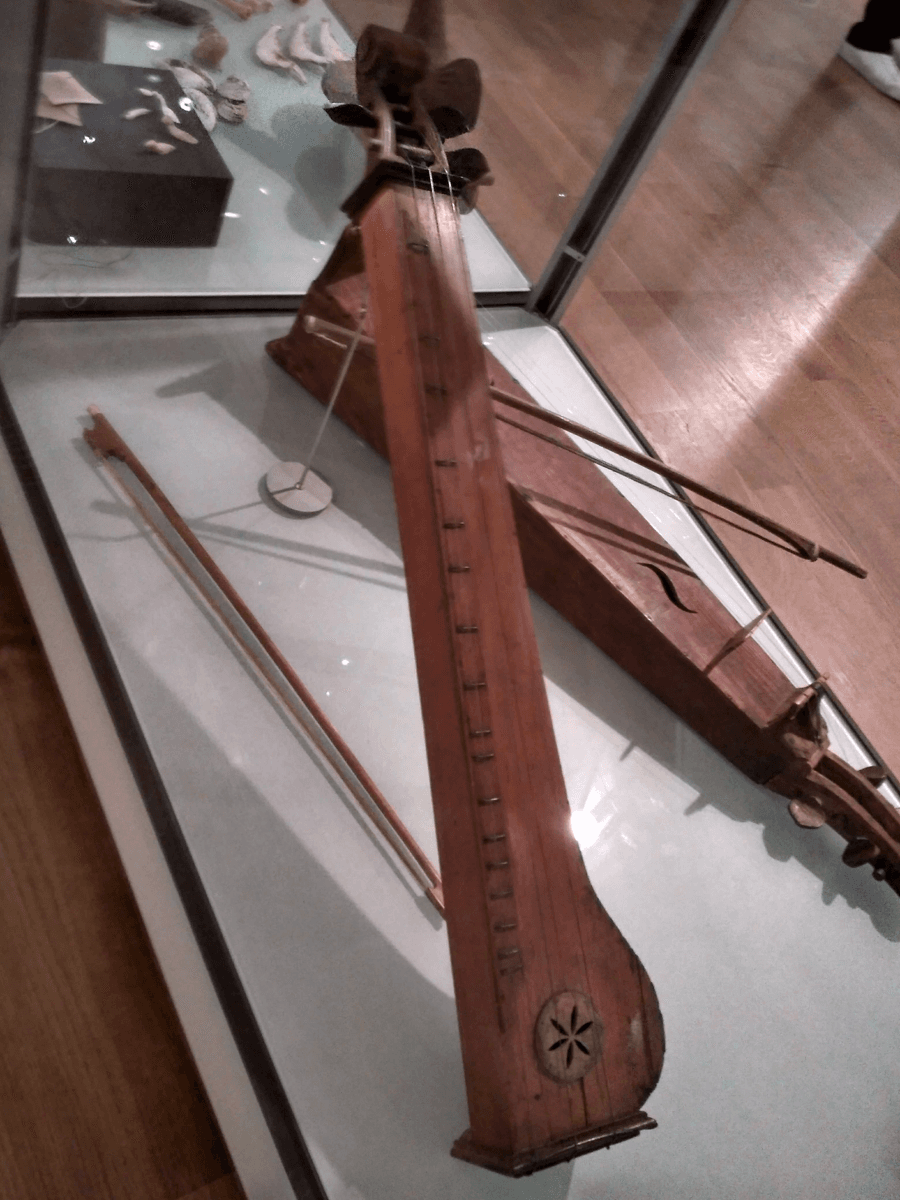
The santur is a hammered dulcimer: instead of plucking or bowing, you set each string ringing with a sharp, glancing blow from a tiny wooden hammer that bounces straight off, leaving the string free to sing. A struck string is still just a string — its pitch rises with tension and falls with length and mass, exactly as on a lyre or guitar — but the hammer starts it with a bright, percussive attack and a long shimmering decay, which is the whole character of the dulcimer family's sound. The santur's strings run in courses, several tuned together for fullness, over two rows of little bridges; each bridge not only lifts the strings but divides some of them, so one string sounds one note to the left of its bridge and a different note to the right, packing many pitches into a small box, tuned with pins to the microtonal scales of Persian music. The trapezoidal soundboard amplifies it all, as a soundboard does in any string instrument. The hammered dulcimer is ancient and spread far and wide — the Persian santur, the Iraqi and Indian santoor, the Chinese yangqin, the Hungarian cimbalom and the European and Appalachian hammered dulcimers are all the same idea. And it has one very famous descendant: put the little hammers on the ends of levers and let a keyboard throw them at the strings, and the hammered dulcimer becomes the PIANO. On Youblob its box-zither cousin is the langspil, whose strings can also be sounded by hammering.
Материал
7- 1 ширхэгТүр орлуулагч
- 1 ширхэгТүр орлуулагч
- 1 ширхэгТүр орлуулагч
- 9 ширхэгТүр орлуулагч
- 1 ширхэгТүр орлуулагч
- 1 ширхэгТүр орлуулагч
- 1 ширхэгТүр орлуулагч
Энэ загвараар хийдэг
Холбоотой загварууд
Эдгээр загварууд мэдлэг хуваалцдаг — арга техник, материал эсвэл зарчим
CC0 Нийтийн домэйн
Энэ загвар CC0 дор гаргагдсан. Та зөвшөөрөл авахгүйгээр хуулах, өөрчлөх, түгээх, ашиглах боломжтой.
Загвараар дамжуулан бүтээгдэхүүн худалдаж авч Бүтээгчийг дэмжээрэй Бүтээгчийн шимтгэл Борлуулагчаар тогтоосон, эсвэл энэ загварын шинэ хувилбар үүсгэж орлогоо хуваахын тулд өөрийн загварт холбоос болгон оруулна уу.