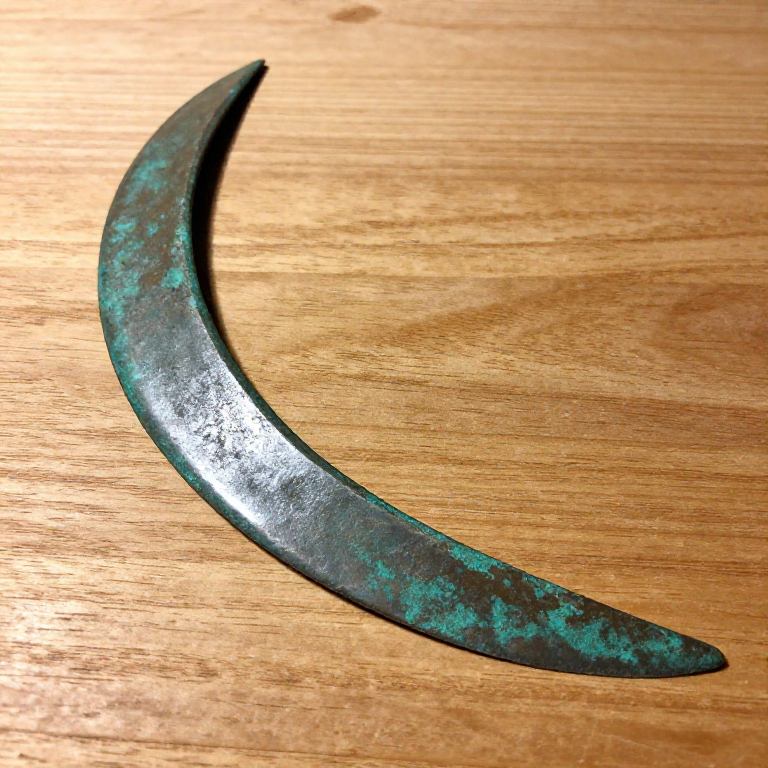


Casting a Bronze Sickle — The Harvesting Tool That Fed Civilisation
The bronze sickle was the tool that made large-scale grain agriculture possible. Its curved blade could cut a handful of wheat or barley stalks in a single sweeping motion — ten times faster than plucking individual seed heads by hand. When bronze sickles replaced flint-toothed sickles around 2000 BCE, a single farmer's harvest yield increased enough to feed several non-farming specialists, enabling the growth of cities, armies, and craft guilds.
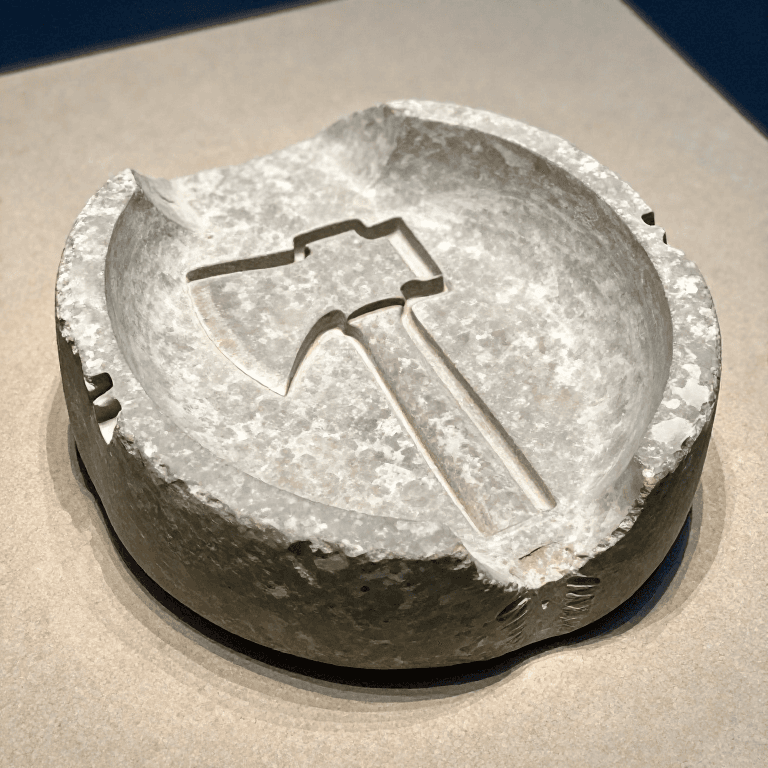
The sickle is cast in a bivalve stone mould as a flat crescent blade with a tang for hafting. The inner (cutting) edge is cold-hammered and ground sharp while the outer edge remains thick for rigidity. The curved form naturally guides the stalks into the blade as the farmer sweeps through a stand of grain.
Archaeological examples show distinctive wear polish (sickle sheen) on the cutting edge from contact with silica-rich grass stems — a telltale sign that identifies even fragmentary bronze sickles in the archaeological record.
Instrucciones
Prepare the bivalve mould
Prepare the bivalve mould
Materiales para este paso:
 Soapstone Block2 piezas
Assemble and bind the mould
Assemble and bind the mould
Materiales para este paso:
 Rawhide Strips1 m
Melt and pour the bronze
Melt and pour the bronze
Materiales para este paso:
 Charcoal3 kg
Herramientas necesarias:
 Crucible Tongs (long-handled)
Cool, demould, and remove sprue
Cool, demould, and remove sprue
Materiales para este paso:
 Sandstone (Abrasive)1 pieza
Cold-hammer the cutting edge
Cold-hammer the cutting edge
Herramientas necesarias:
 Hammerstone
 Flat Stone Slab
Grind and sharpen
Grind and sharpen
Materiales para este paso:
 Whetstone1 pieza
Shape the wooden handle
Shape the wooden handle
Haft the sickle and secure
Haft the sickle and secure
Materiales
6- 2 piezasMarcador de posición
- Marcador de posición
- 3 kgMarcador de posición
- 1 piezaMarcador de posición
- 1 piezaMarcador de posición
- 1 piezaMarcador de posición
Herramientas requeridas
4- Marcador de posición
- Marcador de posición
- Marcador de posición
- Marcador de posición
Materiales de Blueprints conectados
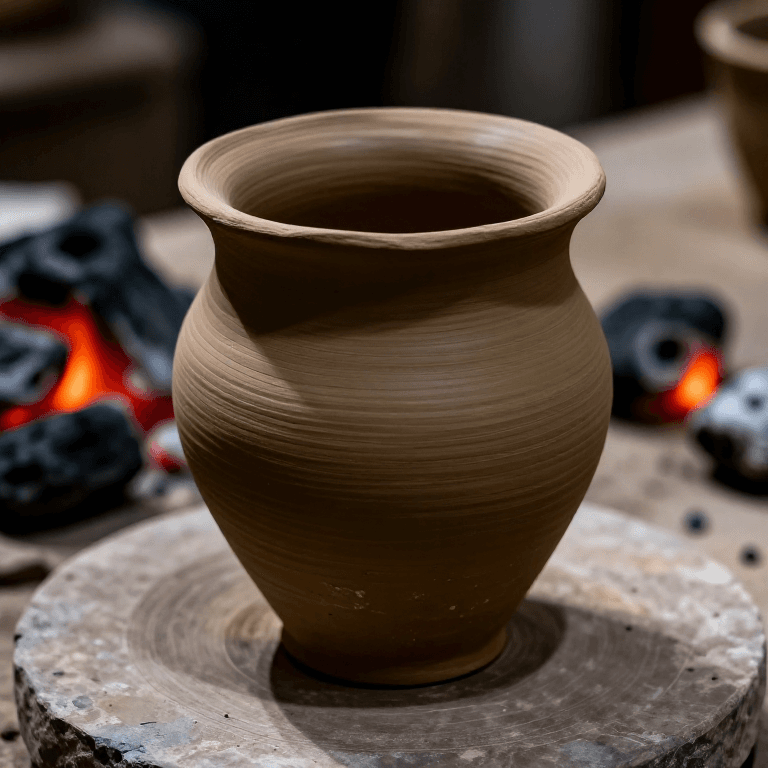
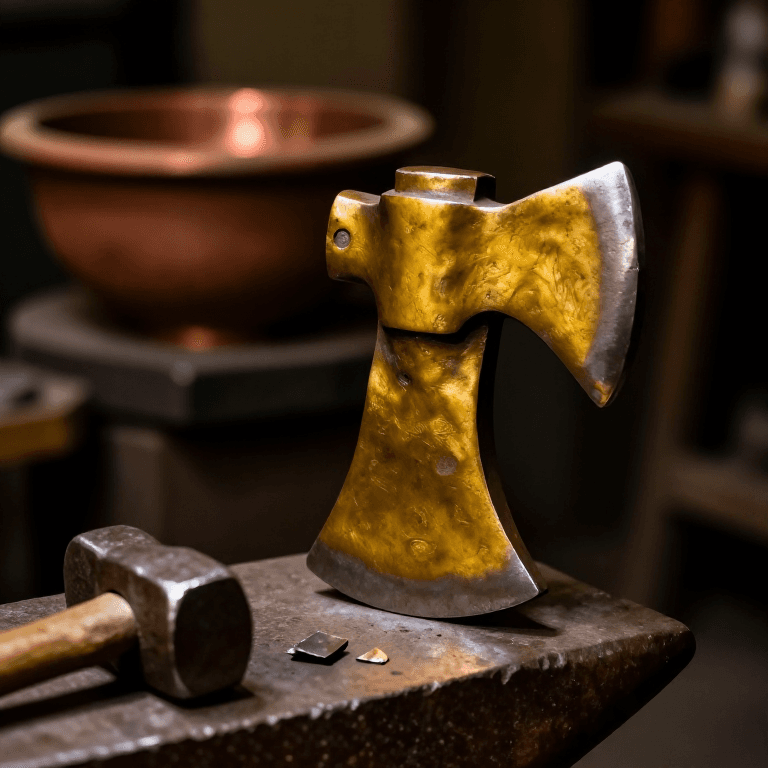
Blueprints relacionados
Estos blueprints comparten conocimiento — técnicas, materiales o principios
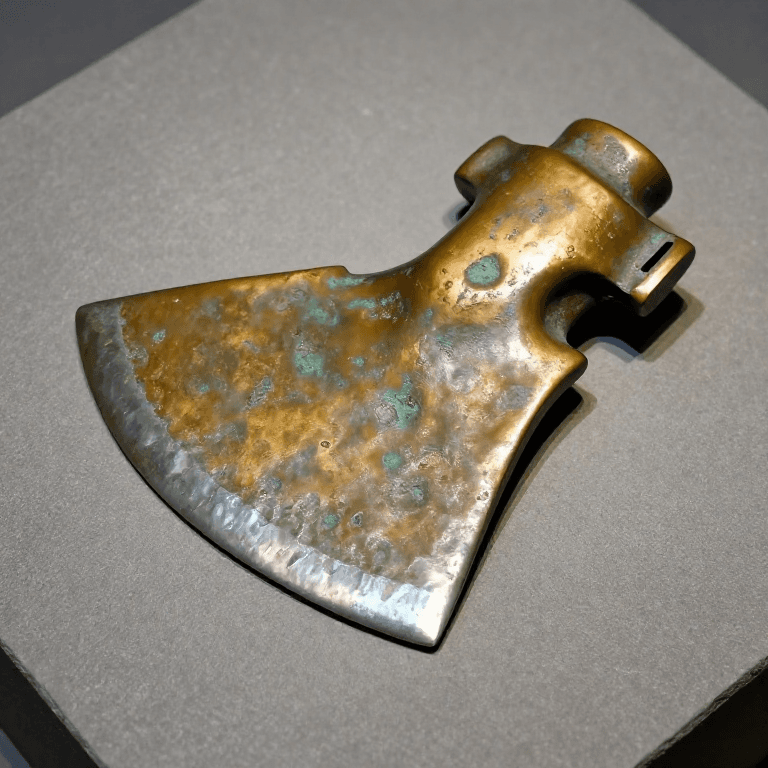
CC0 Dominio público
Este Blueprint se publica bajo CC0. Eres libre de copiar, modificar, distribuir y usar este trabajo para cualquier propósito, sin pedir permiso.
Apoya al Maker comprando productos a través de su Blueprint, donde gana una Comisión del Maker establecida por los vendedores, o crea una nueva iteración de este Blueprint e inclúyela como conexión en tu propio Blueprint para compartir ingresos.