ARTE
BELLEZA Y BIENESTAR
ARTESANÍA
CULTURA E HISTORIA
ENTRETENIMIENTO
MEDIO AMBIENTE
COMIDA Y BEBIDAS
INGENIERÍA INVERSA
CIENCIAS
DEPORTES
TECNOLOGÍA
TECNOLOGÍA VESTIBLE
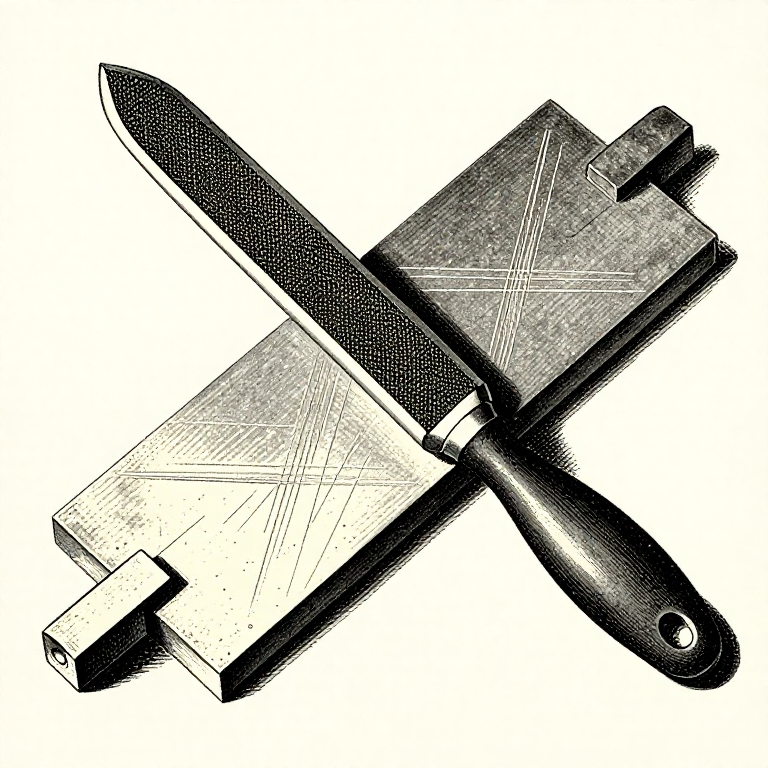


Cross-Filing: Taking Metal Down Fast and Keeping It Flat
Cross-filing is the stroke that removes stock: the file pushed across the work at an angle, then the angle reversed, then reversed again. It is how a rough sawn edge becomes a flat one.
The reason for changing direction is not decoration. Each pass leaves scratches running one way; the next pass crossing them makes the high spots obvious the moment they stop being touched. The file itself tells you where the surface is high — you do not have to measure to find out.
The enemy is ROCKING. A file 250 mm long pivoting a degree through the stroke takes more off the ends than the middle, and produces a convex surface that will never sit flat on anything.
Intermedio
3 hours
Instrucciones
1
1
The stroke: weight forward, level, and lift on the return
The stroke: weight forward, level, and lift on the return
Hold the handle in your dominant hand with the thumb along the top, and the tip of the file between the thumb and fingers of the other. Push the file forward with the weight of your upper body, not by pressing down with your arms.
The pressure balance shifts through the stroke. At the start most of the file hangs off the far side of the work, so the leading hand carries the weight; at the end the handle hangs off the near side, so the pressure shifts back. Getting that transfer right is the whole skill, and it is what keeps the stroke level.
Lift on the return. The teeth cut only forward, so dragging back wears them and drags chips across the surface. The one exception is soft metal like lead where a light return helps clear the teeth.
Herramientas necesarias:
 Limas (lima de mano)
 Tornillo de banco pesado
 Placa de acero dulce
2
2
Cross the strokes, and let the file find the high spots
Cross the strokes, and let the file find the high spots
File at roughly 30 degrees across the work for a dozen strokes, then swing to 30 degrees the other way and file until the first set of scratches has gone.
The moment they have all gone, the surface is level to the depth of those scratches. If a patch of the old scratches survives, that patch is LOW and everything around it is high — so work the high ground, not the hollow. This is the single most useful thing about cross-filing and it costs nothing.
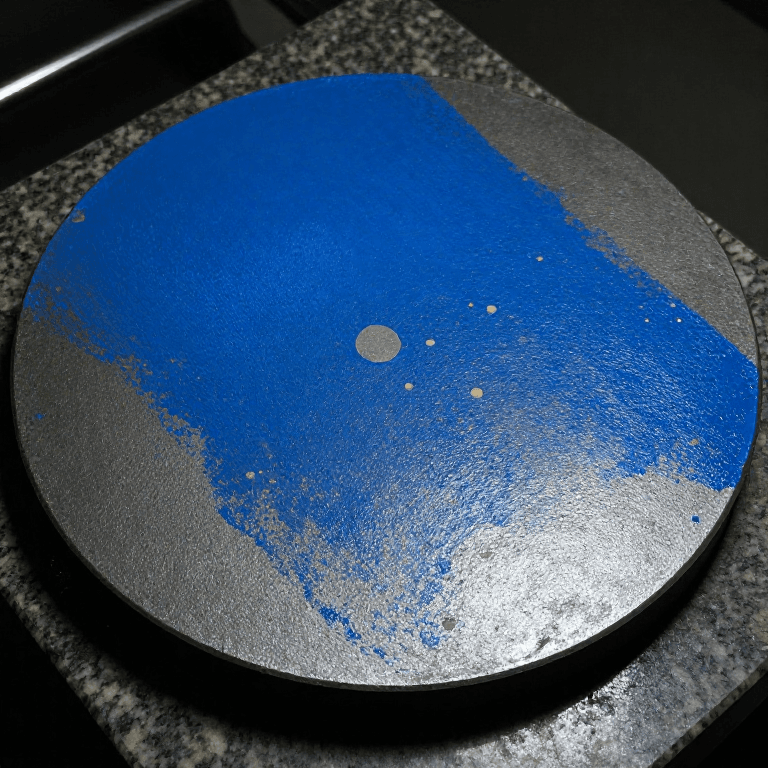
Chalk rubbed on the file face makes the pattern easier to read and slows clogging on soft metal. Marking blue on the work does the same job more clearly on steel.
Materiales para este paso:
 Tiza de marcar1 pieza
Herramientas necesarias:
Limas (lima de mano) Azul de mecánico
 Lupa de relojero
3
3
Why rocking makes a convex surface
Why rocking makes a convex surface
Cargando el cuaderno de Jupyter…
Herramientas necesarias:
 Calculadora
 Calibre vernier
4
4
Check flat, check square, and check often
Check flat, check square, and check often
Lay a straightedge across the work and hold it up to a light. A gap anywhere shows as a line of light, and the eye can see a gap of a few micrometres this way — far finer than any rule you can read.
Check in three directions: along, across, and diagonally. A face can be straight along its length and still be twisted, and the diagonal is what finds that. For square, stand a try square on the reference face and look for light under the blade the same way.
Check every dozen strokes near the end, not every hundred. Metal comes off far faster than it goes back on, and the published surface-plate-and-marking-blue blueprint is the next step up in precision when light-gap checking is no longer good enough.
Herramientas necesarias:
 Regla de trazar
 Escuadra de ajustador
 Escuadra fijaAzul de mecánico
Materiales
1- 1 piezaMarcador de posición
Herramientas requeridas
10- Marcador de posición
- Marcador de posición
- Marcador de posición
- Marcador de posición
- Marcador de posición
- Marcador de posición
- Marcador de posición
- Marcador de posición
- Marcador de posición
- Marcador de posición
Blueprints relacionados
Estos blueprints comparten conocimiento — técnicas, materiales o principios
CC0 Dominio público
Este Blueprint se publica bajo CC0. Eres libre de copiar, modificar, distribuir y usar este trabajo para cualquier propósito, sin pedir permiso.
Apoya al Maker comprando productos a través de su Blueprint, donde gana una Comisión del Maker establecida por los vendedores, o crea una nueva iteración de este Blueprint e inclúyela como conexión en tu propio Blueprint para compartir ingresos.