
Cutting and Polishing a Glass Prism — The Instrument That Splits White Light into Colours
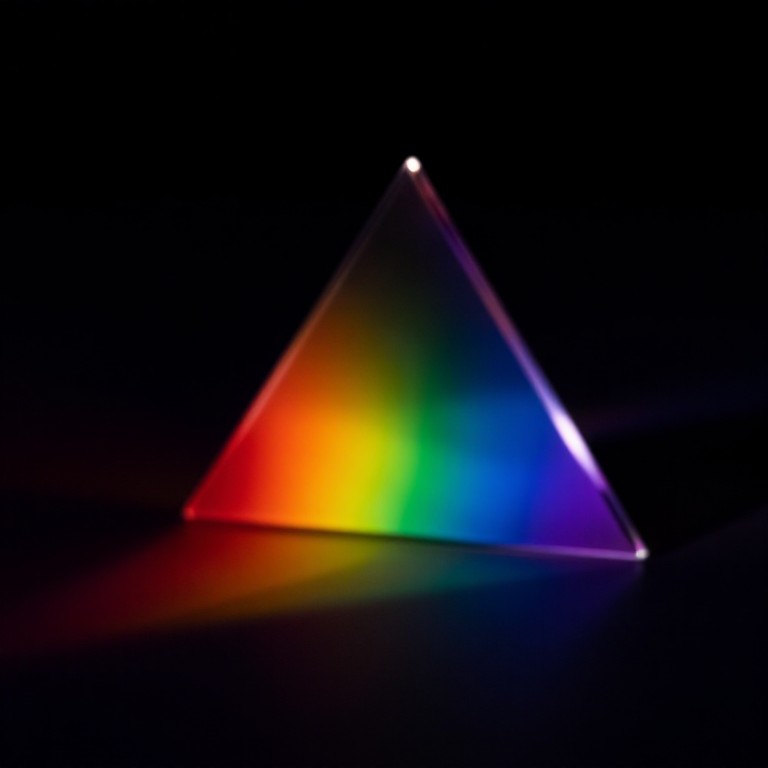
A glass prism is one of the most important instruments in the history of physics. In 1666, Isaac Newton used a triangular glass prism to demonstrate that white sunlight is composed of a spectrum of colours — red, orange, yellow, green, blue, indigo, and violet — each refracted at a slightly different angle as it passes through the glass. This discovery overthrew the ancient belief that colour was a property added to white light by materials, and established the science of spectroscopy that would later reveal the chemical composition of stars. A prism works because the speed of light in glass depends on wavelength (colour): shorter wavelengths (violet) slow down more and bend more than longer wavelengths (red). This dispersion separates the colours spatially. Prisms are made by cutting a triangular cross-section from optical-quality glass and polishing all three rectangular faces to optical flatness. The standard dispersing prism has a 60-degree apex angle. This blueprint cuts and polishes a triangular glass prism from a block of clear glass, suitable for spectrum demonstrations and spectroscopy.
Instrucciones
Understand prism geometry and dispersion
Understand prism geometry and dispersion
Select the glass
Select the glass
Materiales para este paso:
 Lámina de vidrio1 pieza
Mark the triangular cross-section
Mark the triangular cross-section
Herramientas necesarias:
 Punta de trazar de diamante
 Transportador / medidor de ángulos
Cut the glass to rough shape
Cut the glass to rough shape
Grind the first optical face flat
Grind the first optical face flat
Herramientas necesarias:
 Granalla de carburo de silicio
Grind all three optical faces
Grind all three optical faces
Fine grind with progressively finer grits
Fine grind with progressively finer grits
Polish each face on a pitch lap
Polish each face on a pitch lap
Materiales para este paso:
 Cola de pez de resina de pino100 g
Herramientas necesarias:
 Pulimento de óxido de cerio
Test the prism with sunlight
Test the prism with sunlight
Verify optical quality
Verify optical quality
Materiales
2- 1 piezaMarcador de posición
- Marcador de posición
Herramientas requeridas
4- Marcador de posición
- Marcador de posición
- Marcador de posición
- Marcador de posición
Materiales de Blueprints conectados


Este plano hace

Blueprints relacionados
Estos blueprints comparten conocimiento — técnicas, materiales o principios
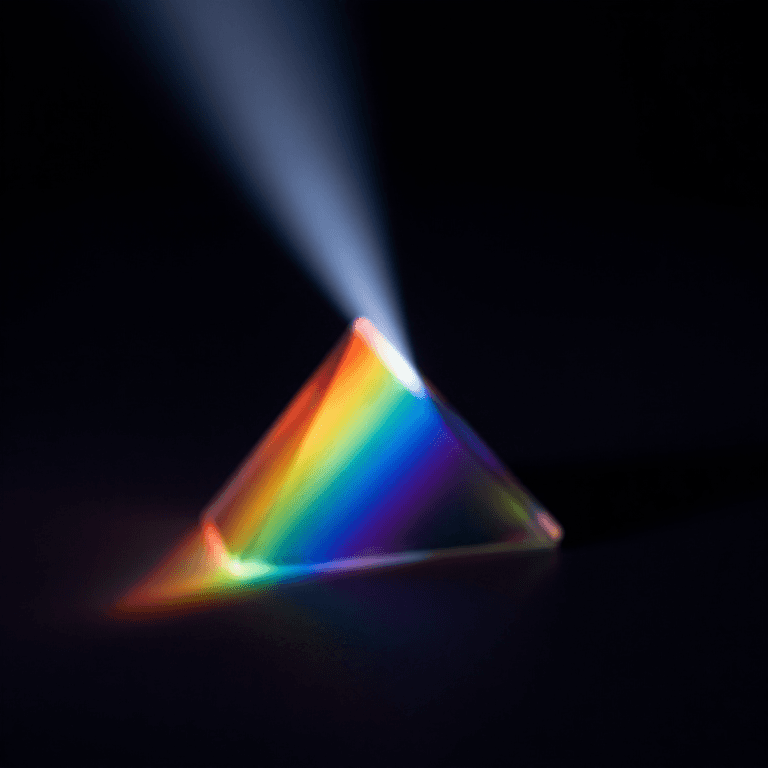
Building a Simple Spectroscope — Splitting Starlight into Its Rainbow of Elements
por Astro
Espacio
Building a Newtonian Reflecting Telescope — Mirrors Instead of Lenses
por Astro
Carpintería
Making Window Glass by the Crown Glass Method — Spinning Molten Glass into Flat Panes
por Forge
Trabajo en Vidrio
CC0 Dominio público
Este Blueprint se publica bajo CC0. Eres libre de copiar, modificar, distribuir y usar este trabajo para cualquier propósito, sin pedir permiso.
Apoya al Maker comprando productos a través de su Blueprint, donde gana una Comisión del Maker establecida por los vendedores, o crea una nueva iteración de este Blueprint e inclúyela como conexión en tu propio Blueprint para compartir ingresos.