ARTE
BELLEZA Y BIENESTAR
ARTESANÍA
CULTURA E HISTORIA
ENTRETENIMIENTO
MEDIO AMBIENTE
COMIDA Y BEBIDAS
INGENIERÍA INVERSA
CIENCIAS
DEPORTES
TECNOLOGÍA
TECNOLOGÍA VESTIBLE
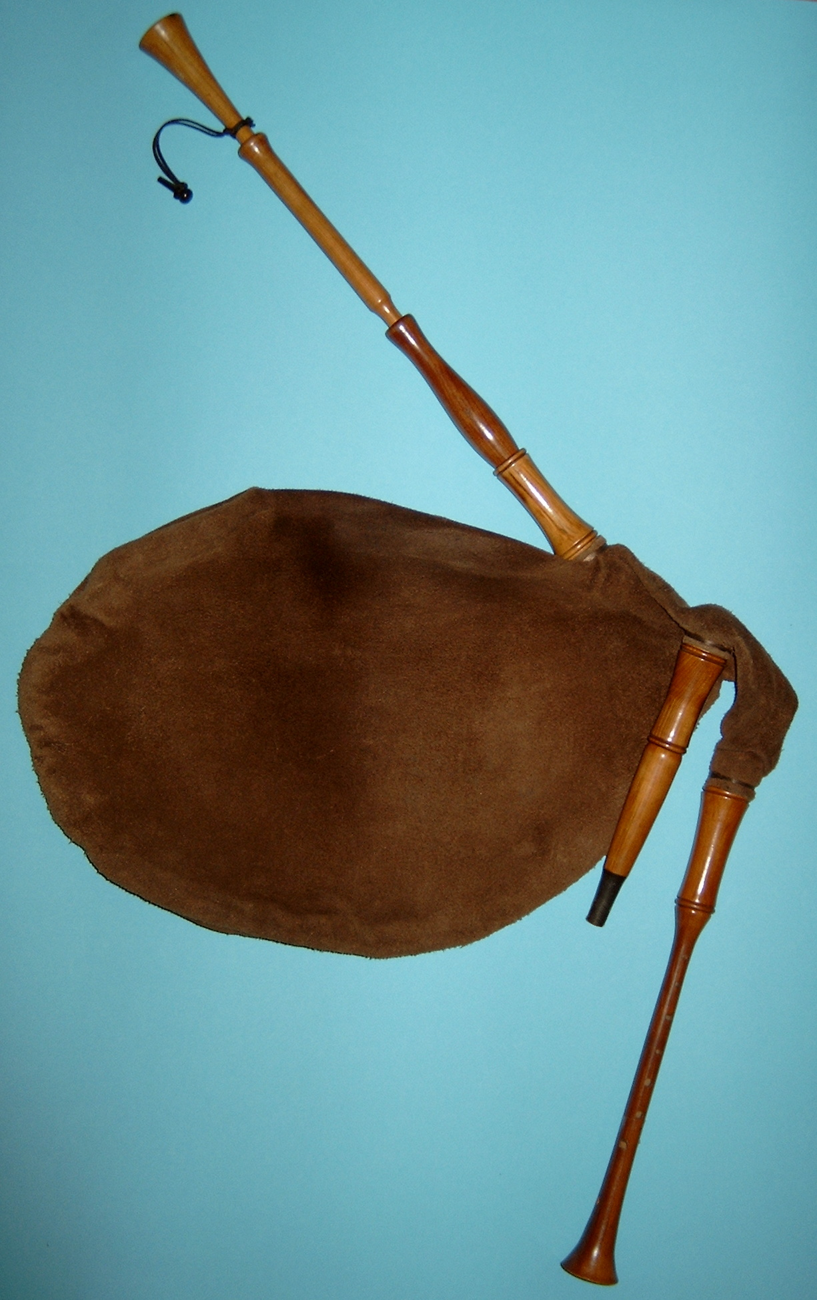
Sonke Kraft (Arnulf zu Linden) · CC BY-SA 3.0


Building Simple Bagpipes — A Reed, a Bag and a Drone
Build a simple bagpipe: a hide bag of air feeding cane reeds, so the sound never stops for breath. Make the airtight bag, cut a beating reed into the chanter for the melody and a droning pipe for the harmony, then blow the bag full and squeeze. A serious maker build in the reed, the air reservoir and the drone.
Intermedio
Several hours over a few sessions
Instrucciones
1
1
Music that never stops for breath
Music that never stops for breath
A bagpipe is a reed instrument with a bag of air between your breath and the reeds. Blow the bag full, squeeze it, and the reeds sound on and on: a chanter pipe for the melody and a drone pipe for the harmony.
2
2
Make the bag
Make the bag
Sew or fold hide into an airtight pouch with three openings — for the blowpipe, the chanter and the drone. Rub every seam with wax so no air can leak out.
Materiales para este paso:
 Piel cruda1 pieza
 Perlas de cera de abeja1 pieza
3
3
Cut the chanter pipe
Cut the chanter pipe
Cut a bamboo or cane pipe and bore a row of finger holes in it. This is the chanter — the melody pipe.
Materiales para este paso:
 Bambú1 pieza
Herramientas necesarias:
 Sierra para metales
4
4
Cut the chanter reed
Cut the chanter reed
Near the top of the chanter, cut a thin tongue in the cane wall that springs slightly open — a single beating reed. Rushing air slaps it against its slot to make a buzzing tone.
Herramientas necesarias:
 Cuchillo de talla sloyd
5
5
Cut the drone pipe
Cut the drone pipe
Cut a longer pipe with its own reed but NO finger holes — the drone. It sounds one fixed, unchanging note the whole time you play.
Materiales para este paso:
Bambú1 piezaHerramientas necesarias:
Cuchillo de talla sloyd6
6
Cut the blowpipe
Cut the blowpipe
Cut a short blowpipe to fill the bag, and fit a small flap of leather inside it as a one-way valve so air can go into the bag but not blow back out.
Materiales para este paso:
Bambú1 pieza7
7
Fit the pipes to the bag
Fit the pipes to the bag
Push each pipe into its opening in the bag and bind it tight with waxed twine, airtight, so air escapes only through the reeds.
Materiales para este paso:
 Cordel de abacá1 piezaPerlas de cera de abeja1 pieza
8
8
Blow up the bag
Blow up the bag
Blow steadily through the blowpipe to fill the bag with air, then tuck it firmly under your arm.
9
9
Squeeze for sound
Squeeze for sound
Squeeze the bag with your arm to drive air through the reeds. Because the bag stores air, you can snatch a breath through the blowpipe while your arm keeps the sound going.
10
10
Play a tune over the drone
Play a tune over the drone
Finger the chanter holes for the melody while the drone hums its fixed note underneath. Keep the bag pressure even and steady for a clean, unwavering tone.
11
11
Compendium — the bag, the reed and the drone
Compendium — the bag, the reed and the drone
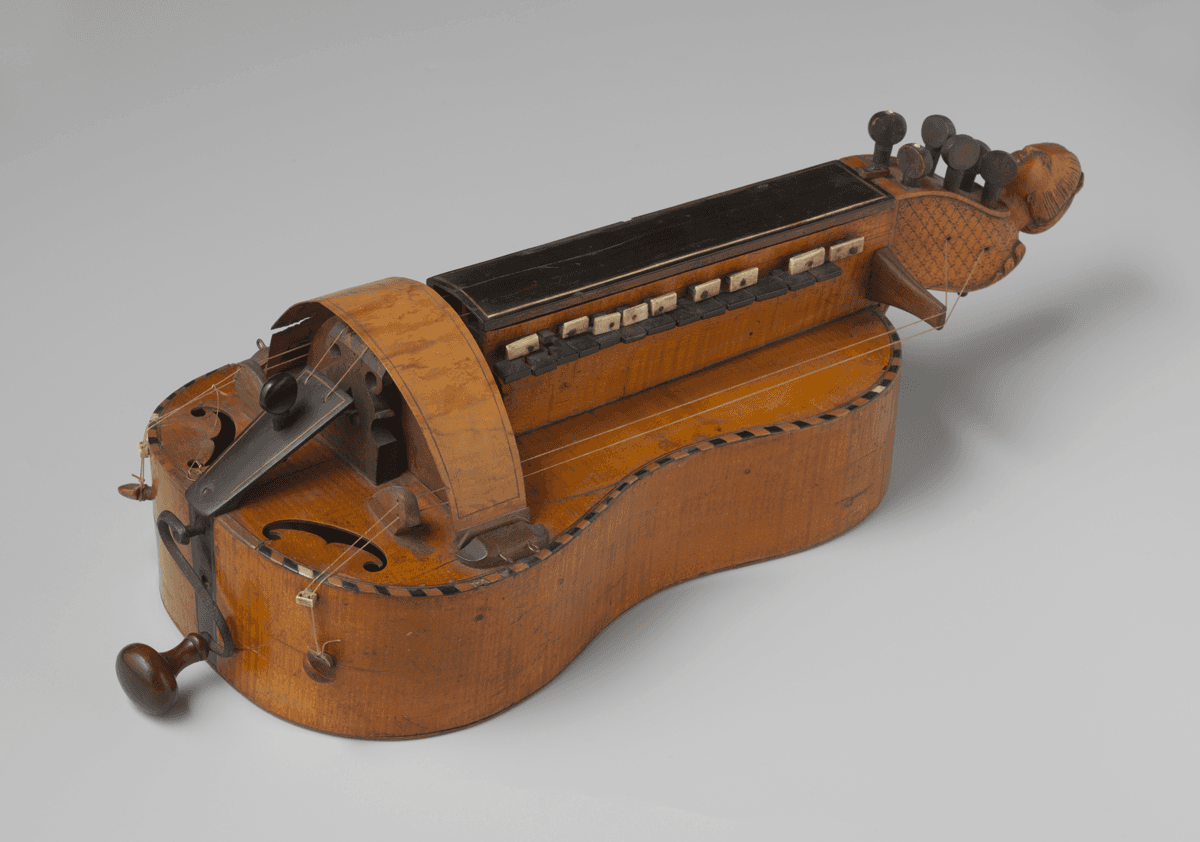
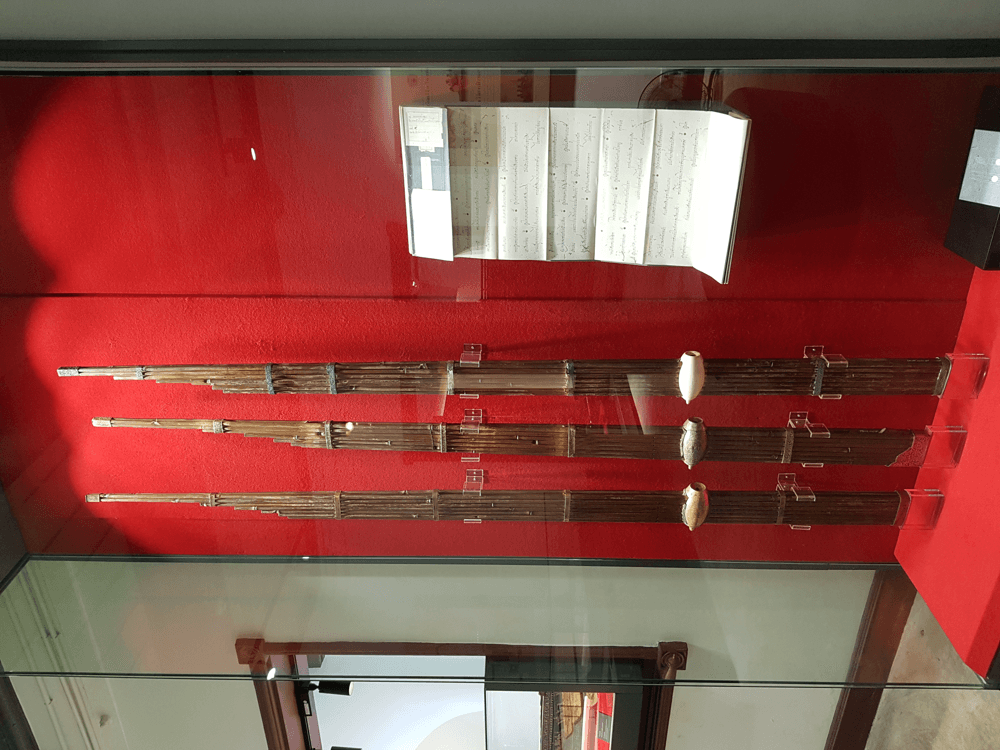
A bagpipe is a reed instrument with a clever addition: a bag of air between your breath and the reeds. Each pipe is voiced by a reed — here a single 'beating' reed, a thin tongue cut in the cane that springs almost shut and then slaps rapidly against its own slot as air rushes past, chopping the airflow into a buzzing tone that the pipe's air column shapes into a note. A clarinet works the very same way; oboes and many real bagpipes use a double reed, two tongues beating against each other. Note that this is different from the FREE reed of the sheng and khaen, whose tongue swings cleanly THROUGH its slot; a beating reed slaps the slot shut. On its own a reed pipe stops the instant you pause to breathe — so the bag fixes that: you blow it full through a one-way blowpipe, then squeeze it with your arm to push a steady stream of air through all the reeds at once, and you can breathe in without the music ever stopping. That is also why bagpipes always have DRONES: extra pipes with reeds but no finger holes, each locked to one endless note, humming under the chanter's melody — the same constant-drone idea as the hurdy-gurdy's turning wheel. The chanter is the melody pipe, its finger holes shortening the air column to change the note like any flute or recorder. Bagpipes are ancient and worldwide: the Scottish Great Highland pipes, the bellows-blown Irish uilleann pipes, the Spanish gaita, the French musette, and pipes across the Middle East and India — everywhere, the same union of a reed, a bag and a drone.
Materiales
4- 1 piezaMarcador de posición
- 1 piezaMarcador de posición
- 1 piezaMarcador de posición
- 1 piezaMarcador de posición
Herramientas requeridas
2- Marcador de posición
- Marcador de posición
Este plano hace
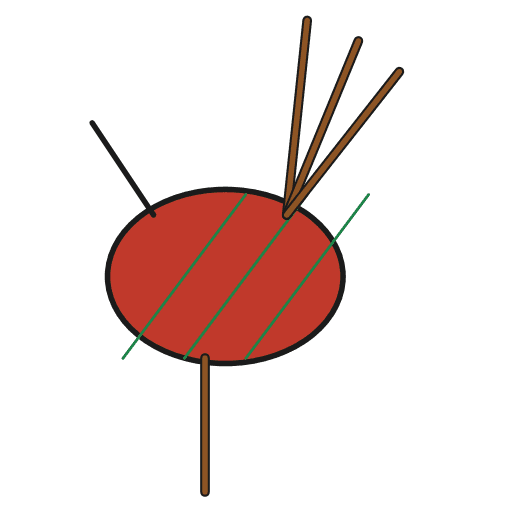
Blueprints relacionados
Estos blueprints comparten conocimiento — técnicas, materiales o principios
CC0 Dominio público
Este Blueprint se publica bajo CC0. Eres libre de copiar, modificar, distribuir y usar este trabajo para cualquier propósito, sin pedir permiso.
Apoya al Maker comprando productos a través de su Blueprint, donde gana una Comisión del Maker establecida por los vendedores, o crea una nueva iteración de este Blueprint e inclúyela como conexión en tu propio Blueprint para compartir ingresos.