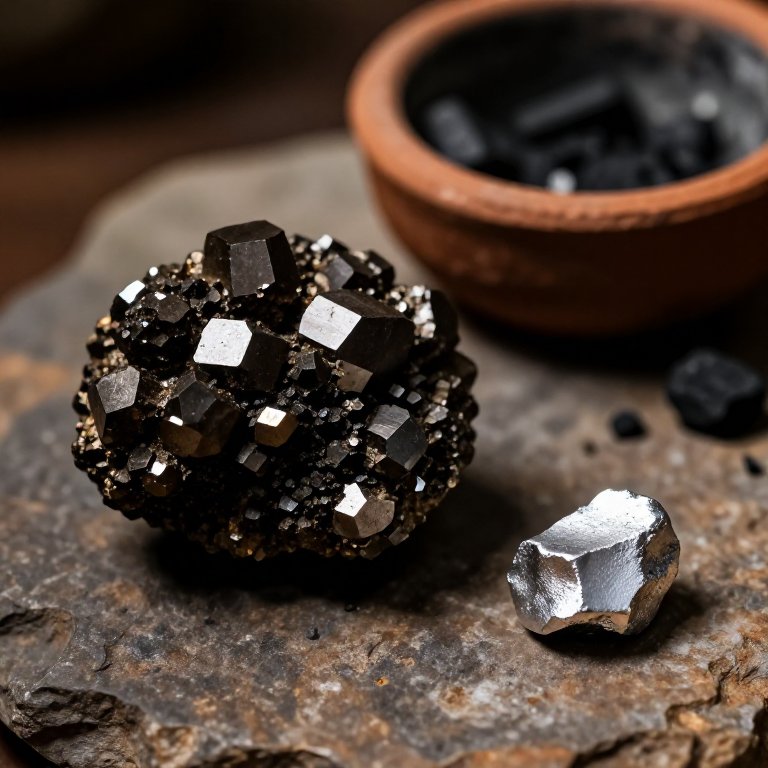


Extracting Tin from Cassiterite — The Missing Ingredient
Instrucciones
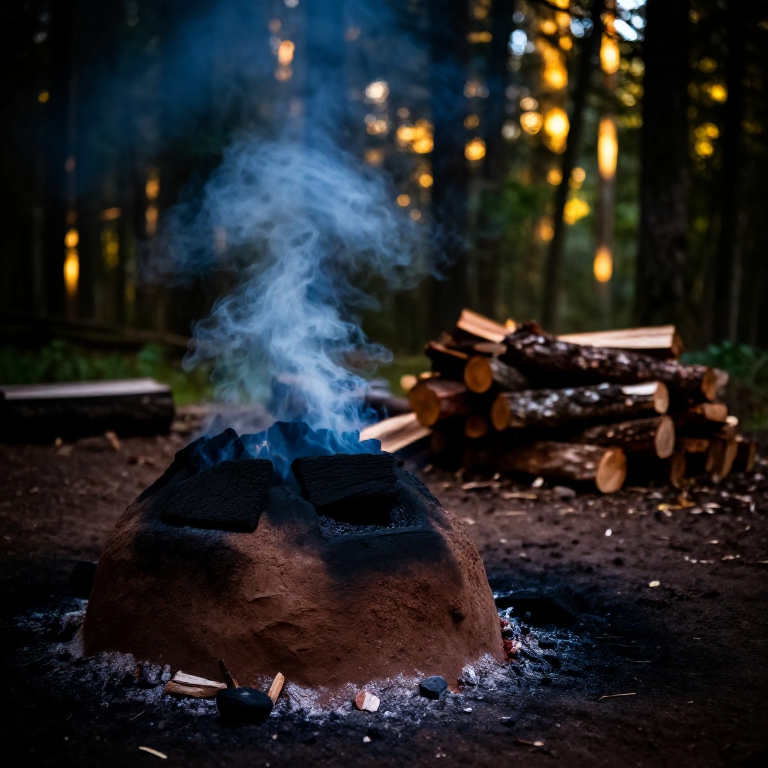
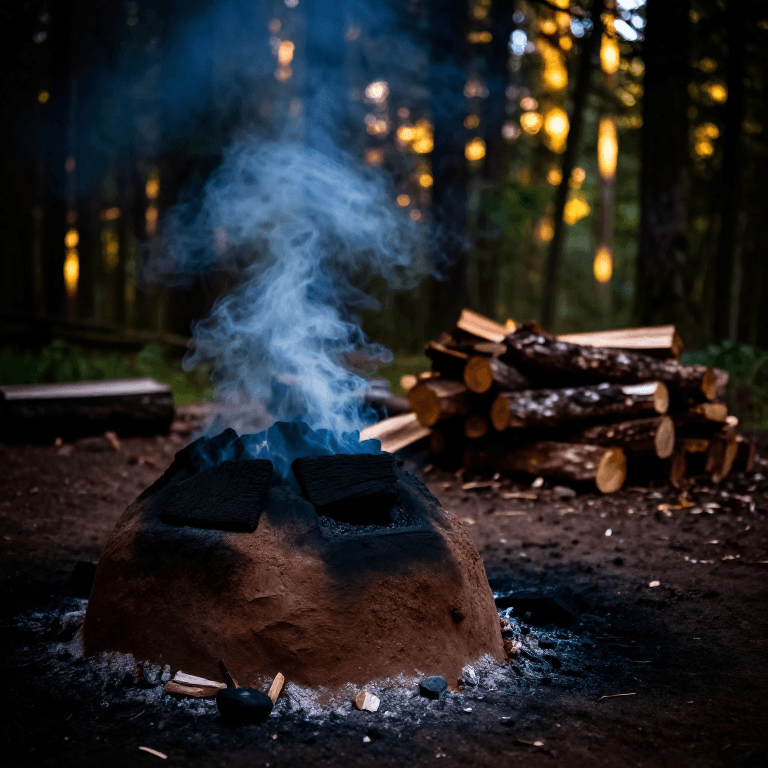
Prerequisite: Making Charcoal
Prerequisite: Making Charcoal
You need charcoal for tin smelting fuel.
Blueprint prerrequisito
Making Charcoal — The First Chemical Process
Materiales para este paso:
 Carbón activado en polvo8 kg
 Estaño1 referencia
Herramientas necesarias:
 Horno cerámico
 Fuelle
 Tenazas de fragua
 Martillo de piedra (triturado de mena)
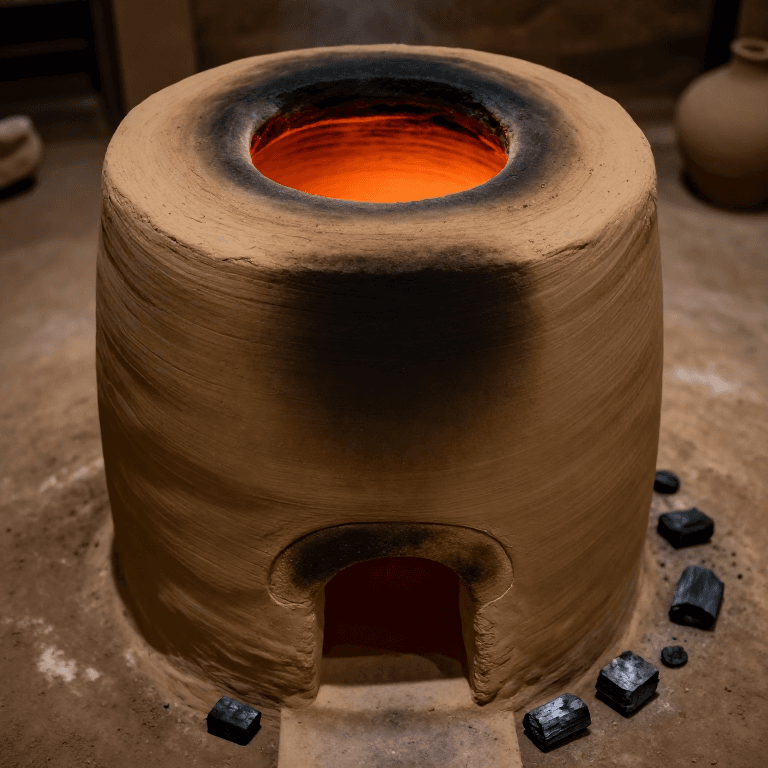
Prerequisite: Building a Clay Kiln
Prerequisite: Building a Clay Kiln
You need a kiln for the tin smelting process.
Blueprint prerrequisito
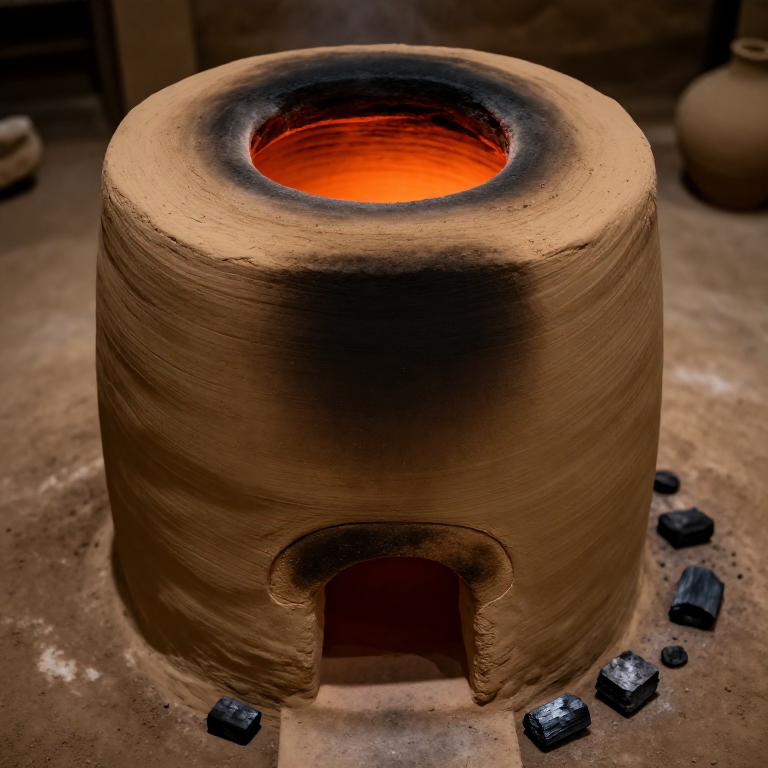
Building a Clay Kiln — The First Furnace
Materiales para este paso:
Estaño1 referenciaThe Chemistry of Tin Reduction
The Chemistry of Tin Reduction
The Reaction
SnO₂ + 2C → Sn + 2CO₂ (at ~900°C)
Carbon from charcoal reduces tin oxide to metallic tin. This is chemically simpler than copper smelting — cassiterite is a simple binary oxide.
Why It's Easy to Smelt
- Reduction temperature: ~900°C (well within kiln range)
- Tin melts at only 232°C — it liquefies immediately upon reduction
- Tin is dense (7.3 g/cm³) — it separates cleanly from slag by gravity
- Unlike copper, tin doesn't readily re-oxidize at smelting temperatures
Ore Preparation
- Crush cassiterite to coarse sand (2-5mm). Tin oxide is extremely hard — this takes effort.
- Wash crushed ore in a stream or pan (like gold panning). Cassiterite is heavy (density 6.8-7.1) — it concentrates just like gold.
- Ancient tin miners used streaming — washing alluvial deposits in wooden troughs to separate heavy cassiterite from lighter sand.
Materiales para este paso:
Carbón activado en polvo8 kg Mineral de casiterita (SnO₂)1 kgEstaño1 referencia
Smelting
Smelting
Kiln Setup
- Bring kiln to full temperature with charcoal and bellows (~1000°C).
- Pre-heat crucible in the kiln for 10 minutes.
- Layer in the crucible: charcoal → crushed cassiterite → charcoal → cassiterite → charcoal (like a sandwich).
- The charcoal layers ensure intimate contact between carbon and ore for efficient reduction.
The Smelt
- Maintain bellows operation for 1-2 hours. Tin smelts faster than copper.
- Watch for tin droplets collecting at the bottom of the crucible — they're bright and silvery.
- Add more charcoal to the kiln as needed to maintain temperature.
- After 2 hours, the reduction should be complete.
Recovery
- Carefully remove the crucible. The tin has pooled at the bottom under a layer of slag.
- Pour the contents onto a flat stone. The heavy tin will run out first, followed by lighter slag.
- Alternatively, let it cool in the crucible and break the slag off the solidified tin button.
Yield
Cassiterite is ~78.8% tin by weight. Expect 60-75% recovery with primitive methods. 1kg ore → 450-600g tin.
Materiales para este paso:
Carbón activado en polvo8 kgMineral de casiterita (SnO₂)1 kgEstaño1 referenciaProperties and What's Next
Properties and What's Next
Identifying Your Tin
- Appearance: Bright silvery-white, with a slight bluish tint
- Sound: Bending a tin bar produces a distinctive "tin cry" — a crackling sound caused by crystal twinning
- Softness: Very soft — easily scratched with a fingernail
- Melting: Melts easily over a campfire (232°C)
Why Tin Alone Isn't Useful
Pure tin is too soft for tools. It bends easily and has poor edge retention. But when you add just 10-12% tin to copper, something remarkable happens — the resulting alloy (bronze) is harder than either metal alone, casts better, and holds a sharper edge than pure copper.
This discovery — that mixing two soft metals creates a hard alloy — was the insight that launched the Bronze Age. See Blueprint 07: Alloying Bronze.
Materiales para este paso:
Estaño1 referenciaMateriales
4- Marcador de posición
- Marcador de posición
- 1 referenciaMarcador de posición
- Marcador de posición
Herramientas requeridas
4- Marcador de posición
- Marcador de posición
- Marcador de posición
- Marcador de posición
Materiales de Blueprints conectados

CC0 Dominio público
Este Blueprint se publica bajo CC0. Eres libre de copiar, modificar, distribuir y usar este trabajo para cualquier propósito, sin pedir permiso.
Apoya al Maker comprando productos a través de su Blueprint, donde gana una Comisión del Maker establecida por los vendedores, o crea una nueva iteración de este Blueprint e inclúyela como conexión en tu propio Blueprint para compartir ingresos.