
กรีดยางพารา — การเก็บน้ำยางธรรมชาติจากต้นยางพารา
คู่มือการกรีดยางพาราและการเก็บน้ำยางธรรมชาติอย่างละเอียด ประเทศไทยเป็นผู้ผลิตยางธรรมชาติรายใหญ่ที่สุดของโลก ผลิตประมาณ 4.5-5 ล้านตันต่อปี (ประมาณ 35% ของผลผลิตโลก) ต้นยางพารา (Hevea brasiliensis) มีถิ่นกำเนิดในลุ่มน้ำอเมซอน แต่ปัจจุบันปลูกอย่างแพร่หลายในเอเชียตะวันออกเฉียงใต้ น้ำยาง (latex) คือน้ำเลี้ยงสีขาวขุ่นที่มีอนุภาคยาง (cis-1,4-polyisoprene) ประมาณ 30-40% แขวนลอยในน้ำ คู่มือนี้ครอบคลุมตั้งแต่การทำความเข้าใจชีววิทยาของต้นยาง การเลือกต้นที่พร้อมกรีด การกรีดแบบครึ่งลำต้น การเก็บน้ำยาง การจับตัว (coagulation) ด้วยกรดฟอร์มิก การรีดเป็นแผ่น การอบแห้งหรือรมควัน และการจัดเกรดตามมาตรฐาน RSS (Ribbed Smoked Sheet)
Instrucciones
ทำความเข้าใจชีววิทยาของต้นยางพารา
ทำความเข้าใจชีววิทยาของต้นยางพารา
ต้นยางพารา (Hevea brasiliensis) เป็นไม้ยืนต้นในวงศ์ Euphorbiaceae มีถิ่นกำเนิดในป่าฝนอเมซอน ต้นยางสูงได้ถึง 25-30 เมตร มีอายุการให้ผลผลิตน้ำยาง 25-30 ปี น้ำยาง (latex) ผลิตในท่อน้ำยาง (laticifer vessels) ที่อยู่ในเปลือกชั้นใน น้ำยางประกอบด้วยอนุภาคยาง (cis-1,4-polyisoprene) 30-40% แขวนลอยในน้ำ พร้อมกับโปรตีน น้ำตาล เกลือแร่ และลิปิด น้ำยางมีหน้าที่ปกป้องต้นไม้จากแมลงและเชื้อโรค เมื่อเปลือกถูกตัด น้ำยางจะไหลออกและจับตัวเป็นก้อนปิดแผล
เลือกต้นยางที่พร้อมกรีด
เลือกต้นยางที่พร้อมกรีด
ต้นยางพาราเริ่มกรีดได้เมื่ออายุ 5-7 ปี เมื่อเส้นรอบวงลำต้นที่ระดับ 150 ซม. จากพื้นดินมีขนาดไม่น้อยกว่า 50 ซม. (ประมาณ 16 ซม. เส้นผ่านศูนย์กลาง) วัดเส้นรอบวงด้วยสายวัดที่ระดับ 150 ซม. จากพื้น ต้นที่เปลือกหนาพอจะทนต่อการกรีดซ้ำได้โดยไม่ทำลายเนื้อไม้ ต้นยางที่เล็กเกินไปจะให้น้ำยางน้อยและเสี่ยงต่อความเสียหายถาวร สวนยางในภาคใต้ของไทย (สุราษฎร์ธานี นครศรีธรรมราช สงขลา ตรัง) เป็นพื้นที่ปลูกยางหลักของประเทศ
Herramientas necesarias:
 Cinta métrica forestal
เตรียมมีดกรีดยาง
เตรียมมีดกรีดยาง
มีดกรีดยาง (มีดกรีดยาง/tapping knife) เป็นเครื่องมือเฉพาะทาง มีใบมีดโค้งสั้นที่ออกแบบมาเพื่อตัดเปลือกได้ตื้นและสม่ำเสมอ ใบมีดต้องคมเสมอ — มีดทื่อทำให้แผลกรีดไม่เรียบ เปลือกฉีกขาด และต้นยางเสียหาย ลับมีดด้วยหินลับมีดก่อนออกกรีดทุกครั้ง ตรวจสอบด้ามจับให้แน่นหนา มีดกรีดยางแบบไทยมักมีที่กันลึก (depth guard) เพื่อป้องกันการตัดลึกเกินไปจนถึงเนื้อไม้ (cambium)
Herramientas necesarias:
 Cuchilla de sangrar caucho
 Piedra de afilar
กรีดรอยเฉือนเกลียว
กรีดรอยเฉือนเกลียว
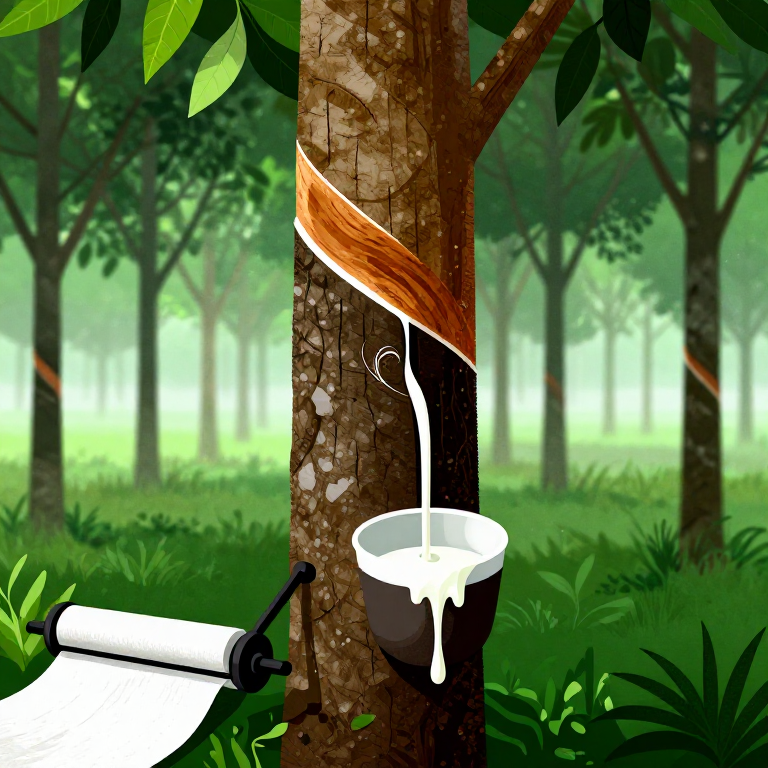
รอยกรีดมาตรฐานคือครึ่งรอบลำต้น (half-spiral) ทำมุม 30 องศาจากแนวนอน เอียงจากซ้ายบนลงไปขวาล่าง (สำหรับคนถนัดขวา) เริ่มกรีดที่ระดับ 150 ซม. จากพื้นดิน ตัดเปลือกชั้นนอกลึกประมาณ 1.5-2 มม. เพื่อเปิดท่อน้ำยาง (laticifer vessels) ห้ามตัดลึกถึงเนื้อไม้ (cambium) เพราะจะทำให้ต้นเสียหายถาวรและเปลือกไม่งอกใหม่ มุม 30 องศาสำคัญเพราะท่อน้ำยางเรียงตัวเอียงจากขวาไปซ้าย — การกรีดมุมนี้ตัดผ่านท่อน้ำยางได้มากที่สุด แต่ละครั้งที่กรีด จะเฉือนเปลือกบางๆ ออก (shaving) เพื่อเปิดท่อน้ำยางใหม่
Herramientas necesarias:
Cuchilla de sangrar cauchoติดตั้งรางน้ำยางและถ้วยรองรับ
ติดตั้งรางน้ำยางและถ้วยรองรับ
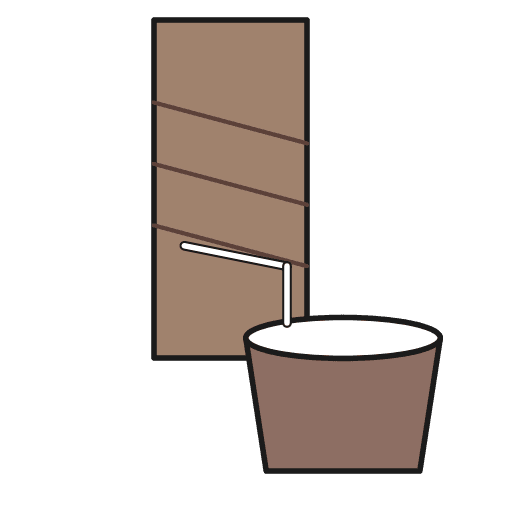
ที่ปลายล่างสุดของรอยกรีด (ด้านขวาล่าง) ติดตั้งรางน้ำยาง (spout) แบบโลหะหรือพลาสติก ปักเข้าไปในเปลือกเพื่อนำทางน้ำยางไหลลงถ้วย แขวนถ้วยรองรับน้ำยาง (latex cup) ไว้ใต้รางด้วยลวดยึดกับลำต้น ถ้วยควรสะอาดและแห้ง — น้ำยางที่ปนเปื้อนจะจับตัวเร็วก่อนเวลาอันควร ถ้วยขนาด 300-500 มล. เพียงพอสำหรับน้ำยางจากการกรีดหนึ่งครั้ง
Materiales para este paso:
 Taza de recogida de látex1 pieza
Herramientas necesarias:
 Soporte de alambre para vaso
 Canaleta de metal
เติมสารกันจับตัว
เติมสารกันจับตัว
ก่อนกรีด ใส่สารกันจับตัว (anti-coagulant) ลงในถ้วยรองรับ สารที่ใช้คือสารละลายแอมโมเนีย (ammonia solution) หรือสารละลายโซเดียมซัลไฟต์ (sodium sulfite) ปริมาณ 2-5 มล. ต่อถ้วย สารนี้จะป้องกันไม่ให้น้ำยางจับตัวเป็นก้อนในถ้วยก่อนที่จะเก็บ หากไม่ใส่สารกันจับตัว น้ำยางจะเริ่มจับตัวภายใน 2-4 ชั่วโมงหลังไหลออกจากต้น สวนยางขนาดใหญ่จะเตรียมสารละลายแอมโมเนียไว้ในขวดฉีดเพื่อความสะดวก
Materiales para este paso:
 Disolución de amoníaco diluida5 ml per cup
Herramientas necesarias:
 Frasco cuentagotas de vidrio (ámbar)
กรีดยางในรอบเช้ามืด
กรีดยางในรอบเช้ามืด
การกรีดยางทำในช่วงเช้ามืด ตั้งแต่ตี 2 ถึงตี 4 เนื่องจากช่วงนี้แรงดันเต่ง (turgor pressure) ในต้นยางสูงที่สุด ทำให้น้ำยางไหลมากกว่าช่วงกลางวัน ใช้ไฟฉายคาดหัวเพื่อส่องสว่างขณะกรีด กรีดโดยเฉือนเปลือกบางๆ (ประมาณ 1.5-2 มม.) ตามรอยกรีดเดิม น้ำยางจะเริ่มไหลทันทีหลังกรีด — หยดสีขาวขุ่นจะไหลตามรอยเฉือนลงสู่รางและถ้วย ชาวสวนยางที่ชำนาญกรีดได้ 400-600 ต้นต่อรอบ กรีดทุก 2-3 วัน (ไม่กรีดทุกวัน) เพื่อให้เปลือกมีเวลางอกใหม่
Herramientas necesarias:
 Linterna frontalCuchilla de sangrar caucho
เก็บน้ำยาง
เก็บน้ำยาง
น้ำยางจะไหลต่อเนื่อง 2-4 ชั่วโมงหลังกรีด จากนั้นจะหยุดไหลเนื่องจากน้ำยางจับตัวปิดแผล กลับมาเก็บน้ำยางจากถ้วยในช่วงเช้า (6-9 โมง) เทน้ำยางจากถ้วยลงถังรวม (latex bucket) ต้นยางหนึ่งต้นให้น้ำยางประมาณ 30-50 มล. ต่อการกรีดหนึ่งครั้ง (ประมาณ 10-15 กรัมยางแห้ง) เก็บยางก้นถ้วย (cup lump) ที่จับตัวเกาะถ้วยแยกต่างหาก — ยางก้นถ้วยมีคุณภาพต่ำกว่าน้ำยางสด ล้างถ้วยให้สะอาดเพื่อใช้ในรอบถัดไป
Herramientas necesarias:
 Cubo de recogida de látex
กรองน้ำยาง
กรองน้ำยาง
น้ำยางที่เก็บมาอาจมีสิ่งเจือปน เช่น เศษเปลือกไม้ ใบไม้ แมลง หรือฝุ่น กรองน้ำยางผ่านตะแกรงสแตนเลส (40-60 mesh) หรือผ้ากรอง เทน้ำยางลงในถังรวมที่สะอาด น้ำยางที่กรองแล้วจะสะอาด สีขาวขุ่นสม่ำเสมอ ไม่มีก้อนหรือสิ่งเจือปน น้ำยางที่สะอาดจะให้แผ่นยางคุณภาพสูงเมื่อจับตัว
Herramientas necesarias:
 Colador de acero inoxidable
จับตัวน้ำยางด้วยกรดฟอร์มิก
จับตัวน้ำยางด้วยกรดฟอร์มิก
เทน้ำยางที่กรองแล้วลงในถาดจับตัว (coagulation tray) — ถาดสี่เหลี่ยมอะลูมิเนียมหรือสแตนเลส เติมกรดฟอร์มิก (formic acid) เข้มข้น 1-2% ในอัตราส่วน 5-10 มล. ต่อน้ำยาง 1 ลิตร คนให้เข้ากันแล้วปล่อยทิ้งไว้ 4-8 ชั่วโมง (หรือค้างคืน) กรดฟอร์มิกจะทำลายสถานะแขวนลอยของอนุภาคยาง ทำให้อนุภาคยางรวมตัวเป็นก้อนขาว (rubber curds) แยกตัวออกจากน้ำเซรุ่ม (serum) ห้ามใช้กรดเข้มข้นเกินไปเพราะจะทำให้ยางสีเข้มและคุณภาพลดลง
Materiales para este paso:
 Látex filtrado10 litros
Herramientas necesarias:
 Bandeja de coagulación
 Varilla agitadora
 Ácido fórmico en solución al 1-2 %
รีดยางผ่านลูกกลิ้ง
รีดยางผ่านลูกกลิ้ง
ก้อนยางที่จับตัวแล้ว (coagulum) นำมารีดผ่านเครื่องรีดยาง (sheeting roller) เครื่องรีดมีลูกกลิ้ง 2 ลูกหมุนสวนทางกัน ลูกกลิ้งชุดสุดท้ายมีลายร่อง (ribbed) เพื่อสร้างลวดลายบนแผ่นยาง ทำให้พื้นที่ผิวเพิ่มขึ้นสำหรับการอบแห้ง รีดซ้ำ 3-5 ครั้ง ค่อยๆ ลดระยะห่างระหว่างลูกกลิ้งเพื่อให้แผ่นยางบางลง (ประมาณ 3-4 มม.) แผ่นยางที่รีดแล้วจะเป็นสีขาวอมเหลือง ยืดหยุ่น มีลายร่องสม่ำเสมอ ล้างแผ่นยางด้วยน้ำสะอาดเพื่อขจัดกรดที่เหลือ
Materiales para este paso:
 Agua limpia (para aclarar)20 litros
Herramientas necesarias:
 Laminadora de caucho
อบแห้งหรือรมควันแผ่นยาง
อบแห้งหรือรมควันแผ่นยาง
แผ่นยางที่รีดแล้วนำไปตากผึ่งลมในร่มเงา 1-2 วันก่อน จากนั้นนำเข้าโรงรมควัน (smokehouse) รมควันที่อุณหภูมิ 40-60 องศาเซลเซียส เป็นเวลา 4-7 วัน ควันจากไม้ (ไม้ยางพาราเก่าหรือไม้อื่น) ทำหน้าที่ฆ่าเชื้อรา แบคทีเรีย และให้สีน้ำตาลอำพันแก่แผ่นยาง แผ่นยางรมควัน (Ribbed Smoked Sheet - RSS) เป็นรูปแบบยางธรรมชาติที่ซื้อขายมากที่สุดในโลก ทางเลือก: ตากแดดหรือตากลมจนแห้ง (air-dried sheet) แต่คุณภาพต่ำกว่าแผ่นรมควัน
Materiales para este paso:
 Leña10 kg
Herramientas necesarias:
 Ahumadero
 Escurreplatos
จัดเกรดคุณภาพ
จัดเกรดคุณภาพ
แผ่นยางรมควันจัดเกรดตามมาตรฐาน RSS (Ribbed Smoked Sheet) ที่กำหนดโดย International Rubber Quality and Packing Conference โดยตรวจสอบด้วยตาเปล่าและแสงส่องผ่าน เกรด RSS1 คือคุณภาพสูงสุด: สีอำพันอ่อนสม่ำเสมอ ไม่มีฟองอากาศ ไม่มีจุดด่าง ไม่มีสิ่งเจือปน ยืดหยุ่นดี เกรด RSS2-RSS3 อนุญาตให้มีจุดด่างเล็กน้อยหรือสีเข้มขึ้น เกรด RSS4-RSS5 มีคุณภาพต่ำกว่า มีจุดดำ ฟองอากาศ หรือสิ่งเจือปน ราคายางแตกต่างกันมากตามเกรด — RSS1 ราคาสูงที่สุด
Herramientas necesarias:
 Caja de luz
จัดเก็บและเตรียมจำหน่าย
จัดเก็บและเตรียมจำหน่าย
แผ่นยางที่จัดเกรดแล้ว มัดรวมเป็นก้อน (bale) ก้อนละ 100-113 กก. ตามมาตรฐานสากล ห่อด้วยแผ่นยางเกรดเดียวกันเพื่อป้องกันการเปื้อน จัดเก็บในโรงเก็บที่แห้ง อากาศถ่ายเทดี ไม่ถูกแสงแดดโดยตรง ความชื้นสูงทำให้ยางขึ้นรา ยางธรรมชาติจากไทยส่งออกไปยังจีน ญี่ปุ่น สหรัฐอเมริกา และยุโรปเป็นหลัก ใช้ในการผลิตยางรถยนต์ ถุงมือยาง ยางยืด และผลิตภัณฑ์ยางอื่นๆ ต้นยางหนึ่งต้นให้ผลผลิตได้ 25-30 ปี โดยเปลือกจะงอกใหม่ให้กรีดครั้งต่อไปทุก 2-3 วัน
Herramientas necesarias:
 Prensa empacadora
 Báscula
Materiales
6- 1 piezaMarcador de posición
- 5 ml per cupMarcador de posición
- 10 litrosMarcador de posición
- 20 litrosMarcador de posición
- 10 kgMarcador de posición
- 20 litrosMarcador de posición
Herramientas requeridas
18- Marcador de posición
- Marcador de posición
- Marcador de posición
- Marcador de posición
- Marcador de posición
- Marcador de posición
- Marcador de posición
- Marcador de posición
- Marcador de posición
- Marcador de posición
- Marcador de posición
- Marcador de posición
- Marcador de posición
- Marcador de posición
- Marcador de posición
- Marcador de posición
- Marcador de posición
- Marcador de posición
Este plano hace
CC0 Dominio público
Este Blueprint se publica bajo CC0. Eres libre de copiar, modificar, distribuir y usar este trabajo para cualquier propósito, sin pedir permiso.
Apoya al Maker comprando productos a través de su Blueprint, donde gana una Comisión del Maker establecida por los vendedores, o crea una nueva iteración de este Blueprint e inclúyela como conexión en tu propio Blueprint para compartir ingresos.