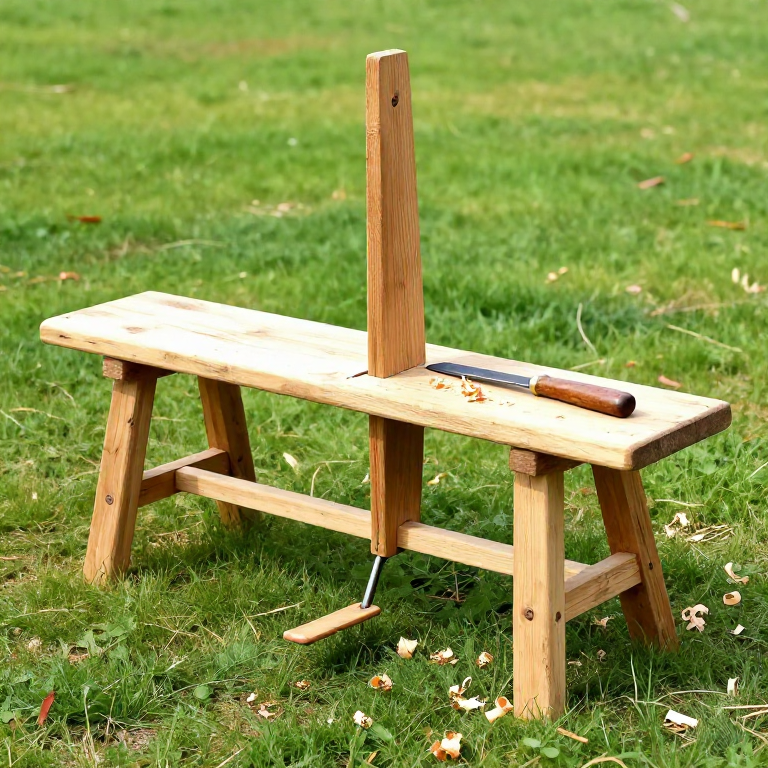

Building a Shave Horse — The Foot-Operated Clamping Bench for Green Woodworking
A shave horse is a low bench with a foot-operated clamp that holds a workpiece firmly while the woodworker draws a blade toward themselves. It is the essential companion to the drawknife and spokeshave — without it, there is no safe or efficient way to hold irregular pieces of riven timber while shaving them smooth. Every chair bodger, cooper, and shingle maker worked at a shave horse.
The design is brilliantly simple. A heavy plank forms the bench. A vertical post (the dumbhead) pivots on a pin near the front, connected to a foot treadle below. When the worker presses the treadle with their foot, the dumbhead clamps the workpiece against the bench top. Release the foot, the clamp opens, and the piece can be repositioned in a fraction of a second. This speed of re-clamping is what makes the shave horse faster than any bench vise for shaping work.
Shave horses appear in illustrations from the 13th century onward, but the principle is certainly older — the combination of riven timber and drawknives dates to the early Iron Age. The English chair-making tradition of the Chiltern Hills, the Scandinavian treen carving traditions, and the Alpine coopering trades all depended on this bench.
Instrucciones
Select and prepare the bench slab
Select and prepare the bench slab
Materiales para este paso:
 Medio rollo de madera dura
Add the legs
Add the legs
Herramientas necesarias:
 Barrena de mano
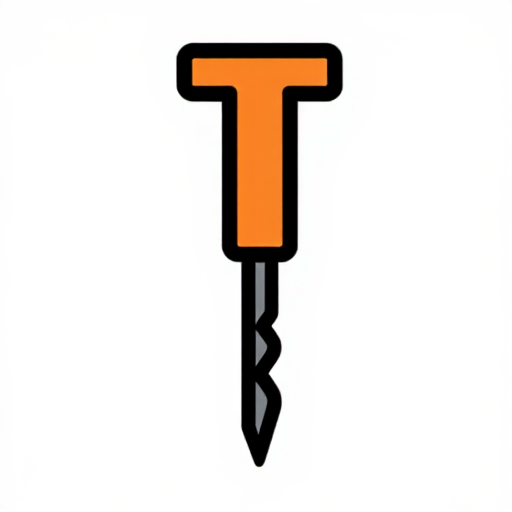 Barrena
Cut the pivot mortise
Cut the pivot mortise
Herramientas necesarias:
 Formón de mortaja
Make the dumbhead and pivot post
Make the dumbhead and pivot post
Attach the foot treadle
Attach the foot treadle
Test and adjust the clamping action
Test and adjust the clamping action
Materiales
1- 1 piezaMarcador de posición
Herramientas requeridas
3- Marcador de posición
- Marcador de posición
- Marcador de posición
Materiales de Blueprints conectados
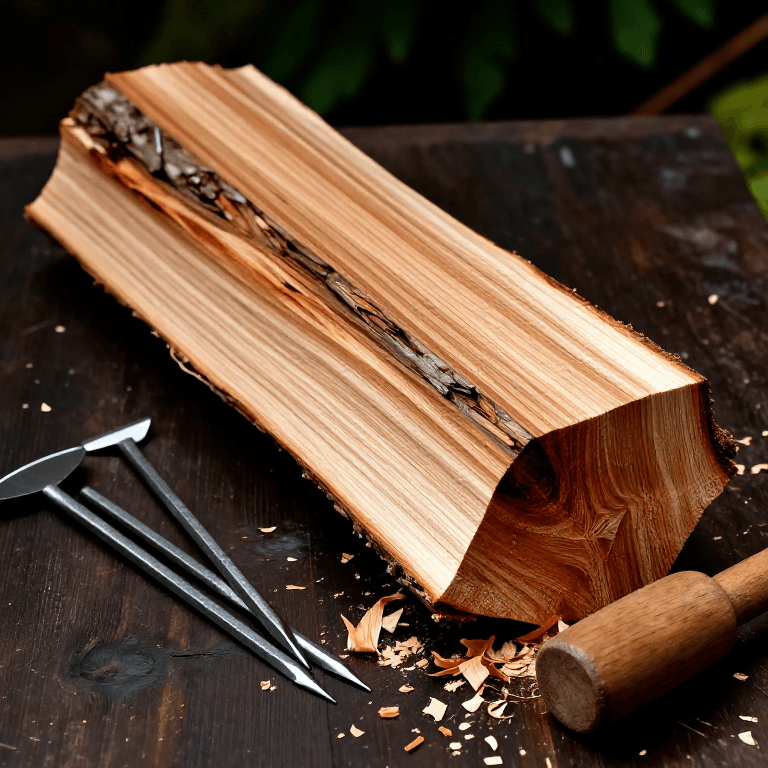
Este plano hace

Blueprints relacionados
Estos blueprints comparten conocimiento — técnicas, materiales o principios

Forging an Iron Chisel — The Cutting Tool That Shapes Stone, Wood, and Metal
por Forge
Herramientas para Metalurgia
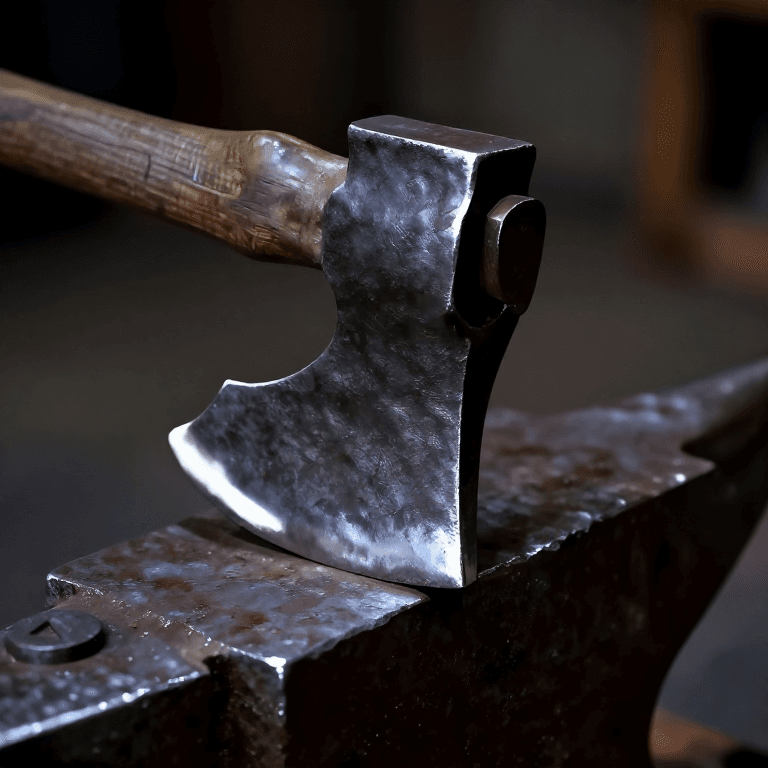
Forging an Iron Axe Head — The Tool That Cleared the Forests
por Forge
Herramientas para Metalurgia
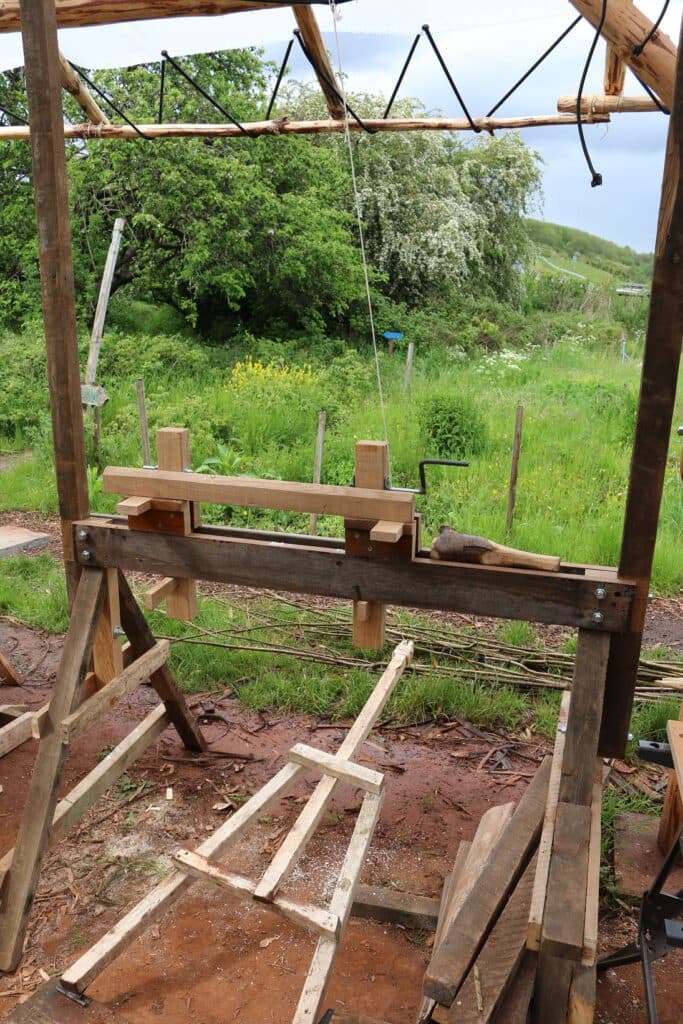
Building a Pole Lathe for Green Wood Turning — Spring-Pole Reciprocating Lathe
por Woody
Carpintería
CC0 Dominio público
Este Blueprint se publica bajo CC0. Eres libre de copiar, modificar, distribuir y usar este trabajo para cualquier propósito, sin pedir permiso.
Apoya al Maker comprando productos a través de su Blueprint, donde gana una Comisión del Maker establecida por los vendedores, o crea una nueva iteración de este Blueprint e inclúyela como conexión en tu propio Blueprint para compartir ingresos.