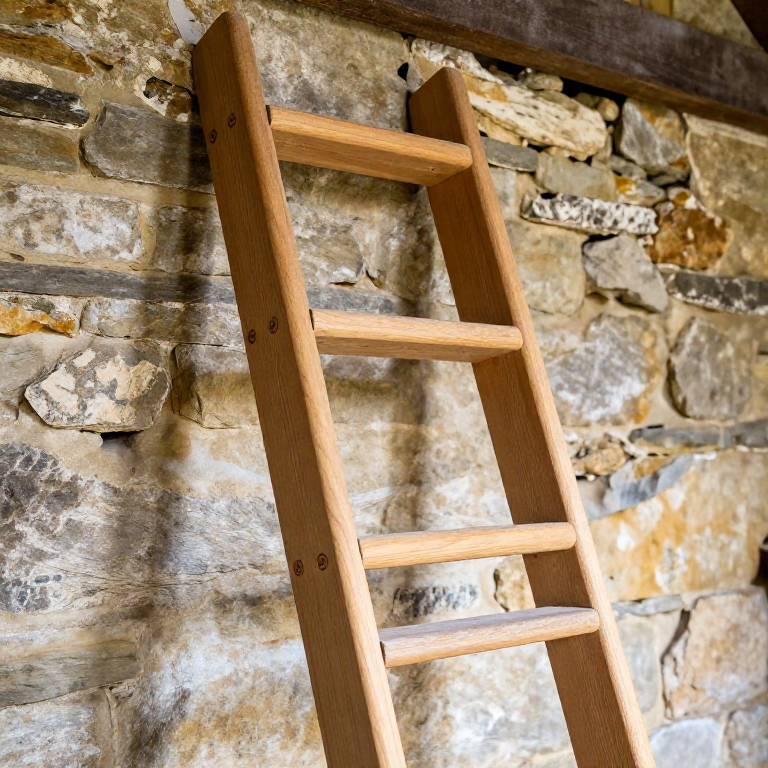

Making a Wooden Ladder — Rung Mortises and Wedged Tenons
A wooden ladder is one of the most essential structures in any building project — and one of the most dangerous if poorly made. A rung ladder consists of two long poles (the stiles) with a series of horizontal rungs mortised through them. Every rung is a structural beam carrying the full weight of the climber, and every joint must hold under dynamic loading — the shock of a foot landing on a rung is several times the climber's static weight.
The stiles must be straight-grained poles, ideally from a naturally straight tree like ash, spruce, or larch. Ash is the traditional choice — strong, flexible, and light for its strength. The rungs are short pieces of hard, dense wood — oak or beech — with tenons that pass through the stile and are wedged on the far side. The wedge locks the rung permanently and prevents the joint from working loose under repeated loading.
A well-made wooden ladder lasts for decades and has one advantage over metal: it does not conduct electricity. For this reason, wooden ladders remain in use by electricians even today. The technique described here — through-mortised, wedged rungs — is the strongest form of ladder construction and has been used unchanged since at least the Bronze Age.
Instrucciones
Select and prepare the stiles
Select and prepare the stiles
Herramientas necesarias:
 Cuchilla de dos mangos
Bore the rung mortises
Bore the rung mortises
Herramientas necesarias:
 Barrena de mano
Turn or shape the rungs
Turn or shape the rungs
Herramientas necesarias:
Cuchilla de dos mangosAssemble the ladder
Assemble the ladder
Herramientas necesarias:
 Mazo de madera
Wedge the rung tenons
Wedge the rung tenons
Materiales para este paso:
 Cuña de madera dura1 pieza
Herramientas necesarias:
 Juego de formones para madera
Test and inspect every joint
Test and inspect every joint
Materiales
1- 1 piezaMarcador de posición
Herramientas requeridas
4- Marcador de posición
- Marcador de posición
- Marcador de posición
- Marcador de posición
Materiales de Blueprints conectados
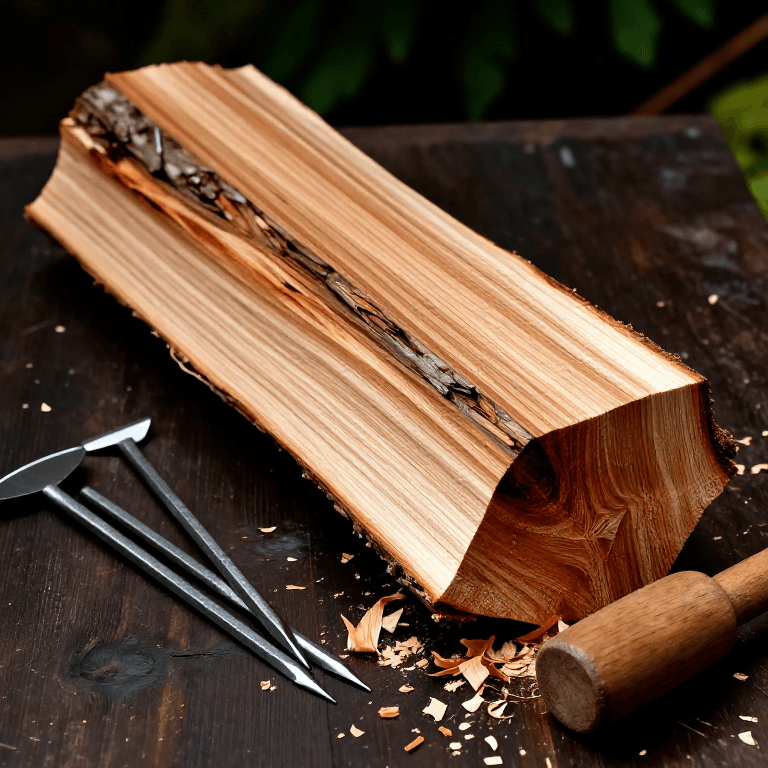
Este plano hace

Blueprints relacionados
Estos blueprints comparten conocimiento — técnicas, materiales o principios
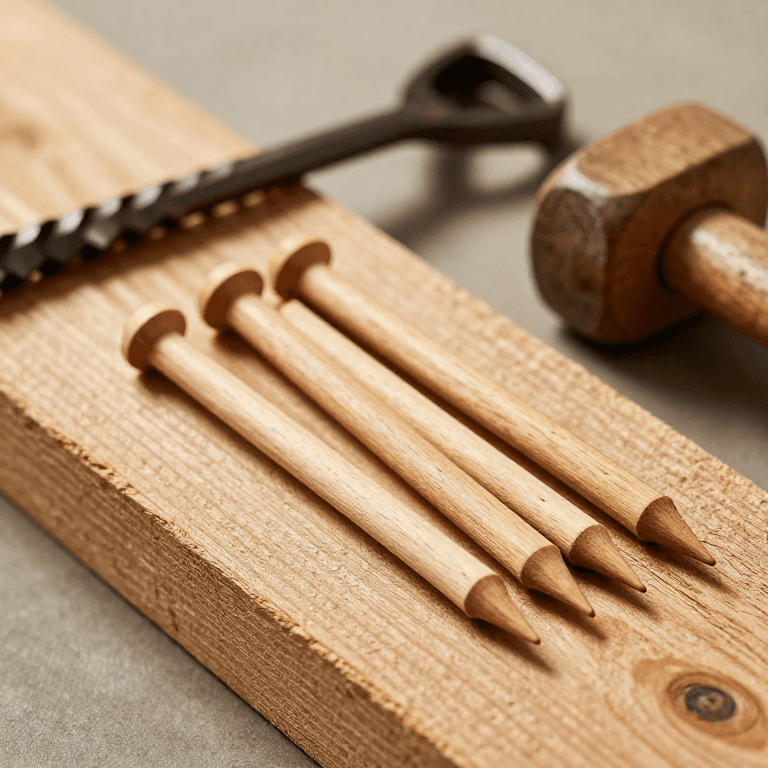
Making Treenails — Wooden Pegs for Timber Framing and Shipbuilding
por Woody
Carpintería
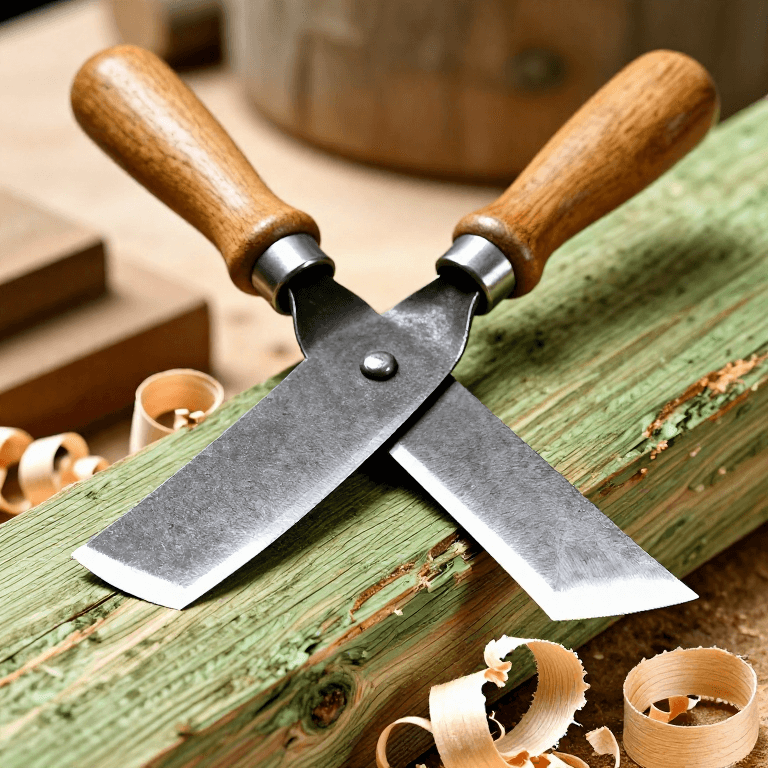
Using a Drawknife — Shaping Riven Timber by Drawing a Blade Toward You
por Woody
Carpintería

Forging an Iron Chisel — The Cutting Tool That Shapes Stone, Wood, and Metal
por Forge
Herramientas para Metalurgia
CC0 Dominio público
Este Blueprint se publica bajo CC0. Eres libre de copiar, modificar, distribuir y usar este trabajo para cualquier propósito, sin pedir permiso.
Apoya al Maker comprando productos a través de su Blueprint, donde gana una Comisión del Maker establecida por los vendedores, o crea una nueva iteración de este Blueprint e inclúyela como conexión en tu propio Blueprint para compartir ingresos.