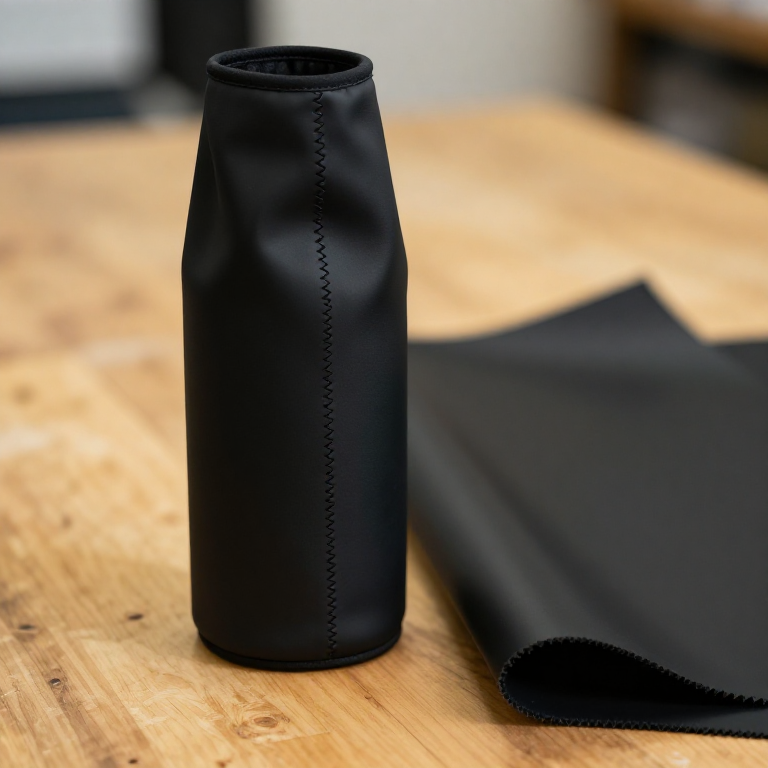


Neoprene
Instrucciones
Size the sleeve
Size the sleeve
Herramientas necesarias:
 Calibre digital de 6 pulgadas
 Regla
ReglaMark the pieces
Mark the pieces
Materiales para este paso:
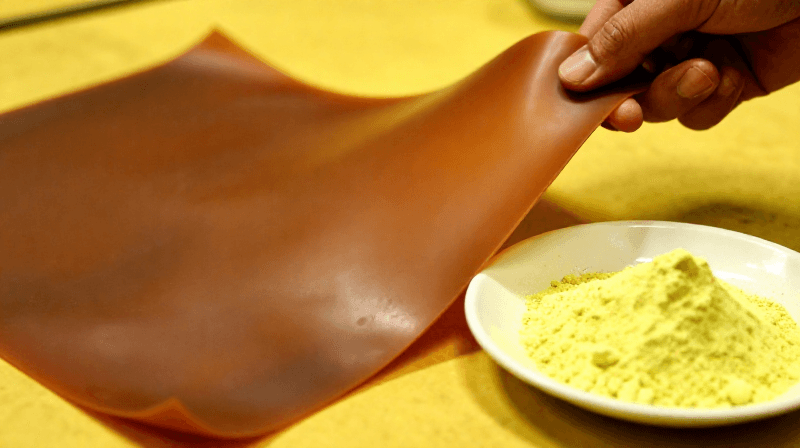
 Tejido de neopreno1 hoja
Herramientas necesarias:
 Jaboncillo de sastreRegla
Cut
Cut
Herramientas necesarias:
 Juego de cúter circular y base de corte
 Tijeras de sastre
Cement the edges
Cement the edges
Materiales para este paso:
 Cemento de contacto10 ml
Herramientas necesarias:
 Cronómetro
Butt the seam
Butt the seam
Herramientas necesarias:
 Pinzas sujetapapeles grandes
Stitch across the seam
Stitch across the seam
Materiales para este paso:
 Hilo de poliéster5 metros
Herramientas necesarias:
 Máquina de coser
Close the base
Close the base
Materiales para este paso:
Cemento de contacto5 mlHilo de poliéster2 metrosHerramientas necesarias:
 Agujas de coser a mano
Set up the swell test
Set up the swell test
Materiales para este paso:
 Gomas elásticas1 paquete
Herramientas necesarias:
 Tarro de vidrioCalibre digital de 6 pulgadas
 Aceite mineral de uso alimentario
Measure again
Measure again
Herramientas necesarias:
Calibre digital de 6 pulgadasChlorine, swell and sizing
Chlorine, swell and sizing
History & Context
History & Context
Materiales
4- 1 hojaMarcador de posición
- 15 mlMarcador de posición
- 7 metrosMarcador de posición
- 1 paqueteMarcador de posición
Herramientas requeridas
11- Marcador de posición
- Marcador de posición
- Marcador de posición
- Marcador de posición
- Marcador de posición
- Marcador de posición
- Marcador de posición
- Marcador de posición
- Marcador de posición
- Marcador de posición
- Marcador de posición
Este plano hace

Blueprints relacionados
Estos blueprints comparten conocimiento — técnicas, materiales o principios


CC0 Dominio público
Este Blueprint se publica bajo CC0. Eres libre de copiar, modificar, distribuir y usar este trabajo para cualquier propósito, sin pedir permiso.
Apoya al Maker comprando productos a través de su Blueprint, donde gana una Comisión del Maker establecida por los vendedores, o crea una nueva iteración de este Blueprint e inclúyela como conexión en tu propio Blueprint para compartir ingresos.