ARTE
BELLEZA Y BIENESTAR
ARTESANÍA
CULTURA E HISTORIA
ENTRETENIMIENTO
MEDIO AMBIENTE
COMIDA Y BEBIDAS
INGENIERÍA INVERSA
CIENCIAS
DEPORTES
TECNOLOGÍA
TECNOLOGÍA VESTIBLE
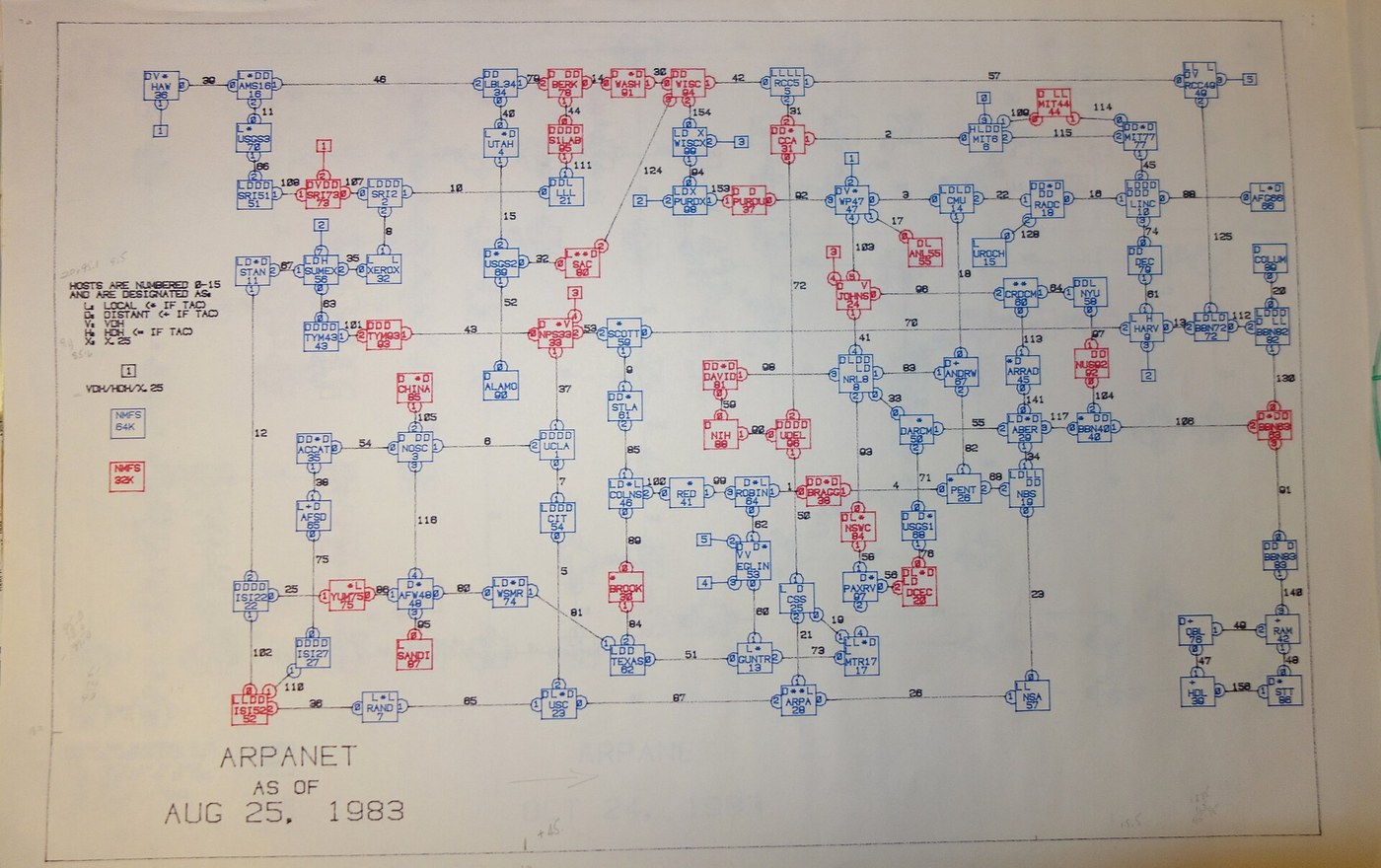


Packet Switching
Two people arrived at the same idea for opposite reasons, four thousand miles apart, and neither knew about the other.
Paul Baran at RAND, working from 1960 and publishing eleven volumes in 1964, was asked how a communications network could survive an attack. His answer was a mesh of ordinary nodes, each forwarding small standard blocks toward their destination using nothing but a local view, so that no node's death removed a path the others could not rediscover. Donald Davies at the National Physical Laboratory, from 1965, was solving something entirely mundane: time-sharing computers were being connected by leased circuits that sat idle over ninety percent of the time. He coined the word packet.
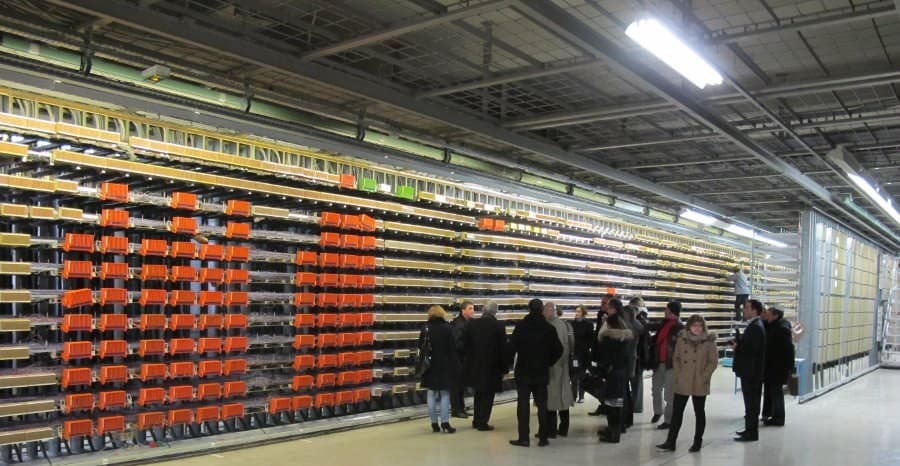
The idea is a rejection of the assumption underneath the previous blueprint and underneath the Strowger exchange this one links to. A circuit reserves a path and holds it — which is exactly right for a telephone call, where you talk half the time, and absurd for a terminal session, where you type for a moment and then read for a minute. Reserve for the average instead of the peak, accept that queues will sometimes form, and a hundred users fit where a circuit network fitted eleven.
The survivability and the economics are the same property seen from two sides. A packet network holds no per-conversation state in the middle, so there is nothing to lose when a node dies, and nothing to reserve when it lives.
MODELLED, WITH A PAPER EXERCISE. The arithmetic is the content and it runs in the notebook. The paper exercise — routing packets by hand across a five-node graph while somebody cuts a link — is where the idea becomes obvious, and it takes twenty minutes.
Intermedio
3 hours
Instrucciones
1
1
The thing it argues against
The thing it argues against
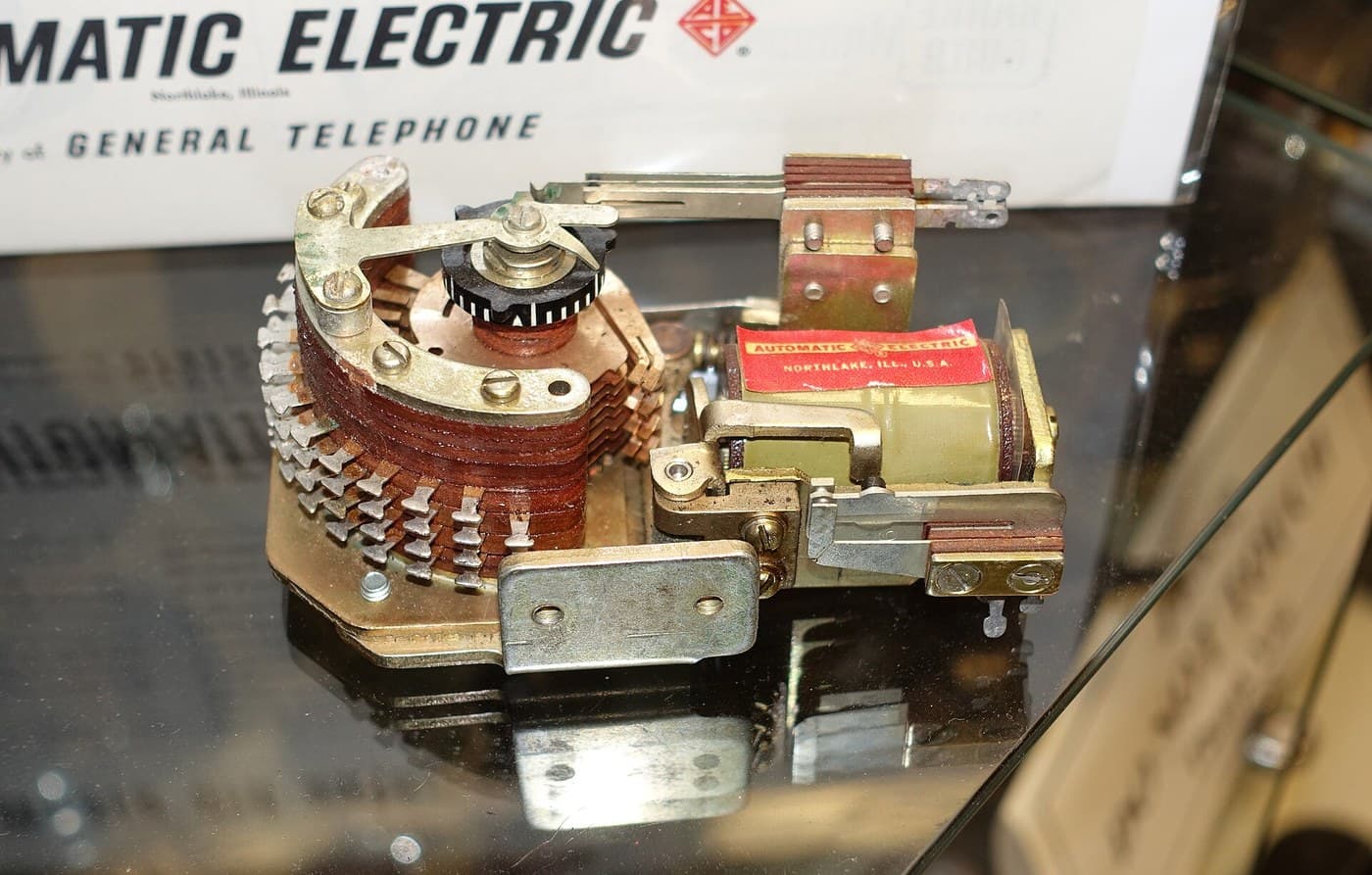
Read the Strowger blueprint first, because packet switching only makes sense as a rejection of it.
A Strowger switch builds a PHYSICAL PATH. Each dialled digit steps a selector, metal touches metal, and by the end there is a continuous circuit from one handset to the other which belongs to you until you hang up. Nobody else may use any part of it, whether you are speaking or not.
Two consequences follow, and both are structural. The network holds STATE for every conversation, distributed across every switch on the path — so when a switch fails, every call through it dies, and cannot be re-established without dialling again. And capacity is reserved for your silences.
Packet switching gives up the guarantee to escape both. Hold your judgement on whether that is a good trade until after step 2.
2
2
Route packets by hand, then cut a link
Route packets by hand, then cut a link
Draw five nodes, A to E, joined in a ring with two chords, so each has three neighbours. Give each node an index card listing, for every destination, which neighbour to hand a packet to. Work those out yourself — shortest hop count.
Now write a message on ten small slips of paper, numbered 1 to 10, each addressed to E. Hand them to A one at a time. Each player reads only their own card and passes the slip on. Time how long the whole message takes.
THEN, halfway through, cut a link — have one player refuse everything from one neighbour. The players either side must notice, update their own card, and route around it. Packets already in flight may loop or arrive out of order; let them, and note what arrives at E and in what sequence.
Two things will happen and both matter. The message gets through. And it arrives OUT OF ORDER, which is a problem this blueprint creates and blueprint 10 has to solve.
Materiales para este paso:
 Fichas de cartulina1 pieza
 Papel milimetrado1 hoja
Herramientas necesarias:
 Cronómetro
3
3
Circuit or packet
Circuit or packet
The decision tree, and it still has two right answers. Branch 1 is the one people skip: packet switching wins on BURSTY traffic and wins nothing at all at high duty cycle, which is why the telephone network stayed circuit-switched for thirty more years and was right to.
Branch 5 is the one that is not technical. Circuits are trivially billable — one call, one duration, one price — and packet networks are not. Baran offered his design to AT&T and was turned down; the objection was never that it would not work.
Flow
CIRCUIT OR PACKET? — the question this blueprint exists to answer, and it still
has two right answers. Work down.

1. IS THE TRAFFIC BURSTY?
   Measure the duty cycle: time actually sending, divided by time connected.
   - above ~50 % (a voice call, a video stream at constant rate, a tape dump)
     -> a circuit wastes little. Its guarantee is nearly free. CONSIDER CIRCUIT.
   - below ~10 % (a terminal session, a web page, a sensor reporting hourly)
     -> a circuit spends over 90 % of its capacity on silence. GO TO 2.

2. CAN THE APPLICATION TOLERATE VARIABLE DELAY?
   Statistical multiplexing means queues, and queues mean jitter.
   - no, delay must be constant and bounded (a 1962 telephone call, a control
     loop, an anaesthesia monitor) -> CIRCUIT, or packets with hard reservation.
   - yes, it can buffer or retry -> PACKET.

3. HOW MUCH DOES A LOST UNIT COST?
   - a circuit does not lose data, it refuses the call up front. Blocking is
     visible and happens once.
   - a packet network accepts everything and drops under load. Loss is invisible
     until something above notices. If nothing above WILL notice, you need
     blueprint 10 before you need this one.

4. WHAT HAPPENS WHEN A NODE DIES MID-CONVERSATION?
   - circuit: the call drops. The path was state held in the switches, and the
     state died with them.
   - packet: the next packet takes another route and the conversation continues,
     because there was never any path -- only a destination address. This is the
     property Baran was asked for, and it falls out of statelessness for free.

5. ARE YOU BILLING FOR IT?
   Circuits are trivially billable: one call, one duration, one price. Packet
   networks are not, which is why the telephone companies who could have built
   the ARPANET declined to. Baran offered the design to AT&T and was turned down;
   the objection was not that it would not work.

THE ANSWER IS STILL BOTH. Voice went packet only when links got cheap enough
that wasting them stopped mattering -- which is an economic threshold, not a
technical one, and it took thirty years to cross.
4
4
Multiplexing gain, packet size, and survivability
Multiplexing gain, packet size, and survivability
Cargando el cuaderno de Jupyter…
Herramientas necesarias:
 Ordenador de sobremesa
5
5
Compendium: giving up the guarantee
Compendium: giving up the guarantee
TWO INVENTORS, TWO PROBLEMS, ONE ANSWER. Baran wanted survivability and got efficiency for free; Davies wanted efficiency and got survivability for free. They are the same property: if the network holds no state about your conversation, there is nothing to lose when a node dies and nothing to reserve while you are silent. Leonard Kleinrock's queueing theory, developed at MIT from 1961, supplied the mathematics for how such a network behaves under load — the delay and throughput analysis, rather than the switching idea itself.
WHAT THE NETWORK STOPS PROMISING. A circuit promises a fixed bandwidth, a fixed delay, in-order delivery and a connection that either exists or is refused up front. A packet network promises none of those. Packets may be delayed, reordered, duplicated or silently dropped, and the network will not tell you. Every remaining blueprint in this batch is a consequence: something has to notice, and it cannot be the middle of the network, because the middle deliberately remembers nothing.
THE SIBLING, MEASURED, against the Strowger exchange. Circuit: reserved bandwidth, constant delay, ordered delivery, per-call state in every switch, dies with any switch on the path, and bills itself. Packet: statistically shared, variable delay, arbitrary order, no state in the middle, routes around failure, and is extremely awkward to bill. Neither is better. Bursty traffic makes one obviously right and steady traffic makes the other, and the last thirty years have been the slow discovery that almost all traffic is bursty.
Materiales
2- 1 piezaMarcador de posición
- 1 hojaMarcador de posición
Herramientas requeridas
2- Marcador de posición
- Marcador de posición
Blueprints relacionados
Estos blueprints comparten conocimiento — técnicas, materiales o principios

CC0 Dominio público
Este Blueprint se publica bajo CC0. Eres libre de copiar, modificar, distribuir y usar este trabajo para cualquier propósito, sin pedir permiso.
Apoya al Maker comprando productos a través de su Blueprint, donde gana una Comisión del Maker establecida por los vendedores, o crea una nueva iteración de este Blueprint e inclúyela como conexión en tu propio Blueprint para compartir ingresos.