ARTE
BELLEZA Y BIENESTAR
ARTESANÍA
CULTURA E HISTORIA
ENTRETENIMIENTO
MEDIO AMBIENTE
COMIDA Y BEBIDAS
INGENIERÍA INVERSA
CIENCIAS
DEPORTES
TECNOLOGÍA
TECNOLOGÍA VESTIBLE


The Convertible Biscuit Cutter: Doughnuts With the Centre, Biscuits Without
A kitchen that makes both biscuits and doughnuts needs two cutters, or one that changes.
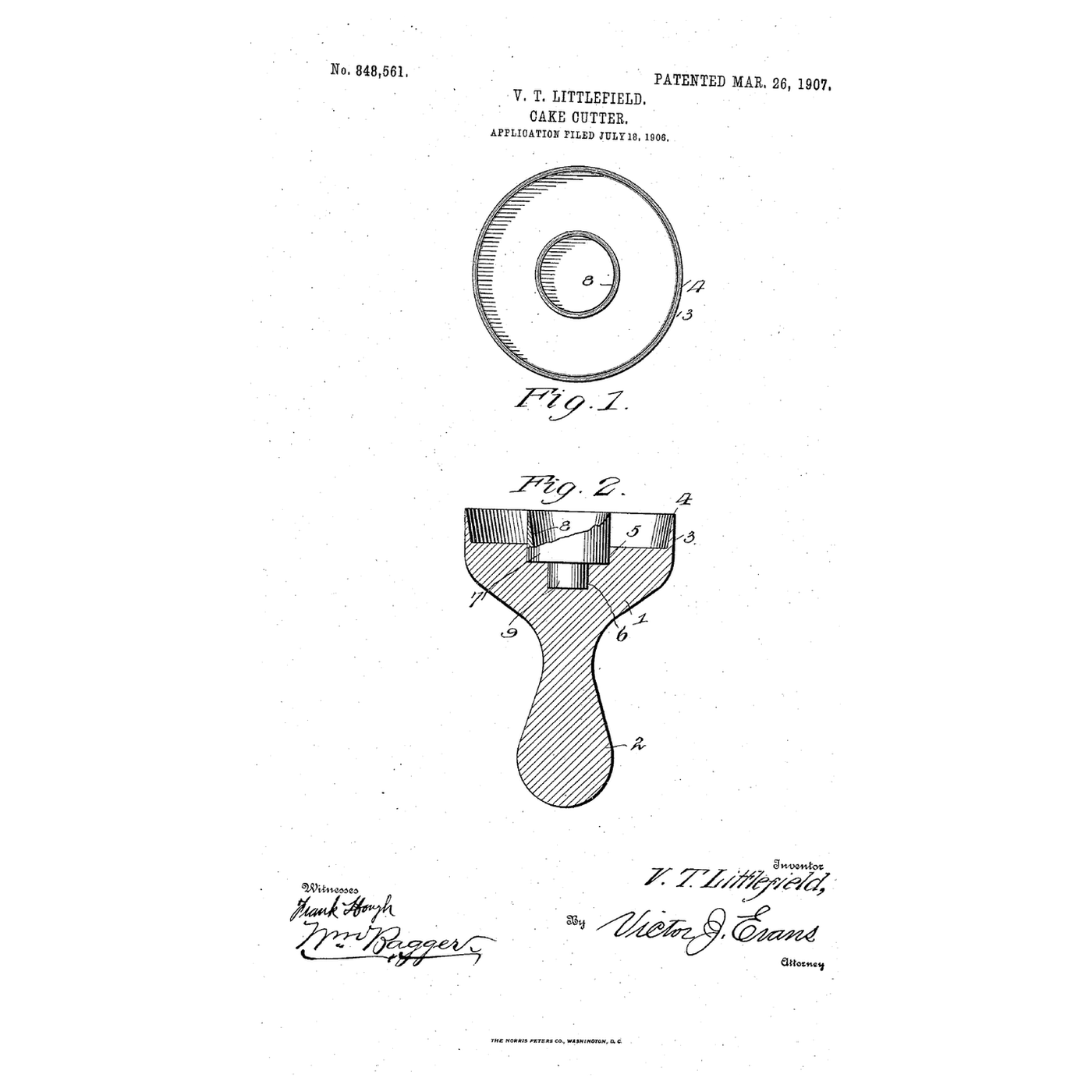
Vernon T. Littlefield of Bangor, Maine, received US 848,561, dated 26 March 1907, for a cake-cutter turned from hard wood, with a cutting rim and a socket in its face for a detachable centre cutter. With the centre cutter in, it cuts doughnuts; with it out, biscuits.
This rung works out what the centre cutter takes from each piece, then builds a convertible cutter on a wooden handle and cuts both from one sheet.
Principiante
About 2 hours
Instrucciones
1
1
The hole and the count
The hole and the count
Cargando el cuaderno de Jupyter…
2
2
Another doughnut cutter
Another doughnut cutter
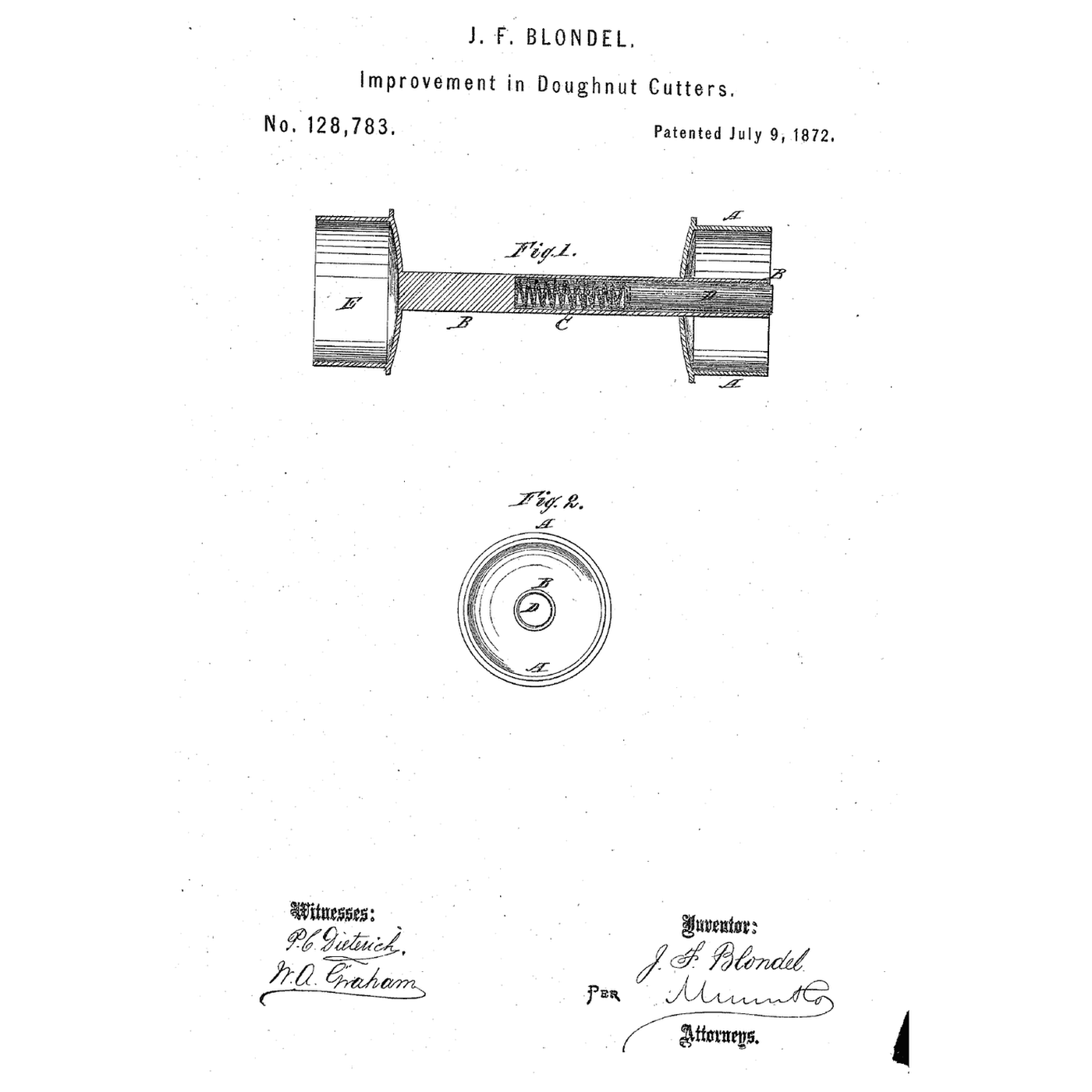
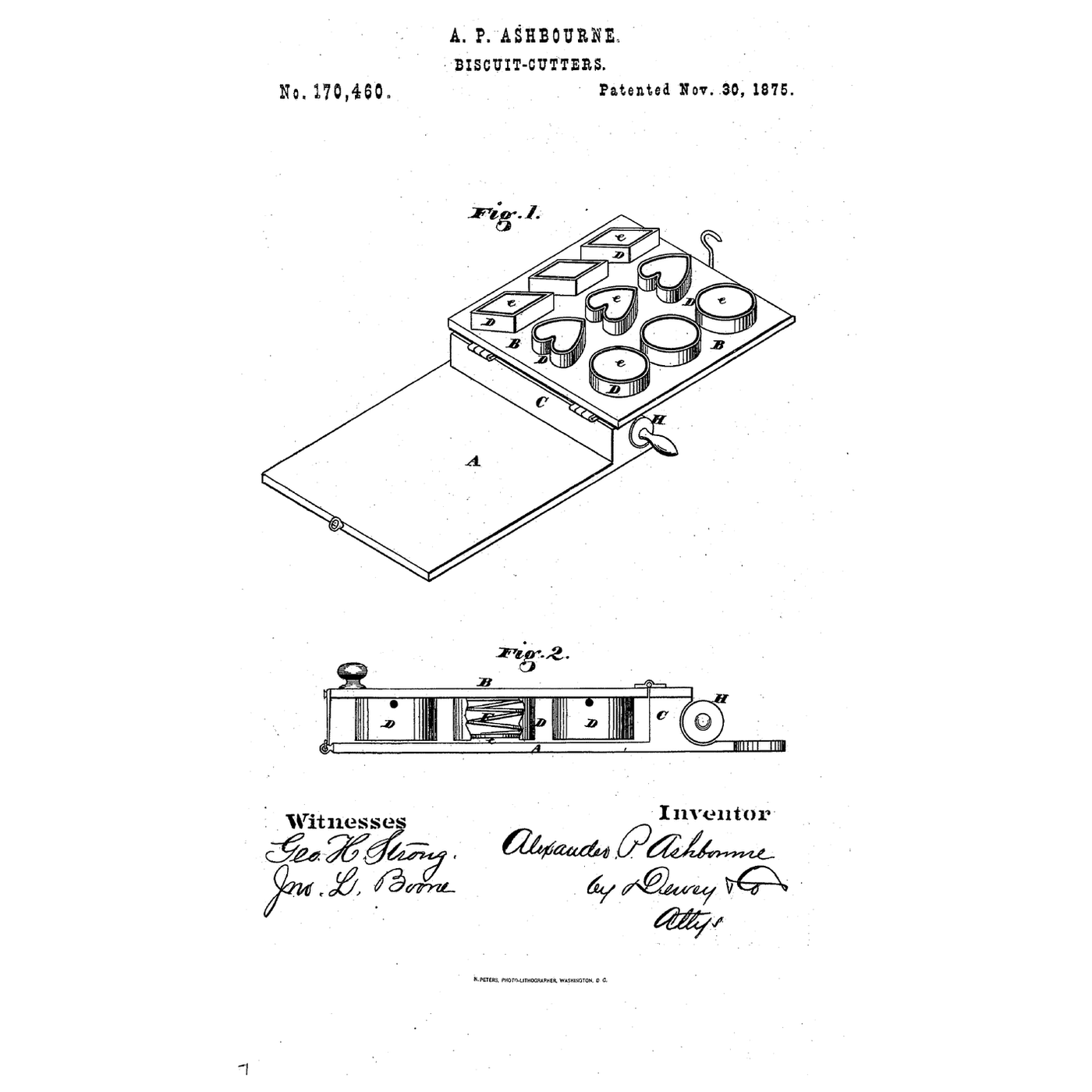
The embedded blueprint's doughnut cutter pushes the hole back out with a spring. Littlefield's centre cutter comes out altogether, turning the doughnut cutter into a biscuit cutter.
3
3
Read US 848,561
Read US 848,561
"This invention relates to devices for cutting cakes, biscuits, doughnuts, cookies, and the like from a sheet of dough".
"For the purpose of cutting doughnuts and the like the auxiliary cutter will be placed in position, as seen in the drawings, and will serve to cut from each piece of dough that is cut by the flange 3 a circular piece. For cutting biscuits and the like the auxiliary cutter is detached from the body of the main cutter, which is then used in the customary manner."
4
4
Build the cutter and cut doughnuts and biscuits
Build the cutter and cut doughnuts and biscuits
Cut a strip of tin 2.5 cm wide from a can, roll it into a 7 cm ring and fold the ends over each other. Leave four tabs on its top edge. Cut a disk of hardwood the ring's size, set the ring on it and screw the tabs down. Glue a length of dowel to the middle of the disk's top as the handle.
Drill a hole through the centre of the disk. Roll a second strip into a 2.5 cm ring, set it on a short piece of dowel that fits the hole snugly, and push the dowel into the hole from below: this is the centre cutter. File every cut edge smooth.
Roll out a dough and cut half the sheet with the centre cutter in and half with it out. Count the pieces from each half and weigh the holes.
Materiales para este paso:
 Lata1 pieza
 Tabla de madera dura1 pieza
 Espiga de madera1 pieza
 Tornillos para madera4 piezas
 Cola de carpintero1 pieza
 Harina de todo uso300 g
 Mantequilla200 g
 Azúcar granulado100 g
Herramientas necesarias:
 Cortador de galletas
 Cortador de rosquillas
 Tijeras de chapa
 Alicates de punta fina
 Segueta (sierra de marquetería)
 Taladro inalámbrico
 Juego de brocas
 Lima para metal
 Rodillo de amasar
 Báscula digital de cocina
5
5
A cutter that sticks, tears or loses its centre
A cutter that sticks, tears or loses its centre
Convertible cutter troubleshooting.
Flow
Loading...
6
6
History and honest limits
History and honest limits
**Vernon T. Littlefield** of Bangor, Maine, filed US 848,561 on 18 July 1906; it was patented 26 March 1907. He turned the whole cutter from hard wood, which he preferred "on account of its cheapness, lightness, strength, and the ease with which it may be kept in a clean and sanitary condition". This rung makes the cutting edges from tin, which is easier to keep sharp.
**Honest limits.** The notebook assumes perfect honeycomb packing; by hand you will fit fewer. Sizes are examples. Your counts are the measurement.
Materiales
8- 1 piezaMarcador de posición
- 1 piezaMarcador de posición
- 1 piezaMarcador de posición
- 4 piezasMarcador de posición
- 1 piezaMarcador de posición
- 300 gMarcador de posición
- 200 gMarcador de posición
- 100 gMarcador de posición
Herramientas requeridas
10- Marcador de posición
- Marcador de posición
- Marcador de posición
- Marcador de posición
- Marcador de posición
- 1 vendor sell this, none ship to you yetMarcador de posición
- Marcador de posición
- Marcador de posición
- Marcador de posición
- Marcador de posición
Blueprints relacionados
Estos blueprints comparten conocimiento — técnicas, materiales o principios

CC0 Dominio público
Este Blueprint se publica bajo CC0. Eres libre de copiar, modificar, distribuir y usar este trabajo para cualquier propósito, sin pedir permiso.
Apoya al Maker comprando productos a través de su Blueprint, donde gana una Comisión del Maker establecida por los vendedores, o crea una nueva iteración de este Blueprint e inclúyela como conexión en tu propio Blueprint para compartir ingresos.