ARTE
BELLEZA Y BIENESTAR
ARTESANÍA
CULTURA E HISTORIA
ENTRETENIMIENTO
MEDIO AMBIENTE
COMIDA Y BEBIDAS
INGENIERÍA INVERSA
CIENCIAS
DEPORTES
TECNOLOGÍA
TECNOLOGÍA VESTIBLE


The Locking Mop Clamp: A Spring and an Over-Centre Lever
Mop rags tied or nailed to a stick are slow to change and fall off when wet and heavy.
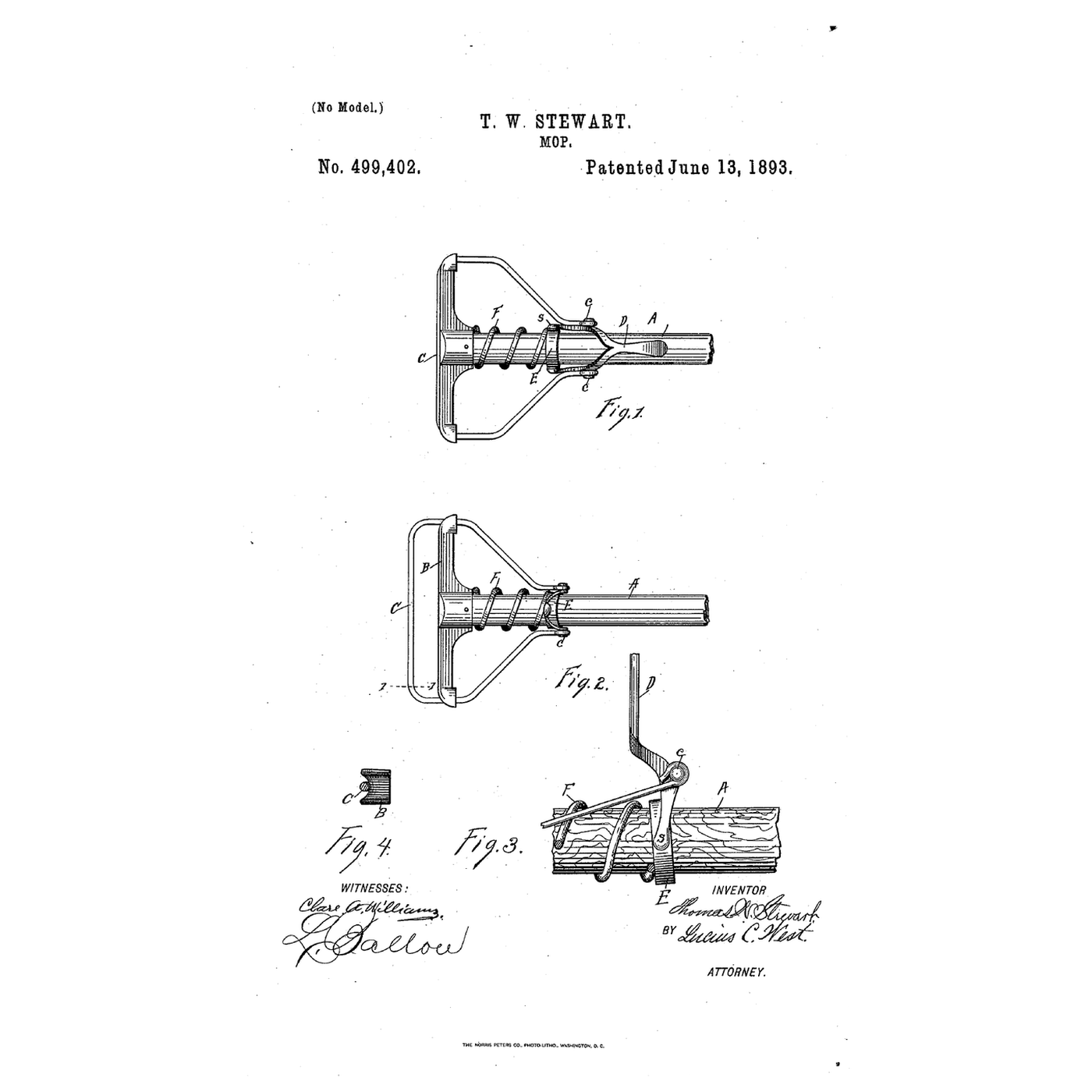
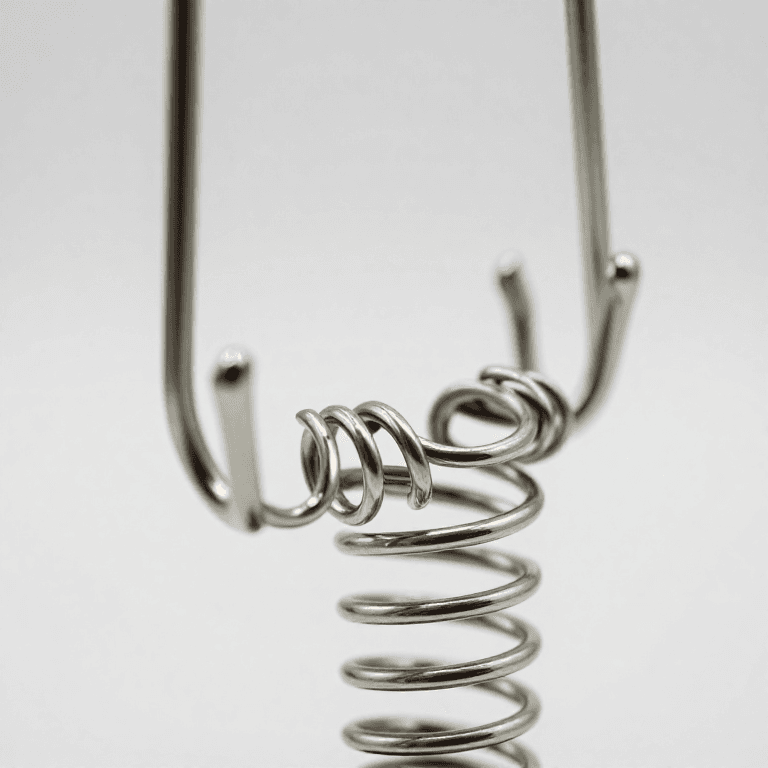
Thomas W. Stewart of Detroit, Michigan, received US 499,402, dated 13 June 1893 (filed 26 September 1892), for a mop whose rags are held between a T-head and a rod, drawn tight by a lever against a spiral spring. When the lever is thrown back, its pivots pass "a little below the horizontal plane" of the others, "thus locking the clamp".
This rung works out why a lever just past centre holds itself shut, then builds the clamp on a mop stick and measures its grip.
Intermedio
About 3 hours
Instrucciones
1
1
Hand force near dead centre
Hand force near dead centre
Cargando el cuaderno de Jupyter…
2
2
A lever that stays where it is left
A lever that stays where it is left
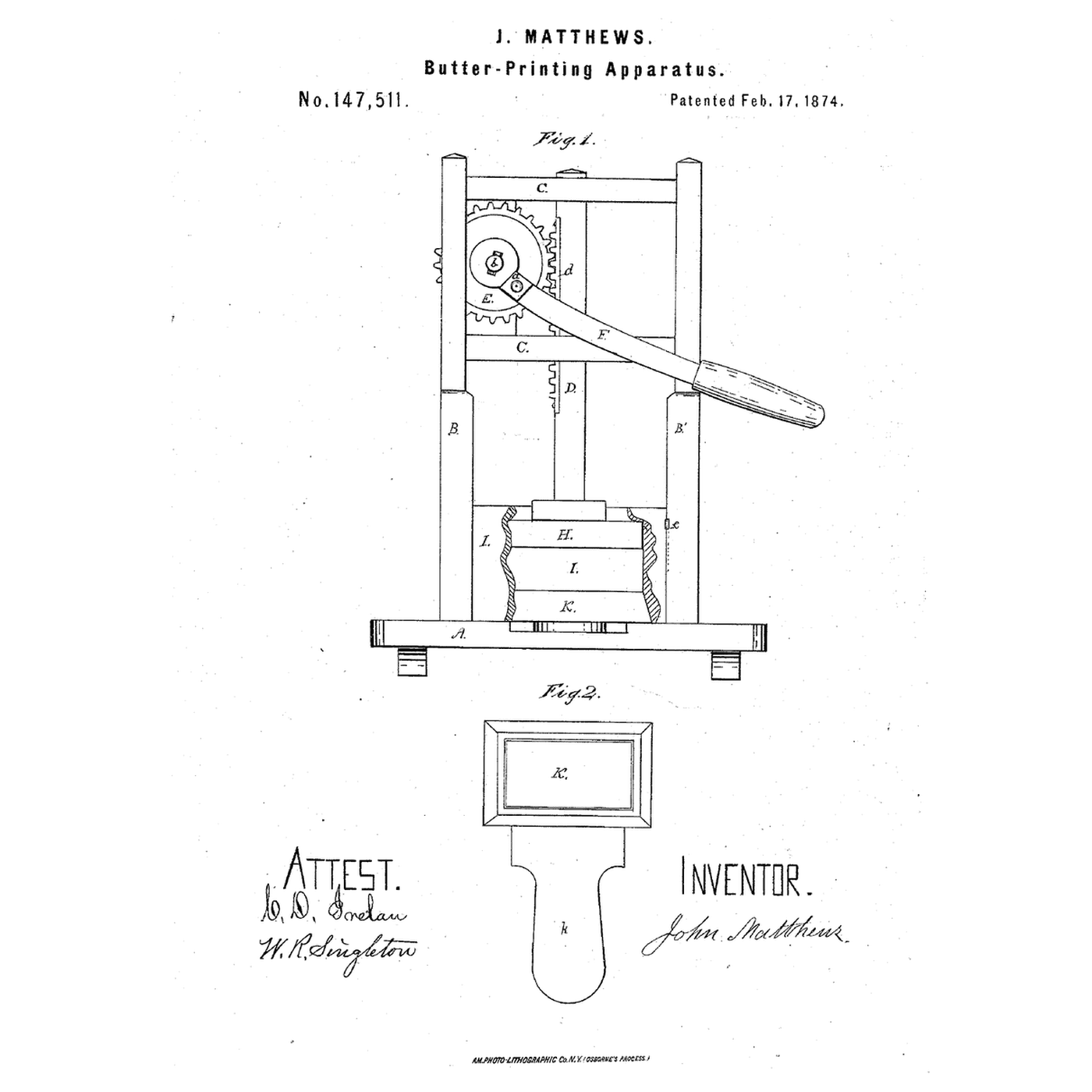
The embedded blueprint's lever holds the follower up once it passes the perpendicular. Stewart's lever uses the same dead centre to hold the clamp shut.
3
3
Read US 499,402
Read US 499,402
"Between the ring E and the T-head B, is a spiral spring, F, the expansive tendency of which holds the clamp firmly closed, as in the position shown in Fig. 1, when the lever D is thrown back."
"In the operation the rags, not here shown, are placed in the clamp, and since the ends of the rod C are pivoted between the ends of the lever D, the lever when carried back against the stick exerts a leverage on the rod C and compresses the spring F, thus firmly holding the rags, during which action the pivotal points c are carried a little below the horizontal plane of the pivoted ends s, of the lever D, thus locking the clamp."
4
4
Build the clamp and measure its grip
Build the clamp and measure its grip
Screw a hardwood cross-piece across the end of a broom handle as the T-head, with a groove in each end. Bend steel wire into the clamp rod: straight across the T-head, then back through the grooves to meet at the handle.
Slide a loose wooden ring or a short tube onto the handle, with a spring from the assortment between it and the T-head. Make a small lever from hardwood, pivot its forked end to the ring, and pin the rod's ends to it a little forward of that pivot.
Lay rags in the clamp and throw the lever back until it snaps past centre. Pull the rags with the force meter to measure the grip, then mop a floor. Compare with the notebook.
Materiales para este paso:
 Tabla de madera dura1 pieza
 Alambre de acero1 pieza
 Surtido de muelles de compresión1 pieza
 Tornillos para madera6 piezas
 Trapos de algodón1 pieza
Herramientas necesarias:
 Fregona
 Escoba
 Alicates de punta fina
 Taladro inalámbrico
 Serrucho
 Dinamómetro (balanza de resorte)
 Cubo
Cubo5
5
A mop clamp that springs open, slips or will not close
A mop clamp that springs open, slips or will not close
Mop clamp troubleshooting.
Flow
Loading...
6
6
History and honest limits
History and honest limits
**Thomas W. Stewart** of Detroit, Wayne County, Michigan, filed US 499,402 on 26 September 1892; it is dated 13 June 1893. The patent is a clamp for holding the rags; it describes no wringer.
**Honest limits.** The notebook treats the linkage as an ideal toggle and the spring force as constant near centre, and ignores friction. Spring rate, compression and sizes are examples. Your force-meter reading is the measurement.
Materiales
5- 1 piezaMarcador de posición
- 1 piezaMarcador de posición
- Marcador de posición
- 6 piezasMarcador de posición
- 1 piezaMarcador de posición
Herramientas requeridas
7- Marcador de posición
- Marcador de posición
- Marcador de posición
- 1 vendor sell this, none ship to you yetMarcador de posición
- Marcador de posición
- Marcador de posición
- Marcador de posición
Blueprints relacionados
Estos blueprints comparten conocimiento — técnicas, materiales o principios


CC0 Dominio público
Este Blueprint se publica bajo CC0. Eres libre de copiar, modificar, distribuir y usar este trabajo para cualquier propósito, sin pedir permiso.
Apoya al Maker comprando productos a través de su Blueprint, donde gana una Comisión del Maker establecida por los vendedores, o crea una nueva iteración de este Blueprint e inclúyela como conexión en tu propio Blueprint para compartir ingresos.