ARTE
BELLEZA Y BIENESTAR
ARTESANÍA
CULTURA E HISTORIA
ENTRETENIMIENTO
MEDIO AMBIENTE
COMIDA Y BEBIDAS
INGENIERÍA INVERSA
CIENCIAS
DEPORTES
TECNOLOGÍA
TECNOLOGÍA VESTIBLE


The Nail Clipper: Spring Jaws and a Cam Lever
Fingernails used to be pared with a knife or small scissors. A clipper nips the nail between two edges that meet, driven by a lever that multiplies the thumb's force.
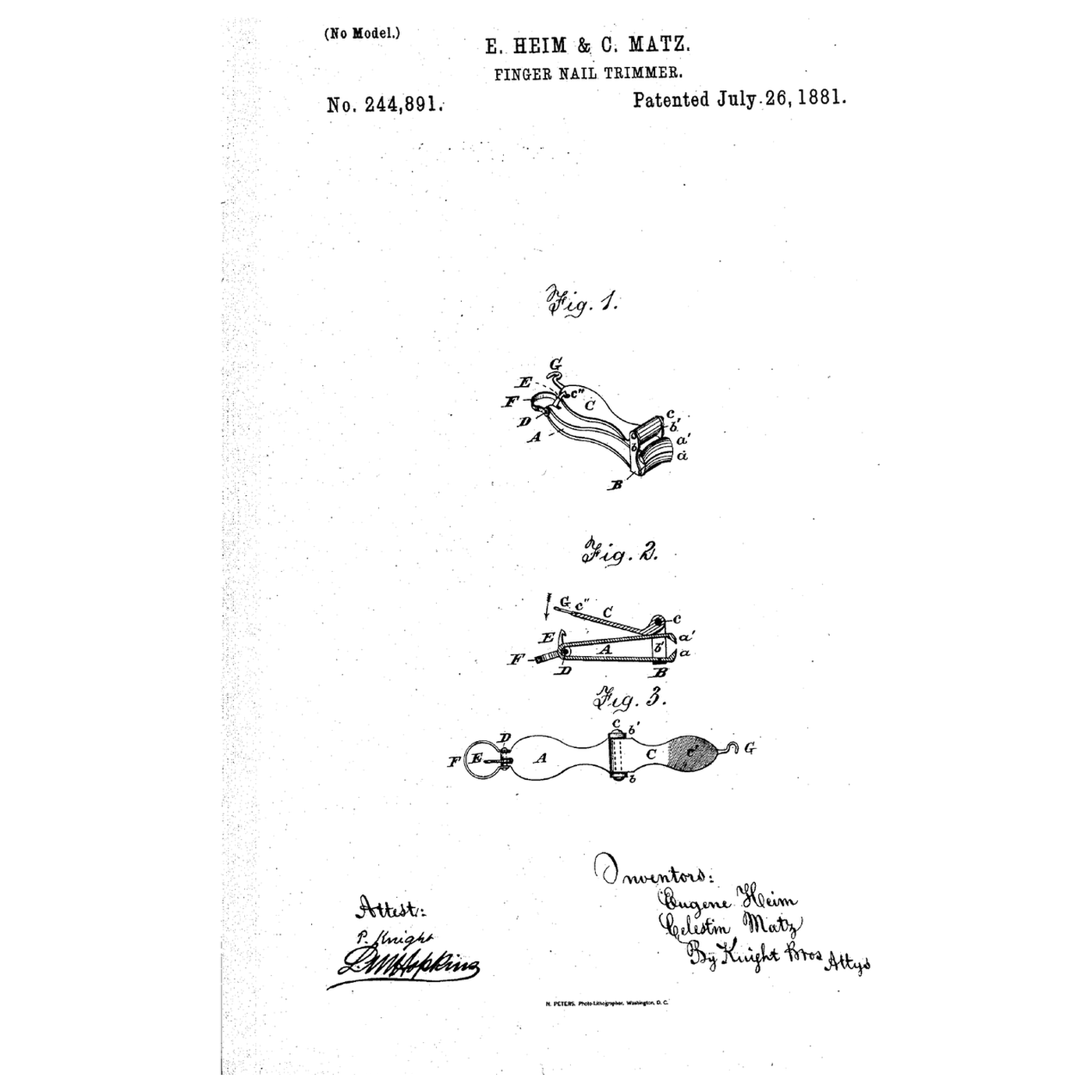
Eugene Heim and Celestin Matz of Cincinnati filed US 244,891 on 9 June 1881; it is dated 26 July 1881. Their finger-nail trimmer is a single plate of spring steel bent into a U so its two in-turned cutting edges stand apart; a yoke on one jaw carries a lever with a cam-shaped head that forces them together. The lever's back is roughened as a file, its end is a hook for buttoning gloves, and a catch and a bow let it fold for a watch-chain.
This rung works out the lever's advantage and the cost of spring jaws, and takes a modern clipper apart to find the same parts.
Principiante
About 2 hours
Instrucciones
1
1
Cam ratio and spring jaws
Cam ratio and spring jaws
Cargando el cuaderno de Jupyter…
2
2
A strip of steel that springs back
A strip of steel that springs back
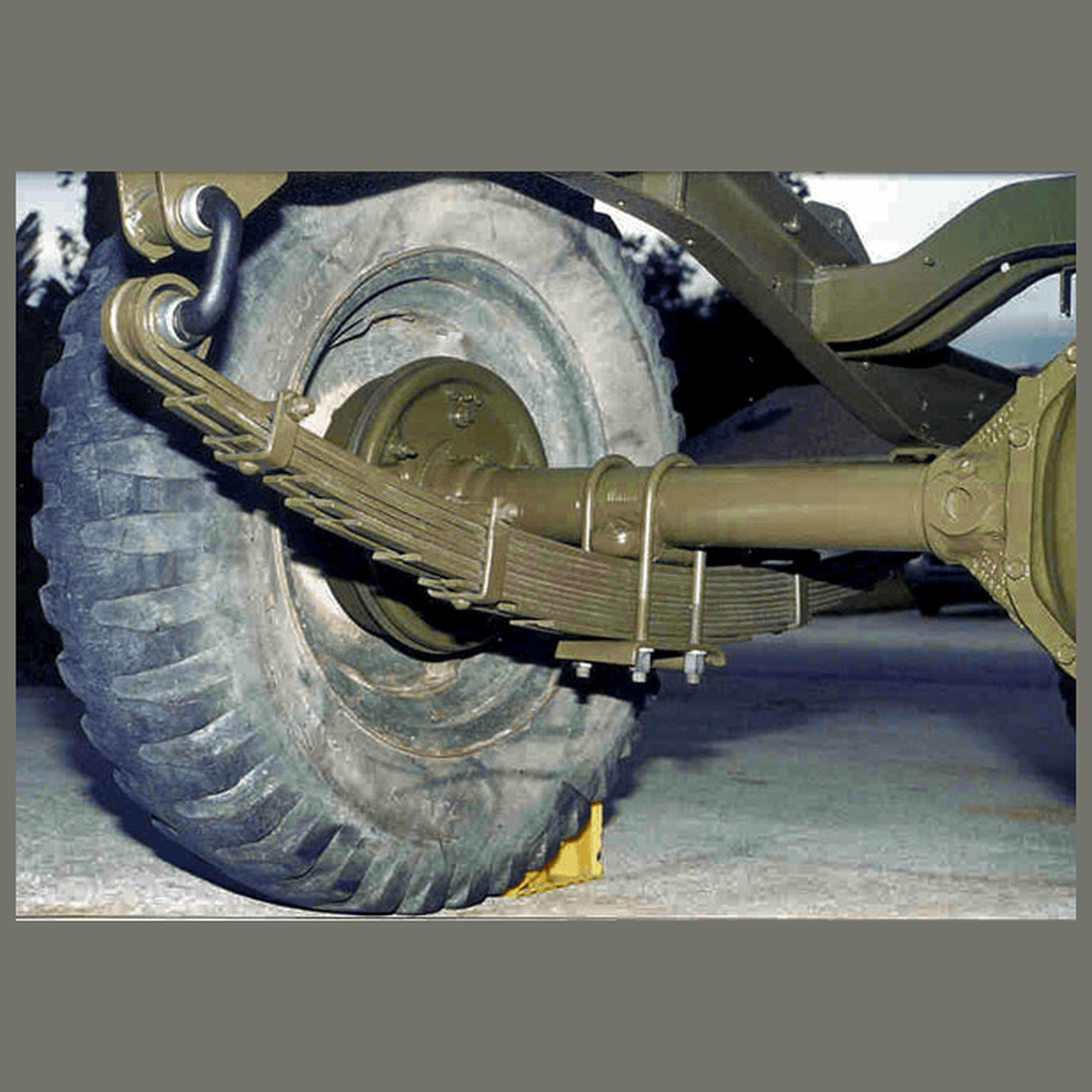
The U of spring steel is a leaf spring bent back on itself. The embedded blueprint explains how such a spring stores and returns force.
3
3
Read US 244,891
Read US 244,891
Their device "consists, essentially, of a pair of nipping-jaws composed of a single plate of spring-steel so formed and bent as to bring its cutting-edges in opposition and nearly in contact", with "a yoke secured to one jaw" giving a pivot to "a cam-headed lever, whose operation presses the jaws forcibly together."
Plate A is bent to a U so the jaws "stand normally some distance asunder". On the yoke B pivots the lever C, whose depression forces the jaws together until they meet; on release, "the resilience of the jaws causes their automatic separation". Part of the lever's back is grooved or roughened "to constitute a file or rasp"; its end G is a hook "suitable for buttoning gloves"; a clasp E holds the lever closed and a bail F hangs it from a watch-chain.
They note earlier trimmers with two hinged jaws held open by a spring and closed by the thumb and finger, "and we therefore disclaim invention, broadly"; they claim the one-piece jaws closed by a cam-headed lever.
4
4
Take a clipper apart and measure it
Take a clipper apart and measure it
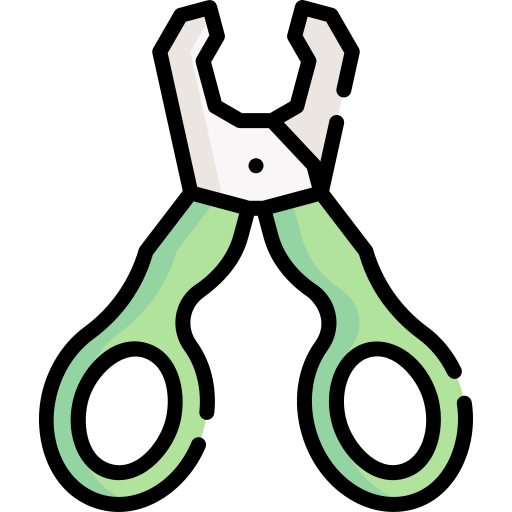
Take a lever-type nail clipper apart by pulling out its pin. Identify the U-shaped jaws, the lever and the part of it that acts as a cam, and the pin that is the pivot. Measure with the caliper the lever length from the pivot, how far the jaws close, and how far the lever's end travels, and work out the ratio.
Reassemble it. Hang weights from the lever's end over a strip of card in the jaws until it cuts, and compare the force with the notebook. Check the jaw edges under a hand lens: they must meet along their whole length.
Materiales para este paso:
 Cartulina1 pieza
Herramientas necesarias:
 Calibre digital de 6 pulgadas
 Lupa de mano 10x
 Dinamómetro (balanza de resorte)
 Alicates de boca plana
 Cortaúñas (toma de muestras)
5
5
A nail clipper that tears
A nail clipper that tears
Nail clipper troubleshooting.
Flow
Loading...
6
6
History and honest limits
History and honest limits
**Eugene Heim and Celestin Matz** of Cincinnati filed US 244,891 on 9 June 1881; it is dated 26 July 1881. They claim jaws of a single integral piece of steel, held open by their resilience and closed by a cam-headed lever.
**Honest limits.** The nail-cutting force, jaw stiffness and friction efficiency in the notebook are assumptions; the patent gives no dimensions.
Herramientas requeridas
5- Marcador de posición
- Marcador de posición
- Marcador de posición
- Marcador de posición
- Marcador de posición
Blueprints relacionados
Estos blueprints comparten conocimiento — técnicas, materiales o principios


CC0 Dominio público
Este Blueprint se publica bajo CC0. Eres libre de copiar, modificar, distribuir y usar este trabajo para cualquier propósito, sin pedir permiso.
Apoya al Maker comprando productos a través de su Blueprint, donde gana una Comisión del Maker establecida por los vendedores, o crea una nueva iteración de este Blueprint e inclúyela como conexión en tu propio Blueprint para compartir ingresos.