ARTE
BELLEZA Y BIENESTAR
ARTESANÍA
CULTURA E HISTORIA
ENTRETENIMIENTO
MEDIO AMBIENTE
COMIDA Y BEBIDAS
INGENIERÍA INVERSA
CIENCIAS
DEPORTES
TECNOLOGÍA
TECNOLOGÍA VESTIBLE



The Oil-Moat Insect Guard: Up the Leg, Out the Flange, Down Into the Oil
Ants find food on a table by walking up its legs. A barrier on each leg can stop them before they reach the top.
Sterling Walter Conrad of Hanford, California, received US 460,429, dated 29 September 1891, for an insect-guard fitted round the leg of a table or the post of a house, "to prevent ants, mice, or rats and other vermin entering a house or house-safes or getting on a table or after suspended meat". A flange inside the casing turns climbing insects outward, and they walk down into a ring of oil.
This rung works out how much oil the moat holds, then builds a guard on a wooden post and tests it against an unguarded post on an ant trail.
Principiante
About 2 hours, then a day outdoors
Instrucciones
1
1
Oil in the moat
Oil in the moat
Cargando el cuaderno de Jupyter…
2
2
A liquid that bars the way
A liquid that bars the way
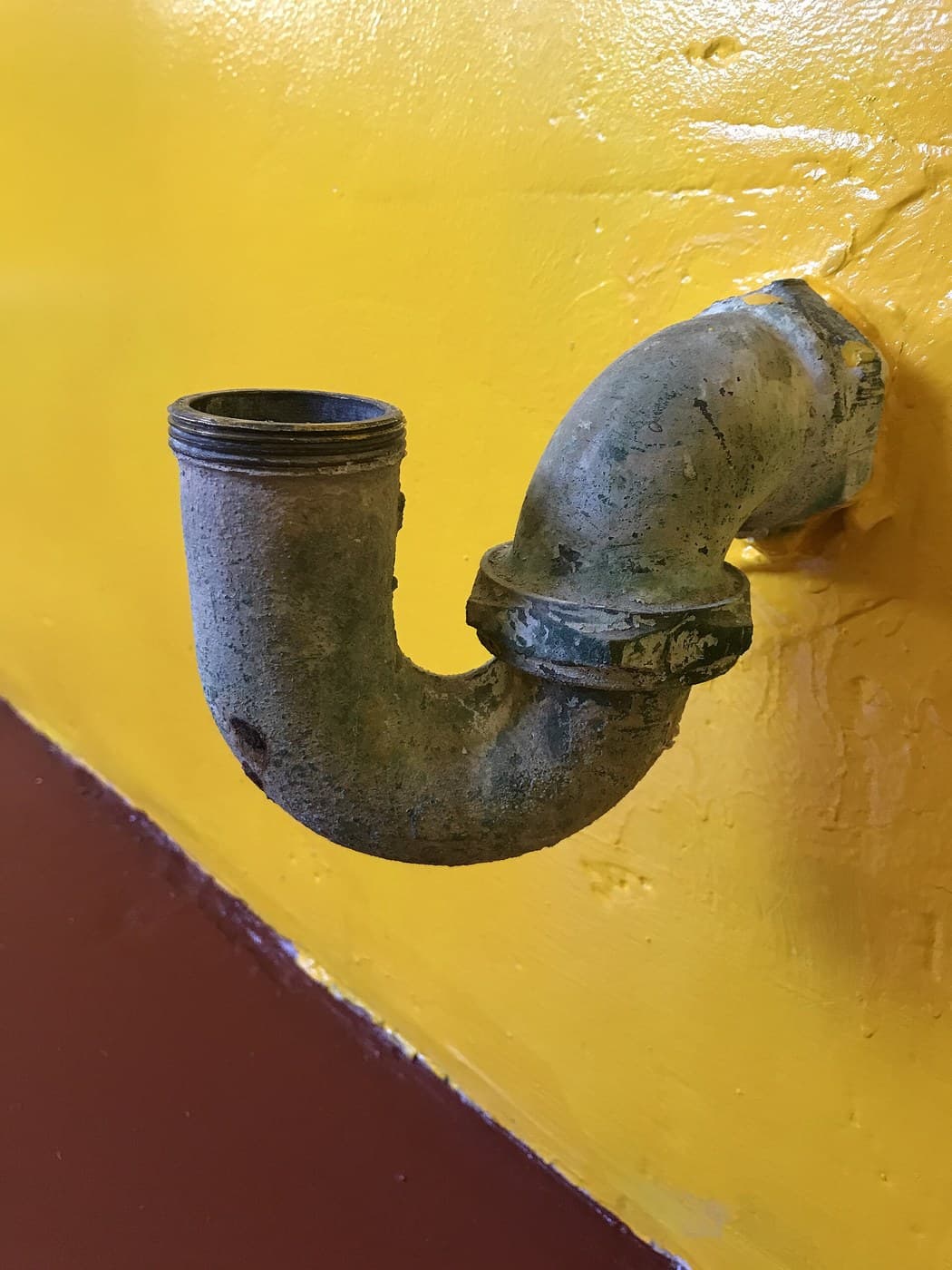
The embedded blueprint uses a standing pool of water to stop gases coming up a drain. Conrad uses a standing ring of oil to stop insects coming up a leg.
3
3
Read US 460,429
Read US 460,429
"The object of the present invention is to provide a simple and inexpensive insect-trap adapted to be readily applied to the posts of houses, the legs of a table, or the like, to prevent ants, mice, or rats and other vermin entering a house or house-safes or getting on a table or after suspended meat."
"Ants or similar insects in attempting to ascend the leg or the post of a house will ascend the outer face of the tube 3 until they reach the horizontal flange 4, when they will pass to the sides of the casing 1 and descend into the annular space and drown in the oil or return. In either case the insect will be prevented passing up the leg farther than the horizontal flange."
4
4
Build a guard on a post and test it on an ant trail
Build a guard on a post and test it on an ant trail
Glue two dowels upright into holes drilled in two small boards: these are two table legs. Put a spoonful of sugar wetted with a little water on top of each.
Take a tin can with its top removed. Drill a hole in the centre of its bottom that fits the dowel closely. Turn the can upside down, so its bottom is the guard's top, and slide it down one dowel to halfway. Hot-glue it all round the hole so nothing can pass.
Cut a disk from the lid of a second can, about 1 cm smaller than the can, with a hole in its centre for the dowel. Slide it up inside the casing to halfway and glue it round the dowel: this is the flange. Cut a strip of tin 3 cm wide, bend it lengthways into an L, and hot-glue it inside the open rim to make a gutter. Drill a small hole in the top, pour cooking oil through it into the gutter, and seal the hole with tape.
Set both posts on an ant trail outdoors. Count the ants on each sugar after one hour, and again the next day.
Materiales para este paso:
 Lata2 piezas
 Espiga de madera2 piezas
 Tabla de madera plana2 piezas
 Aceite de cocina60 ml
 Azúcar granulado20 g
 Cinta americana1 pieza
Herramientas necesarias:
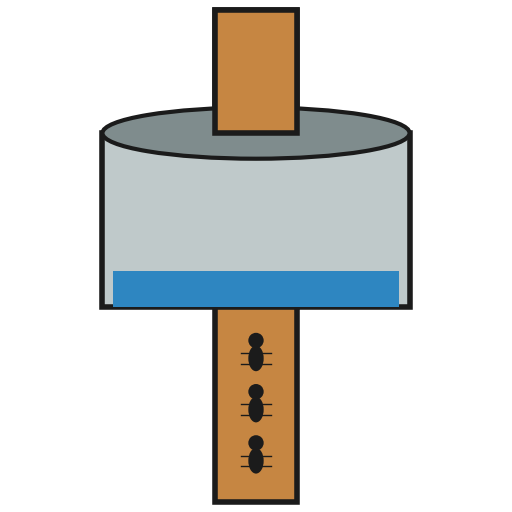 Foso antihormigas
 Tijeras de chapa
 Taladro inalámbrico
 Juego de brocas
 Pistola de cola caliente
 Regla
Regla Rotulador permanente
 Cronómetro
5
5
Ants that still reach the sugar
Ants that still reach the sugar
Insect guard troubleshooting.
Flow
Loading...
6
6
History and honest limits
History and honest limits
**Sterling Walter Conrad** of Hanford, California, filed US 460,429 on 8 January 1891; it is dated 29 September 1891. The patent names ants, mice and rats. This rung tests it on ants only.
**Honest limits.** The guard only works while nothing else touches the leg or the casing. The oil needs cleaning and topping up. The notebook's sizes are examples. Your ant counts, on the guarded and the unguarded post, are the measurement.
Materiales
6- 2 piezasMarcador de posición
- 2 piezasMarcador de posición
- 2 piezasMarcador de posición
- 60 mlMarcador de posición
- 20 gMarcador de posición
- 1 piezaMarcador de posición
Herramientas requeridas
8- Marcador de posición
- Marcador de posición
- 1 vendor sell this, none ship to you yetMarcador de posición
- Marcador de posición
- Marcador de posición
- Marcador de posición
- Marcador de posición
- Marcador de posición
Blueprints relacionados
Estos blueprints comparten conocimiento — técnicas, materiales o principios


CC0 Dominio público
Este Blueprint se publica bajo CC0. Eres libre de copiar, modificar, distribuir y usar este trabajo para cualquier propósito, sin pedir permiso.
Apoya al Maker comprando productos a través de su Blueprint, donde gana una Comisión del Maker establecida por los vendedores, o crea una nueva iteración de este Blueprint e inclúyela como conexión en tu propio Blueprint para compartir ingresos.