

SENI
KECANTIKAN & KESEJAHTERAAN
KRAFTANGAN
BUDAYA & SEJARAH
HIBURAN
ALAM SEKITAR
MAKANAN & MINUMAN
MASA DEPAN HIJAU
KEJURUTERAAN TERBALIK
SAINS
SUKAN
TEKNOLOGI
WEARABLES
Building a Copernican Orrery — A Mechanical Model of the Heliocentric Solar System
Astro

Dicipta oleh

Astro

30. Mei 2026IS
0
0
0
3
0

Building a Copernican Orrery — A Mechanical Model of the Heliocentric Solar System

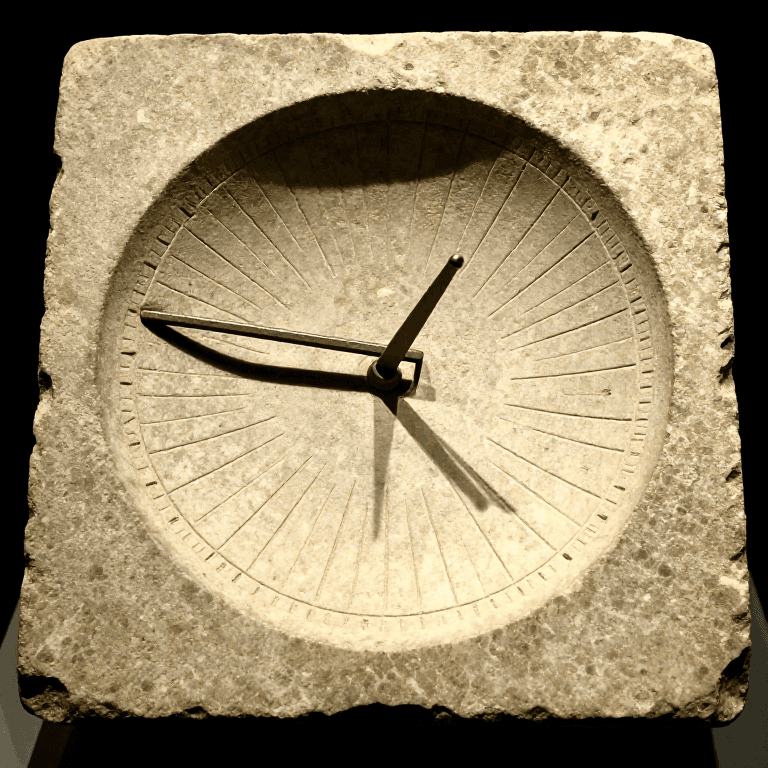
An orrery is a mechanical model of the solar system — a clockwork device that shows the relative positions and motions of the planets as they orbit the Sun. The name comes from Charles Boyle, 4th Earl of Orrery, who commissioned one of the first such devices in 1713, but the concept traces directly to Nicolaus Copernicus (1473–1543), whose heliocentric model placed the Sun at the centre and the planets in circular orbits around it. Building an orrery makes the Copernican revolution tangible: instead of abstract diagrams, you hold a physical machine where turning a crank makes Earth and the inner planets orbit a central brass Sun at their correct relative speeds. The key engineering challenge is the gear ratios — Mercury orbits the Sun in 88 days, Venus in 225, Earth in 365, and Mars in 687, so the gear train must produce these ratios from a single input shaft. This blueprint builds a simplified desktop orrery showing the Sun and the four inner planets (Mercury, Venus, Earth, and Mars) using brass gears, rods, and a wooden base — accurate enough to demonstrate retrograde motion and planetary conjunctions.

Lanjutan
30-50 hours

Arahan

1

Design the gear train ratios

The orrery's accuracy depends on the gear ratios that drive each planet at the correct orbital speed relative to Earth. The orbital periods are: Mercury 87.97 days, Venus 224.7 days, Earth 365.25 days, Mars 686.97 days. Express these as ratios relative to Earth: Mercury = 365.25/87.97 ≈ 4.152, Venus = 365.25/224.7 ≈ 1.626, Earth = 1.000, Mars = 365.25/686.97 ≈ 0.5317. Approximate each with gear tooth counts — for example, Mercury: 83/20 = 4.15, Venus: 65/40 = 1.625, Mars: 37/70 ≈ 0.529. These approximations are close enough that the orrery stays accurate for many turns of the crank.
2

Prepare the brass sheet for gears

Cut squares of brass sheet (1.5-2 mm thick) large enough for each gear. You need at least 8 gears: a drive gear on the crank shaft, and a driven gear plus a transfer gear for each of the four planets. Mark the centre of each square with dividers and scribe the pitch circle — the imaginary circle on which the gear teeth are spaced. The pitch circle diameter determines the gear ratio in combination with the number of teeth.

Bahan untuk langkah ini:

Brass SheetBrass Sheet2 keping

Alatan diperlukan:

DividersDividers
Diamond ScriberDiamond Scriber
3

Cut the gear blanks

Using a jeweller's saw, cut each brass square into a disc along the outer circle (slightly larger than the pitch circle to allow for tooth tips). File the edges smooth and drill a centre hole in each disc for the shaft. The centre hole must be precisely centred — any eccentricity causes the gear to wobble, which binds the mechanism and produces uneven motion.

Alatan diperlukan:

Jeweller's SawJeweller's Saw
Metal FileMetal File
4

Mark and cut the gear teeth

Divide the pitch circle into the required number of equal spaces for the teeth. Use dividers stepped around the circumference, adjusting until the last step returns exactly to the starting point. Mark radial lines from the centre through each division point. Cut the tooth profiles with a jeweller's saw and needle files — each tooth is roughly trapezoidal in cross-section. The teeth do not need to be involute profile (like modern gears); simple triangular or trapezoidal teeth work well at the slow speeds of a hand-cranked orrery.

Alatan diperlukan:

Jeweller's SawJeweller's Saw
Metal FileMetal File
5

Turn the central Sun post and planet shafts

The Sun sits on a fixed central post rising from the base. Around it, concentric brass tubes (one inside the other) carry each planet's arm. The innermost tube carries Mercury, the next Venus, the next Earth, and the outermost Mars. Cut brass tubes of incrementally larger diameters so each fits loosely inside the next and all rotate independently around the central post. The tubes must turn freely without excessive wobble.

Bahan untuk langkah ini:

Brass RodBrass Rod1 keping
6

Build the wooden base

Cut a circular hardwood base about 30 cm in diameter and 20 mm thick. This serves as the platform for the entire mechanism. Drill a centre hole for the Sun post and additional holes for the gear shaft bearings. The base must be flat and stable — any wobble shows up as erratic planetary motion. Sand and oil the base for a clean finish.

Bahan untuk langkah ini:

Hardwood BlockHardwood Block1 keping

Alatan diperlukan:

Hand SawHand Saw
7

Assemble the gear train

Mount the gears on their shafts beneath the base. The crank shaft drives a large gear which meshes with the Earth gear (1:1 ratio — one crank turn equals one Earth year). The Earth gear shaft also carries a smaller gear that drives the Mars gear through an intermediate shaft. Similarly, separate gear pairs drive Venus and Mercury at their faster rates. Each gear pair must mesh smoothly — test by turning the crank slowly and checking that all four output shafts rotate without binding.
8

Make the planet arms

Cut thin brass strips about 5 mm wide for the planet arms. Each arm extends horizontally from its concentric tube at a length proportional to the planet's orbital radius. Use the approximate ratios: Mercury 0.39 AU, Venus 0.72 AU, Earth 1.00 AU, Mars 1.52 AU. If the Earth arm is 10 cm, Mercury is 3.9 cm, Venus is 7.2 cm, and Mars is 15.2 cm. Solder each arm to the top of its concentric tube.

Bahan untuk langkah ini:

Brass StripBrass Strip1 meter

Alatan diperlukan:

Soldering IronSoldering Iron
Solder WireSolder Wire
9

Create the planet spheres

Shape small brass or wooden balls to represent the planets. Mercury and Mars are small (about 5 mm diameter), Venus and Earth slightly larger (about 8 mm). The Sun at the centre should be the largest sphere (about 20 mm). Drill a small hole in each ball and press-fit or solder it onto a short vertical pin at the end of each planet arm. The planets should sit at the same height above the base for visual clarity.
10

Add the crank handle

The crank is a simple brass or wooden handle that drives the entire mechanism. Bend a brass rod into an L-shape and attach it to the main drive shaft where it emerges from the side of the base. The handle should turn smoothly and drive all four planets simultaneously. One full turn of the crank represents one Earth year — Mercury completes about 4.15 orbits, Venus about 1.63, and Mars only about half an orbit.
11

Mark the zodiac ring

Cut a thin brass ring slightly larger than the Mars orbit arm and mount it on short posts above the base, surrounding all the planetary orbits. Divide this ring into twelve equal sections and engrave or label the zodiac constellations — Aries, Taurus, Gemini, Cancer, Leo, Virgo, Libra, Scorpio, Sagittarius, Capricorn, Aquarius, Pisces. This ring represents the background stars against which the planets appear to move, and makes it possible to read the apparent position of each planet in the sky.
12

Demonstrate retrograde motion

Slowly turn the crank and watch Mars against the zodiac ring. Most of the time Mars moves eastward (in the direction of increasing zodiac signs), but periodically Earth overtakes Mars on its inside track, and Mars appears to reverse direction — moving westward for several weeks before resuming its eastward course. This retrograde motion baffled astronomers for millennia. Ptolemy needed complex epicycles to explain it; Copernicus showed it was simply a consequence of viewing a slower outer planet from a faster inner one. Your orrery now demonstrates this directly — the most elegant proof of the heliocentric model.

Bahan

4

Alatan Diperlukan

7

Bahan Blueprint Bersambung

CC0 Domain Awam

Blueprint ini dikeluarkan di bawah CC0. Anda bebas menyalin, mengubah, mengedar, dan menggunakan karya ini untuk sebarang tujuan, tanpa meminta kebenaran.

Sokong Pembuat dengan membeli produk melalui Blueprint mereka di mana mereka memperoleh Komisen Pembuat ditetapkan oleh Penjual, atau cipta iterasi baru Blueprint ini dan sertakan ia sebagai sambungan dalam Blueprint anda sendiri untuk berkongsi hasil.

Perbincangan

(0)

Log masuk untuk menyertai perbincangan

Memuatkan komen...