SENI
KECANTIKAN & KESEJAHTERAAN
KRAFTANGAN
BUDAYA & SEJARAH
HIBURAN
ALAM SEKITAR
MAKANAN & MINUMAN
KEJURUTERAAN TERBALIK
SAINS
SUKAN
TEKNOLOGI
BOLEH PAKAI
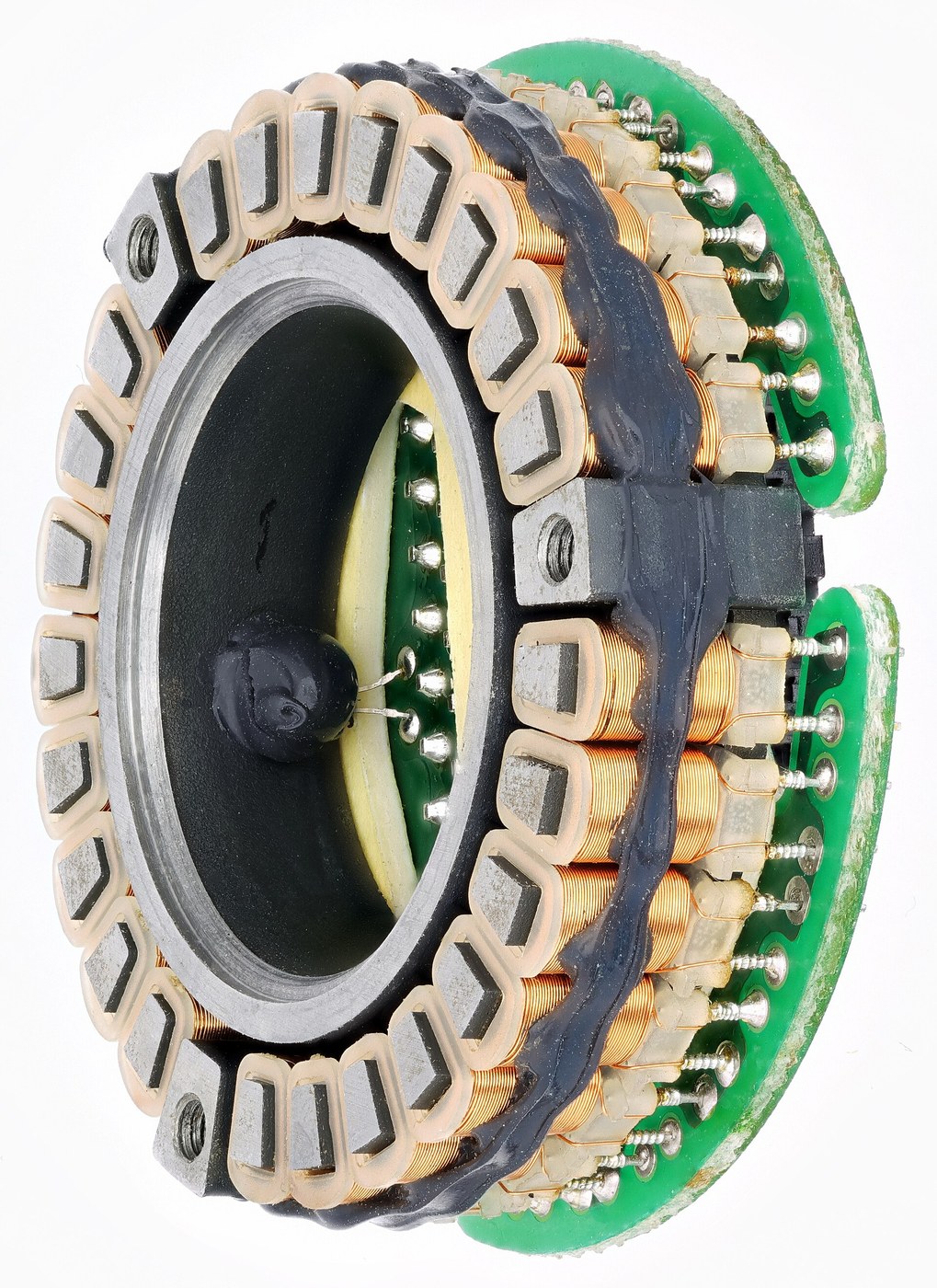


The Dot Matrix Impact Head
A typewriter carries every letter it can print, cast in metal, one piece per character. To print something it did not come with - a currency symbol, a Greek letter, a bar chart - you cannot. The type is the vocabulary.
The dot matrix head throws that away. It has no letters at all, only a vertical column of steel wires, each with a solenoid behind it, and it builds every shape out of dots as it sweeps across the page. OKI shipped the Wiredot in 1968 and Centronics put the idea on desks with the Model 101 in 1970, seven wires printing a five-by-seven grid. From that moment the printer stopped knowing what a letter was, and the character set moved into software.
The engineering is ballistic. Every dot is one round trip of a wire weighing a few tens of milligrams: accelerate it over half a millimetre, strike the ribbon, rebound, return, settle. Work out that cycle and you get a few thousand dots per second per wire, which divided by the columns in a character cell gives eighty to two hundred characters per second - exactly the range every 9-pin printer of the 1980s occupied. The speed of an entire generation of printers was set by the mass of nine small pieces of steel.
Going finer is not simply a matter of more wires. At 24 pins the vertical pitch is 0.141 mm and a 0.20 mm wire physically will not fit on it, so the head becomes two or three staggered columns fired at different instants as it sweeps. The geometry moves into the timing.
And it is still sold. A hammer transmits force through a stack of paper, so impact printing is the only desktop process that can make carbon copies - which is why delivery notes and dockets are still printed this way.
Pertengahan
3 hours
Arahan
1
1
Build one wire
Build one wire
Cut a 25 mm length of 0.3 mm piano wire, dress the striking end square on a stone, and glue it to the plunger of the small solenoid so it stands proud by half a millimetre. Set the gap to the platen with the feeler gauge.
Pulse the solenoid through the MOSFET with paper, a strip of inked ribbon and a backing roller in the way. One dot.
Bahan untuk langkah ini:
 Dawai piano30 mm
 Solenoid1 keping
 Reben kain bertinta untuk pencetak1 keping
 Kertas5 helaian
Alatan diperlukan:
 Bekalan Kuasa Bangku
 MOSFET saluran-N IRF540N
 Penjana Fungsi
 Set tolok sesat
 Batu Asah
2
2
Find the cycle time, and the carbon copy
Find the cycle time, and the carbon copy
Raise the pulse rate until the dots stop appearing. Watch the solenoid current on the scope: the flat top means the wire has stopped moving, the wobble after it is the rebound. That is the limit in the notebook, measured.
Then print onto two sheets with carbon paper between them and look at the second sheet under the microscope. No other desktop process can do this.
Bahan untuk langkah ini:
Kertas10 helaian Kertas karbon2 helaian
Alatan diperlukan:
 Osiloskop Digital
 Mikroskop DigitalPenjana Fungsi
3
3
Wire ballistics, staggered columns, and five printers
Wire ballistics, staggered columns, and five printers
Memuatkan buku nota Jupyter…
Alatan diperlukan:
 Komputer Meja
4
4
Compendium: the ribbon and the sound
Compendium: the ribbon and the sound
The ribbon is a loop of woven nylon soaked in an oil-based ink, and it is re-inked by being wound back through itself so the same square is struck many hundreds of times. Ink migrates sideways through the weave to refill a struck spot, which is why print fades gradually rather than stopping, and why a tired ribbon prints paler at the top of a character than at the bottom - the top wires fire less often. Nothing meters the ink; the weave does it.
The noise is not a fault, it is the process. Nine wires hitting a steel platen through two sheets of paper radiate straight out of the case, and 55 to 65 dB(A) at a desk is loud enough that acoustic hoods were a standard accessory. Every quieter technology in the table gets there by not hitting anything - and pays for it with the multipart column.
Bahan
5- 30 mmPemegang Tempat
- Pemegang Tempat
- Pemegang Tempat
- 15 helaianPemegang Tempat
- 2 helaianPemegang Tempat
Alatan Diperlukan
8- Pemegang Tempat
- Pemegang Tempat
- Pemegang Tempat
- Pemegang Tempat
- Pemegang Tempat
- 1 vendor sell this, none ship to you yetPemegang Tempat
- Pemegang Tempat
- Pemegang Tempat
Blueprint berkaitan
Blueprint ini berkongsi pengetahuan — teknik, bahan atau prinsip




CC0 Domain Awam
Blueprint ini dikeluarkan di bawah CC0. Anda bebas menyalin, mengubah, mengedar, dan menggunakan karya ini untuk sebarang tujuan, tanpa meminta kebenaran.
Sokong Pembuat dengan membeli produk melalui Blueprint mereka di mana mereka memperoleh Komisen Pembuat ditetapkan oleh Penjual, atau cipta iterasi baru Blueprint ini dan sertakan ia sebagai sambungan dalam Blueprint anda sendiri untuk berkongsi hasil.