SENI
KECANTIKAN & KESEJAHTERAAN
KRAFTANGAN
BUDAYA & SEJARAH
HIBURAN
ALAM SEKITAR
MAKANAN & MINUMAN
KEJURUTERAAN TERBALIK
SAINS
SUKAN
TEKNOLOGI
BOLEH PAKAI

The Clothes Wringer: Two Rollers and a Spring
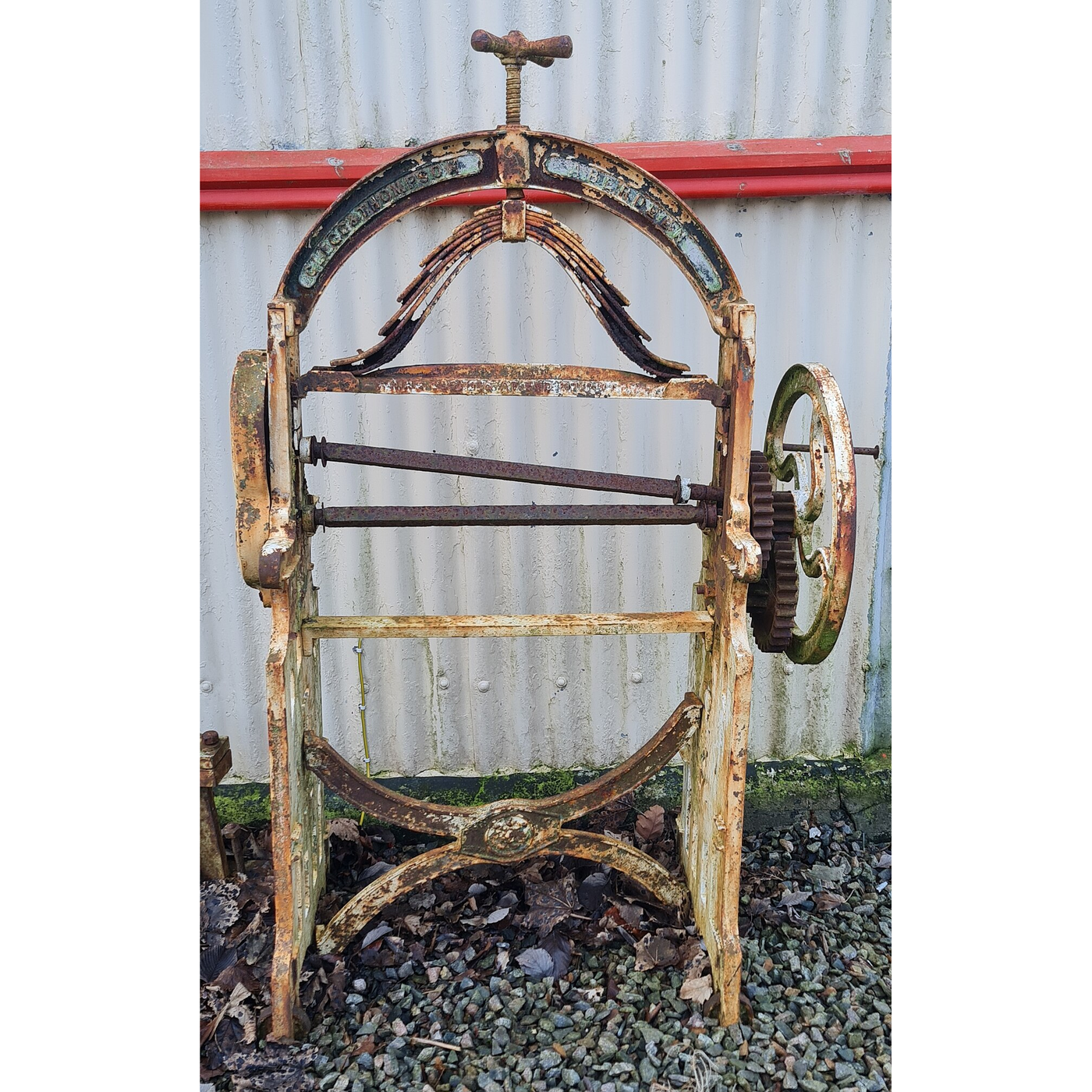
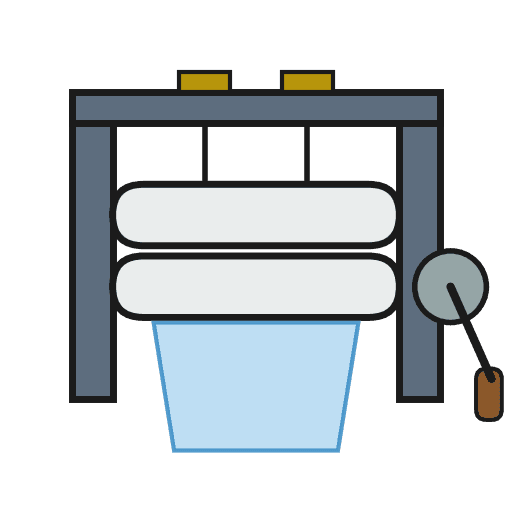
Washing clothes by hand leaves them heavy with water, and wringing a sheet by hand is slow, tiring and hard on the fabric. The wringer — two rubber rollers pressed together by springs and turned by a crank through gears — squeezes the water out as the cloth feeds through. Clamped to a tub or built onto a washing machine, it was in most homes that did their own washing for a century, until spin dryers took its place.
The design is a balance: more spring force takes out more water but needs more effort at the crank, wears the rubber and breaks buttons; the gearing trades speed for effort. And the nip that grips cloth grips fingers too — wringers had a release to spring the rollers apart.
This rung works out the crank effort and gearing and builds a small wringer.
Pemula
About 4 hours
Arahan
1
1
Crank effort, gearing and drying
Crank effort, gearing and drying
Memuatkan buku nota Jupyter…
2
2
Two rollers, a different job
Two rollers, a different job
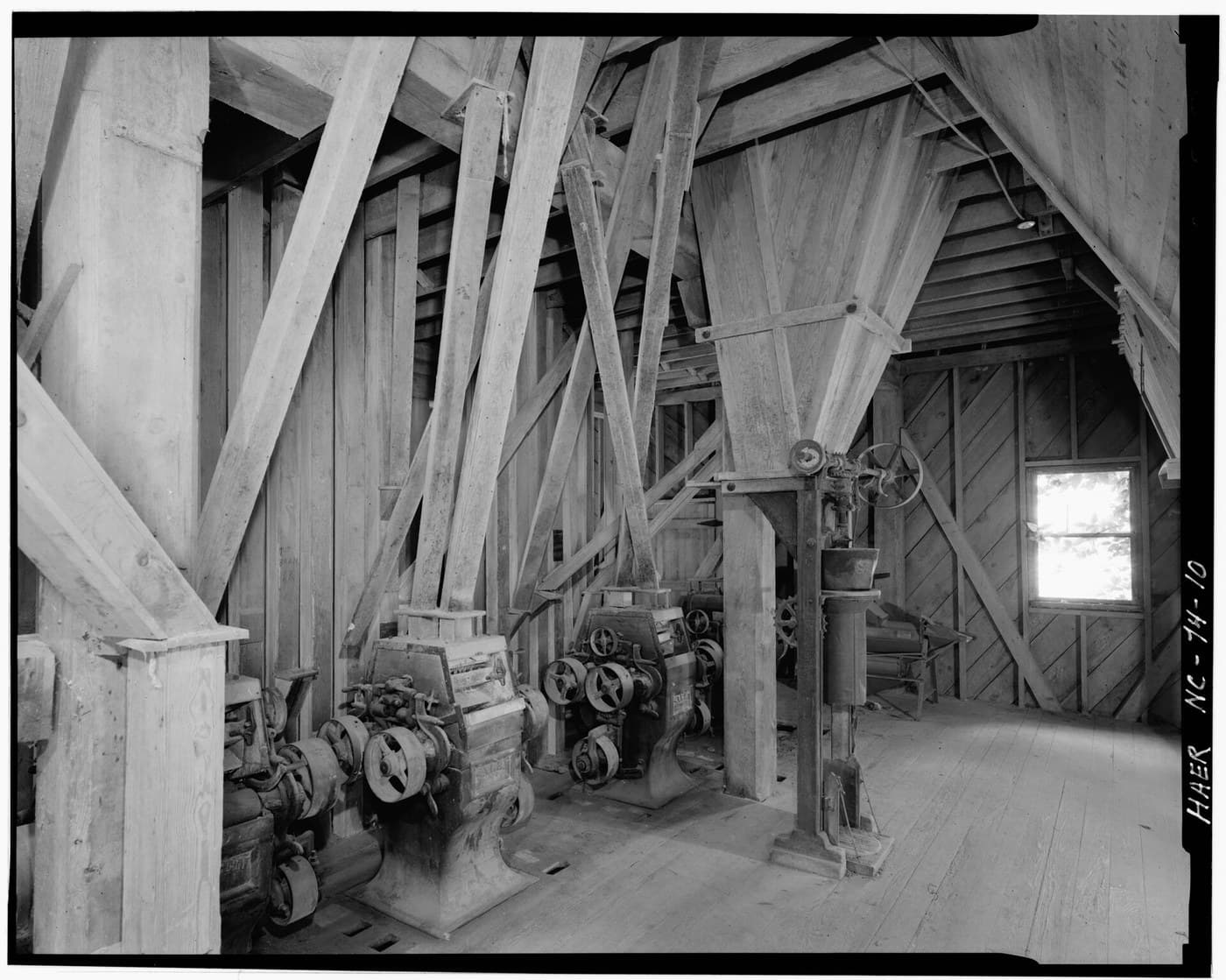
A roller mill crushes grain between rollers set a fixed gap apart; a wringer presses its rollers together with springs. The embedded blueprint shows the mill.
3
3
Build a small wringer
Build a small wringer
Cut two 250 mm lengths of 30 mm PVC pipe and slide each over a length of rubber hose, or wrap it tightly with rubber sheet glued down, to make the rollers. Run each on a steel shaft through holes in two plywood side frames: the bottom roller in fixed holes, the top roller in slots so it can move up.
Press the top shaft down with two compression springs under screw adjusters in the frame tops. Fit a crank to the bottom roller, and drive the top roller by gear or by friction from the bottom one. Add a lever that lifts the top roller's slot blocks against the springs — the safety release.
Soak cotton towels, weigh each wet, pass it through at three spring settings, and weigh again. Keep fingers well back from the nip: it pulls in whatever it grips.
Bahan untuk langkah ini:
 Paip PVC1 meter
 Kepingan getah1 keping
 Bar keluli mentah2 keping
 Kepingan papan lapis1 keping
 Pelbagai spring mampatan1 keping
 Skru mesin8 kepingPaip PVC1 keping
Alatan diperlukan:
 Gerudi Tanpa Wayar
 Set Mata Gerudi
 Penimbang Dapur Digital
 Sepana boleh laras
 Penembak gam panas
4
4
A wringer not wringing
A wringer not wringing
Wringer faults.
Flow
Loading...
5
5
Context and honest limits
Context and honest limits
Hand-cranked wringers and box mangles spread through nineteenth-century homes and laundries; powered wringers sat on top of early electric washing machines until spin drying replaced them in the mid-twentieth century.
**Honest limits.** The notebook's spring force, rolling arm and water contents are illustrative; measure your own. Wringers caused many injuries to hands and hair — keep children away from any wringer, and never reach toward the nip while it turns.
Bahan
6- 1 kepingPemegang Tempat
- 1 kepingPemegang Tempat
- 2 kepingPemegang Tempat
- 1 kepingPemegang Tempat
- 1 kepingPemegang Tempat
- 8 kepingPemegang Tempat
Alatan Diperlukan
5- 1 vendor sell this, none ship to you yetPemegang Tempat
- Pemegang Tempat
- Pemegang Tempat
- Pemegang Tempat
- Pemegang Tempat
Blueprint ini membuat
Blueprint berkaitan
Blueprint ini berkongsi pengetahuan — teknik, bahan atau prinsip




CC0 Domain Awam
Blueprint ini dikeluarkan di bawah CC0. Anda bebas menyalin, mengubah, mengedar, dan menggunakan karya ini untuk sebarang tujuan, tanpa meminta kebenaran.
Sokong Pembuat dengan membeli produk melalui Blueprint mereka di mana mereka memperoleh Komisen Pembuat ditetapkan oleh Penjual, atau cipta iterasi baru Blueprint ini dan sertakan ia sebagai sambungan dalam Blueprint anda sendiri untuk berkongsi hasil.