SENI
KECANTIKAN & KESEJAHTERAAN
KRAFTANGAN
BUDAYA & SEJARAH
HIBURAN
ALAM SEKITAR
MAKANAN & MINUMAN
KEJURUTERAAN TERBALIK
SAINS
SUKAN
TEKNOLOGI
BOLEH PAKAI
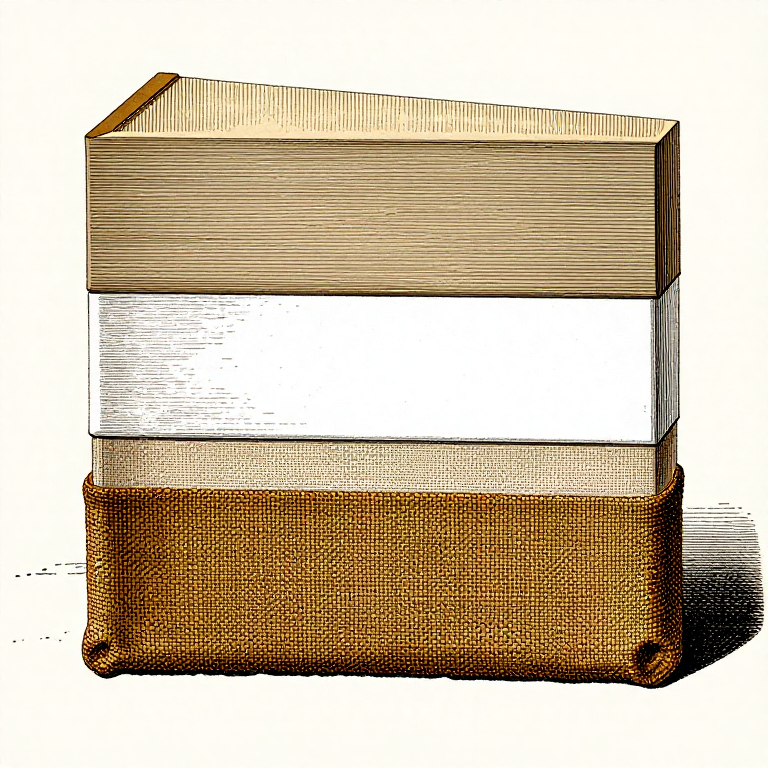


The Ground: Paint Needs Something to Hold On To, and Not Sink Into
Paint applied straight onto bare canvas or wood does two bad things at once: the binder soaks into the support, leaving the pigment under-bound on the surface, and the acid in the oil attacks the fibres underneath.
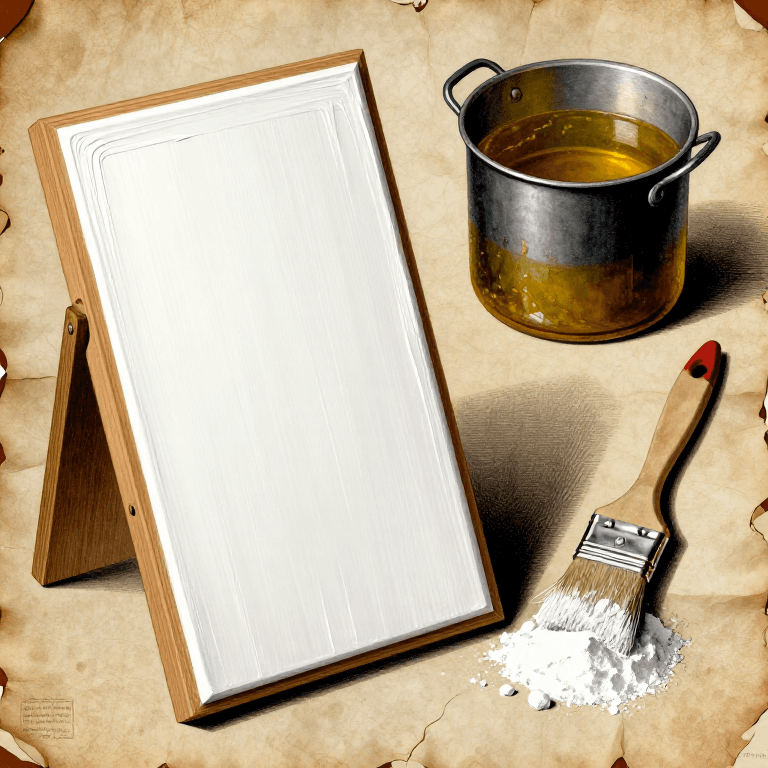
A GROUND sits between them. It seals the support so the binder stays where it belongs, gives the paint a surface with enough tooth to grip, and provides a consistent colour and absorbency to work on.
Traditional grounds are two layers doing two jobs: a SIZE that seals, then a GROUND that provides the working surface. Modern acrylic gesso tries to do both at once, which works and is a compromise worth understanding rather than assuming.
Pertengahan
3 hours
Arahan
1
1
Size first: seal the fibres
Size first: seal the fibres
Size is a thin glue layer applied to bare canvas or panel. Its only job is to stop what comes next soaking in, and to protect the fibres from the oil.
Traditional size is animal glue — rabbit skin glue — applied warm and thin. It works beautifully and it has one serious flaw: it absorbs and releases moisture with the weather, so it swells and shrinks for ever, and that movement is transmitted to every layer above.
Modern practice often uses an acrylic medium or PVA size instead, which does not respond to humidity. That is a genuine improvement, and it is why a 400-year-old painting and a modern one crack in different patterns.
Bahan untuk langkah ini:
 Kanvas pelukis (terenggang)1 keping
 Air1 liter
Alatan diperlukan:
 Set berus pelukis
 Bikar Kaca
 Penimbang Jitu
2
2
Ground second: colour, tooth and absorbency
Ground second: colour, tooth and absorbency
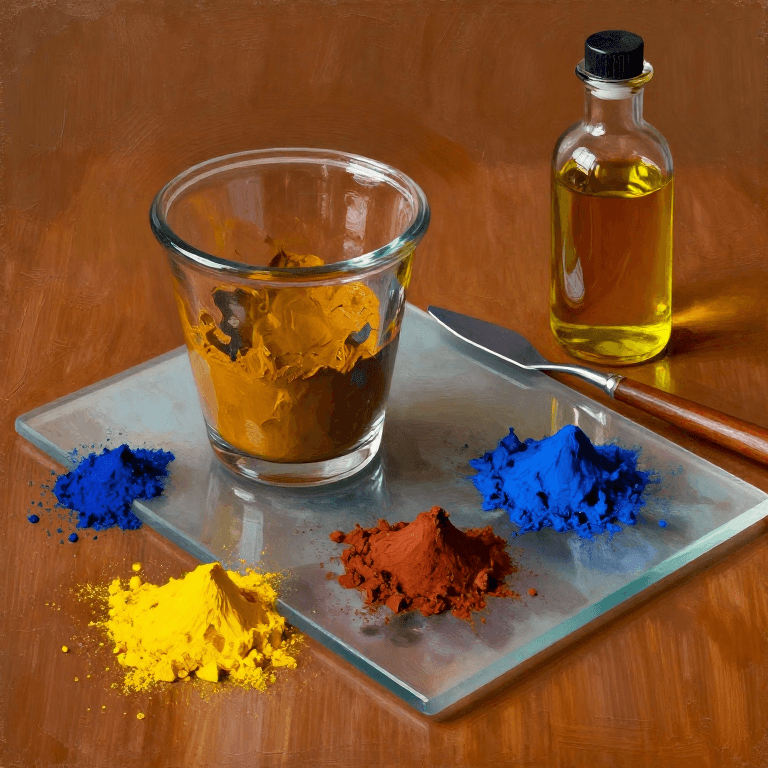
The ground is the surface you actually paint on, and it has three properties worth choosing deliberately. Its COLOUR shows through thin paint and affects every mixture laid over it — which is why a toned ground is a technique rather than a shortcut.
Its TOOTH is the microscopic roughness that gives the paint something to key into. A ground sanded perfectly smooth has very little, and paint on it can be scraped off years later with a fingernail.
Its ABSORBENCY decides how much binder the ground takes from the first paint layer. A very absorbent ground makes that layer lean and matt — which is useful deliberately, and a problem if it was not intended.
Bahan untuk langkah ini:
Kanvas pelukis (terenggang)1 keping Set Serbuk Pigmen Tanah1 keping
Alatan diperlukan:
Set berus pelukis Pembaris
 Kanta Pembesar Tukang Emas
3
3
Traditional gesso is not acrylic gesso
Traditional gesso is not acrylic gesso
TRUE GESSO is chalk or gypsum in animal glue. It dries brittle, sands to a glass-smooth surface, and is used on rigid panels only — flexed on canvas it cracks immediately.
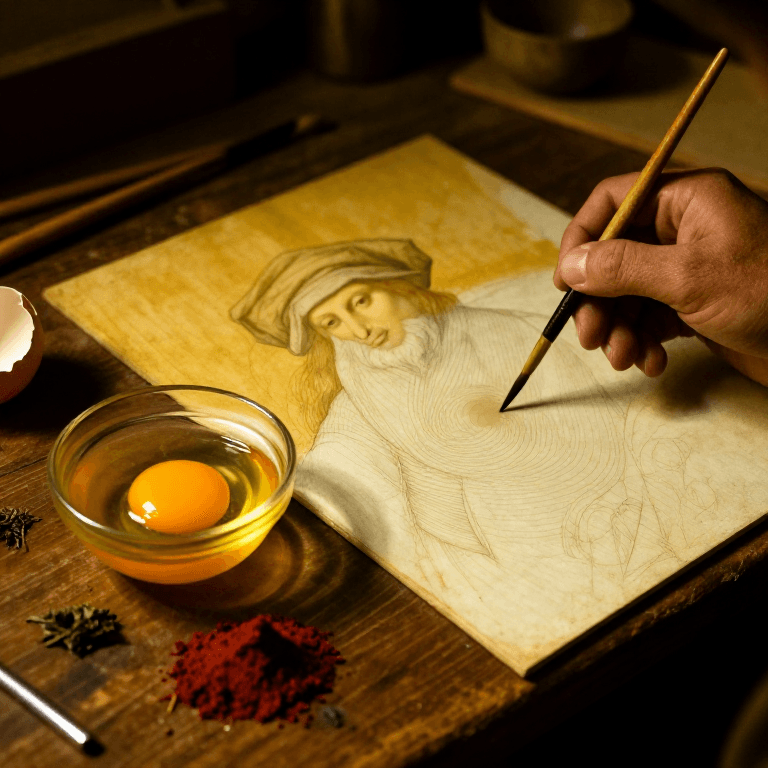
ACRYLIC 'gesso' shares the name and almost nothing else. It is titanium white and filler in acrylic dispersion: flexible, water-resistant, usable on canvas, and much less absorbent. It cannot be sanded to the same polish and it does not take egg tempera well.
So the choice follows the support and the medium. A rigid panel for tempera or gilding wants true gesso; a stretched canvas for oil or acrylic wants the acrylic kind. Putting true gesso on canvas is a known and avoidable failure.
Bahan untuk langkah ini:
 Papan Kayu Keras1 kepingKanvas pelukis (terenggang)1 keping
Alatan diperlukan:
Set berus pelukisPembarisKanta Pembesar Tukang Emas4
4
Match the layers, or build in a failure
Match the layers, or build in a failure
Every layer in the stack expands, contracts and flexes at its own rate. Where two neighbouring layers differ a lot, the interface between them is where the painting will fail — which is the same mismatch argument as glaze fit on a pot and wood movement in a joint.
The rule that follows: each layer should be no more rigid than the one beneath it. A brittle ground on a flexible support, or a hard fast-drying paint over a soft one, is a crack scheduled for later.
Oil paint over acrylic ground is fine and standard. Acrylic over dried OIL is not: acrylic does not bond to an oily surface and will eventually peel off in sheets. That one is worth remembering as an absolute.
Bahan untuk langkah ini:
Kanvas pelukis (terenggang)1 keping Minyak Biji Rami1 keping
Alatan diperlukan:
Set berus pelukisKanta Pembesar Tukang EmasBahan
5- 4 kepingPemegang Tempat
- 1 literPemegang Tempat
- 1 kepingPemegang Tempat
- 1 kepingPemegang Tempat
- 1 kepingPemegang Tempat
Blueprint ini membuat
Blueprint berkaitan
Blueprint ini berkongsi pengetahuan — teknik, bahan atau prinsip

CC0 Domain Awam
Blueprint ini dikeluarkan di bawah CC0. Anda bebas menyalin, mengubah, mengedar, dan menggunakan karya ini untuk sebarang tujuan, tanpa meminta kebenaran.
Sokong Pembuat dengan membeli produk melalui Blueprint mereka di mana mereka memperoleh Komisen Pembuat ditetapkan oleh Penjual, atau cipta iterasi baru Blueprint ini dan sertakan ia sebagai sambungan dalam Blueprint anda sendiri untuk berkongsi hasil.