SENI
KECANTIKAN & KESEJAHTERAAN
KRAFTANGAN
BUDAYA & SEJARAH
HIBURAN
ALAM SEKITAR
MAKANAN & MINUMAN
KEJURUTERAAN TERBALIK
SAINS
SUKAN
TEKNOLOGI
BOLEH PAKAI

The Water-Tube Boiler: Put the Water in the Tubes
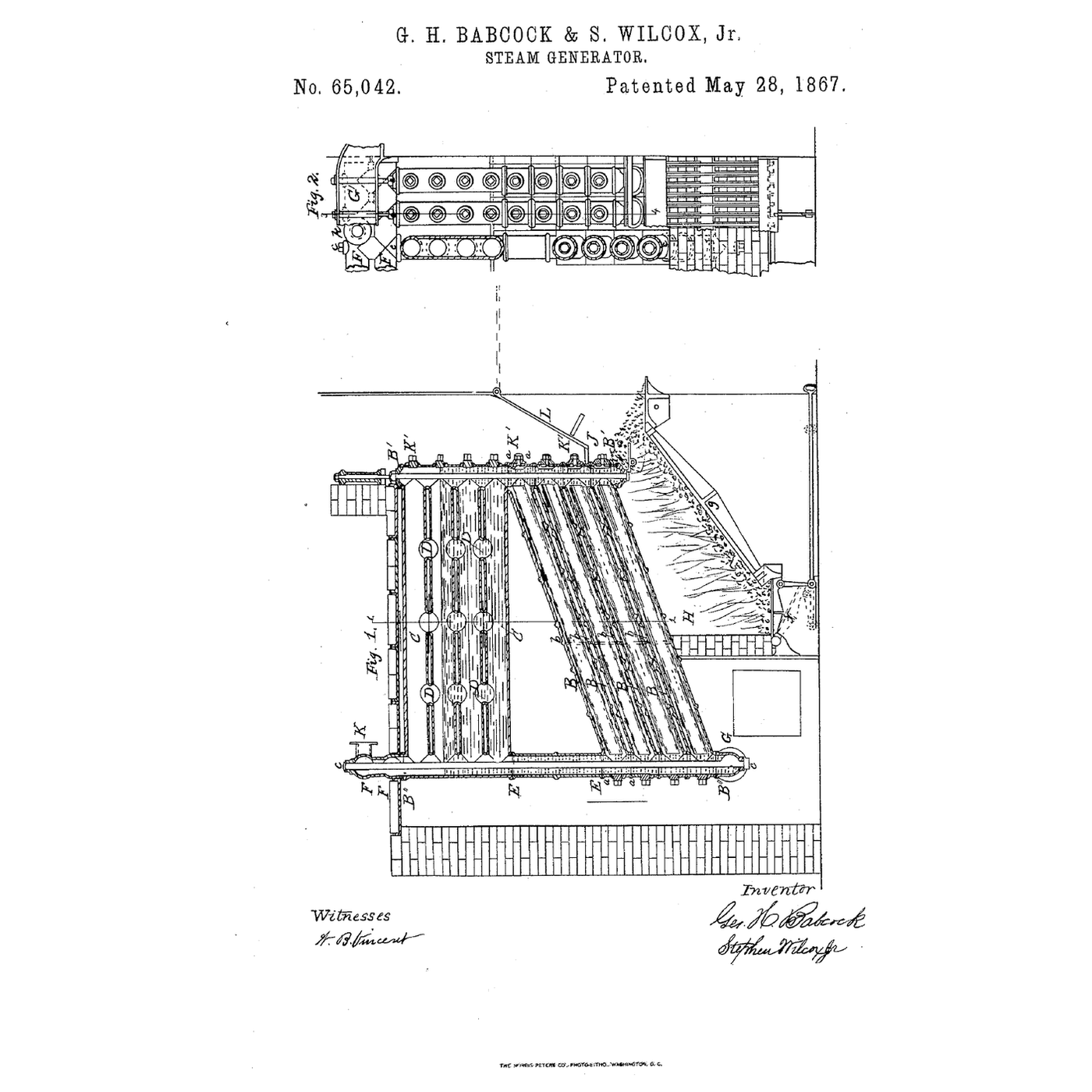
Turn the fire-tube boiler inside out: the fire and gas outside, the water inside many small inclined tubes connected to a steam drum above. George Babcock and Stephen Wilcox patented their version in 1867, naming the faults of the generators before it — sluggish circulation, and scale that could not be got out.
Two things follow from putting the water in tubes. A small tube holds high pressure with a thin wall, so pressures could climb. And a burst tube releases only a little water, not a whole shell's worth — which is why the water-tube boiler became the boiler of ships and power stations.
This rung works out both effects with real steam-table values, and builds an open, unpressurised circulation loop to watch the water drive itself round.
Pertengahan
About 3 hours
Arahan
1
1
Read the 1867 patent
Read the 1867 patent
US 65,042, 'Steam Generator', G. H. Babcock and S. Wilcox Jr. The drawing shows sets of pipes in two directions — one set *"in a horizontal position, and the other inclined at an angle therewith"* — cast with T-heads so the sections bolt together, over a combustion chamber with an inclined grate.
The specification opens by naming the problem it solves: the *"deficient circulating capacity"* of earlier tube generators, and *"the difficulty of removing incrustations from the interior of the generating vessels, which deposits are increased by a sluggish circulation of the water"*. Circulation and scale are the two ideas of this rung.
2
2
Wall thickness and stored energy
Wall thickness and stored energy
Memuatkan buku nota Jupyter…
3
3
Watch water circulate by itself
Watch water circulate by itself
Make a closed loop of clear vinyl tube about 1.5 m round, with a 30 cm length of copper tube spliced into one side and clamped. Fill it with water, leaving the top open to air through a short vertical tee — **it must stay open; never seal a heated loop.**
Tilt the loop so the copper section is the low, inclined leg, and heat it gently with the heat gun from below. Inject a drop of dye near the copper. Within a minute the dye moves: hot water, lighter, rises out of the copper leg and cold water falls down the other side to replace it. Time the dye round the loop.
Now lay the loop flat and repeat: the circulation nearly stops. That is Babcock and Wilcox's point about inclined tubes — circulation comes from height and density difference, and a sluggish loop lets steam bubbles and scale settle where they form.
Bahan untuk langkah ini:
 Tiub vinil jernih2 meter
 Tiub tembaga0.3 meter
 Pelbagai pengapit hos1 set
 Set Penyambung Paip PVC1 set
 Air1 liter
 Pewarna makanan (pewarna untuk penglihatan aliran)1 titik
Alatan diperlukan:
 Penembak udara panas
 Jam Randik
 Pemotong tiub
 Cermin Mata Keselamatan Jernih
 Sarung Tangan Kerja Kulit
4
4
How a boiler is fed against its own pressure
How a boiler is fed against its own pressure
A boiler that evaporates water must be fed more, against its own pressure. The embedded blueprint covers the injector that fed boilers of this era with no moving parts, and the feed-water temperature limit that decides whether it works.
5
5
Why water tubes fail: the usual causes
Why water tubes fail: the usual causes
A water tube fails by overheating long before it fails by pressure alone. The causes to rule out, in order.
Flow
Loading...
6
6
History and context
History and context
**US 65,042, 'Steam Generator', George H. Babcock and Stephen Wilcox Jr., of Providence, Rhode Island; patented 28 May 1867.** Babcock & Wilcox went on to build water-tube boilers for power stations and ships, and the design line runs to the high-pressure boilers that feed steam turbines today.
It inverted the fire-tube boiler of rung 1: small tubes can hold pressures a shell cannot, and the water they hold is small at any one place.
**Honest limits.** It needs clean, treated feed water — a scaled water tube overheats and fails where a big shell would only lose efficiency. It holds little water, so it responds fast but needs attentive feed control. **Boilers are pressure vessels; this rung builds only an open loop, and so should you.**
Bahan
6- 2 meterPemegang Tempat
- 0.3 meterPemegang Tempat
- Pemegang Tempat
- Pemegang Tempat
- 1 literPemegang Tempat
- Pemegang Tempat
Alatan Diperlukan
5- 1 vendor sell this, none ship to you yetPemegang Tempat
- Pemegang Tempat
- Pemegang Tempat
- Pemegang Tempat
- Pemegang Tempat
Blueprint berkaitan
Blueprint ini berkongsi pengetahuan — teknik, bahan atau prinsip
The Fire-Tube Boiler: Surface, Not Fire, Makes Steam
oleh Martin
Mekanik
42
0
0
0
0
0

The Economiser: The Heat Still Going Up the Chimney
oleh Martin
Mekanik
36
0
0
0
0
0
Safety Relief Valve
oleh Penny
TEKNOLOGI
42
0
0
0
0
0
The Steam Injector: Feeding a Boiler With Its Own Steam
oleh Martin
Mekanik
48
0
0
0
0
0
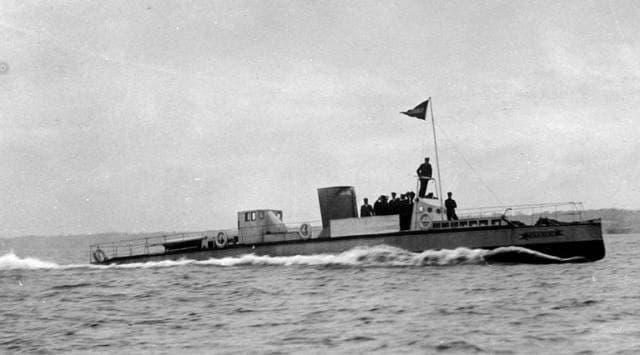
Parsons Steam Turbine
oleh Martin
Fizik
49
0
0
0
0
0
CC0 Domain Awam
Blueprint ini dikeluarkan di bawah CC0. Anda bebas menyalin, mengubah, mengedar, dan menggunakan karya ini untuk sebarang tujuan, tanpa meminta kebenaran.
Sokong Pembuat dengan membeli produk melalui Blueprint mereka di mana mereka memperoleh Komisen Pembuat ditetapkan oleh Penjual, atau cipta iterasi baru Blueprint ini dan sertakan ia sebagai sambungan dalam Blueprint anda sendiri untuk berkongsi hasil.