IṢẸ́ ỌNÀ
ẸWÀ ÀTI ÌLERA
IṢẸ́ ỌWỌ́
ÀṢÀ ÀTI ÌTÀN
ÌṢERÉ
ÀYÍKÁ
OÚNJẸ ÀTI OHUN MÍMU
REVERSE ENGINEERING
SÁYẸ́ǸSÌ
ERÉ ÌDÁRAYÁ
ÌMỌ̀-Ẹ̀RỌ
ÀWỌN OHUN WÍWỌ̀
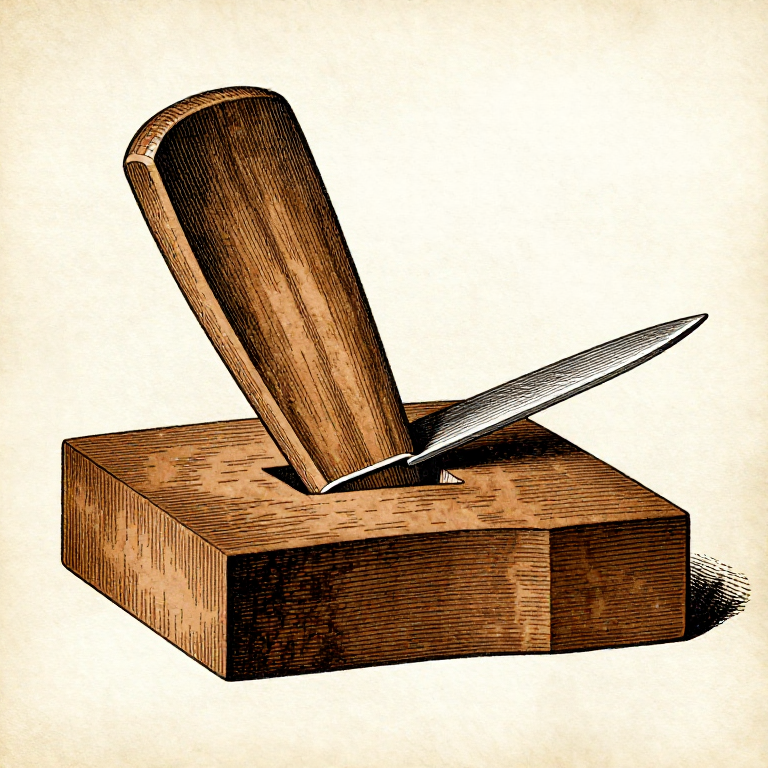


Fit: A Joint That Needs a Mallet Is Too Tight
A joint you have to drive home with a mallet will not be stronger for it. It will be weaker, because the fibres are crushed, there is nowhere for the glue to sit, and the glue that was there has been scraped off on the way in.
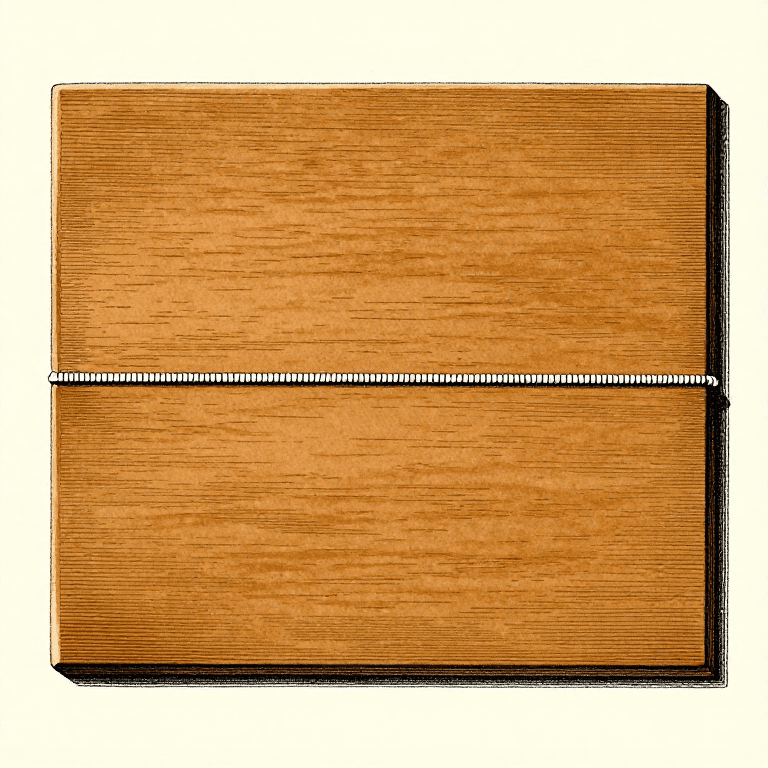
The target is a joint that goes together with firm hand pressure, or at most a few light taps, and stays together on its own when you let go. That leaves a glue line a few hundredths of a millimetre thick, which is what modern wood glues are formulated for.
A slack joint is also a bad joint, and for the opposite reason: PVA has essentially no gap-filling ability, so a visible gap is a joint held by a brittle film of dried glue. The useful range between the two is narrow, and it is worth knowing in numbers.
Àárín
3 hours
Ìlànà
1
1
How tight is right, in numbers
How tight is right, in numbers
Ń ṣí ìwé Jupyter…
Àwọn ohun èlò fún ìgbésẹ̀ yìí:
 Pátákó Igi Líle1 ẹyọ
 Ìdìpọ̀ Igi PVA1 ẹyọ
Àwọn irinṣẹ́ tí a nílò:
 Ìdìpọ̀ òǹwọ̀n àyè
 Òṣùwọ̀n Kálípà Díjítà Ìnṣì 6
 Kọ̀ǹpútà Tábìlì
2
2
Pare to fit, and pare the right piece
Pare to fit, and pare the right piece
Push the joint together until it binds, then look for the shiny spots — where it has rubbed is where it is tight. Pare those and only those. Taking a shaving off the whole cheek turns a tight joint straight into a slack one.
A sharp chisel takes a controlled shaving; a dull one skips and digs. Fitting is the operation that most rewards a freshly honed edge, and most punishes a tired one.
Pare the part that is hidden. On a mortise and tenon, pare the tenon rather than the mortise walls, because the tenon disappears. On a dovetail, pare the pins.
Àwọn ohun èlò fún ìgbésẹ̀ yìí:
Pátákó Igi Líle1 ẹyọÀwọn irinṣẹ́ tí a nílò:
 Àwọn ìtànná igi
 Ìdìmú TábìlìÒṣùwọ̀n Kálípà Díjítà Ìnṣì 6
3
3
Fit dry, and only once
Fit dry, and only once
Assemble the whole thing dry, check it for square and for wind, and take it apart again. That is the dry-run rung, and this is the rung where it pays: a joint discovered to be tight with glue in it is a genuine emergency.
Assemble dry as FEW times as possible. Wood compresses a little each time, so a joint tested five times is looser than the one tested once. If a joint is right, leave it alone.
Number the joints as you take them apart. Hand-fitted joints are fitted to each other and are not interchangeable, and a pencil mark on the inside face saves finding that out during the glue-up.
Àwọn ohun èlò fún ìgbésẹ̀ yìí:
Pátákó Igi Líle1 ẹyọÀwọn irinṣẹ́ tí a nílò:
 Igun Àpapọ̀
 Igi méjì ìwádìí ìyípo
 Ìdìmú oní-ọ̀pá
4
4
The clamps are for holding it, not for closing it
The clamps are for holding it, not for closing it
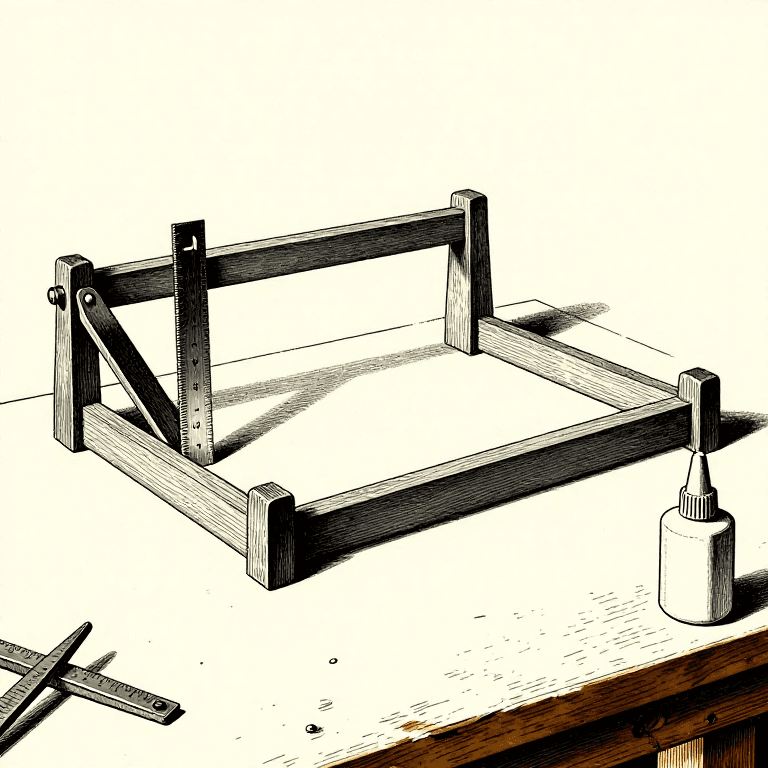
If the joint needs clamp pressure to close, it does not fit. Clamps are there to hold surfaces in contact while the glue cures, and to squeeze the line thin — not to drag parts into position.
A frame pulled square by clamps springs back out of square the moment they come off, because nothing has changed about the geometry of the parts. The shoulders are what make it square, and clamps cannot fix a shoulder.
Which makes the whole batch one argument. The wood will move whatever you do; the joint holds because its long grain is glued and its shape interlocks; and the fit is what decides whether the glue line is a bond or a filler. None of those can be corrected with pressure at the end.
Àwọn ohun èlò fún ìgbésẹ̀ yìí:
Ìdìpọ̀ Igi PVA1 ẹyọÀwọn irinṣẹ́ tí a nílò:
Ìdìmú oní-ọ̀páIgun Àpapọ̀Àwọn irinṣẹ́ tó nílò
8- Àyè
- Àyè
Blueprint tó jọra
Àwọn blueprint wọ̀nyí pín ìmọ̀ — ọ̀nà, ohun-èlò tàbí ìlànà

CC0 Àgbègbè Gbogbogbò
Blueprint yìí ti jáde lábẹ́ CC0. O lè ṣe àdàkọ, yí padà, pín, àti lò láìsí ìyọ̀ǹda.
Ṣàtìlẹ́yìn Olùṣẹ́dá nípa rírà àwọn ọjà nipasẹ̀ Blueprint wọn Ẹ̀san Olùṣẹ́dá tí àwọn Olùtajà gbé kalẹ̀, tàbí ṣẹ̀dá àtúnṣe tuntun ti Blueprint yìí kí o sì fi sínú Blueprint rẹ gẹ́gẹ́ bí ìsopọ̀ láti pín owó-wíwọlé.