IṢẸ́ ỌNÀ
ẸWÀ ÀTI ÌLERA
IṢẸ́ ỌWỌ́
ÀṢÀ ÀTI ÌTÀN
ÌṢERÉ
ÀYÍKÁ
OÚNJẸ ÀTI OHUN MÍMU
REVERSE ENGINEERING
SÁYẸ́ǸSÌ
ERÉ ÌDÁRAYÁ
ÌMỌ̀-Ẹ̀RỌ
ÀWỌN OHUN WÍWỌ̀
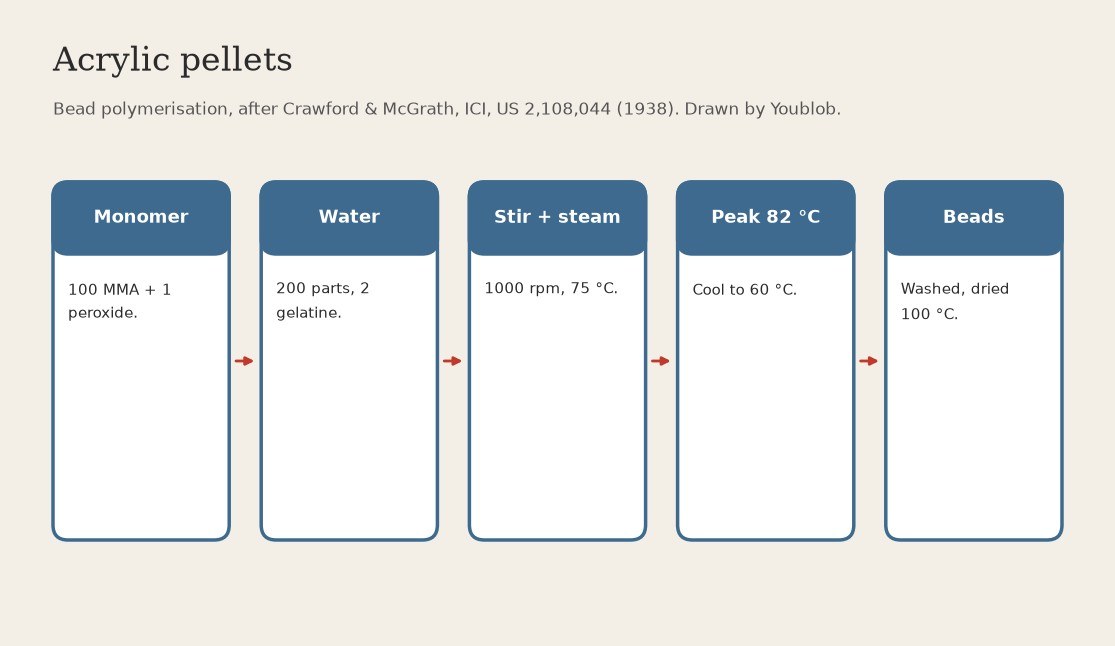


Acrylic Pellets: Methyl Methacrylate Stirred into Beads in Gelatine Water at 75 °C (Crawford & McGrath, ICI, US 2,108,044)
Stirred hard enough in water with a little gelatine, methyl methacrylate breaks into droplets that harden into separate beads of acrylic instead of one solid lump. ICI's beads settle out, wash easily and go straight to the moulding press.
Result: hard acrylic granules, used as moulding and extrusion pellets (they are beads, not cut pellets).
Source: Crawford & McGrath, US 2,108,044 (ICI, 1938), Examples 5 and 6. Picture drawn by Youblob.
Ilọsíwájú
1 day
Ìlànà
1
1
Dissolve 1 part benzoyl peroxide in 100 parts monomer
Dissolve 1 part benzoyl peroxide in 100 parts monomer
Dissolve 1 part by weight of benzoyl peroxide in 100 parts of methyl methacrylate.
Àwọn ohun èlò fún ìgbésẹ̀ yìí:
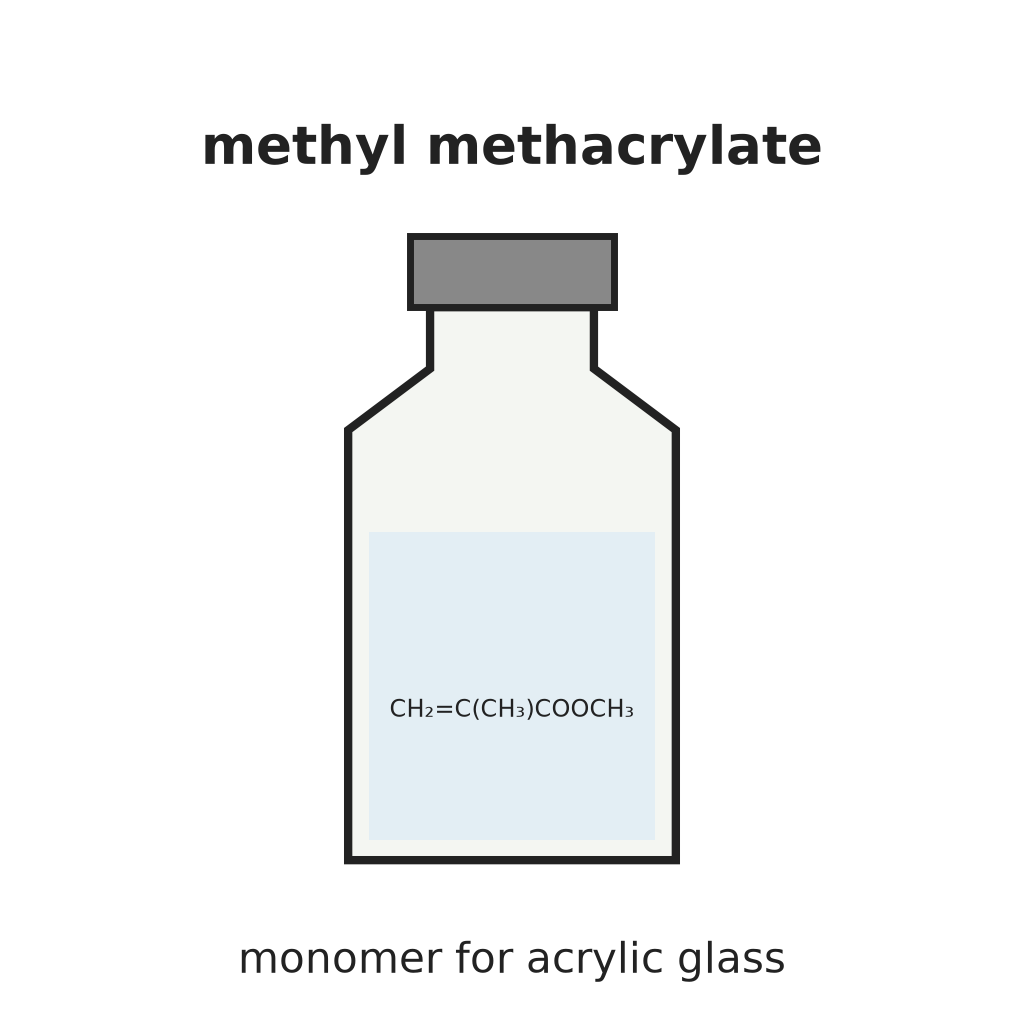 Methyl Methacrylate100 parts by weight
 Benzoyl peroxide1 part by weight
Àwọn irinṣẹ́ tí a nílò:
 Òǹwọ̀n ìdọ́gba
2
2
Mix with 200 parts of water holding 2 parts gelatine
Mix with 200 parts of water holding 2 parts gelatine
Mix it with 200 parts of water containing 2 parts of gelatine in solution (Example 6; Example 5 uses a soluble starch instead).
Àwọn irinṣẹ́ tí a nílò:
 Ìyẹ̀fun gelatin
 Omi
 Ìkòkò ìṣe polymer oníbora
3
3
Stir at 1000 rpm and blow in steam to 75 °C
Stir at 1000 rpm and blow in steam to 75 °C
Stir at 1000 rpm and blow steam into the stirred mixture to bring it to 75 °C, and hold it there. After about 115 minutes the temperature starts to rise by itself: shut off the steam.
Àwọn irinṣẹ́ tí a nílò:
 Ohun ìrúwé
 Bọ́ìlà èéfín omi
 Ẹ̀rọ Ìwọ̀n Ooru Yàrá Ìwádìí
4
4
At the 82 °C peak, cool to 60 °C with cold water
At the 82 °C peak, cool to 60 °C with cold water
When the temperature peaks at 82 °C, cool the mixture to 60 °C by adding cold water.
Àwọn irinṣẹ́ tí a nílò:
Omi5
5
Centrifuge, wash and dry at 100 °C
Centrifuge, wash and dry at 100 °C
Separate the granules in a centrifuge and wash them with 1 % hydrochloric acid, water, 2 % ammonia solution, and repeatedly with water. Dry them at 100 °C.
Àwọn irinṣẹ́ tí a nílò:
 Ẹ̀rọ yíyí agbọ̀n
 Hydrochloric acid
 Omi amonia - fífẹ́lẹ̀
 Ààrò ìgbẹ̀
Àwọn ohun-èlò
2- 100 parts by weightÀyè
- 1 part by weightÀyè
Àwọn irinṣẹ́ tó nílò
11- Àyè
- Àyè
- Àyè
Ìtọ́nisọ́nà yìí ń ṣe
Blueprint tó jọra
Àwọn blueprint wọ̀nyí pín ìmọ̀ — ọ̀nà, ohun-èlò tàbí ìlànà

CC0 Àgbègbè Gbogbogbò
Blueprint yìí ti jáde lábẹ́ CC0. O lè ṣe àdàkọ, yí padà, pín, àti lò láìsí ìyọ̀ǹda.
Ṣàtìlẹ́yìn Olùṣẹ́dá nípa rírà àwọn ọjà nipasẹ̀ Blueprint wọn Ẹ̀san Olùṣẹ́dá tí àwọn Olùtajà gbé kalẹ̀, tàbí ṣẹ̀dá àtúnṣe tuntun ti Blueprint yìí kí o sì fi sínú Blueprint rẹ gẹ́gẹ́ bí ìsopọ̀ láti pín owó-wíwọlé.