IṢẸ́ ỌNÀ
ẸWÀ ÀTI ÌLERA
IṢẸ́ ỌWỌ́
ÀṢÀ ÀTI ÌTÀN
ÌṢERÉ
ÀYÍKÁ
OÚNJẸ ÀTI OHUN MÍMU
REVERSE ENGINEERING
SÁYẸ́ǸSÌ
ERÉ ÌDÁRAYÁ
ÌMỌ̀-Ẹ̀RỌ
ÀWỌN OHUN WÍWỌ̀

Air-Pump Tube Dasher: A Tube Over a Loose Plunger Pumps Air at Every Stroke
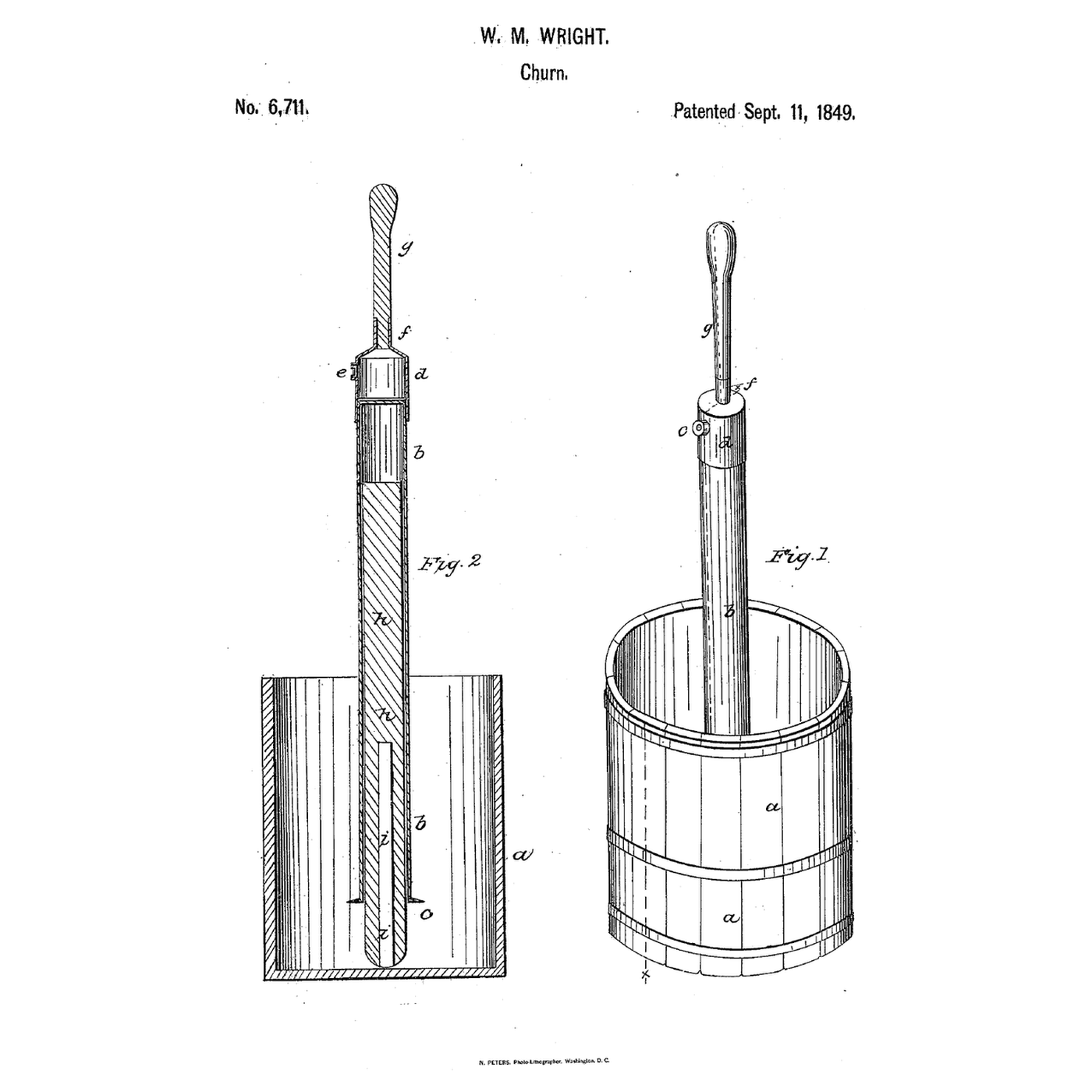
Wright wanted a hand dasher that "will operate as an air pump to force a stream of air into the cream at the same time that it agitates it."
William M. Wright of Pittsburgh, Pennsylvania, received US 6,711, dated 11 September 1849, for an atmospheric churn-dasher: a tube of tinned sheet iron with a flange on its lower end, a cap with a valve opening inward, and a handle; inside, a loose cylinder of wood weighted at its lower end rests on the bottom of the tub as a plunger. Worked like a common dasher in "almost any ordinary pail or dairy vessel," it discharges air among the cream on each descent and refills on each ascent.
This rung works out the air per stroke, then prints the cap, flange and plunger, assembles them on a pipe, and makes butter in a pail.
Olùbẹ̀rẹ̀
About 1 hour, plus printing
Ìlànà
1
1
Air per stroke
Air per stroke
Ń ṣí ìwé Jupyter…
2
2
A dash closing over a fixed block before it
A dash closing over a fixed block before it
The embedded blueprint squeezes air from a hollow dash over a block fixed to the churn. Wright's plunger is loose, so it needs no fixing at all.
3
3
Read US 6,711
Read US 6,711
"From the fact of the piston resting loosely upon the bottom of the tub, and being capable of moving about and occupying a vertical or inclined position as may best suit the convenience of the operator, and also from the facility with which it and the dasher may be removed from the churn tub and cleaned, and from the simplicity of all the parts being a guarantee against their getting out of order, this apparatus is applicable to churning cream in either large or small quantities."
4
4
Print the parts
Print the parts
Print the cap (/uploads/blueprints/air-pump-tube-dasher-cap.stl) with its side valve port and handle socket, the foot flange (/uploads/blueprints/air-pump-tube-dasher-flange.stl), and the plunger (/uploads/blueprints/air-pump-tube-dasher-plunger.stl), whose foot has a pocket for a steel weight. Print in PETG at 0.2 mm layers, 30 % infill, 4 walls; wash before first use.
Àwọn ohun èlò fún ìgbésẹ̀ yìí:
 Okùn PETG1 ẹyọ
Àwọn irinṣẹ́ tí a nílò:
 Ẹ̀rọ ìtẹ̀ 3D oníwàyà (FDM)
5
5
Valve and weight
Valve and weight
Glue a small leather flap inside the cap over the valve port, along its top edge only, so air enters and cannot leave. Glue an M10 carriage bolt into the plunger's pocket, so it sinks in cream as he weighted his with metal.
Àwọn ohun èlò fún ìgbésẹ̀ yìí:
 Tẹ́ẹ́rẹ́ awọ1 ẹyọ
 Bọ́ọ̀tù orí róbótó1 ẹyọ
 Ẹpọ́ksì Ẹ̀yà Méjì1 ẹyọ
Àwọn irinṣẹ́ tí a nílò:
 Ìṣù àwọn ohun ìyí skurú
6
6
Assemble
Assemble
Cut 300 mm of 50 mm pipe. Push the flange onto its foot and the cap onto its top, and glue a hardwood dowel handle in the cap's socket. Stand the plunger in a tall food-grade bucket and lower the tube over it.
Àwọn ohun èlò fún ìgbésẹ̀ yìí:
 Páìpù PVC1 ẹyọ
 Àwọn dowel igi líle1 ẹyọ
 Bàkẹ́ẹ̀tì Lítà 201 ẹyọẸpọ́ksì Ẹ̀yà Méjì1 ẹyọ
Àwọn irinṣẹ́ tí a nílò:
 Ayùn Irin
 Bébà Ìfá
7
7
The build in 3D
The build in 3D
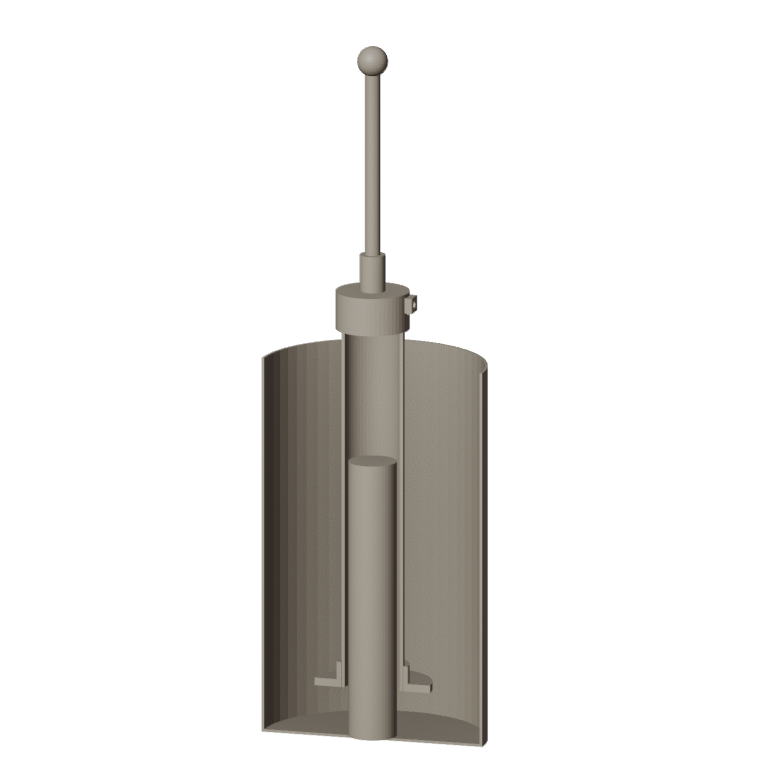
FreeCAD model of this build, not of the patent: the pail, tube and flange cut away to show the loose weighted plunger standing on the bottom inside the tube, the cap with its valve, and the handle.
8
8
Dash and make butter
Dash and make butter
Let the heavy cream stand until it reaches about 15 °C, checked with the thermometer. Pour in 2 litres. Work the tube up and down over the plunger; bubbles should burst from under the flange on each down-stroke. Time until the butter comes. Pour off the buttermilk, add cold water, churn a little and pour off again until it runs clear; work in a pinch of salt and weigh the butter.
Àwọn ohun èlò fún ìgbésẹ̀ yìí:
 Ọ̀rá wàrà tó nípọn2000 ml
 Iyọ̀ Òkun Rúkèrúdò1 ẹyọ
 Omi1 ẹyọ
Àwọn irinṣẹ́ tí a nílò:
 Ẹ̀rọ ìwọ̀n ooru oníhun tí ó dúró sí inú
 Aago Ìdúró
 Òṣùwọ̀n Díjítà Ilé Ìdáná
 Àwo ìdàpọ̀ ńlá ti irin tí kò ń yá
9
9
No bubbles, a plunger that floats
No bubbles, a plunger that floats
Air-pump tube dasher troubleshooting.
Flow
Loading...
10
10
History and honest limits
History and honest limits
**William M. Wright** of Pittsburgh, Allegheny County, Pennsylvania, received US 6,711, dated 11 September 1849. The plunger was to be "specifically heavier than cream," or wood weighted with a plug of metal; the tub could be any pail, "particularly, if it be deep in comparison with its width." He claimed the combination of the loose plunger with the tubular dasher.
**Honest limits.** A pipe and printed parts stand in for his tinned sheet-iron tube; use a food-grade pipe. FDM prints hold food in their layer lines, so wash well and replace when worn. Your times and weights are the result.
Àwọn ohun-èlò
10- 1 ẹyọÀyè
- 1 ẹyọÀyè
- 1 ẹyọÀyè
- 2 ẹyọÀyè
- 1 ẹyọÀyè
- 1 ẹyọÀyè
- 1 ẹyọÀyè
- 2000 mlÀyè
- 1 ẹyọÀyè
- 1 ẹyọÀyè
Àwọn irinṣẹ́ tó nílò
8- Àyè
- Àyè
- Àyè
Àwọn fáìlì àpẹrẹ
1Ìtọ́nisọ́nà yìí ń ṣe

Blueprint tó jọra
Àwọn blueprint wọ̀nyí pín ìmọ̀ — ọ̀nà, ohun-èlò tàbí ìlànà
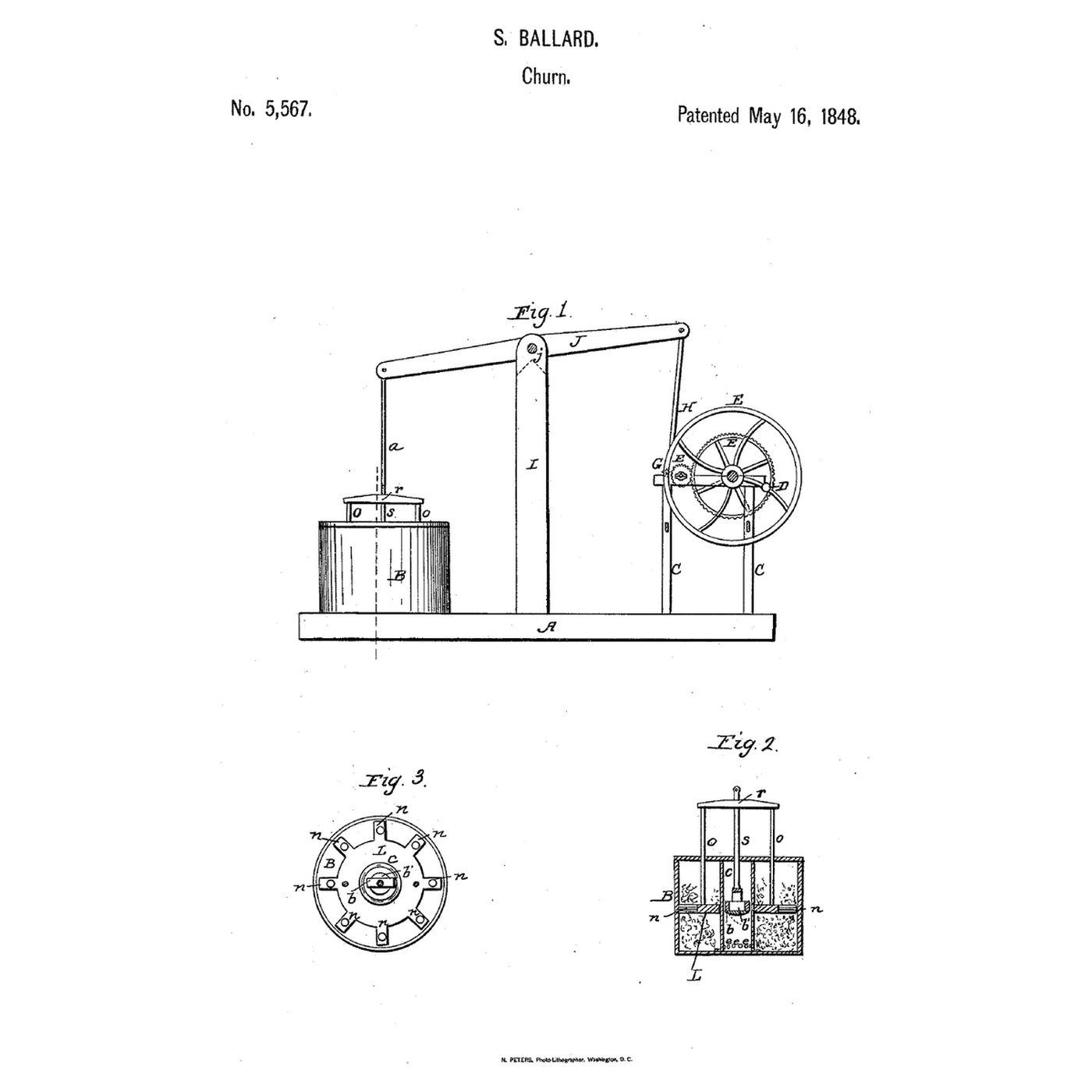
Air-Pump Annular Dasher Churn: A Pump in the Middle, a Ring Dasher Round It
láti ọwọ́ Martin
OÚNJẸ ÀTI OHUN MÍMU
21
0
0
0
0
0
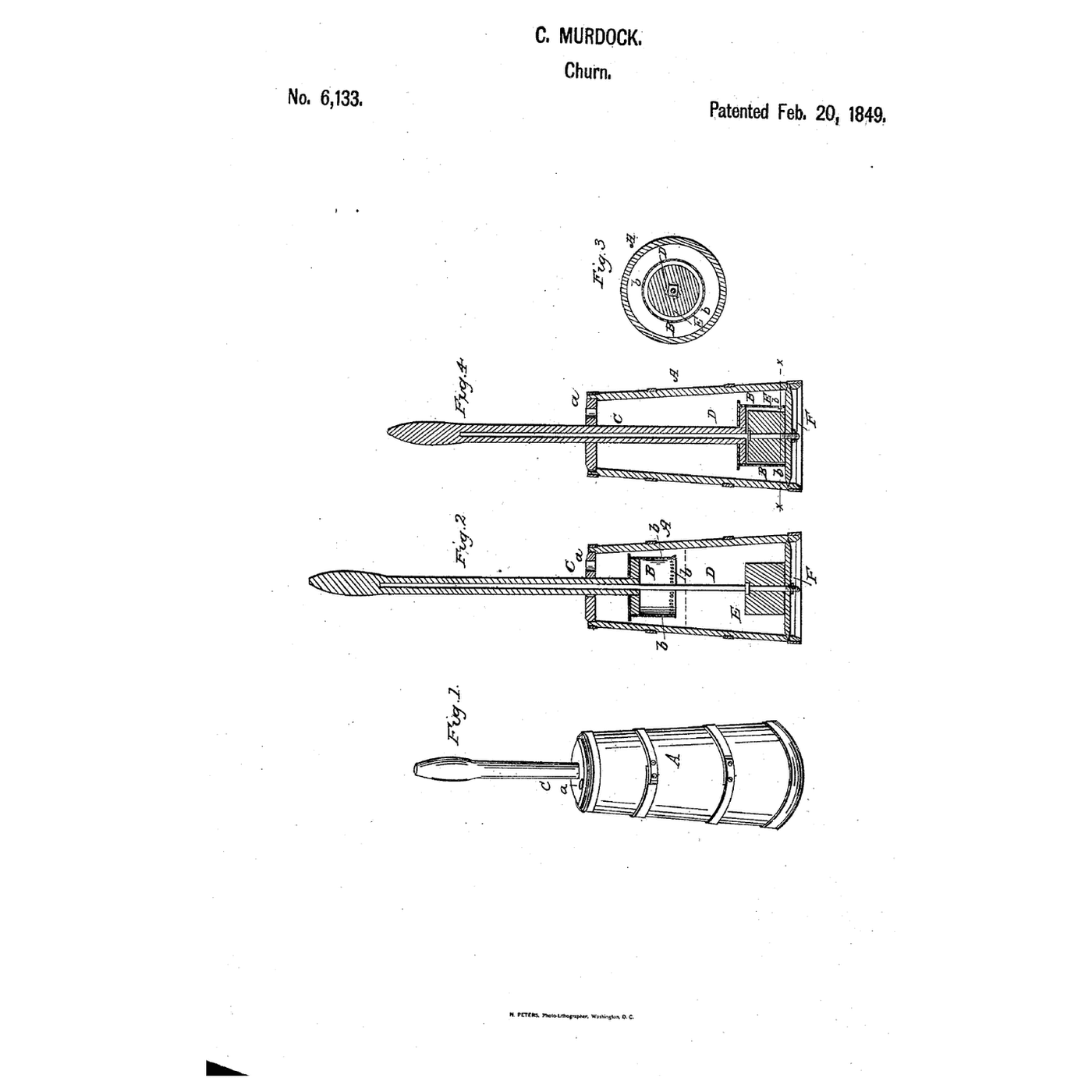
Trapped-Air Cylinder Dash Churn: A Hollow Dash That Squeezes Air Into the Cream
láti ọwọ́ Emma
OÚNJẸ ÀTI OHUN MÍMU
22
0
0
0
0
0
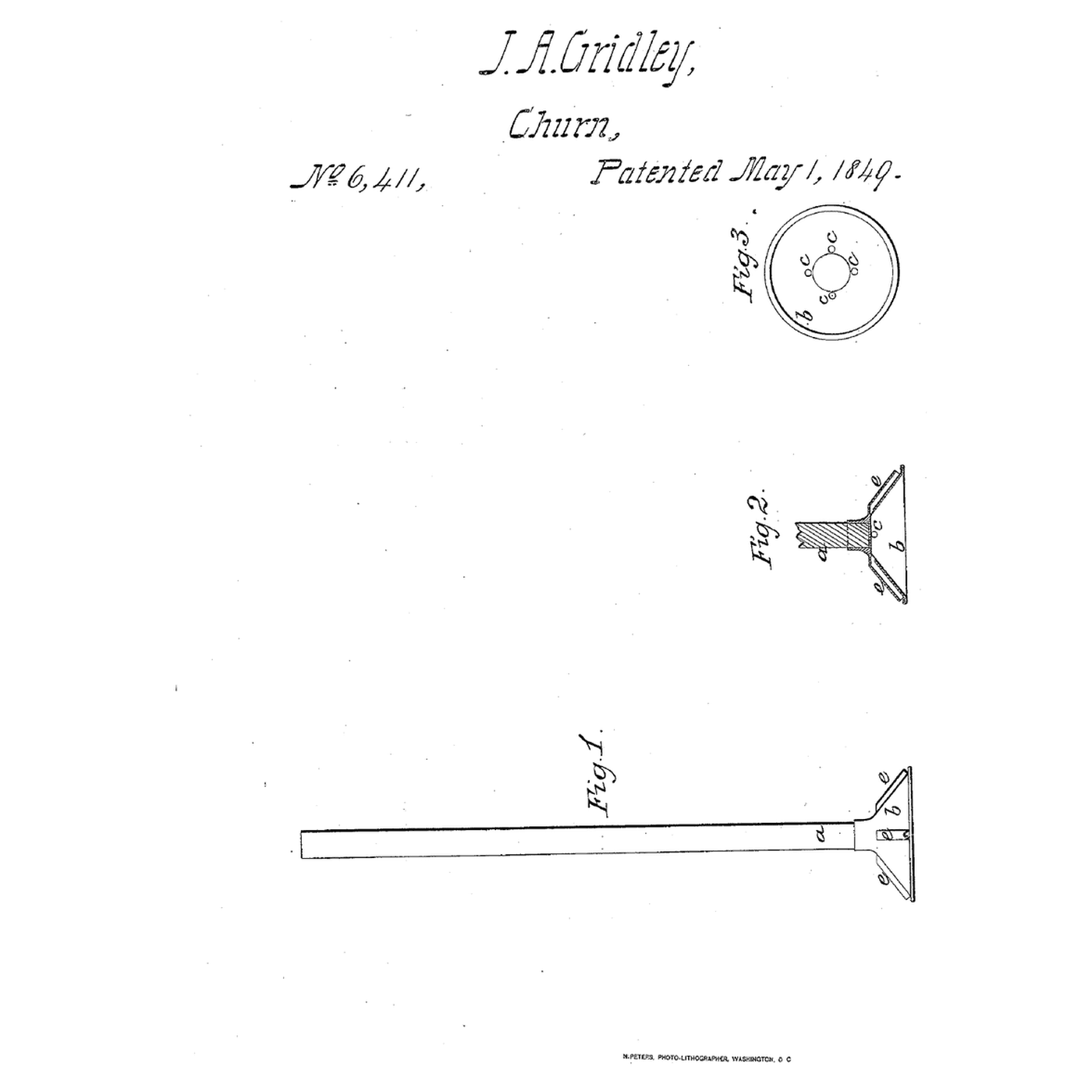
Valveless Cone Air Dasher: A Hollow Cone and Four Tubes, Nothing to Wear Out
láti ọwọ́ YourGrandma
OÚNJẸ ÀTI OHUN MÍMU
16
0
0
0
0
0
CC0 Àgbègbè Gbogbogbò
Blueprint yìí ti jáde lábẹ́ CC0. O lè ṣe àdàkọ, yí padà, pín, àti lò láìsí ìyọ̀ǹda.
Ṣàtìlẹ́yìn Olùṣẹ́dá nípa rírà àwọn ọjà nipasẹ̀ Blueprint wọn Ẹ̀san Olùṣẹ́dá tí àwọn Olùtajà gbé kalẹ̀, tàbí ṣẹ̀dá àtúnṣe tuntun ti Blueprint yìí kí o sì fi sínú Blueprint rẹ gẹ́gẹ́ bí ìsopọ̀ láti pín owó-wíwọlé.