IṢẸ́ ỌNÀ
ẸWÀ ÀTI ÌLERA
IṢẸ́ ỌWỌ́
ÀṢÀ ÀTI ÌTÀN
ÌṢERÉ
ÀYÍKÁ
OÚNJẸ ÀTI OHUN MÍMU
REVERSE ENGINEERING
SÁYẸ́ǸSÌ
ERÉ ÌDÁRAYÁ
ÌMỌ̀-Ẹ̀RỌ
ÀWỌN OHUN WÍWỌ̀
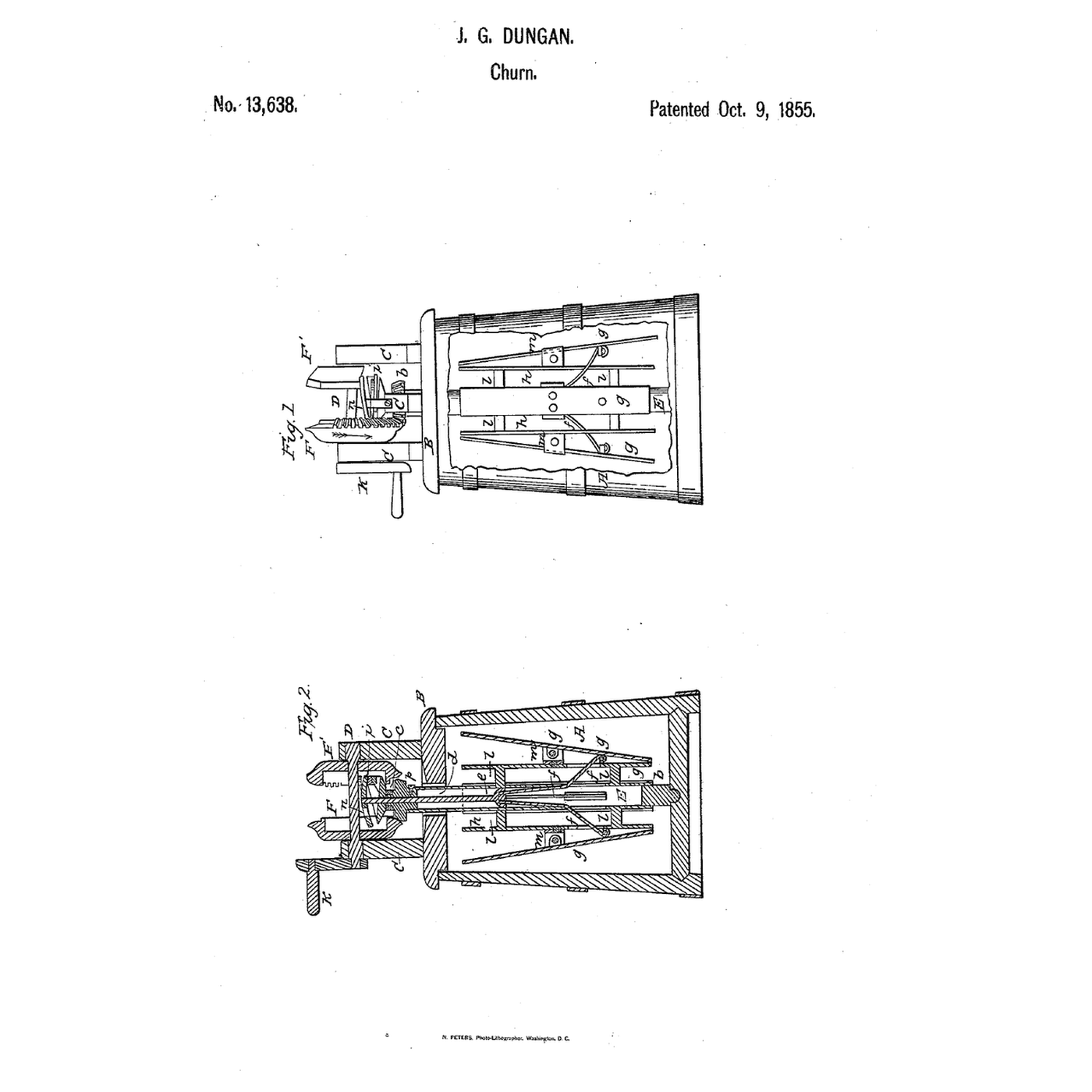


Alternating Rocking-Leaf Churn: Half-Cogged Wheels Reverse the Agitator, a Spiral Rocks Its Leaves
John G. Dungan of Steubenville, Ohio, received US 13,638, dated 9 October 1855, for a churn whose agitator turns alternately one way and the other, driven through two face wheels cogged over part of their faces, while a spiral groove rocks its outer leaves to and from the sides.
This rung prints the wheels, pinion, spiral cap and agitator, builds the churn and makes butter.
Ilọsíwájú
About 8 hours, plus printing
Ìlànà
1
1
One turn each way, and the rock
One turn each way, and the rock
Ń ṣí ìwé Jupyter…
2
2
To and fro, before it
To and fro, before it
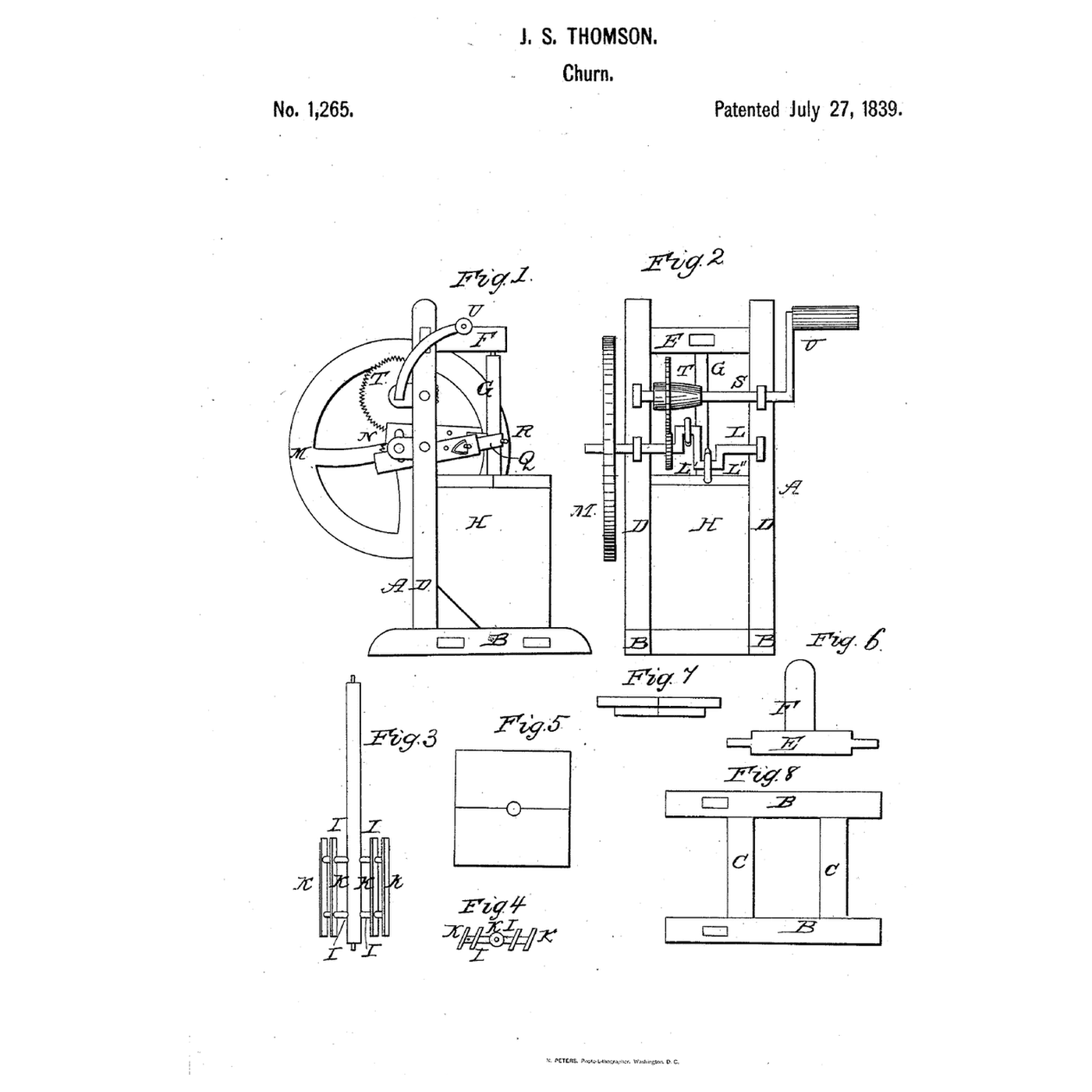
Thomson swung his dasher to and fro by a strap; Dungan reverses his with half-cogged wheels.
3
3
Read US 13,638
Read US 13,638
"D, operating shaft, to which are secured the wheels F, F', partially cogged on their inner faces, so that the gear of one will engage the pinion p on head of main shaft, at the moment the said pinion leaves the teeth of the other wheel, the number of cogs on each wheel being sufficient to insure the entire revolution of the pinion p"
4
4
Print the parts
Print the parts
Print two half-cogged wheels (/uploads/blueprints/alternating-rocking-leaf-churn-half-cogged-wheel.stl), the pinion (/uploads/blueprints/alternating-rocking-leaf-churn-pinion.stl), the spiral cap (/uploads/blueprints/alternating-rocking-leaf-churn-spiral-cap.stl), the agitator hub (/uploads/blueprints/alternating-rocking-leaf-churn-agitator-hub.stl), four outer leaves (/uploads/blueprints/alternating-rocking-leaf-churn-outer-leaf.stl), the rod head (/uploads/blueprints/alternating-rocking-leaf-churn-rod-head.stl) and the step (/uploads/blueprints/alternating-rocking-leaf-churn-step.stl). Print in PETG at 0.2 mm layers, 30 % infill, 4 walls; wash before first use.
Àwọn ohun èlò fún ìgbésẹ̀ yìí:
 Okùn PETG1 ẹyọ
Àwọn irinṣẹ́ tí a nílò:
 Ẹ̀rọ ìtẹ̀ 3D oníwàyà (FDM)
5
5
Agitator
Agitator
Cut a 16 mm pipe about 345 mm long and saw a slot down it where the hub sits and one at the top for the arm. Glue the hub low on it and pin the outer leaves at their middles to the hub's lugs with 3 mm rod. Glue the head on the foot of a 4 mm rod, bend its top into a short arm, and drop it in the pipe with the arm out through the top slot; run spring wires from the head through the slots to the leaves' feet.
Àwọn ohun èlò fún ìgbésẹ̀ yìí:
 Páìpù PVC1 ẹyọ
 Ọ̀pá Róbótó Irin Rírọ̀1 ẹyọ
 Okùn irin kámánì1 ẹyọ
 Ẹpọ́ksì Ẹ̀yà Méjì1 ẹyọ
Àwọn irinṣẹ́ tí a nílò:
 Ayùn Irin
 Ìfá Irin
 Ẹ̀rọ Ìlùkòkò Aláìlókùn
 Àkójọ Orí Ìlùkòkò
6
6
Cover and gearing
Cover and gearing
Stand the step in a food-grade container about 170 mm across, wider at the foot, and the pipe in it. Make a pine lid with a bridge, slide the spiral cap down the pipe so the arm enters its groove by the straight channel, screw the cap on the bridge, and glue the pinion on the pipe's top. Run a 10 mm square shaft in two standards, a wheel each side of the pinion, cogs opposite, and a crank.
Àwọn ohun èlò fún ìgbésẹ̀ yìí:
 Àgọ́ ìtọ́jú ti ìpele oúnjẹ1 ẹyọ
 Pákó igi pine1 ẹyọ
 Àwọn dowel igi líle1 ẹyọỌ̀pá Róbótó Irin Rírọ̀1 ẹyọ
 Skurú ẹ̀rọ1 ẹyọ
 Ìsúrù igi #8 x 1"1 ẹyọ
 Ìdìpọ̀ Igi1 ẹyọ
Àwọn irinṣẹ́ tí a nílò:
 Ayùn Ọwọ́
 Ìṣètò ayùn ihòẸ̀rọ Ìlùkòkò Aláìlókùn
 Ìṣù àwọn ohun ìyí skurú
7
7
The build in 3D
The build in 3D
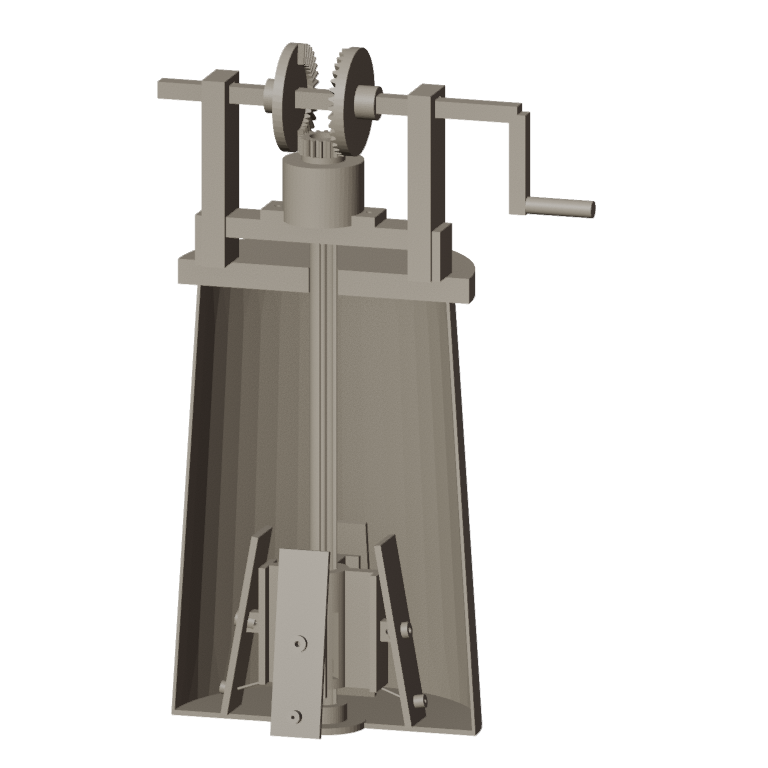
FreeCAD model of this build: the churn cut open to show the hub, inner and outer leaves and spring rods; the hollow shaft with rod d; the spiral cap on its bridge; and the pinion between the two half-cogged face wheels.
8
8
Crank and churn
Crank and churn
Let the heavy cream stand until it reaches about 15 °C, checked with the thermometer. Pour in 1.5 litres. Turn the crank steadily one way; the agitator turns, stops, turns back, and its outer leaves rock. Time until the butter comes. Pour off the buttermilk, add cold water, churn a little and pour off again until it runs clear; work in a pinch of salt and weigh the butter.
Àwọn ohun èlò fún ìgbésẹ̀ yìí:
 Ọ̀rá wàrà tó nípọn1500 ml
 Iyọ̀ Òkun Rúkèrúdò1 ẹyọ
 Omi1 ẹyọ
Àwọn irinṣẹ́ tí a nílò:
 Ẹ̀rọ ìwọ̀n ooru oníhun tí ó dúró sí inú
 Aago Ìdúró
 Òṣùwọ̀n Díjítà Ilé Ìdáná
 Àwo ìdàpọ̀ ńlá ti irin tí kò ń yá
9
9
Troubleshooting
Troubleshooting
Alternating rocking-leaf churn troubleshooting.
Flow
Loading...
10
10
History and honest limits
History and honest limits
**John G. Dungan** of Steubenville, Jefferson County, Ohio, US 13,638, 9 October 1855. He claimed giving the outer leaves of an alternately opposite rotating agitator a rocking motion to and from the sides of the churn. He suggested covering the shaft's slots with slides, and rigid jointed rods instead of spring rods. Our sizes, tooth counts and 20 mm climb are ours. FDM prints hold food in their layer lines, so wash well and replace when worn.
Àwọn ohun-èlò
14- 1 ẹyọÀyè
- 1 ẹyọÀyè
- Àyè
- 1 ẹyọÀyè
- 1 ẹyọÀyè
- Àyè
- 1 ẹyọÀyè
- 1 ẹyọÀyè
- 1 ẹyọÀyè
- 1 ẹyọÀyè
- 1 ẹyọÀyè
- 1500 mlÀyè
- 1 ẹyọÀyè
- 1 ẹyọÀyè
Àwọn irinṣẹ́ tó nílò
12- Àyè
- Àyè
- 1 vendor sell this, none ship to you yetÀyè
- Àyè
- Àyè
Àwọn fáìlì àpẹrẹ
1Ìtọ́nisọ́nà yìí ń ṣe

Blueprint tó jọra
Àwọn blueprint wọ̀nyí pín ìmọ̀ — ọ̀nà, ohun-èlò tàbí ìlànà
Oscillating Paddle Churn: Oblique Paddles Swung to and Fro by a Strap
láti ọwọ́ Martin
OÚNJẸ ÀTI OHUN MÍMU
23
0
0
0
0
0
Roller-and-Float Gathering Churn: Floats That Fold Onto Rollers to Press the Butter
láti ọwọ́ Woody
Iṣẹ́ Igi
35
0
0
0
0
0

Churning Butter from Cream — The 5,000-Year-Old Fat Separation
láti ọwọ́ TheChef
IṢẸ́ ỌWỌ́
49
0
0
0
0
0
CC0 Àgbègbè Gbogbogbò
Blueprint yìí ti jáde lábẹ́ CC0. O lè ṣe àdàkọ, yí padà, pín, àti lò láìsí ìyọ̀ǹda.
Ṣàtìlẹ́yìn Olùṣẹ́dá nípa rírà àwọn ọjà nipasẹ̀ Blueprint wọn Ẹ̀san Olùṣẹ́dá tí àwọn Olùtajà gbé kalẹ̀, tàbí ṣẹ̀dá àtúnṣe tuntun ti Blueprint yìí kí o sì fi sínú Blueprint rẹ gẹ́gẹ́ bí ìsopọ̀ láti pín owó-wíwọlé.