IṢẸ́ ỌNÀ
ẸWÀ ÀTI ÌLERA
IṢẸ́ ỌWỌ́
ÀṢÀ ÀTI ÌTÀN
ÌṢERÉ
ÀYÍKÁ
OÚNJẸ ÀTI OHUN MÍMU
REVERSE ENGINEERING
SÁYẸ́ǸSÌ
ERÉ ÌDÁRAYÁ
ÌMỌ̀-Ẹ̀RỌ
ÀWỌN OHUN WÍWỌ̀

Roller-and-Float Gathering Churn: Floats That Fold Onto Rollers to Press the Butter
Dutcher wanted the whole process — churning, gathering and working the butter — done "without removing it from the churn."
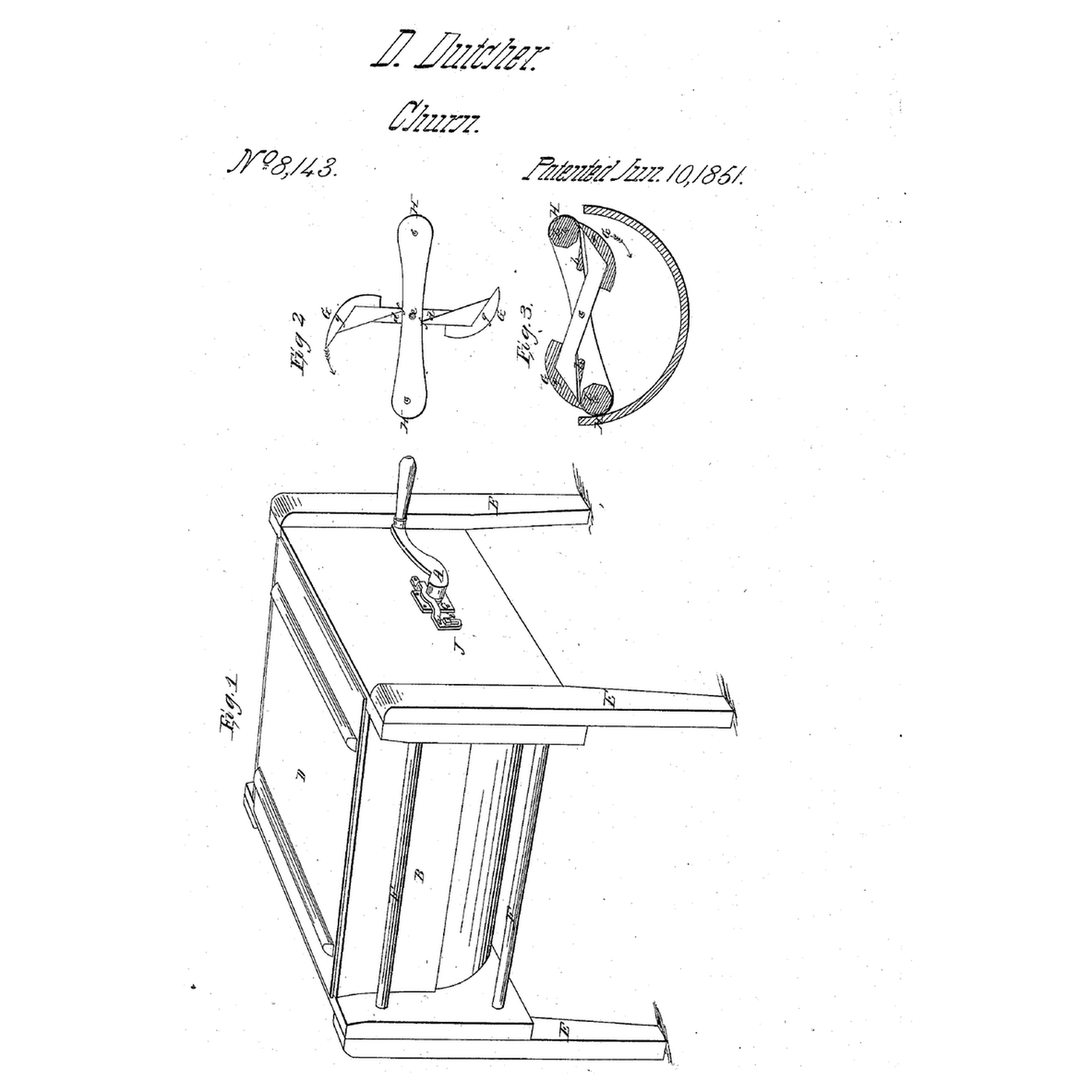
Davis Dutcher of Springfield, New York, received US 8,143, dated 10 June 1851 (antedated 15 February 1851), for a churn with a curved-bottom box and a dasher whose stationary arms carry eight-sided rollers, braced by angular strips, and whose swinging arms carry floats. Churning, the floats stand out against shoulders; reversed, "the floats will fall back, by the resistance of the cream, upon the rollers, presenting a curved surface for directing the particles of butter toward the rollers," which press and roll it against the churn's sides.
This rung works out the pressing gap, then prints the arms, rollers and floats, assembles the dasher in a box, and makes and works butter.
Àárín
About 4 hours, plus printing
Ìlànà
1
1
The pressing gap
The pressing gap
Ń ṣí ìwé Jupyter…
2
2
Floats that change with the direction before it
Floats that change with the direction before it
The embedded blueprint closes hinged floats into a curve to gather the butter. Dutcher adds rollers that press it against the churn's sides.
3
3
Read US 8,143
Read US 8,143
"This operation is continued until the butter is gathered, when the milk may be drawn off at the bottom of the churn, by a faucet, pin or otherwise, and water may be added, and the butter washed, cleaned of the milk, and pressed, and rolled ready for use, thus performing the whole process of churning, gathering and working the butter without removing it from the churn."
4
4
Print the parts
Print the parts
Print two stationary arms (/uploads/blueprints/roller-and-float-gathering-churn-arm.stl), two eight-sided rollers (/uploads/blueprints/roller-and-float-gathering-churn-roller.stl), two floats with their shoulders (/uploads/blueprints/roller-and-float-gathering-churn-float.stl) and the crank arm (/uploads/blueprints/roller-and-float-gathering-churn-crank-arm.stl). Print in PETG at 0.2 mm layers, 30 % infill, 4 walls; wash before first use.
Àwọn ohun èlò fún ìgbésẹ̀ yìí:
 Okùn PETG1 ẹyọ
Àwọn irinṣẹ́ tí a nílò:
 Ẹ̀rọ ìtẹ̀ 3D oníwàyà (FDM)
5
5
Assemble the dasher
Assemble the dasher
Slide the arms onto a 10 mm square hardwood shaft 150 mm apart, set a roller's journals into each pair of end holes, and screw two pine strips edgewise between the arms as his angular braces. Hang each float on a 3 mm stainless rod through the arms' pin holes so it swings out to its shoulder one way and folds onto the roller the other.
Àwọn ohun èlò fún ìgbésẹ̀ yìí:
 Àwọn dowel igi líle1 ẹyọ
 Pákó igi pine1 ẹyọ
 Ọ̀pá Róbótó Irin Rírọ̀1 ẹyọ
 Ìsúrù igi #8 x 1"1 ẹyọ
Àwọn irinṣẹ́ tí a nílò:
 Ayùn Ọwọ́
 Ayùn Irin
 Ìṣù àwọn ohun ìyí skurú
6
6
The box
The box
Use a food-safe box about 230 × 190 × 200 mm with a curved liner of 0.5 mm stainless sheet bent to the rollers' circle plus a few millimetres, seated in silicone. Drill the ends on the axis, pass the shaft through with leather washers, glue on the crank arm and handle, and fit a plug low in one end to draw off the milk.
Àwọn ohun èlò fún ìgbésẹ̀ yìí:
 Àgọ́ ìtọ́jú ti ìpele oúnjẹ1 ẹyọ
 Àwo irin tí kò ń yá - 3041 ẹyọ
 Ìdílẹ̀ Silikoni1 ẹyọ
 Tẹ́ẹ́rẹ́ awọ1 ẹyọ
 Ìdìpọ̀ Igi1 ẹyọ
Àwọn irinṣẹ́ tí a nílò:
 Ìlàǹkàn irin
 Ohun èlò ìmúkúrò èèpo
 Òòlù rọ́bà
 Ẹ̀rọ Ìlùkòkò Aláìlókùn
 Àkójọ Orí Ìlùkòkò
7
7
The patent drawing
The patent drawing
US 8,143 drawing sheet, public domain (expired patent).
8
8
Churn, then reverse to press and roll
Churn, then reverse to press and roll
Let the heavy cream stand until it reaches about 15 °C, checked with the thermometer. Pour in 1.5 litres. Crank forward, floats out; time until the butter comes. Reverse the crank so the floats fold onto the rollers and the butter is pressed and rolled against the bottom. Draw off the buttermilk at the plug, add cold water and crank again until it runs clear; work in a pinch of salt the same way and weigh the butter.
Àwọn ohun èlò fún ìgbésẹ̀ yìí:
 Ọ̀rá wàrà tó nípọn1500 ml
 Iyọ̀ Òkun Rúkèrúdò1 ẹyọ
 Omi1 ẹyọ
Àwọn irinṣẹ́ tí a nílò:
 Ẹ̀rọ ìwọ̀n ooru oníhun tí ó dúró sí inú
 Aago Ìdúró
 Òṣùwọ̀n Díjítà Ilé Ìdáná
 Àwo ìdàpọ̀ ńlá ti irin tí kò ń yá
9
9
Floats that won't fold, butter that won't roll
Floats that won't fold, butter that won't roll
Roller-and-float gathering churn troubleshooting.
Flow
Loading...
10
10
History and honest limits
History and honest limits
**Davis Dutcher** of Springfield, Otsego County, New York, received US 8,143, dated 10 June 1851, antedated 15 February 1851. His crank's spindle fitted a square hole in the dasher's arm and was held by a latch in a groove, so it came out for cleaning; iron rods outside the box gave it strength. He claimed the arms with their rollers and the swinging arms with their floats, kept in place in churning and in gathering by the resistance of the cream.
**Honest limits.** A food-safe box with a stainless liner and printed parts stand in for his curved wooden box. FDM prints hold food in their layer lines, so wash well and replace when worn. Your times and weights are the result.
Àwọn ohun-èlò
13- 1 ẹyọÀyè
- 1 ẹyọÀyè
- 1 ẹyọÀyè
- Àyè
- 1 ẹyọÀyè
- Àyè
- Àyè
- 1 ẹyọÀyè
- 1 ẹyọÀyè
- 1 ẹyọÀyè
- 1500 mlÀyè
- 1 ẹyọÀyè
- 1 ẹyọÀyè
Àwọn irinṣẹ́ tó nílò
13- Àyè
- Àyè
- Àyè
- Àyè
- 1 vendor sell this, none ship to you yetÀyè
- Àyè
Ìtọ́nisọ́nà yìí ń ṣe

Blueprint tó jọra
Àwọn blueprint wọ̀nyí pín ìmọ̀ — ọ̀nà, ohun-èlò tàbí ìlànà
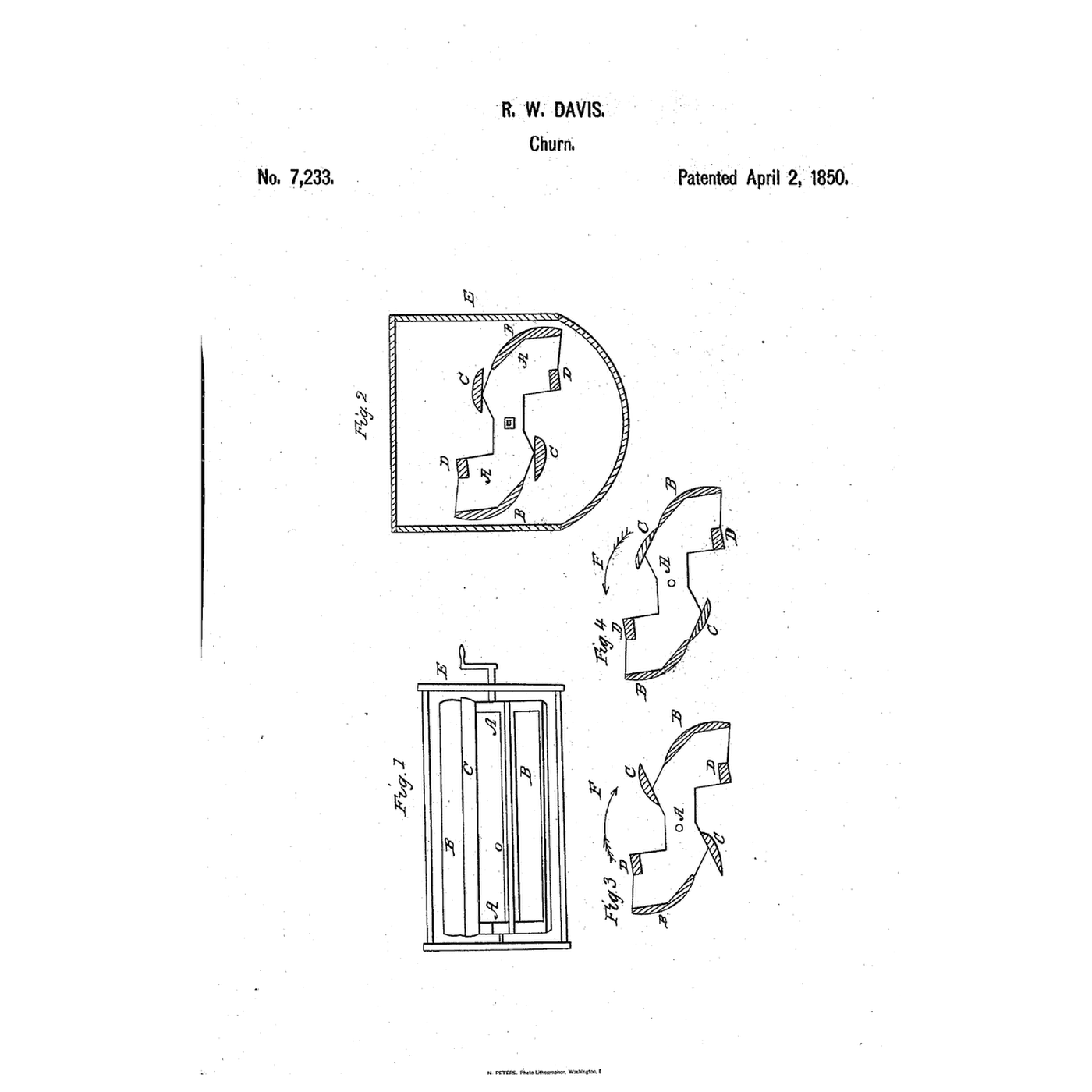
Self-Closing Float Dasher Churn: Floats That Open to Churn and Close to Gather
láti ọwọ́ Woody
Iṣẹ́ Igi
8
0
0
0
0
0
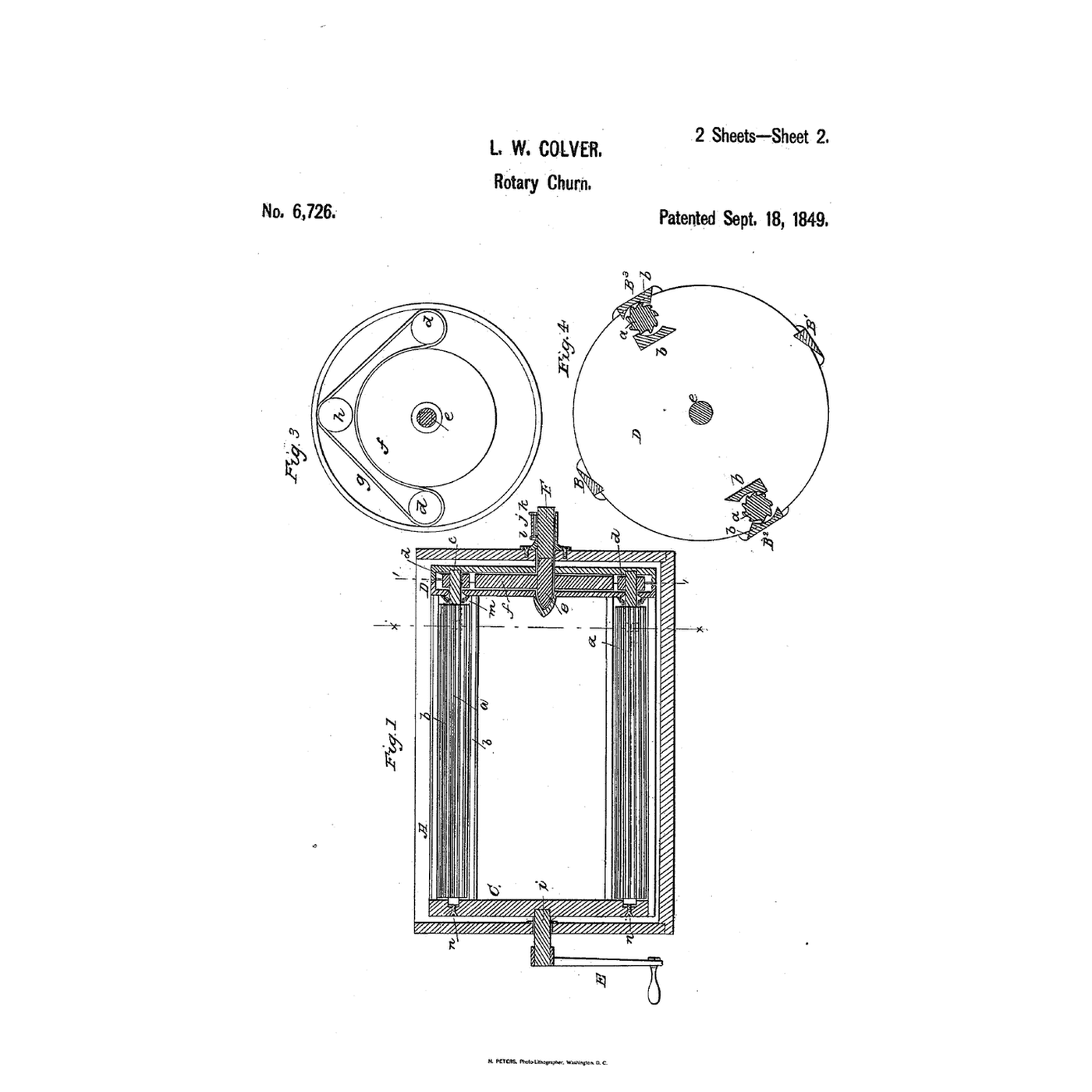
Self-Turning Roller Churn: Fluted Rollers Spun by a Fixed Wheel as the Dasher Turns
láti ọwọ́ Martin
OÚNJẸ ÀTI OHUN MÍMU
28
0
0
0
0
0
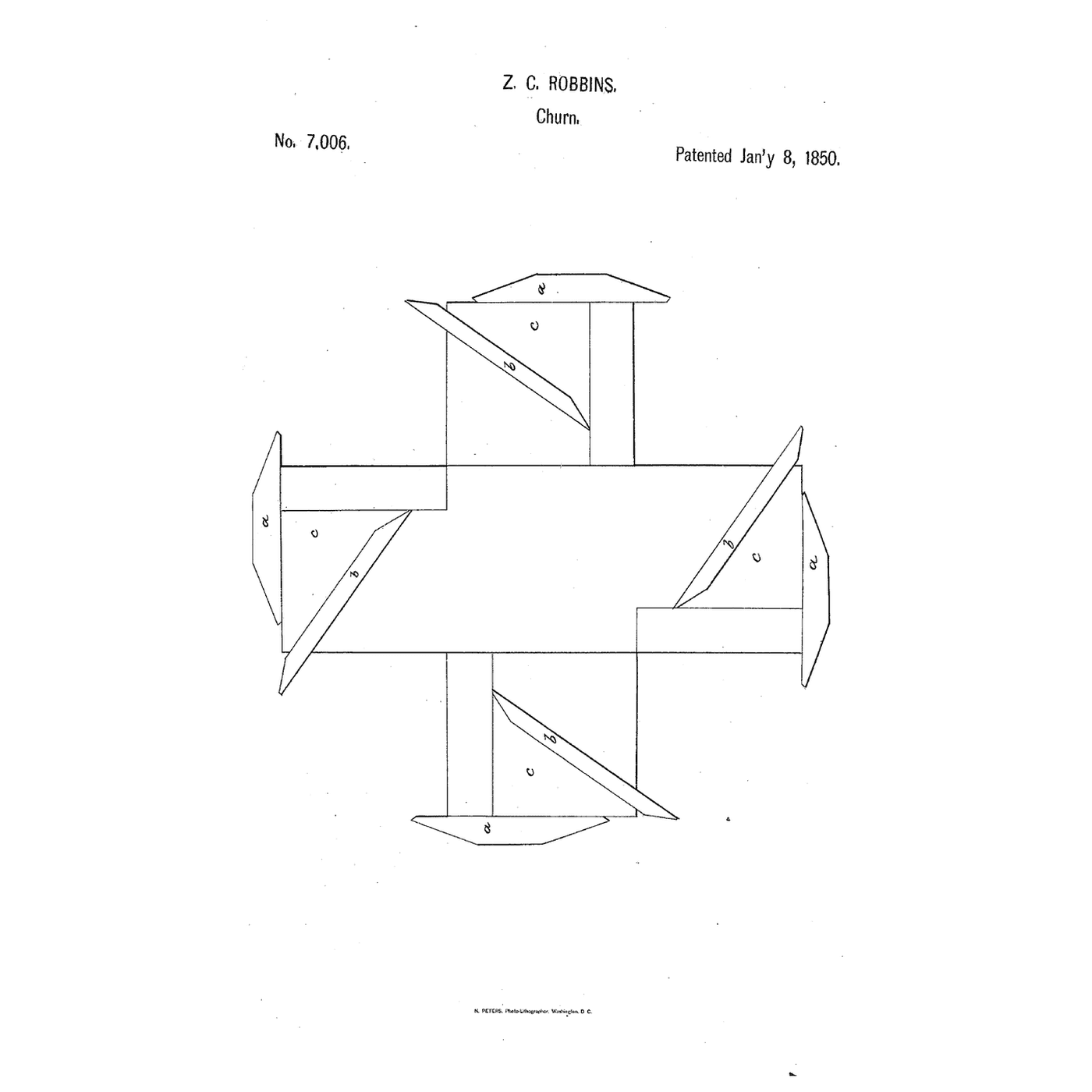
Centrifugal and Centripetal Churn Dasher: Paired Blades That Squeeze the Cream Through
láti ọwọ́ TheChef
OÚNJẸ ÀTI OHUN MÍMU
8
0
0
0
0
0
CC0 Àgbègbè Gbogbogbò
Blueprint yìí ti jáde lábẹ́ CC0. O lè ṣe àdàkọ, yí padà, pín, àti lò láìsí ìyọ̀ǹda.
Ṣàtìlẹ́yìn Olùṣẹ́dá nípa rírà àwọn ọjà nipasẹ̀ Blueprint wọn Ẹ̀san Olùṣẹ́dá tí àwọn Olùtajà gbé kalẹ̀, tàbí ṣẹ̀dá àtúnṣe tuntun ti Blueprint yìí kí o sì fi sínú Blueprint rẹ gẹ́gẹ́ bí ìsopọ̀ láti pín owó-wíwọlé.