IṢẸ́ ỌNÀ
ẸWÀ ÀTI ÌLERA
IṢẸ́ ỌWỌ́
ÀṢÀ ÀTI ÌTÀN
ÌṢERÉ
ÀYÍKÁ
OÚNJẸ ÀTI OHUN MÍMU
REVERSE ENGINEERING
SÁYẸ́ǸSÌ
ERÉ ÌDÁRAYÁ
ÌMỌ̀-Ẹ̀RỌ
ÀWỌN OHUN WÍWỌ̀
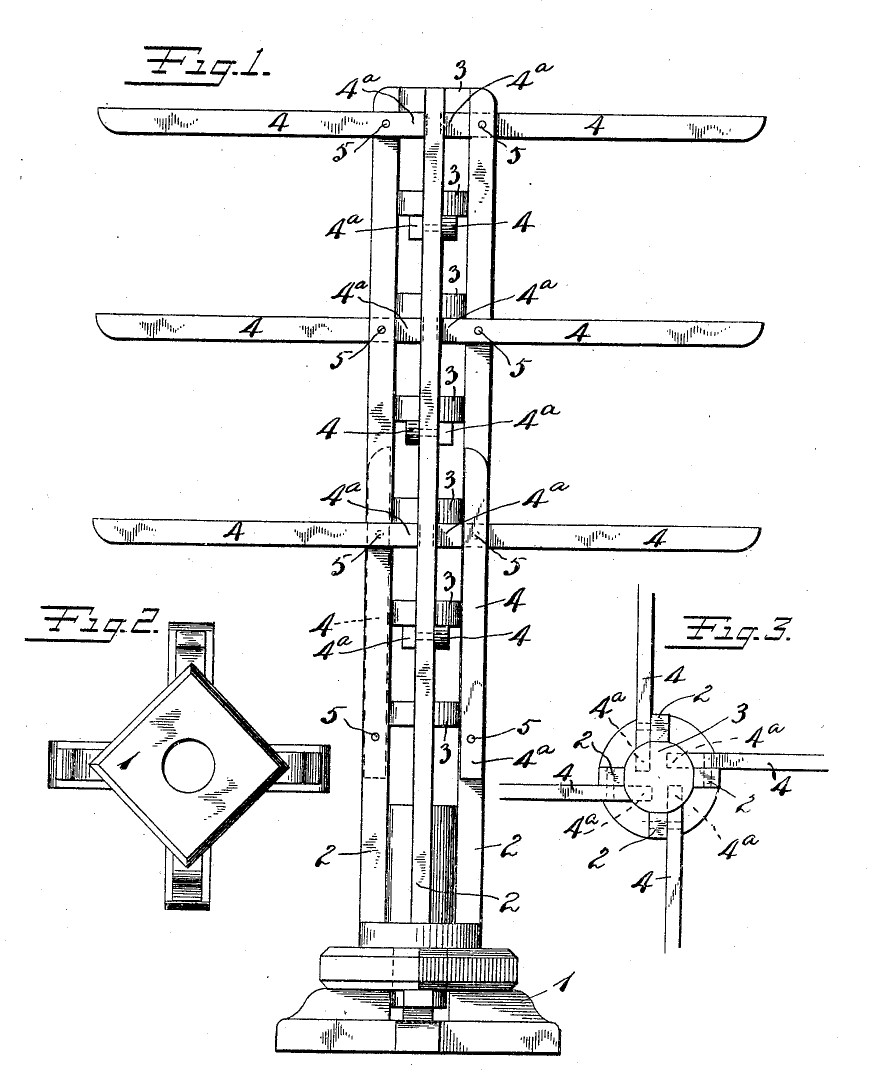


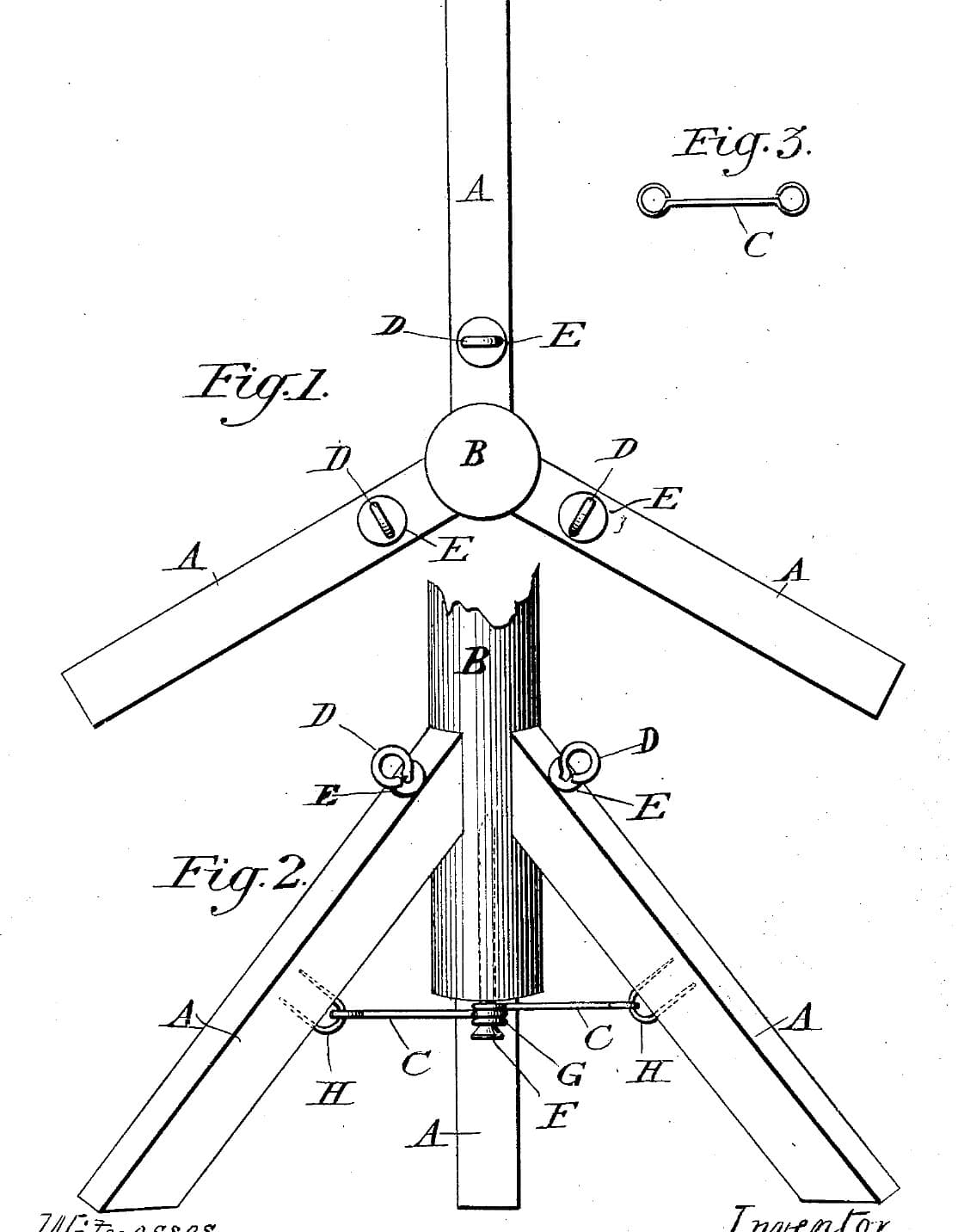
Folding Clothes Tree: Arms Pivoted Between Spaced Uprights, Held Level by Stop-Blocks (Bidwell, 1905)
Moses Bidwell of Brooklyn received US 805,051, dated 21 November 1905, for a clothes tree that folds flat. Separate uprights, spaced apart by blocks, make a light, strong open column; arms pivoted between them swing out level to hang clothes, held up by a short tail that catches under a block, and swing down along the column to store.
We make it from hardwood. All sizes are ours.
Olùbẹ̀rẹ̀
About 5 hours
Ìlànà
1
1
Arm and pivot
Arm and pivot
Ń ṣí ìwé Jupyter…
2
2
Read US 805,051
Read US 805,051
"The upright portion is, when completed, of truss or bridge like construction; hence, though light, is very strong."
3
3
Make the column
Make the column
Cut four hardwood uprights (his 2) to the height wanted. Join them into a square open column with short stop-blocks (his 3) glued and screwed between them at intervals, leaving a gap between each pair of uprights wide enough for an arm to swing in.
Àwọn ohun èlò fún ìgbésẹ̀ yìí:
 Tẹ́ẹ́rẹ́ igi líle1 ẹyọ
 Pátákó Igi Líle1 ẹyọ
 Ìdìpọ̀ Igi1 ẹyọ
 Ìṣó igi1 ẹyọ
Àwọn irinṣẹ́ tí a nílò:
 Okùn Ìdíwọ̀n
 Ayùn Ọwọ́
 Ìlù ọwọ́
 Ìṣù àwọn ohun ìyí skurú
4
4
Make and hang the arms
Make and hang the arms
Cut the arms (his 4) from hardwood strip and round their outer ends. Bore each near its inner end and hang it on a bolt through the pair of uprights, his pivot 5, so the short tail below the pivot (his 4a) catches under the stop-block above it when the arm is swung out level. Place the arms so they balance one another round the column.
Àwọn ohun èlò fún ìgbésẹ̀ yìí:
Tẹ́ẹ́rẹ́ igi líle1 ẹyọ Bọ́ọ̀tù orí róbótó1 ẹyọ
Àwọn irinṣẹ́ tí a nílò:
Ayùn Ọwọ́ Ìlù ọwọ́ pẹ̀lú orí
 Bébà Ìfá
 Kọ́kọ́rọ́ tí a lè ṣàtúnṣe
5
5
Make the base
Make the base
Make a cross base of hardwood (his base 1, "of any suitable form") and fix the column upright in its centre.
Àwọn ohun èlò fún ìgbésẹ̀ yìí:
Pátákó Igi Líle1 ẹyọÌdìpọ̀ Igi1 ẹyọÌṣó igi1 ẹyọÀwọn irinṣẹ́ tí a nílò:
Ayùn Ọwọ́Ìlù ọwọ́ pẹ̀lú oríÌṣù àwọn ohun ìyí skurú6
6
Use and fold it
Use and fold it
Swing the arms out until their tails stop under the blocks; hang coats and hats. Lift each arm and swing it down along the column to fold the tree away.
7
7
Troubleshooting
Troubleshooting
Clothes tree troubleshooting.
Flow
Loading...
8
8
History and honest limits
History and honest limits
**Moses Bidwell** of Brooklyn, US 805,051, dated 21 November 1905, filed 11 April 1905. He claimed "a clothes-tree comprising a skeleton-like body composed of a plurality of separate upright members, stop-blocks at frequent intervals between said members spacing them apart and rigidly connecting the same, swinging arms pivoted near their ends to said upright members adjacent to said stop-blocks". He gives no sizes or wood: the hardwood, four uprights, all sizes, bolts and the cross base are ours.
Àwọn ohun-èlò
5- 1 ẹyọÀyè
- 1 ẹyọÀyè
- 2 ẹyọÀyè
- 2 ẹyọÀyè
- 1 ẹyọÀyè
Ìtọ́nisọ́nà yìí ń ṣe
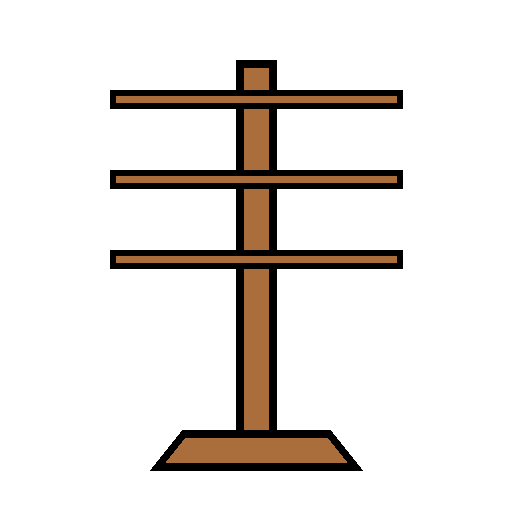
Blueprint tó jọra
Àwọn blueprint wọ̀nyí pín ìmọ̀ — ọ̀nà, ohun-èlò tàbí ìlànà
CC0 Àgbègbè Gbogbogbò
Blueprint yìí ti jáde lábẹ́ CC0. O lè ṣe àdàkọ, yí padà, pín, àti lò láìsí ìyọ̀ǹda.
Ṣàtìlẹ́yìn Olùṣẹ́dá nípa rírà àwọn ọjà nipasẹ̀ Blueprint wọn Ẹ̀san Olùṣẹ́dá tí àwọn Olùtajà gbé kalẹ̀, tàbí ṣẹ̀dá àtúnṣe tuntun ti Blueprint yìí kí o sì fi sínú Blueprint rẹ gẹ́gẹ́ bí ìsopọ̀ láti pín owó-wíwọlé.