IṢẸ́ ỌNÀ
ẸWÀ ÀTI ÌLERA
IṢẸ́ ỌWỌ́
ÀṢÀ ÀTI ÌTÀN
ÌṢERÉ
ÀYÍKÁ
OÚNJẸ ÀTI OHUN MÍMU
REVERSE ENGINEERING
SÁYẸ́ǸSÌ
ERÉ ÌDÁRAYÁ
ÌMỌ̀-Ẹ̀RỌ
ÀWỌN OHUN WÍWỌ̀
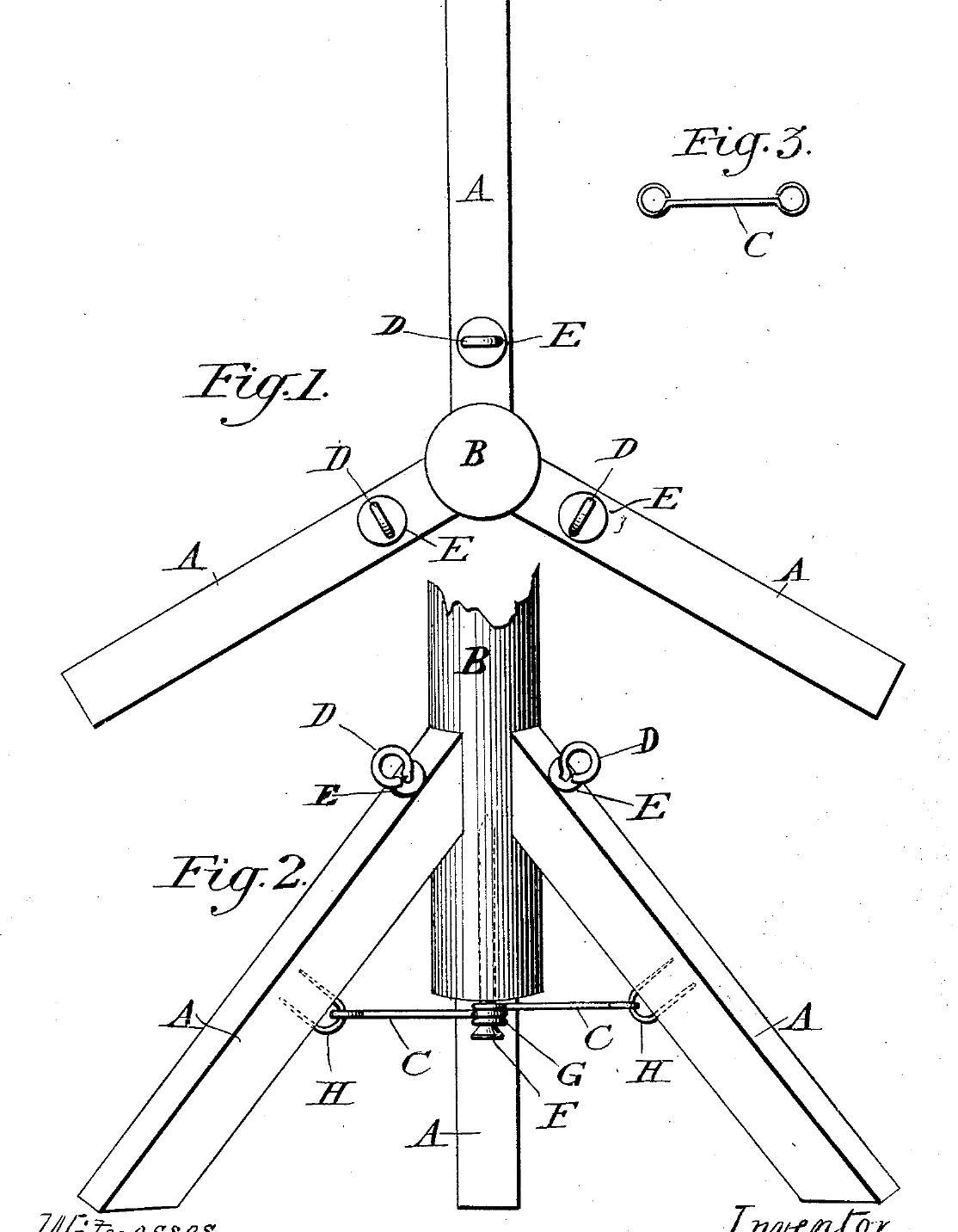


Christmas Tree Stand: Three Legs Tied by Wire Links to a Nail in the Butt (Cook, 1902)
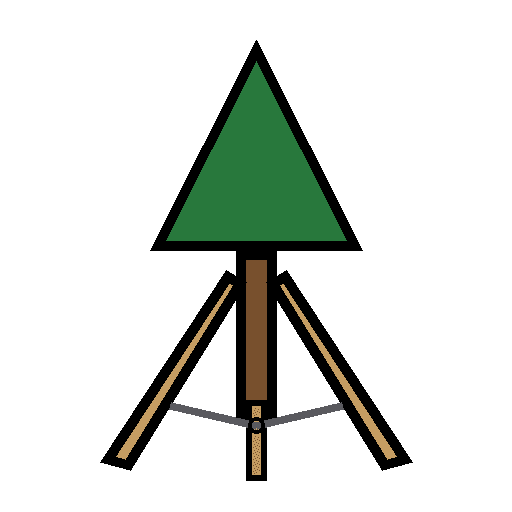
William Cook of New York received US 710,762, dated 7 October 1902, for a Christmas tree stand of three leaning legs and three wire links. The links meet under the tree on a nail driven up into the butt, and their other ends are fixed part way up the legs. The tops of the legs are screwed to the trunk. The tree's weight pushes the feet out, the links pull back, and the tops of the legs squeeze the trunk.
We make it from pine and steel wire. All sizes are ours.
Olùbẹ̀rẹ̀
About 3 hours
Ìlànà
1
1
Where the links go
Where the links go
Ń ṣí ìwé Jupyter…
2
2
Read US 710,762
Read US 710,762
"The tendency of legs A to spread by weight of tree causes an outward tension at wire nail F through the several links C and inward pressure on stem of tree by upper part of legs A. Thus the tree is held very secure and perfectly upright by two opposite forces acting a short space apart and derived from weight of tree."
3
3
Cut the legs
Cut the legs
Saw three legs 700 mm long from 70 x 22 mm pine (ours). Set a bevel gauge to 30 degrees and cut both ends of each leg at that angle, parallel to each other, so the foot sits flat on the floor and the top lies along the trunk, as in his Fig. 2. Sand off the splinters.
Àwọn ohun èlò fún ìgbésẹ̀ yìí:
 Pákó igi pine1 ẹyọ
Àwọn irinṣẹ́ tí a nílò:
 Ayùn Ọwọ́
 Òsùwọ̀n igun tí a lè ṣàtúnṣe
 Okùn Ìdíwọ̀n
 Gègé
 Bébà Ìfá
4
4
Bend the links
Bend the links
Cut three pieces of 2.5 mm steel wire, each the link length from the notebook plus about 60 mm for the eyes. Bend a round eye at each end with round-nose pliers, as his Fig. 3, so the eyes' centres are the link length apart. Make all three the same.
Àwọn ohun èlò fún ìgbésẹ̀ yìí:
 Okun waya irin3 ẹyọ
Àwọn irinṣẹ́ tí a nílò:
 Ẹ̀mú ìgé okùn oníkọ̀rọ̀
 Ẹ̀mú Olórí YíkáOkùn Ìdíwọ̀n
5
5
Staple the links to the legs
Staple the links to the legs
Mark each leg where the notebook says, on its inner face. Bend three U staples from the same wire (ours). Lay a link's outer eye on the mark and drive a staple over it into the leg, his staple H, leaving the eye free to turn.
Àwọn ohun èlò fún ìgbésẹ̀ yìí:
Okun waya irin1 ẹyọÀwọn irinṣẹ́ tí a nílò:
Ẹ̀mú ìgé okùn oníkọ̀rọ̀Ẹ̀mú Olórí Yíká Òòlù oníkànnì
6
6
Drill the tops of the legs
Drill the tops of the legs
Drill a hole through the top of each leg, about 40 mm from its end, just big enough for the screw eye's shank to pass.
Àwọn irinṣẹ́ tí a nílò:
 Ìlù ọwọ́
7
7
Nail the links to the butt
Nail the links to the butt
Saw the butt of the tree off square. Lay the tree on its side. Thread a long wire nail through the three free eyes of the links, his nail F, and drive it up into the middle of the bottom end of the tree.
Àwọn ohun èlò fún ìgbésẹ̀ yìí:
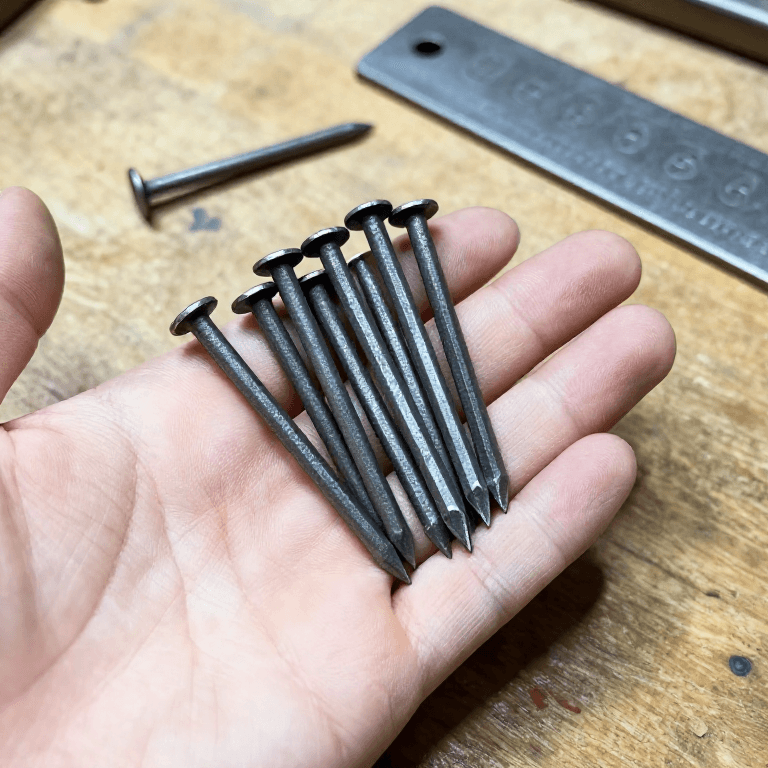
 Ìṣó1 ẹyọ
Àwọn irinṣẹ́ tí a nílò:
Ayùn Ọwọ́Òòlù oníkànnì8
8
Fix the tops of the legs
Fix the tops of the legs
Bring the top of each leg in against the trunk. Make a start hole in the trunk with an awl through the leg's hole, and turn a screw eye through the leg into the trunk until the leg is held tight, his screw-eye D. Do all three, then stand the tree up.
Àwọn ohun èlò fún ìgbésẹ̀ yìí:
 Ìṣó olórùka3 ẹyọ
Àwọn irinṣẹ́ tí a nílò:
 Ọ̀kọ̀ Ìlùhò
9
9
Check it stands upright
Check it stands upright
All three feet should touch the floor and the links should be straight and tight. Look at the tree from two sides. To take it down, turn out the screw eyes and pull the nail; the links fold about the nail for storing.
10
10
Troubleshooting
Troubleshooting
Christmas tree stand troubleshooting.
Flow
Loading...
11
11
History and honest limits
History and honest limits
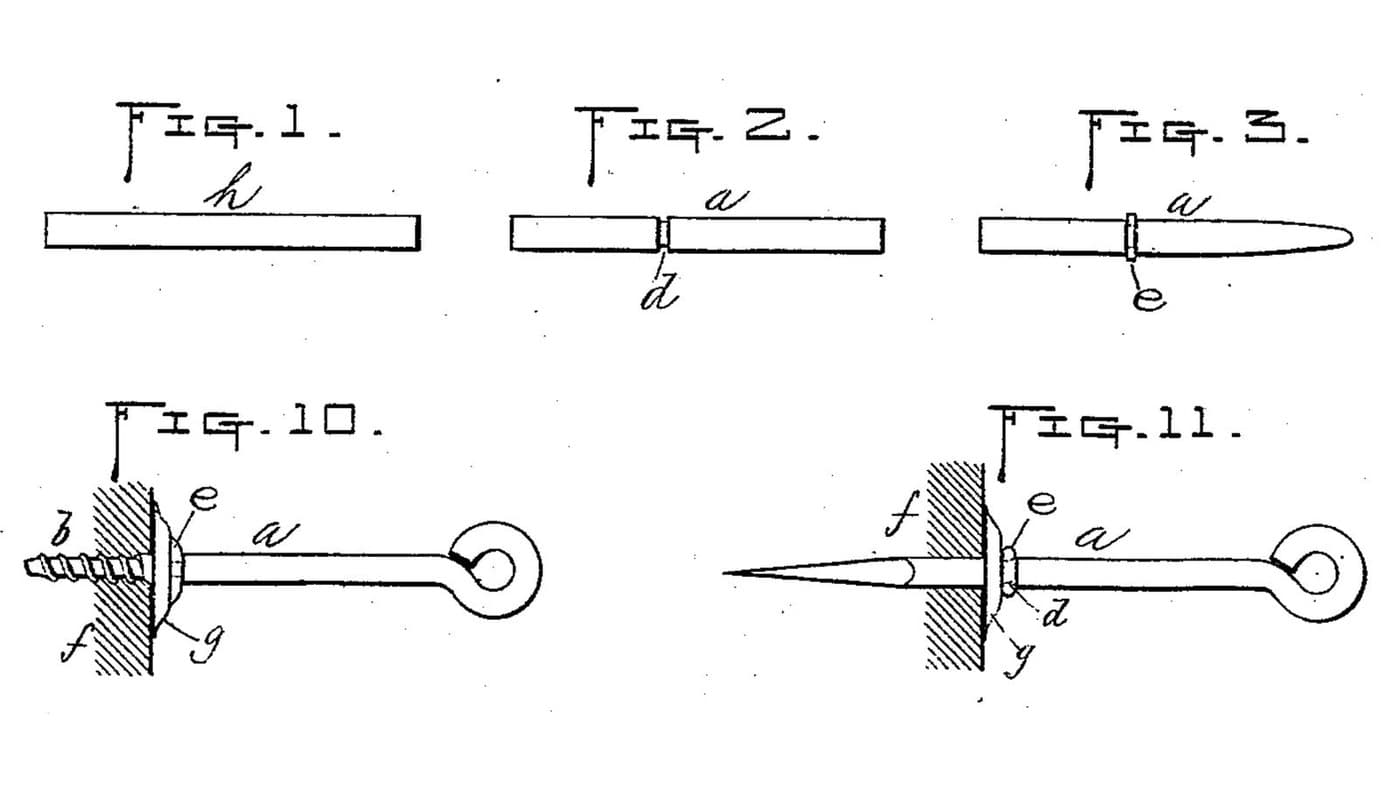
**William Cook** of New York, US 710,762, dated 7 October 1902, filed 29 July 1901. He claimed "a Christmas-tree stand composed of legs, and links, one end of each link being connected with one leg at a point intermediate between the ends of the leg, and the opposite ends of the links being connected with each other to form a seat". He says the stand is "more economical of construction and more easily applied" and that "size of tree offers no obstacle". He names no materials and gives no sizes: the pine, the wire, the 700 mm legs, the 30 degree angle, the butt height and how the screw eyes pass through the legs are ours. His drawing also marks parts E and G, which his text does not describe.
Àwọn ohun-èlò
4- 1 ẹyọÀyè
- 4 ẹyọÀyè
- 1 ẹyọÀyè
- 3 ẹyọÀyè
Ìtọ́nisọ́nà yìí ń ṣe
Blueprint tó jọra
Àwọn blueprint wọ̀nyí pín ìmọ̀ — ọ̀nà, ohun-èlò tàbí ìlànà
CC0 Àgbègbè Gbogbogbò
Blueprint yìí ti jáde lábẹ́ CC0. O lè ṣe àdàkọ, yí padà, pín, àti lò láìsí ìyọ̀ǹda.
Ṣàtìlẹ́yìn Olùṣẹ́dá nípa rírà àwọn ọjà nipasẹ̀ Blueprint wọn Ẹ̀san Olùṣẹ́dá tí àwọn Olùtajà gbé kalẹ̀, tàbí ṣẹ̀dá àtúnṣe tuntun ti Blueprint yìí kí o sì fi sínú Blueprint rẹ gẹ́gẹ́ bí ìsopọ̀ láti pín owó-wíwọlé.