IṢẸ́ ỌNÀ
ẸWÀ ÀTI ÌLERA
IṢẸ́ ỌWỌ́
ÀṢÀ ÀTI ÌTÀN
ÌṢERÉ
ÀYÍKÁ
OÚNJẸ ÀTI OHUN MÍMU
REVERSE ENGINEERING
SÁYẸ́ǸSÌ
ERÉ ÌDÁRAYÁ
ÌMỌ̀-Ẹ̀RỌ
ÀWỌN OHUN WÍWỌ̀
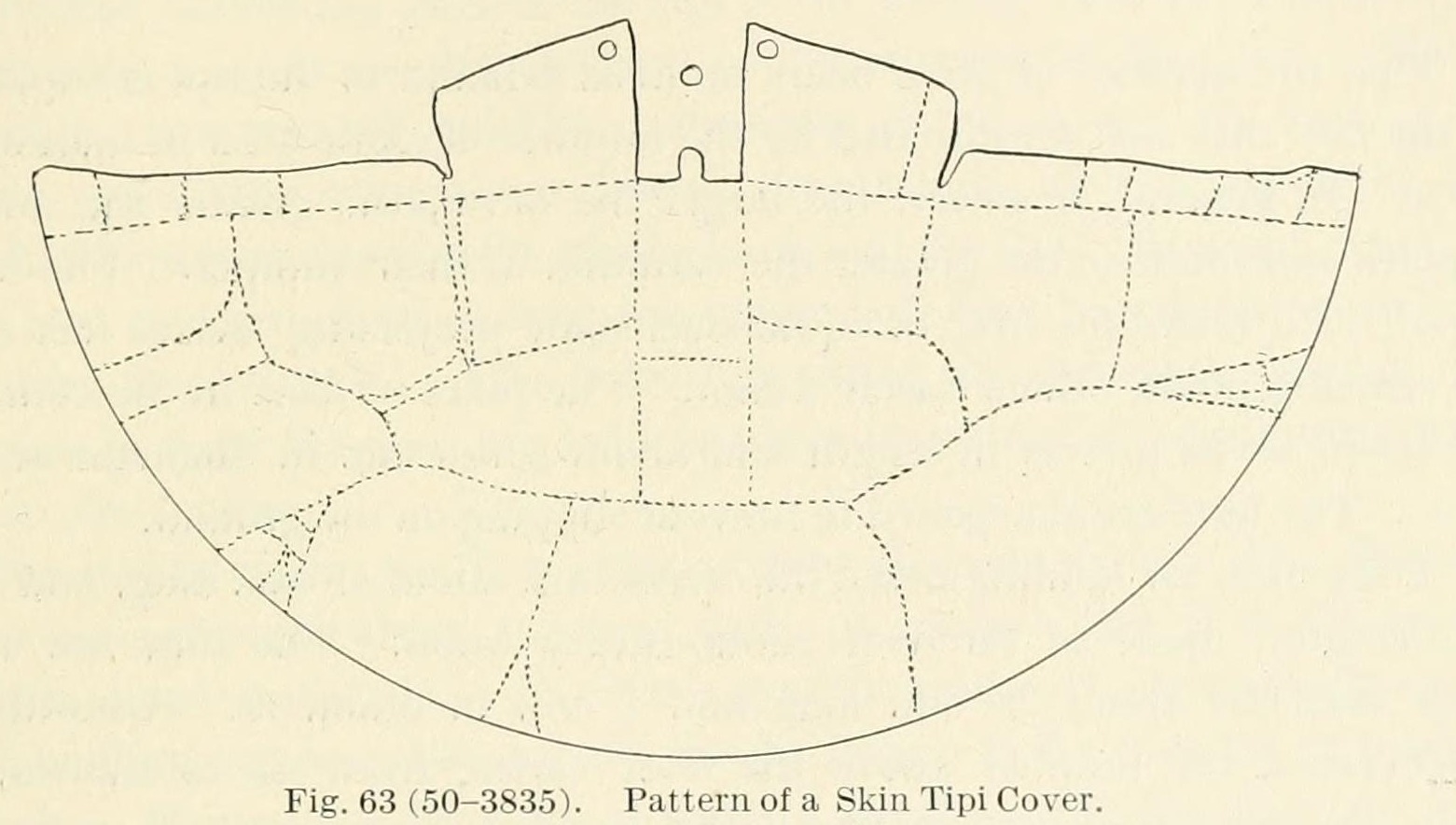


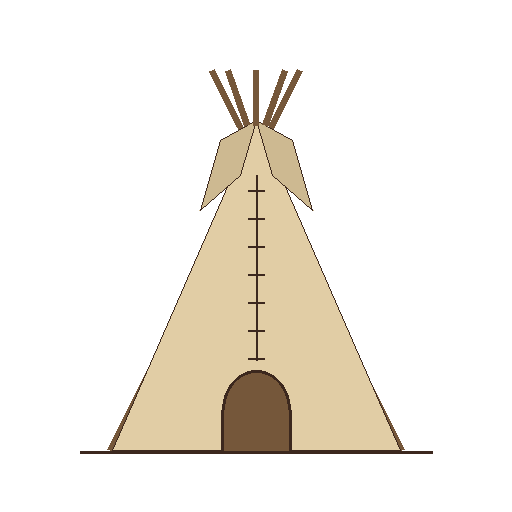
Blackfoot Tipi: Four Poles Locked in a Tie, Cover Raised on the Back Pole, Pinned over an East Door, Ears on Poles (Wissler, 1910)
The Blackfoot (Niitsitapi) tipi as Clark Wissler measured it: seasoned pine or spruce poles about 7 m long, four of them tied where they cross and locked by swapping two, the rest laid in by side, a half-circle cover of buffalo skins or canvas raised on the back pole and pinned shut over an east-facing door, stretched by moving the poles, and two smoke-flap 'ears' on their own poles. A woman pitched it in thirty minutes.
Àárín
Days to make; thirty minutes to pitch
Ìlànà
1
1
His measures
His measures
Ń ṣí ìwé Jupyter…
2
2
Read Wissler
Read Wissler
"This completes the process, a task which the average woman will perform in thirty minutes or less."
3
3
Cut and season the poles
Cut and season the poles
Cut long, slender, straight pine or spruce poles (his museum set: about 7 m long and 7 cm thick at the butt), peel them and sharpen the butts. Set them up as a frame and leave them to season. Wissler counted 13 to 23 poles a tipi.
Àwọn ohun èlò fún ìgbésẹ̀ yìí:
 Òpó igi1 ẹyọ
Àwọn irinṣẹ́ tí a nílò:
 Àáké
 Ọ̀bẹ Ìfàsẹ́yìn
4
4
Make the cover
Make the cover
Make a cover that is close to a half circle (his radii 4.2-5.7 m). Formerly twelve to fourteen buffalo skins, dressed soft without hair, fitted together and sewn with sinew; now canvas strips sewn to a vertical centre strip. Add the two 'ears' with holes in their tips, a flap with cords at the top, lap strips with paired pin holes, a long oval door about 1.2 m long, and loops or holes round the curved edge for the stakes.
Àwọn ohun èlò fún ìgbésẹ̀ yìí:
 Aṣọ kánfásì1 ẹyọ
 Awọ àgbọ̀nrín rírọ̀1 ẹyọ
 Òwú Iṣan Ẹranko1 ẹyọ
Àwọn irinṣẹ́ tí a nílò:
 Ọ̀bẹ
 Ọ̀kọ̀ Ìlùhò
 Abẹ́rẹ́ ìránṣọ
5
5
Cut stakes and pins
Cut stakes and pins
Make stakes about 42 x 2 cm and pins about 28 x 1 cm of birch or chokecherry: six to sixteen pins above the door and two to five below.
Àwọn ohun èlò fún ìgbésẹ̀ yìí:
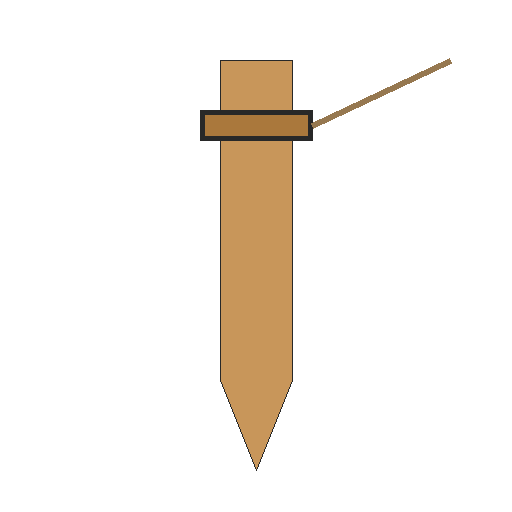 Tent Stake1 ẹyọ
Àwọn irinṣẹ́ tí a nílò:
Ọ̀bẹ6
6
Tie the four poles
Tie the four poles
Unroll the folded cover: its folded length is the distance from base to smoke hole. Lay two poles side by side on it, cross the other two over them at that distance from the butts, and tie the crossing with a thong about 4.5 m long and a simple knot. Raise them: a and b to the east, c and d to the west; swapping b and c locks the tie. The four feet stand at the corners of a rectangle, short side east. Then lay the other poles in on the north and south sides in about equal numbers, then the west side except its middle, and last the east side, the two door poles resting in a second crotch; keep three poles back.
Àwọn ohun èlò fún ìgbésẹ̀ yìí:
 Okùn awọ tútù1 ẹyọÒpó igi1 ẹyọ
Àwọn irinṣẹ́ tí a nílò:
Ọ̀bẹ7
7
Raise and pin the cover
Raise and pin the cover
Tie the cover's top cords to a pole so the bottom edge just touches the ground, stand it up in the middle of the west side through the crotch of the door poles, carry the cover round both ways and pin it above and below the door (door to the east; the right-hand edge, as you face it, on the outside; pins from right to left). A small ladder reaches the top pins.
Àwọn ohun èlò fún ìgbésẹ̀ yìí:
Okùn awọ tútù1 ẹyọÀwọn irinṣẹ́ tí a nílò:
 Okùn
8
8
Stretch, ears and stakes
Stretch, ears and stakes
Go inside and move the poles out or in until the cover is tight and evenly conical, then finish from outside. Poke the small ends of the last two poles through the holes in the ears' tips; moving these poles opens, closes or turns the smoke hole away from the wind. Stake the edge down all round.
Àwọn ohun èlò fún ìgbésẹ̀ yìí:
Òpó igi1 ẹyọÀwọn irinṣẹ́ tí a nílò:
Tent Stake Òòlù Igi
9
9
Troubleshooting
Troubleshooting
Tipi troubleshooting.
Flow
Loading...
10
10
History and honest limits
History and honest limits
From Clark Wissler, *Material Culture of the Blackfoot Indians*, **Anthropological Papers of the American Museum of Natural History** vol. V (1910), pp. 99-105 and Figs. 60-63 (checked on the archive.org scan materialcultureo00wiss; pp. 101-102 and 105 read from its text layer). The tipi was made and owned by the woman. The floor averaged about 4.3 m across, the fire a little toward the door. Wissler admits he was unsure how the cover's shape was laid out: he thought the skins were pieced roughly, trimmed against a pole and the bottom trimmed in place. Seam layout and canvas widths are ours.
Àwọn ohun-èlò
6- 1 ẹyọÀyè
- 1 ẹyọÀyè
- 1 ẹyọÀyè
- 1 ẹyọÀyè
- 1 ẹyọÀyè
- 1 ẹyọÀyè
Ìtọ́nisọ́nà yìí ń ṣe
Blueprint tó jọra
Àwọn blueprint wọ̀nyí pín ìmọ̀ — ọ̀nà, ohun-èlò tàbí ìlànà
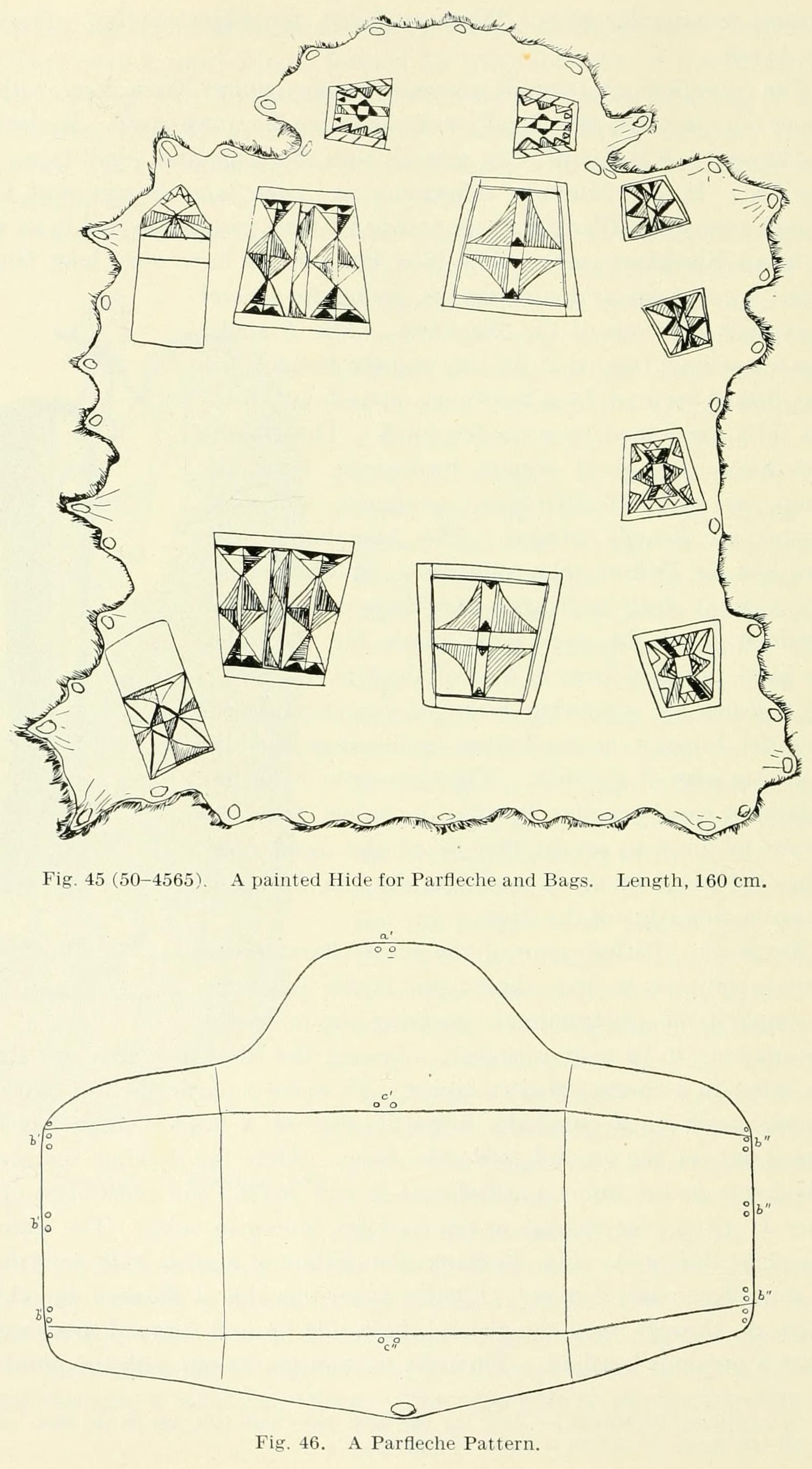
Blackfoot Parfleche: Rawhide Pegged Out, Fleshed, Painted While Staked, Scraped Even, Cut and Folded Like an Envelope (Wissler, 1910)
láti ọwọ́ Tex
Aṣọ àti Awọ
7
0
0
0
0
0
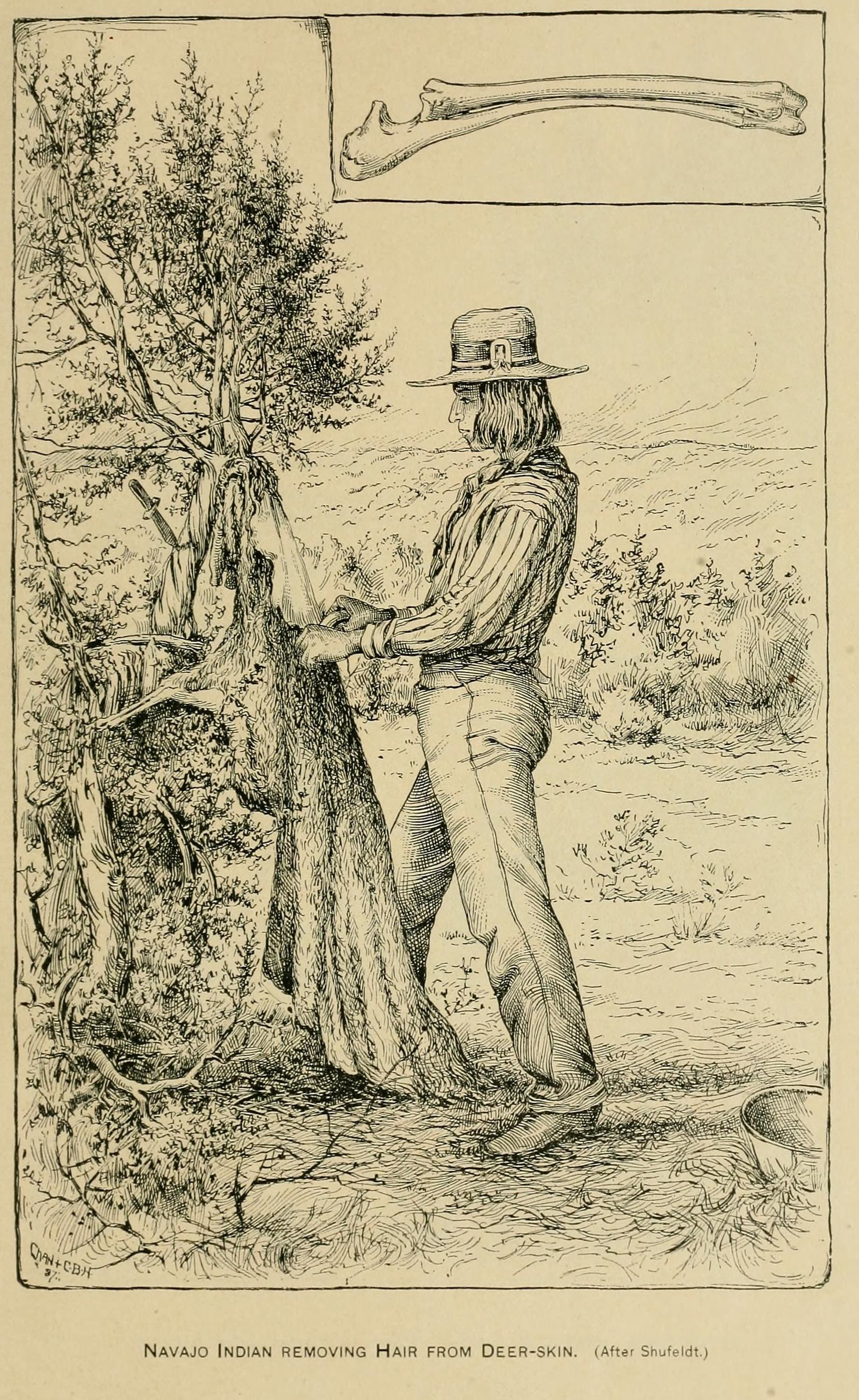
Navajo Buckskin: Hair Shaved with the Deer's Own Foreleg Bone, Brains Rubbed In, Wrung on a Tree, Worked Dry over the Feet (Shufeldt, 1888)
láti ọwọ́ Tex
Aṣọ àti Awọ
6
0
0
0
0
0
CC0 Àgbègbè Gbogbogbò
Blueprint yìí ti jáde lábẹ́ CC0. O lè ṣe àdàkọ, yí padà, pín, àti lò láìsí ìyọ̀ǹda.
Ṣàtìlẹ́yìn Olùṣẹ́dá nípa rírà àwọn ọjà nipasẹ̀ Blueprint wọn Ẹ̀san Olùṣẹ́dá tí àwọn Olùtajà gbé kalẹ̀, tàbí ṣẹ̀dá àtúnṣe tuntun ti Blueprint yìí kí o sì fi sínú Blueprint rẹ gẹ́gẹ́ bí ìsopọ̀ láti pín owó-wíwọlé.