IṢẸ́ ỌNÀ
ẸWÀ ÀTI ÌLERA
IṢẸ́ ỌWỌ́
ÀṢÀ ÀTI ÌTÀN
ÌṢERÉ
ÀYÍKÁ
OÚNJẸ ÀTI OHUN MÍMU
REVERSE ENGINEERING
SÁYẸ́ǸSÌ
ERÉ ÌDÁRAYÁ
ÌMỌ̀-Ẹ̀RỌ
ÀWỌN OHUN WÍWỌ̀
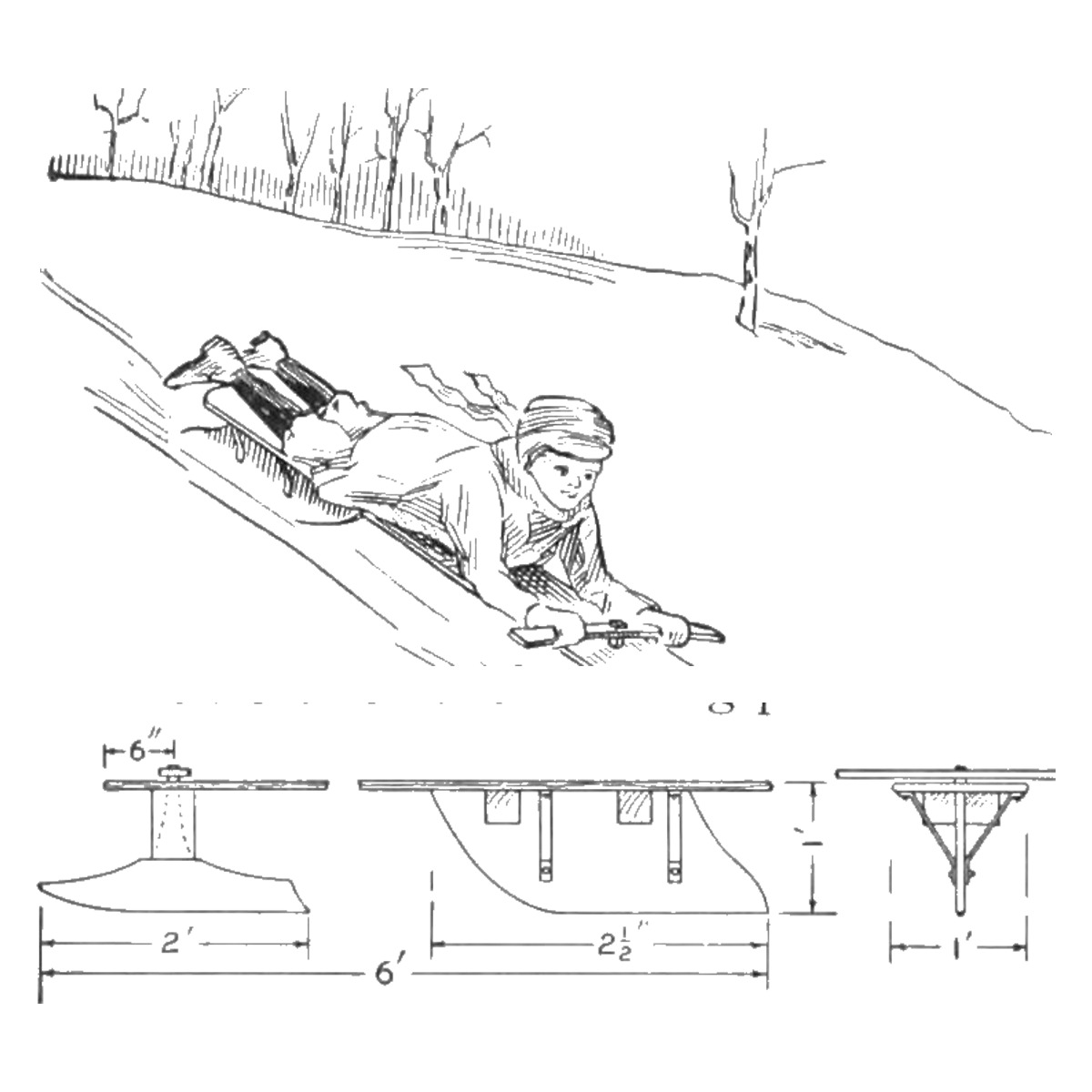


Monorail Sled: Two Tandem Plank Runners Shod With Strap Iron, Steered Lying Down (Boy Mechanic, 1915)
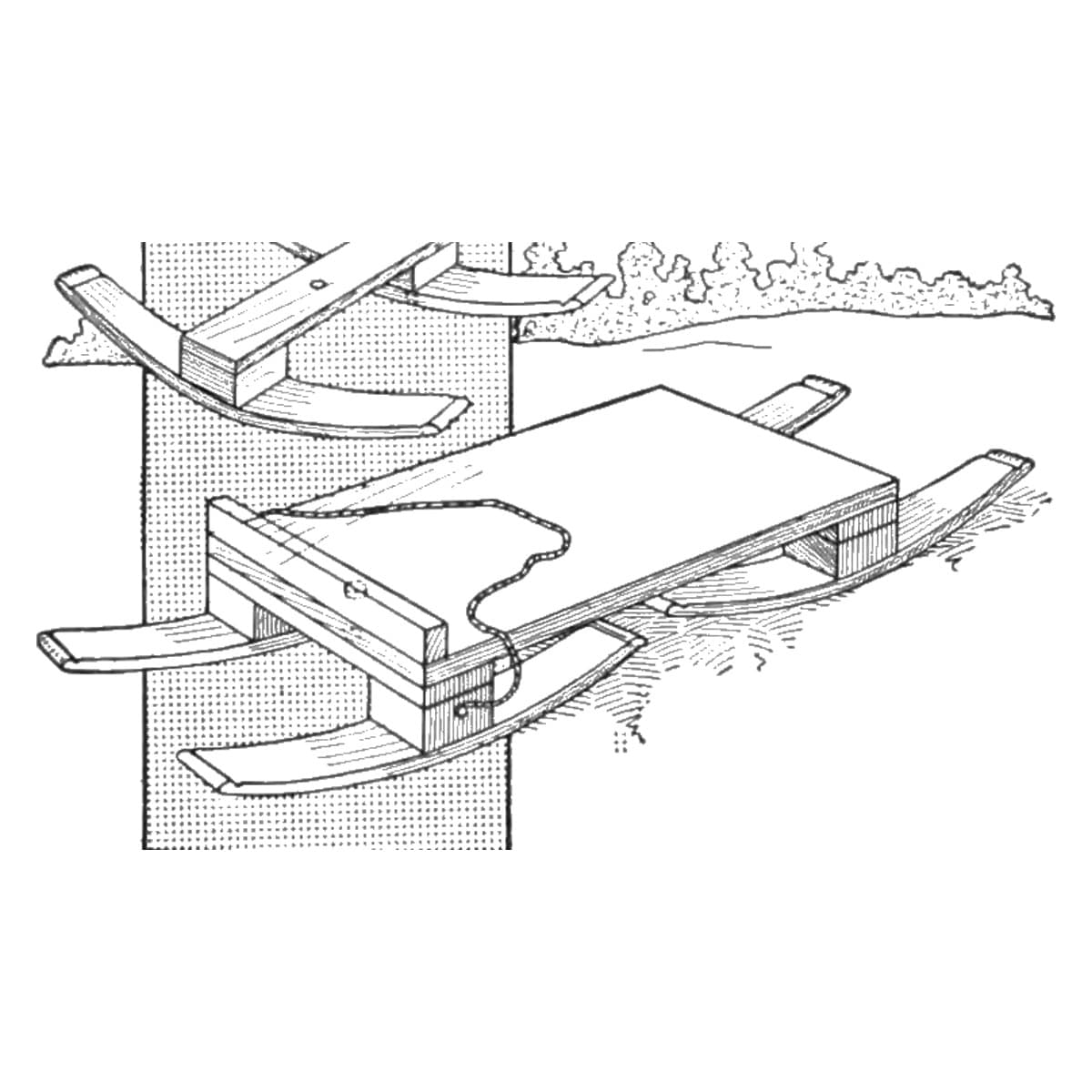
Harry Hardy's monorail sled from The Boy Mechanic, Book 2 (1915): two plank runners one behind the other under a 6 ft board, shod with square-edged strap iron that grips like a skate. The rider lies full length and steers the front runner with a bar, balancing like a cyclist.
Àárín
About 1 day
Ìlànà
1
1
His sketch in centimetres
His sketch in centimetres
Ń ṣí ìwé Jupyter…
2
2
Read The Boy Mechanic, Book 2
Read The Boy Mechanic, Book 2
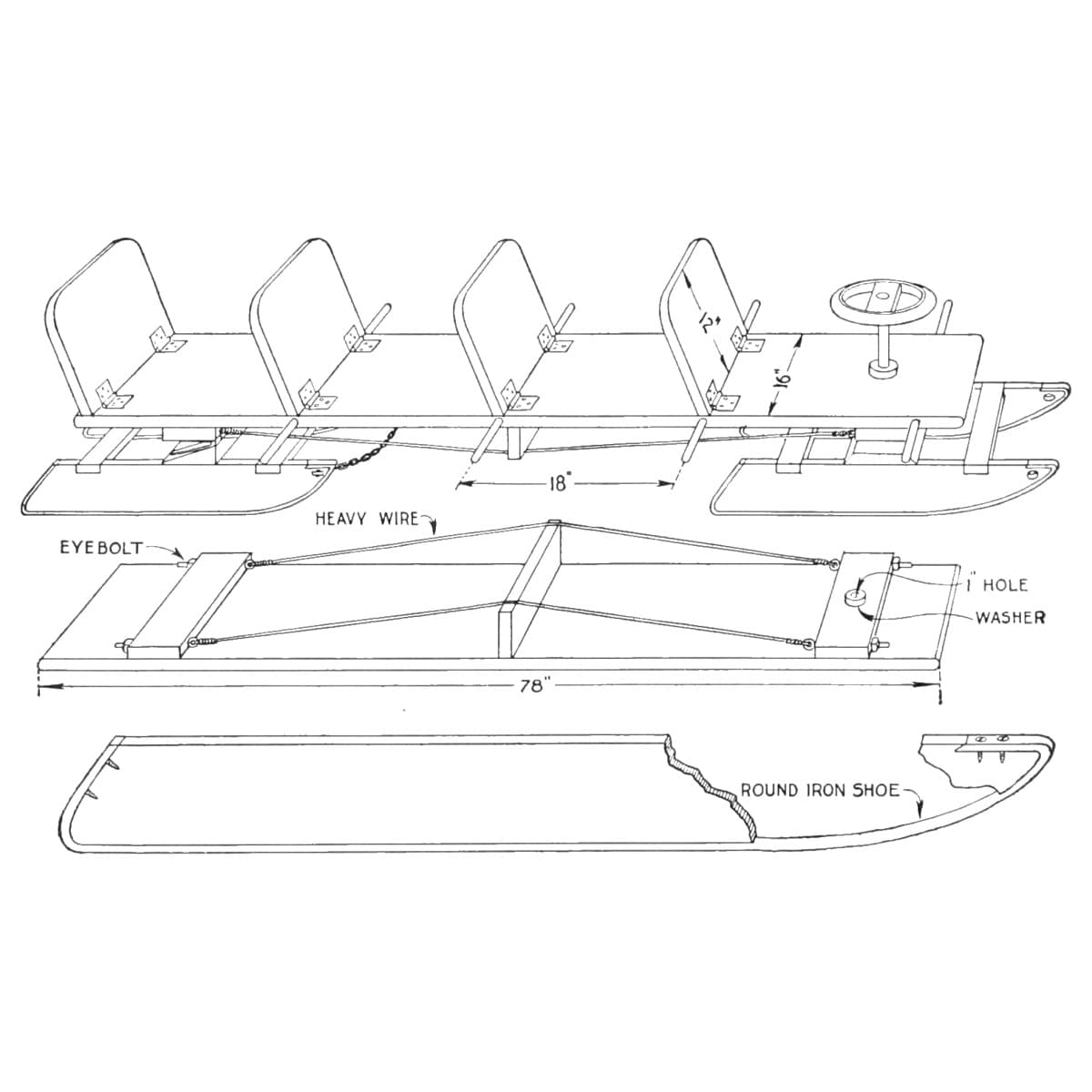
"Round iron or half-round iron should not be used, as these are liable to skid. The square, sharp edges of the strap iron prevent this and grip the surface just as a skate."
3
3
Cut and shoe the runners
Cut and shoe the runners
Cut the two runners from 1 in plank to the size and shape of his sketch: the front runner 2 ft long, the rear one 2-1/2 ft long and about 1 ft high (the sketch prints the rear length with an inch mark; it is drawn as 2-1/2 ft). Shoe them with strap iron 1 in wide and 1/4 in thick, keeping the edges square and sharp.
Àwọn ohun èlò fún ìgbésẹ̀ yìí:
 Pátákó Igi Líle1 ẹyọ
 Ọ̀pá Pẹrẹsẹ Irin Pẹ́lẹ́1 ẹyọ
 Ìṣó igi1 ẹyọ
Àwọn irinṣẹ́ tí a nílò:
 Ayùn Ọwọ́
 Ayùn Kópìngì
 Ayùn Irin
 Ìdìmú Tábìlì
 Ìlù ọwọ́
 Gègé
 Okùn Ìdíwọ̀n
4
4
Fit the rear runner
Fit the rear runner
Nail or bolt blocks on either side of the upper edge of the rear runner and screw the top board (6 ft long, 1 in thick) to them. Brace the runner with strap iron, as in the sketch.
Àwọn ohun èlò fún ìgbésẹ̀ yìí:
 Pákó igi pine1 ẹyọPátákó Igi Líle1 ẹyọỌ̀pá Pẹrẹsẹ Irin Pẹ́lẹ́1 ẹyọ
 Bọ́ọ̀tù orí róbótó1 ẹyọÌṣó igi1 ẹyọ
Àwọn irinṣẹ́ tí a nílò:
Ayùn Ọwọ́Ayùn IrinÌlù ọwọ́ Òòlù
5
5
Fit the front runner and steering
Fit the front runner and steering
Fit the front runner the same way, but with only one pair of blocks at the centre and a thin piece of wood on their tops as the fifth wheel. Bore the hole for the steering post 6 in from the front end of the top, a little larger than the post. Round the post where it passes through the hole and leave its upper end square, to take the steering bar tightly.
Àwọn ohun èlò fún ìgbésẹ̀ yìí:
Pátákó Igi Líle1 ẹyọỌ̀pá Pẹrẹsẹ Irin Pẹ́lẹ́1 ẹyọÌṣó igi1 ẹyọÀwọn irinṣẹ́ tí a nílò:
Ayùn Ọwọ́ Ìlù ọwọ́ pẹ̀lú orí
 Àwọn ìgbẹ́ igi
 Ohun èlò ìfárí igi (pìlánì)
6
6
Troubleshooting
Troubleshooting
Monorail sled troubleshooting.
Flow
Loading...
7
7
History and honest limits
History and honest limits
From "How to Make a Monorail Sled" by Harry Hardy, in **The Boy Mechanic, Book 2**, Popular Mechanics, 1915 (Project Gutenberg 44585; checked on the archive.org scan boymechanicbook200chic2, p. 50). The rear runner length is printed 2-1/2 with an inch mark but drawn longer than the 2 ft front runner, so it is read here as 2-1/2 ft. He gives no sizes for the blocks, braces or steering bar. The tools and metric figures are ours.
Àwọn ohun-èlò
5- 1 ẹyọÀyè
- Àyè
- 3 ẹyọÀyè
- 1 ẹyọÀyè
- 1 ẹyọÀyè
Ìtọ́nisọ́nà yìí ń ṣe
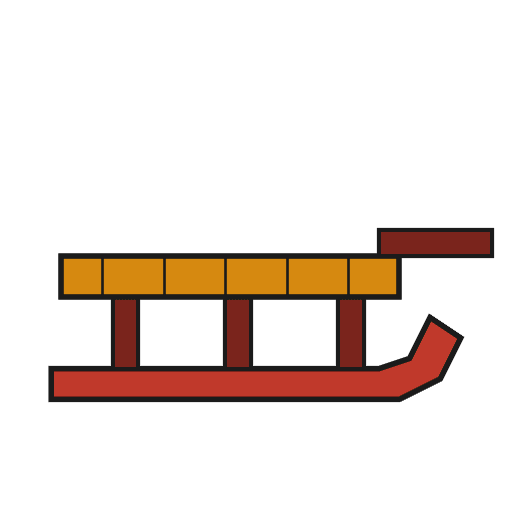
Blueprint tó jọra
Àwọn blueprint wọ̀nyí pín ìmọ̀ — ọ̀nà, ohun-èlò tàbí ìlànà
CC0 Àgbègbè Gbogbogbò
Blueprint yìí ti jáde lábẹ́ CC0. O lè ṣe àdàkọ, yí padà, pín, àti lò láìsí ìyọ̀ǹda.
Ṣàtìlẹ́yìn Olùṣẹ́dá nípa rírà àwọn ọjà nipasẹ̀ Blueprint wọn Ẹ̀san Olùṣẹ́dá tí àwọn Olùtajà gbé kalẹ̀, tàbí ṣẹ̀dá àtúnṣe tuntun ti Blueprint yìí kí o sì fi sínú Blueprint rẹ gẹ́gẹ́ bí ìsopọ̀ láti pín owó-wíwọlé.