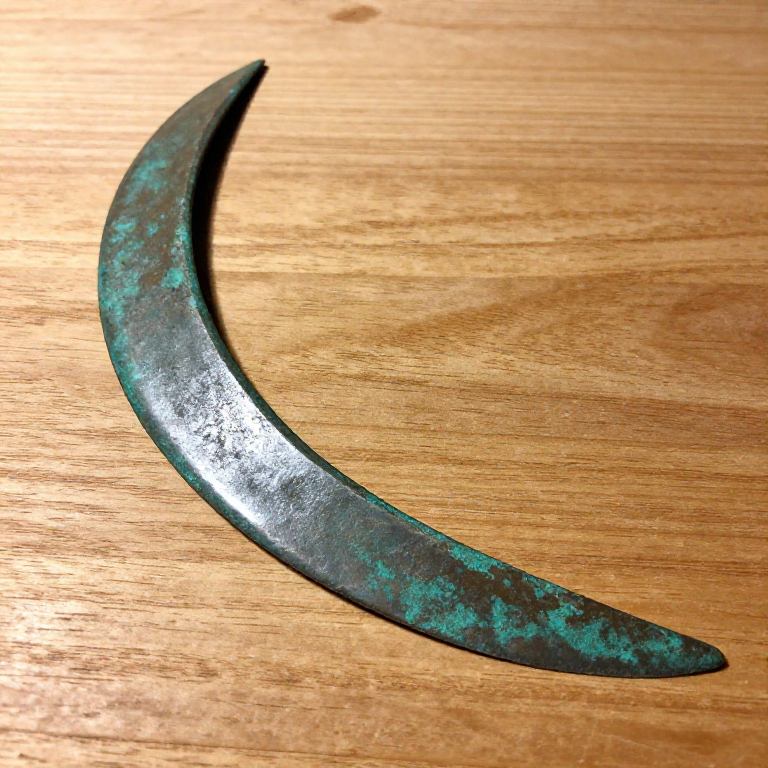


Casting a Bronze Sickle — The Harvesting Tool That Fed Civilisation
The bronze sickle was the tool that made large-scale grain agriculture possible. Its curved blade could cut a handful of wheat or barley stalks in a single sweeping motion — ten times faster than plucking individual seed heads by hand. When bronze sickles replaced flint-toothed sickles around 2000 BCE, a single farmer's harvest yield increased enough to feed several non-farming specialists, enabling the growth of cities, armies, and craft guilds.
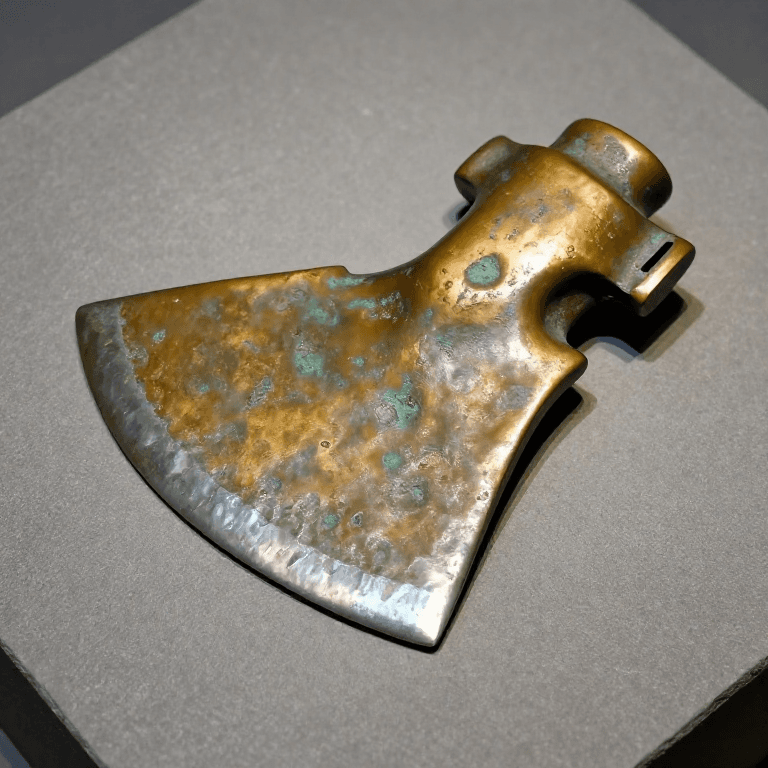
The sickle is cast in a bivalve stone mould as a flat crescent blade with a tang for hafting. The inner (cutting) edge is cold-hammered and ground sharp while the outer edge remains thick for rigidity. The curved form naturally guides the stalks into the blade as the farmer sweeps through a stand of grain.
Archaeological examples show distinctive wear polish (sickle sheen) on the cutting edge from contact with silica-rich grass stems — a telltale sign that identifies even fragmentary bronze sickles in the archaeological record.
Ìlànà
Prepare the bivalve mould
Prepare the bivalve mould
Àwọn ohun èlò fún ìgbésẹ̀ yìí:
 Bulọ́ọ̀kù òkúta ọṣẹ2 ẹyọ
Assemble and bind the mould
Assemble and bind the mould
Àwọn ohun èlò fún ìgbésẹ̀ yìí:
 Ege awọ àìṣe1 m
Melt and pour the bronze
Melt and pour the bronze
Àwọn ohun èlò fún ìgbésẹ̀ yìí:
 Èédú3 kg
Àwọn irinṣẹ́ tí a nílò:
 Ẹmú Ìkòkò Ìyọ́
Cool, demould, and remove sprue
Cool, demould, and remove sprue
Àwọn ohun èlò fún ìgbésẹ̀ yìí:
 Òkúta Iyanrìn (Ohun Ìfá)1 ẹyọ
Cold-hammer the cutting edge
Cold-hammer the cutting edge
Àwọn irinṣẹ́ tí a nílò:
 Òkúta Ìlù
 Pẹpẹ Òkúta Pẹrẹsẹ
Grind and sharpen
Grind and sharpen
Àwọn ohun èlò fún ìgbésẹ̀ yìí:
 Òkúta ìpọ́n1 ẹyọ
Shape the wooden handle
Shape the wooden handle
Haft the sickle and secure
Haft the sickle and secure
Àwọn ohun-èlò
6- 2 ẹyọÀyè
- 1 mÀyè
- 3 kgÀyè
- Àyè
- 1 ẹyọÀyè
- 1 ẹyọÀyè
Àwọn irinṣẹ́ tó nílò
4- Àyè
- Àyè
Àwọn Ohun Èlò Ìtọ́nisọ́nà Tí A So Pọ̀
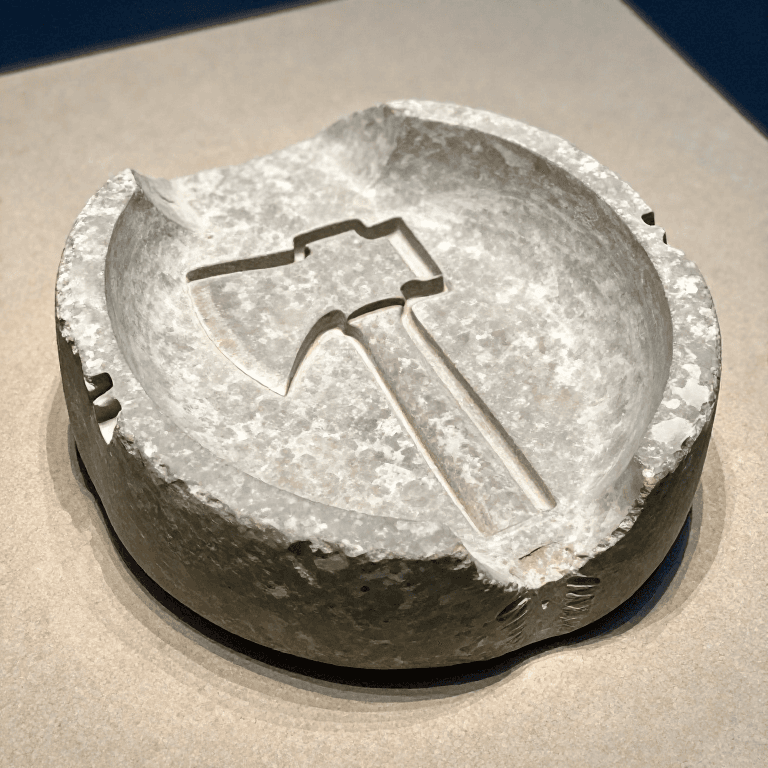
Ìtọ́nisọ́nà yìí ń ṣe

Blueprint tó jọra
Àwọn blueprint wọ̀nyí pín ìmọ̀ — ọ̀nà, ohun-èlò tàbí ìlànà

CC0 Àgbègbè Gbogbogbò
Blueprint yìí ti jáde lábẹ́ CC0. O lè ṣe àdàkọ, yí padà, pín, àti lò láìsí ìyọ̀ǹda.
Ṣàtìlẹ́yìn Olùṣẹ́dá nípa rírà àwọn ọjà nipasẹ̀ Blueprint wọn Ẹ̀san Olùṣẹ́dá tí àwọn Olùtajà gbé kalẹ̀, tàbí ṣẹ̀dá àtúnṣe tuntun ti Blueprint yìí kí o sì fi sínú Blueprint rẹ gẹ́gẹ́ bí ìsopọ̀ láti pín owó-wíwọlé.