


Making a Bronze Torc — Twisting and Bending a Neck Ring
The torc (torque) was the defining ornament of Bronze Age and Celtic cultures — a rigid open-ended neck ring worn by warriors, chieftains, and gods in the art of the period. From Ireland to Persia, gold and bronze torcs symbolised status, wealth, and divine favour. Some of the most famous examples, like the Snettisham Great Torc, are among the finest metalwork ever produced.
A bronze torc is made by casting a long rod, twisting it while hot to create the characteristic spiral pattern, then bending the twisted rod into a C-shape that fits around the neck. The terminals (ends) are hammered flat and curled into decorative finials, or cast separately and soldered on.
The twist is both decorative and structural — the spiral cross-section is stiffer than a plain round rod of the same weight, allowing the torc to spring open slightly when placed over the head and then grip the neck firmly.
Ìlànà
Cast a long bronze rod
Cast a long bronze rod
Àwọn ohun èlò fún ìgbésẹ̀ yìí:
 Pẹlẹbẹ Bàbà180 g
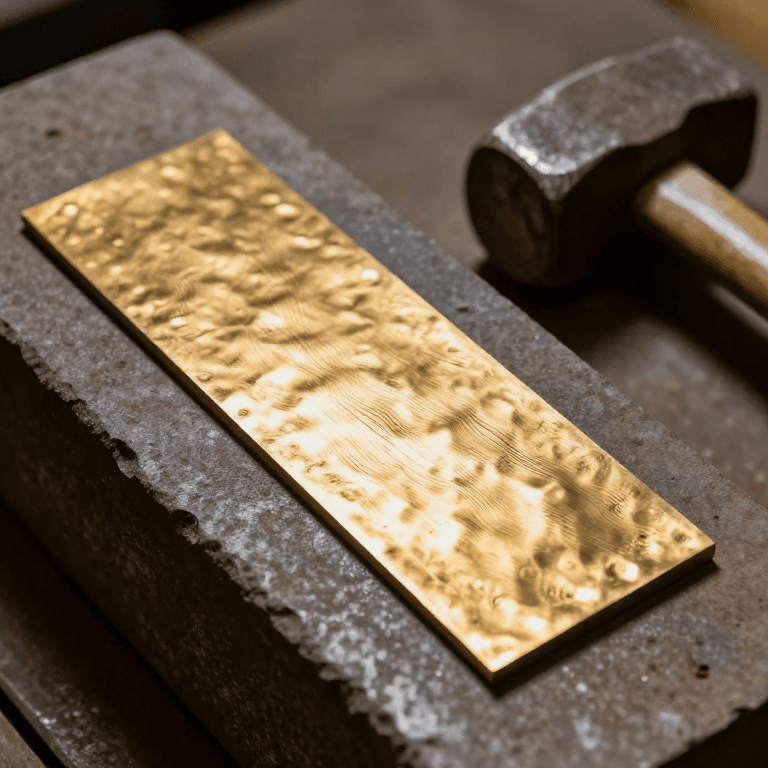
Hammer the rod to uniform cross-section
Hammer the rod to uniform cross-section
Àwọn irinṣẹ́ tí a nílò:
 Òkúta Ìlù
 Pẹpẹ Òkúta Pẹrẹsẹ
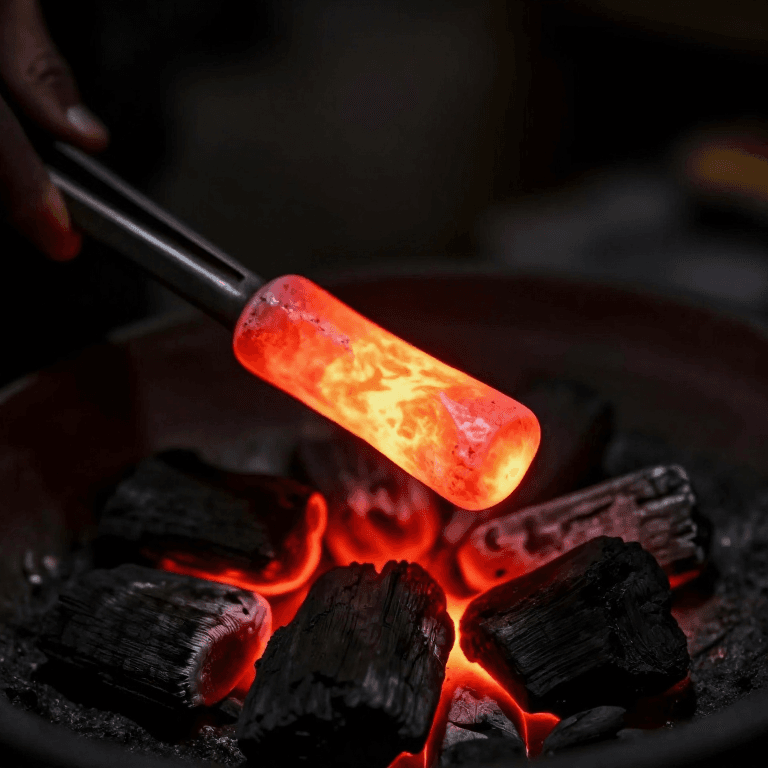
Anneal the rod for twisting
Anneal the rod for twisting
Àwọn ohun èlò fún ìgbésẹ̀ yìí:
 Èédú2 kg
Àwọn irinṣẹ́ tí a nílò:
 Ẹmú Onígùn Gígùn
Twist the rod
Twist the rod
Straighten the twisted rod
Straighten the twisted rod
Àwọn irinṣẹ́ tí a nílò:
 Òòlù Igi
Bend into a neck ring
Bend into a neck ring
Form the terminals
Form the terminals
Polish and finish
Polish and finish
Àwọn ohun èlò fún ìgbésẹ̀ yìí:
 Iyanrìn Kékeré50 g
 Ọ̀rá Ẹranko20 g
Àwọn ohun-èlò
6- 180 gÀyè
- 2 kgÀyè
- 50 gÀyè
- 20 gÀyè
- 1 ẹyọÀyè
- 1 ẹyọÀyè
Àwọn Ohun Èlò Ìtọ́nisọ́nà Tí A So Pọ̀
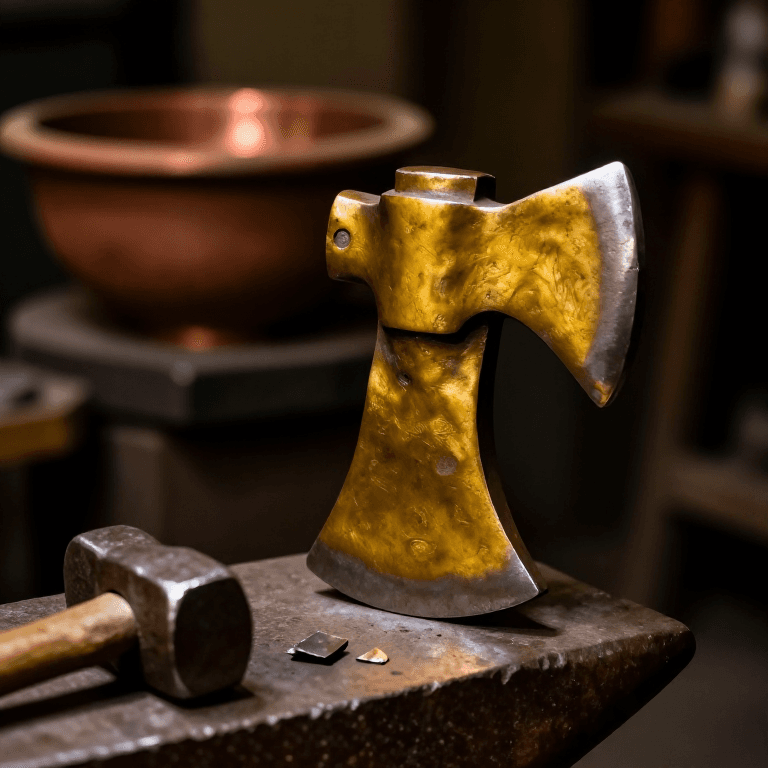
Ìtọ́nisọ́nà yìí ń ṣe
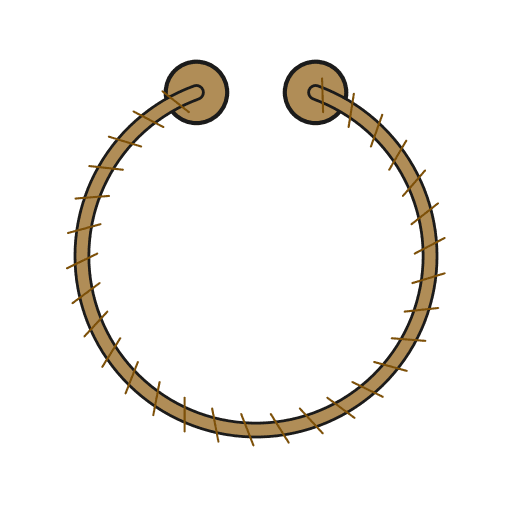
Blueprint tó jọra
Àwọn blueprint wọ̀nyí pín ìmọ̀ — ọ̀nà, ohun-èlò tàbí ìlànà
CC0 Àgbègbè Gbogbogbò
Blueprint yìí ti jáde lábẹ́ CC0. O lè ṣe àdàkọ, yí padà, pín, àti lò láìsí ìyọ̀ǹda.
Ṣàtìlẹ́yìn Olùṣẹ́dá nípa rírà àwọn ọjà nipasẹ̀ Blueprint wọn Ẹ̀san Olùṣẹ́dá tí àwọn Olùtajà gbé kalẹ̀, tàbí ṣẹ̀dá àtúnṣe tuntun ti Blueprint yìí kí o sì fi sínú Blueprint rẹ gẹ́gẹ́ bí ìsopọ̀ láti pín owó-wíwọlé.