IṢẸ́ ỌNÀ
ẸWÀ ÀTI ÌLERA
IṢẸ́ ỌWỌ́
ÀṢÀ ÀTI ÌTÀN
ÌṢERÉ
ÀYÍKÁ
OÚNJẸ ÀTI OHUN MÍMU
REVERSE ENGINEERING
SÁYẸ́ǸSÌ
ERÉ ÌDÁRAYÁ
ÌMỌ̀-Ẹ̀RỌ
ÀWỌN OHUN WÍWỌ̀
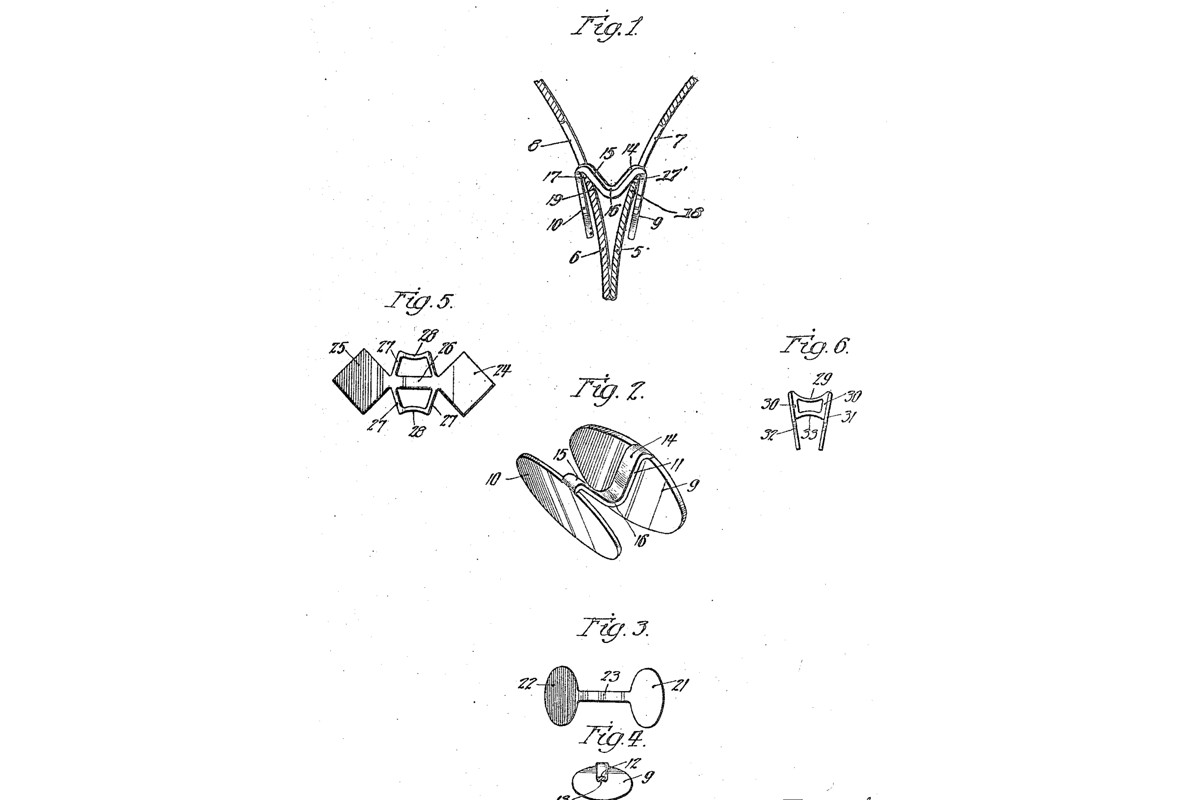


One-Piece Cuff Button: Two Faces and a V Shank Cut From One Brass Blank (Buchsbaum, 1923)
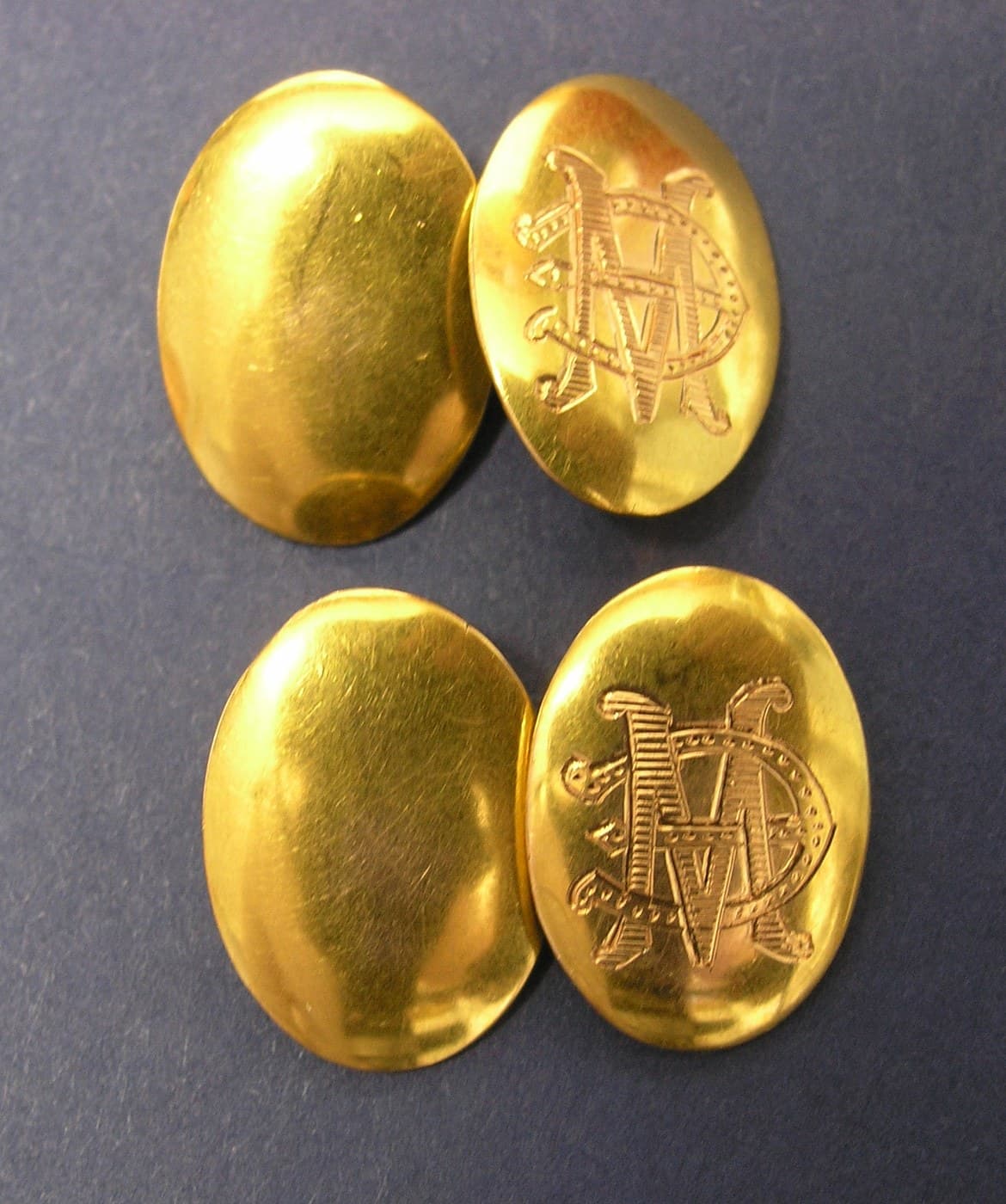
Samuel Buchsbaum of Chicago received US 1,444,023, dated 6 February 1923, for a cuff button made in one piece. A flat blank has two oval faces joined at their edges by a tongue. The tongue is bent into a V-shaped shank with a curved middle, and the faces lean in towards each other. Pockets between the shank and the faces hold the two ends of the cuff together. There is nothing to solder and nothing to come apart.
We cut it from brass sheet with a jeweller's saw, using a 1:1 template. All sizes are ours.
Olùbẹ̀rẹ̀
About 2 hours
Ìlànà
1
1
Where the cuff is gripped
Where the cuff is gripped
Ń ṣí ìwé Jupyter…
2
2
Read US 1,444,023
Read US 1,444,023
"It is a purpose of the present invention to form a cuff button wherein the face members and shank portion are integral, said members being all stamped from a single sheet of material."
3
3
Print the template
Print the template
Three blanks at 1:1 with the bend lines, and a side view of the bent button. print at 100 % (check the 50 mm bar).
4
4
Cut the blank
Cut the blank
Cut a blank out of the paper and lay it on 0.8 mm brass sheet. Scribe round it. Saw just outside the line with a jeweller's saw, then file to the line, keeping the tongue an even 4 mm wide where it meets each face.
Àwọn ohun èlò fún ìgbésẹ̀ yìí:
 Pẹlẹbẹ Bronse1 ẹyọ
Àwọn irinṣẹ́ tí a nílò:
 Abẹ́rẹ́ Ìkọ Ìlà
 Ayùn Alágbẹ̀dẹ Wúrà
 Àkójọ Ìfá Kékeré
 Ìdìmú Tábìlì
5
5
Smooth the edges
Smooth the edges
Round every edge with the needle files and sandpaper so nothing can catch the cuff or the skin. Do the faces' fronts now: they are hard to reach once bent.
Àwọn irinṣẹ́ tí a nílò:
Àkójọ Ìfá Kékeré Bébà Ìfá
6
6
Bend the shank
Bend the shank
Hold the middle of the tongue round a 3 mm rod, or in the round-nose pliers, and bend both halves up into a V about 60 degrees apart (ours). The middle stays curved, as his part 16.
Àwọn irinṣẹ́ tí a nílò:
 Ẹ̀mú Olórí Yíká
 Ọ̀pá Róbótó Irin Rírọ̀
7
7
Bend the faces
Bend the faces
Grip each leg close to its face with the flat-nose pliers and fold the face back down outside the leg, so it hangs beside the leg and leans in a little, as in his Fig. 1. The narrow gap between leg and face is the pocket for the cuff. Check both faces sit level with each other.
Àwọn irinṣẹ́ tí a nílò:
 Ẹmú Ẹnu Pẹrẹsẹ
8
8
Polish
Polish
Polish the faces with polishing compound on a soft cloth.
Àwọn irinṣẹ́ tí a nílò:
 Ohun ìdán
9
9
Fit it to the cuff
Fit it to the cuff
Turn the button edgewise and pass one face through both buttonholes, turning it as it goes, as he describes. Each cuff end should sit in a pocket between a leg and its face, and the ends stay together. If it is too tight, open the faces out a little; if loose, press them in.
Àwọn irinṣẹ́ tí a nílò:
Ẹmú Ẹnu Pẹrẹsẹ10
10
Troubleshooting
Troubleshooting
One-piece cuff button troubleshooting.
Flow
Loading...
11
11
History and honest limits
History and honest limits
**Samuel Buchsbaum** of Chicago, US 1,444,023, dated 6 February 1923, filed 22 August 1921. He claimed "a blank for cuff buttons comprising a sheet metal member having enlarged end members and a connecting tongue joining the adjacent edge portions of said end members". His were stamped; ours is sawn and filed. He also shows a form with square ends and a reinforced tongue (Figs. 5-6), not built here. He gives no sizes or metal: the brass, the 18 x 12 mm faces, the 4 x 18 mm tongue and the angles are ours.
Àwọn ohun-èlò
1- 1 ẹyọÀyè
Àwọn irinṣẹ́ tó nílò
9- Àyè
- Àyè
- Àyè
Àwọn fáìlì àpẹrẹ
1Ìtọ́nisọ́nà yìí ń ṣe
Blueprint tó jọra
Àwọn blueprint wọ̀nyí pín ìmọ̀ — ọ̀nà, ohun-èlò tàbí ìlànà
CC0 Àgbègbè Gbogbogbò
Blueprint yìí ti jáde lábẹ́ CC0. O lè ṣe àdàkọ, yí padà, pín, àti lò láìsí ìyọ̀ǹda.
Ṣàtìlẹ́yìn Olùṣẹ́dá nípa rírà àwọn ọjà nipasẹ̀ Blueprint wọn Ẹ̀san Olùṣẹ́dá tí àwọn Olùtajà gbé kalẹ̀, tàbí ṣẹ̀dá àtúnṣe tuntun ti Blueprint yìí kí o sì fi sínú Blueprint rẹ gẹ́gẹ́ bí ìsopọ̀ láti pín owó-wíwọlé.