
Building a Methane Gas Leak Detector
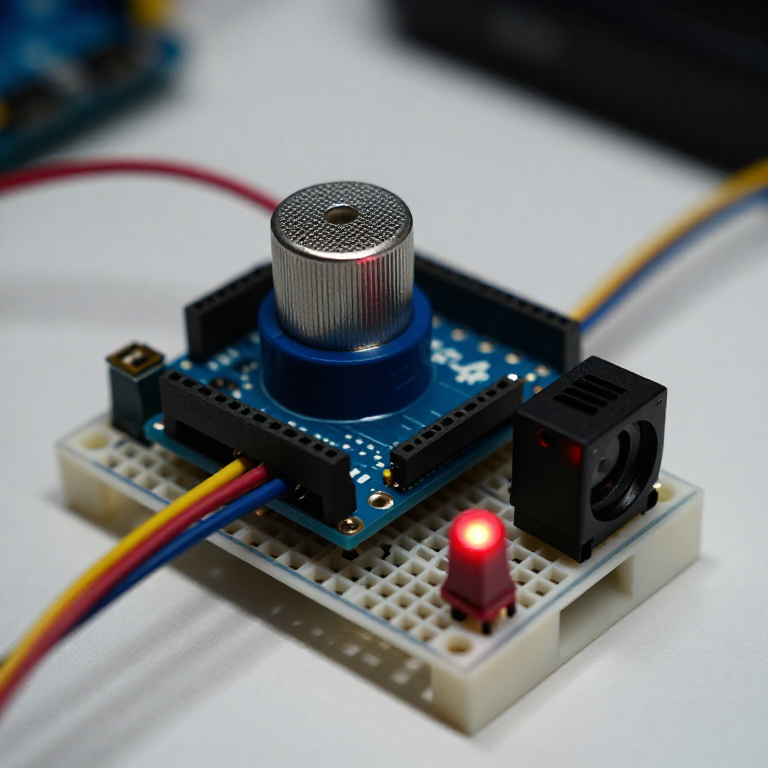
Build a circuit that sniffs out methane — the main component of natural gas — and alarms when it rises. An MQ-4 sensor's reading climbs when combustible gas is present; the Arduino compares it to clean air and triggers a buzzer and red LED. A great combustible-gas sensing project — with two honest notes: methane is flammable, and this is a demonstration, NOT a certified gas-leak detector.
Ìlànà
Wire the sensor, buzzer and LED
Wire the sensor, buzzer and LED
On the breadboard: MQ-4 VCC to Arduino 5V, GND to GND, and its analog output (AOUT) to A0. Active buzzer + to pin 8, - to GND. Red LED anode to pin 7 through a 330 Ω resistor, cathode to GND.
Àwọn ohun èlò fún ìgbésẹ̀ yìí:
 Arduino Uno R31 ẹyọ
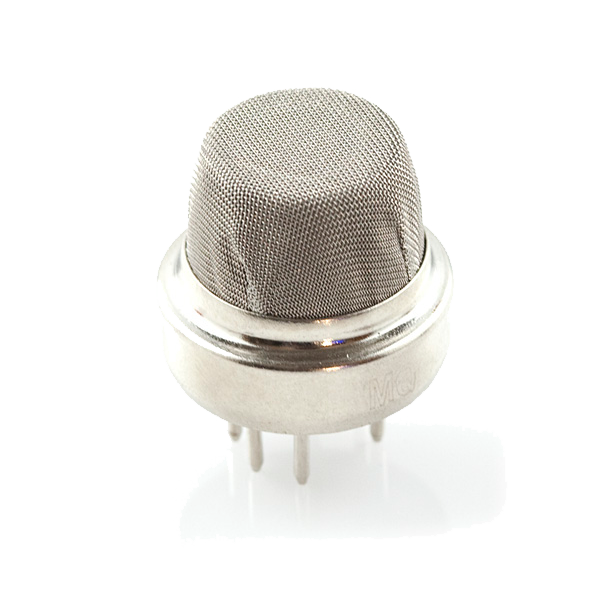 Methane CNG Gas Sensor - MQ-41 ẹyọ
 Modulu buzzer tí ń ṣiṣẹ́1 ẹyọ
 LED 5 mm1 ẹyọ
 Rẹ́sístà 330 ohm1 àkópọ̀
 Pátákó Àdánwò1 ẹyọ
 Okùn Ìsopọ̀1 àkópọ̀
Connect and open the IDE
Connect and open the IDE
Plug the Arduino into your computer with the USB cable, open the Arduino IDE, and select Arduino Uno and its serial port.
Àwọn irinṣẹ́ tí a nílò:
 Kọ̀ǹpútà Tí Ó Ní Arduino IDE
 Okùn USB-B
Upload the detector sketch
Upload the detector sketch
Paste this sketch and upload. It warms the sensor, records a clean-air baseline, then sounds the buzzer and lights the LED whenever the reading rises above that baseline.
Warm up, baseline and test SAFELY
Warm up, baseline and test SAFELY
Power it in fresh air and let the 2-minute warm-up set the baseline (a new MQ-4 also needs a 24–48 h burn-in). Test with only a TINY controlled source in a well-ventilated room — a brief puff of gas from an UNLIT lighter held near the sensor. NEVER test with a real gas leak, a large amount of gas, or anywhere near a flame or spark. Adjust ALARM_MARGIN for sensitivity.
Safety limits
Safety limits
Methane is highly flammable and, in enough concentration, explosive. This circuit is a LEARNING project and at best a supplementary indicator — it is NOT a certified gas-leak detector: the hobby MQ-4 gives a relative reading, not calibrated ppm, drifts, and needs re-baselining. For real protection use a certified natural-gas detector, and if you ever smell gas, do not switch anything on or off — leave and call your gas utility.
Àwọn ohun-èlò
7- Àyè
- 1 ẹyọ$4.84
- Àyè
- Àyè
- 1 àkópọ̀Àyè
- Àyè
- Àyè
Àwọn irinṣẹ́ tó nílò
3- 1 vendor sell this, none ship to you yetÀyè
- 1 vendor sell this, none ship to you yetÀyè
Blueprint tó jọra
Àwọn blueprint wọ̀nyí pín ìmọ̀ — ọ̀nà, ohun-èlò tàbí ìlànà
CC0 Àgbègbè Gbogbogbò
Blueprint yìí ti jáde lábẹ́ CC0. O lè ṣe àdàkọ, yí padà, pín, àti lò láìsí ìyọ̀ǹda.
Ṣàtìlẹ́yìn Olùṣẹ́dá nípa rírà àwọn ọjà nipasẹ̀ Blueprint wọn Ẹ̀san Olùṣẹ́dá tí àwọn Olùtajà gbé kalẹ̀, tàbí ṣẹ̀dá àtúnṣe tuntun ti Blueprint yìí kí o sì fi sínú Blueprint rẹ gẹ́gẹ́ bí ìsopọ̀ láti pín owó-wíwọlé.