IṢẸ́ ỌNÀ
ẸWÀ ÀTI ÌLERA
IṢẸ́ ỌWỌ́
ÀṢÀ ÀTI ÌTÀN
ÌṢERÉ
ÀYÍKÁ
OÚNJẸ ÀTI OHUN MÍMU
REVERSE ENGINEERING
SÁYẸ́ǸSÌ
ERÉ ÌDÁRAYÁ
ÌMỌ̀-Ẹ̀RỌ
ÀWỌN OHUN WÍWỌ̀
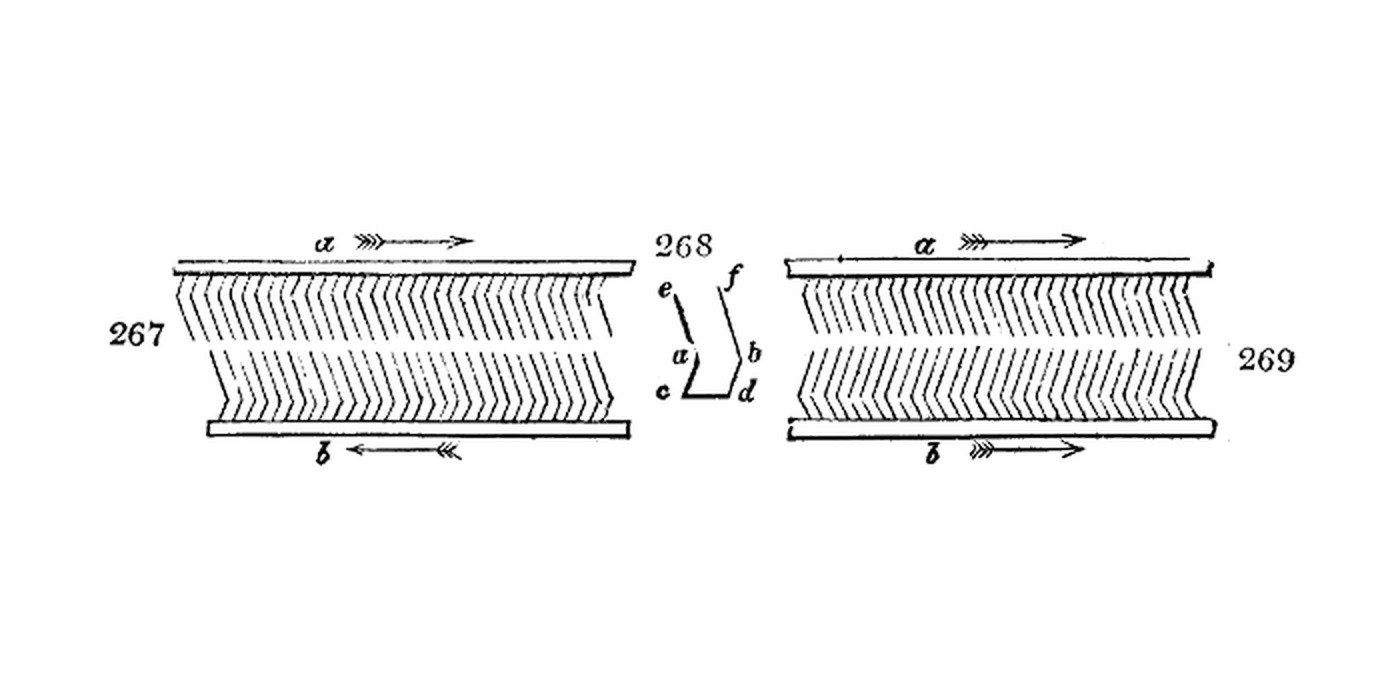


Card Clothing: Twin-Toothed Wire Staples Set in Shaved Leather (Ure, 1839)
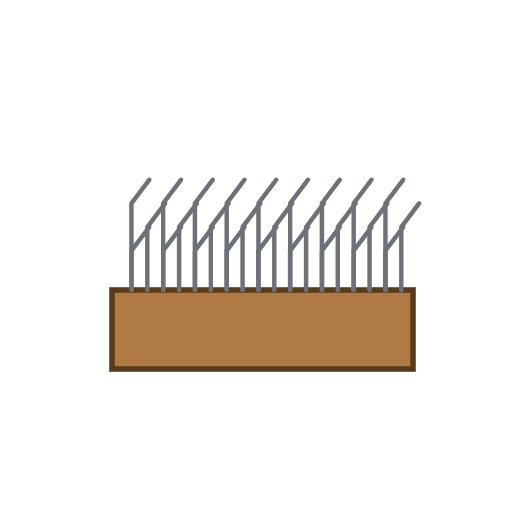
Card clothing is the toothed face of a card: leather set with rows of bent wire staples. Andrew Ure's Dictionary of Arts (1839) explains why it is hard to make well. Every staple gives two teeth, and both teeth must be bent to exactly the same angle; the twin holes for each staple must slope at the same angle through the leather; and the leather must be the same thickness everywhere, or the teeth stand at different lengths and the card works unevenly. Factories shaved the leather to an even thickness, losing about half its weight, and gave the wire and leather out to be put together by hand.
Ure gives no wire metal, gauge, tooth length, angle or hole spacing; those are unknown here.
Source: Andrew Ure, A Dictionary of Arts, Manufactures and Mines (1839), CARDS. Picture: his figs. 267-269, card teeth and one staple.
Àárín
A day for a small sheet
Ìlànà
1
1
Read Ure
Read Ure
"Cards are formed of a sheet or fillet of leather pierced with a multitude of small holes, in which are implanted small staples of wire with bent projecting ends called teeth. Thus every piece of wire is double toothed."
2
2
Shave the leather even
Shave the leather even
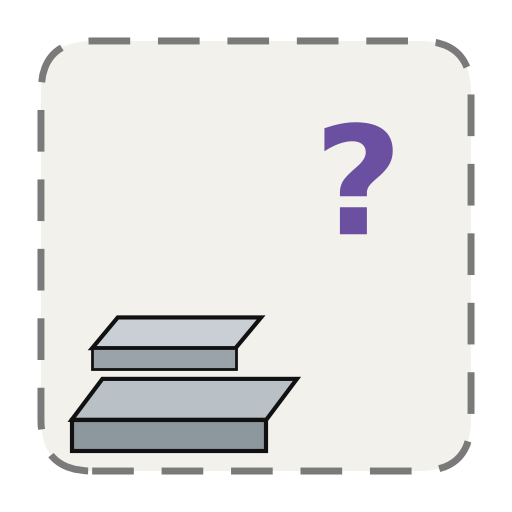
Shave the leather to the same thickness over its whole surface; in the factory about half its weight is lost in shaving and trimming. If the thickness varies, teeth of the same length stand at different heights. The thickness is not given (unknown).
Àwọn ohun èlò fún ìgbésẹ̀ yìí:
 Awọ tí a fi ewéko ṣe1 ewé
Àwọn irinṣẹ́ tí a nílò:
 Ọ̀bẹ ìdín awọ kù
 Ìwọ̀n tí a kò mọ̀
3
3
Bend the staples
Bend the staples
Cut the wire into equal lengths. Bend each length at right angles at two points (c and d in fig. 268) to make a staple, then bend each leg again at the same obtuse angle (a and b), so the two teeth lean the same way. Every staple must be bent alike. The metal and gauge of the wire, the tooth length and the angle are not given (unknown).
Àwọn ohun èlò fún ìgbésẹ̀ yìí:
 Irin tí a kò mọ̀1 wire
Àwọn irinṣẹ́ tí a nílò:
 Ẹ̀mú ìgé okùn oníkọ̀rọ̀
 Ẹmú Ẹnu PẹrẹsẹÌwọ̀n tí a kò mọ̀
4
4
Prick the twin holes
Prick the twin holes
Prick the leather with pairs of holes the width of a staple apart (c to d), in regular rows, every hole sloping at the same angle through the leather. The spacing is not given (unknown).
Àwọn irinṣẹ́ tí a nílò:
 Ọ̀kọ̀ ÌlùhòÌwọ̀n tí a kò mọ̀
5
5
Set the staples
Set the staples
Push each staple through its two holes from the back, so the cross piece (c d) lies against the back of the leather and holds it, and the teeth stand out on the face all leaning one way.
Àwọn irinṣẹ́ tí a nílò:
Ẹmú Ẹnu Pẹrẹsẹ6
6
History and honest limits
History and honest limits
By 1839 machines at Halifax, Leeds, Glasgow and Lille shaved the leather, pierced it, cut and bent the wire and set the staples; Ure describes a machine that does all four in turn. Card clothing was then nailed to the flat or cylindrical wooden or metal surfaces of hand cards and carding engines.
The wire metal and gauge, tooth length, knee angle, hole spacing and leather thickness are not given; vegetable-tanned leather stands for the card leather.
Àwọn ohun-èlò
2- 1 ewéÀyè
- 1 wireÀyè
Àwọn irinṣẹ́ tó nílò
5- Àyè
Ìtọ́nisọ́nà yìí ń ṣe
CC0 Àgbègbè Gbogbogbò
Blueprint yìí ti jáde lábẹ́ CC0. O lè ṣe àdàkọ, yí padà, pín, àti lò láìsí ìyọ̀ǹda.
Ṣàtìlẹ́yìn Olùṣẹ́dá nípa rírà àwọn ọjà nipasẹ̀ Blueprint wọn Ẹ̀san Olùṣẹ́dá tí àwọn Olùtajà gbé kalẹ̀, tàbí ṣẹ̀dá àtúnṣe tuntun ti Blueprint yìí kí o sì fi sínú Blueprint rẹ gẹ́gẹ́ bí ìsopọ̀ láti pín owó-wíwọlé.