
IṢẸ́ ỌNÀ
ẸWÀ ÀTI ÌLERA
IṢẸ́ ỌWỌ́
ÀṢÀ ÀTI ÌTÀN
ÌṢERÉ
ÀYÍKÁ
OÚNJẸ ÀTI OHUN MÍMU
REVERSE ENGINEERING
SÁYẸ́ǸSÌ
ERÉ ÌDÁRAYÁ
ÌMỌ̀-Ẹ̀RỌ
ÀWỌN OHUN WÍWỌ̀
Cattleman's Broad-Brimmed Hat: A Felt Body Stiffened With Shellac, Blocked and Set by Hand (Ermatinger, 1919)
Tex

Ṣẹ́dá nipasẹ̀

Tex

13. Oṣù Kọkànlá 2026FO
13
0
0
0
0

Cattleman's Broad-Brimmed Hat: A Felt Body Stiffened With Shellac, Blocked and Set by Hand (Ermatinger, 1919)

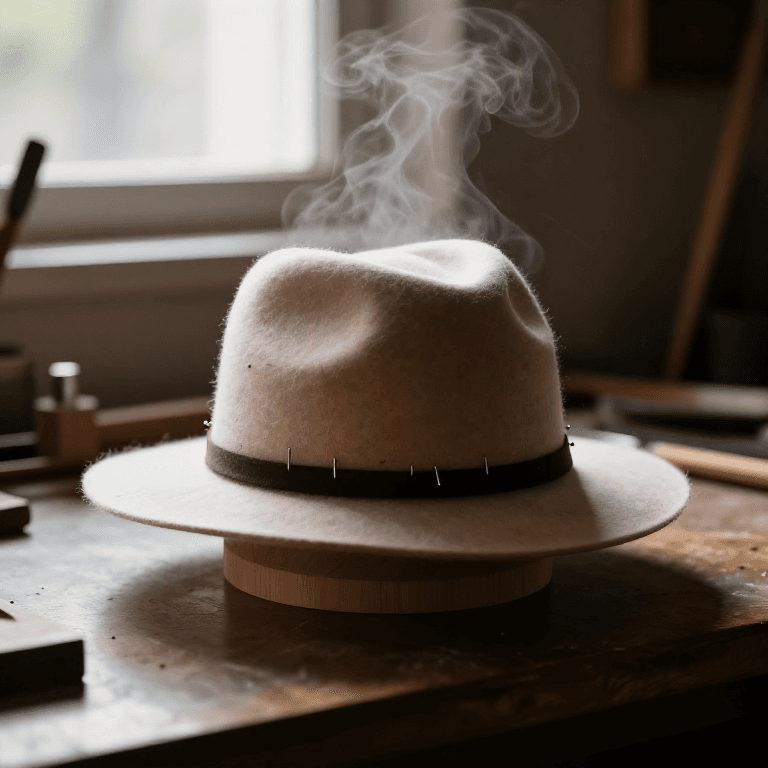
A cowboy hat is a soft felt hat with a broad, stout brim. In 1919 the hatter Henry L. Ermatinger wrote that shellac stiffening "should only be applied to hats requiring extra stout brims, such as the broad brimmed hats used by cattlemen and military men." His book Scientific Hat Finishing and Renovating also tells how a small shop finishes new hats from bodies bought in the rough. This blueprint follows him: stiffen a felt body with shellac, block it with steam and a cord, iron and pounce it, pare the brim, set the brim's roll by hand over steam, and sew in the sweatband. The brim width, the block size and a few hand tools are ours.
Ilọsíwájú
About 3 days (mostly drying)

Ìlànà

1

Body width and the mix

Ń ṣí ìwé Jupyter…
2

Read Ermatinger

"Shellac stiffening should only be applied to hats requiring extra stout brims, such as the broad brimmed hats used by cattlemen and military men. In the ordinary soft hat the thing desired is to turn out a hat that is soft and mellow." (Scientific Hat Finishing and Renovating, 1919, p. 47)
3

Make a notched board

Ermatinger rests the hat in a half circle cut in his bench while he works on the brim. Cut a half circle 20 cm across (our size: wide enough for the crown) in the edge of a plywood board and clamp the board to your table.

Àwọn ohun èlò fún ìgbésẹ̀ yìí:

Àwo igi tí a lẹ̀ pọ̀Àwo igi tí a lẹ̀ pọ̀1 ẹyọ

Àwọn irinṣẹ́ tí a nílò:
Ayùn KópìngìAyùn Kópìngì
Ìdíwọ̀nÌdíwọ̀n
4

Dissolve the shellac

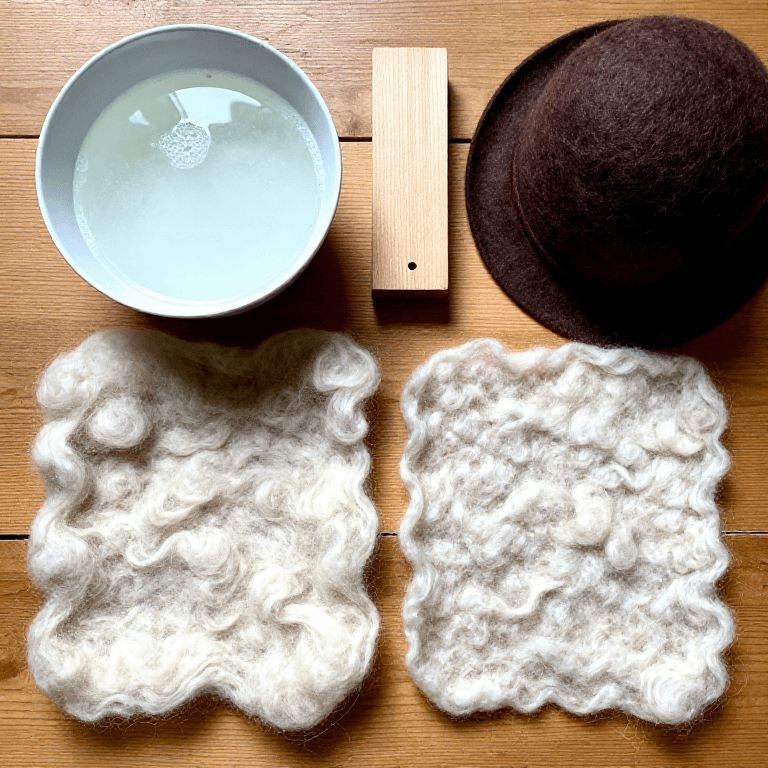
Put orange shellac in a jar, cover it with denatured alcohol, close the lid and shake it now and then through the day until it has all dissolved. Pour some into a bowl and add an equal part of denatured alcohol, so it is like rich milk. Keep a new sponge only for this, stored in a closed jar of alcohol so it does not harden.

Àwọn ohun èlò fún ìgbésẹ̀ yìí:

Ẹ̀ka sẹ́làkìẸ̀ka sẹ́làkì1 ẹyọ
Ọtí tí a bà jẹ́Ọtí tí a bà jẹ́1 ẹyọ

Àwọn irinṣẹ́ tí a nílò:

Ìgò Gílásì OnídìíÌgò Gílásì Onídìí
Abọ́Abọ́
Kànrìnkàn omi àdáyébáKànrìnkàn omi àdáyébá
5

Stiffen the inside and upper brim

Ermatinger puts shellac on the inside and the upper brim only. Chalk the back of the body. Turn it inside out and pull it firmly onto the block. Soak the sponge in the mix. Starting at the bottom at the chalk mark, stroke it on with one long stroke, pressing gently and then harder, up to the centre of the crown. Work round the hat like this. Never go over the same spot twice, or it will come up stiffer there.

Àwọn ohun èlò fún ìgbésẹ̀ yìí:

Kapelini aṣọ irun àgùtàn tí a lẹ̀Kapelini aṣọ irun àgùtàn tí a lẹ̀1 ẹyọ

Àwọn irinṣẹ́ tí a nílò:

Ìdí fìlà - igi, oríÌdí fìlà - igi, orí
Kànrìnkàn omi àdáyébáKànrìnkàn omi àdáyébá
Ẹfun aránṣọẸfun aránṣọ
6

Stiffen the underbrim

Turn the hat right side out and lay the brim over the notch. Stiffen the underbrim the same way: it should be a little stiffer than the crown. Then pat it and brush it from the band-mark out to the edge to stretch the nap. Hang it to dry overnight. If it is not stiff enough when dry, do it again. When dry, brush it hard with a dry sponge to clear the surface.

Àwọn irinṣẹ́ tí a nílò:

Kànrìnkàn omi àdáyébáKànrìnkàn omi àdáyébá
Búrọ́ọ̀ṣì aṣọBúrọ́ọ̀ṣì aṣọ
7

Block the crown

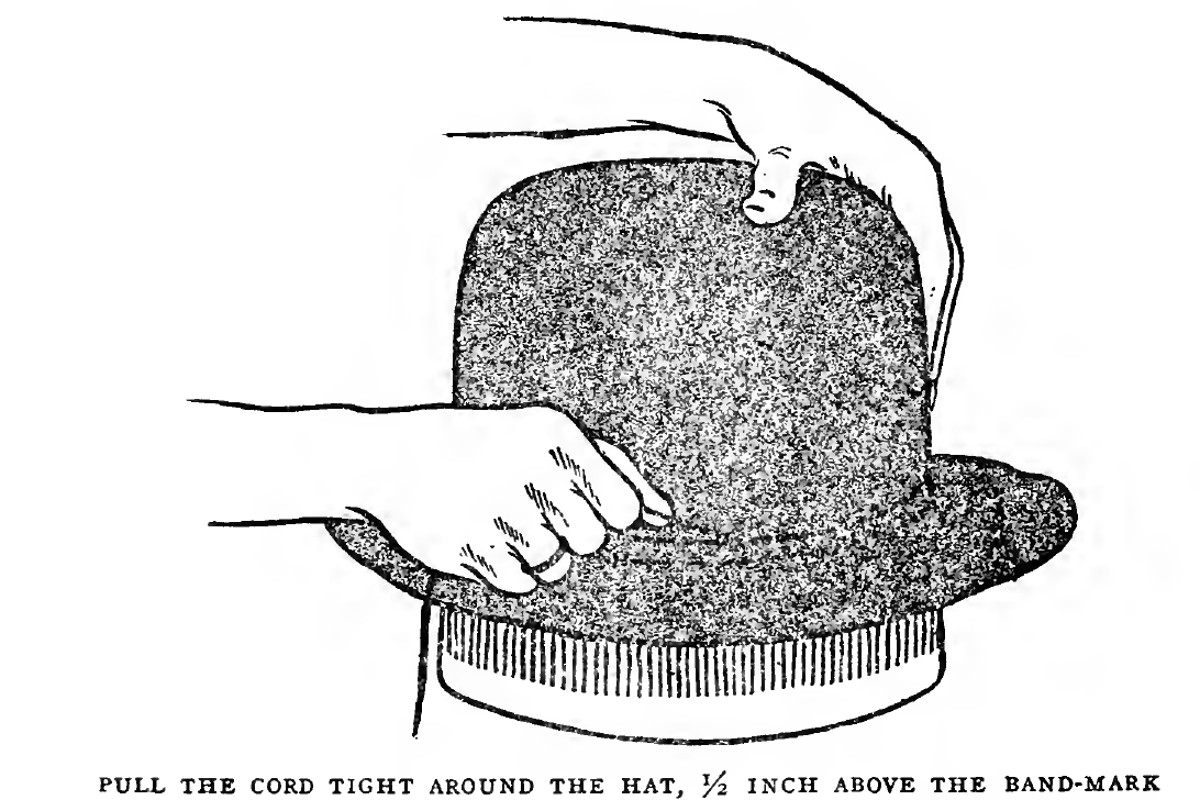
Put the dry hat on the block and work it down by hand. Tie the blocking cord round it with a tight slip-knot, half an inch (13 mm) above the band-mark (the line where crown meets brim), and wet the knot. Boil about two inches (5 cm) of water in the pot, lift the lid and hold the crown in the steam for 15 to 20 seconds, no longer: more makes the felt porous. Pull the brim down evenly until all wrinkles are gone, then push the cord down to the band-mark. For a full, flat-topped crown (his "Dakota"), palm the tip flat on the block and steam again, two or three times if needed.

Àwọn ohun èlò fún ìgbésẹ̀ yìí:

Okùn ìṣètòOkùn ìṣètò1 ẹyọ

Àwọn irinṣẹ́ tí a nílò:

Ìdí fìlà - igi, oríÌdí fìlà - igi, orí
Ìkòkò Ọbẹ̀ ŃláÌkòkò Ọbẹ̀ Ńlá
Pátákó GbígbónáPátákó Gbígbóná
Okùn Ìdíwọ̀nOkùn Ìdíwọ̀n
8

Iron the underbrim

Pull the brim out flat by hand and smooth it. Rest the hat upside down in the notch. Heat the flat iron on the hot plate, wipe its face clean, and cool its nose in the water bowl so it cannot scorch. Wet the sponge, squeeze it out, rub it over a part of the underbrim with the nap, and iron that part dry, always with the nap. Work round the whole underbrim.

Àwọn irinṣẹ́ tí a nílò:

Irin ayọ́ aṣọ olójú pẹlẹbẹIrin ayọ́ aṣọ olójú pẹlẹbẹ
Pátákó GbígbónáPátákó Gbígbóná
Kànrìnkàn omi àdáyébáKànrìnkàn omi àdáyébá
Abọ́Abọ́
9

Iron the crown

Stand the block up. Sponge one side of the crown and iron it dry with the nap until the water marks go and a gloss comes up. Do the other side, the front, the back and last the top, ironing in one direction to spin a neat centre. Pull on the brim's edge all the time: ironing narrows the brim and raises the crown. Lay a cotton cloth (he used duck or Canton flannel) over light-coloured felt so the iron cannot soil it.

Àwọn irinṣẹ́ tí a nílò:

Irin ayọ́ aṣọ olójú pẹlẹbẹIrin ayọ́ aṣọ olójú pẹlẹbẹ
Kànrìnkàn omi àdáyébáKànrìnkàn omi àdáyébá
Aṣọ ÒwúAṣọ Òwú
10

Pounce

Fold emery paper strips about 3 x 4 inches into a pad of three or four layers, with a fresh sheet on top. Hold the pad in your curved palm and rub the crown with the nap only, the same amount everywhere, to cut out the short hairs. Use 7-0 to 8-0 paper on fine felt, 5-0 to 6-0 on coarse. Finish with an old, dull sheet. Pounce both sides of the brim the same way. A fine hat gets no powders or grease.

Àwọn ohun èlò fún ìgbésẹ̀ yìí:

Bébà emeryBébà emery2 ewé
11

Iron the upper brim

Take the hat off the block, set it brim down on a flat board with the block back inside the crown, and iron the upper brim with short strokes. While it is still steaming, press firmly along the band-mark again and again; a tight twine round the band-mark helps keep it sharp. Pounce the upper brim.

Àwọn irinṣẹ́ tí a nílò:

Irin ayọ́ aṣọ olójú pẹlẹbẹIrin ayọ́ aṣọ olójú pẹlẹbẹ
Kànrìnkàn omi àdáyébáKànrìnkàn omi àdáyébá
Okùn ÒwúOkùn Òwú
Àwo igi tí a lẹ̀ pọ̀Àwo igi tí a lẹ̀ pọ̀
12

Dry on the block

Put the hat back on the block, wipe the crown lightly with a damp (not wet) sponge, and leave it to dry slowly on the block. As it dries the felt tightens and the surface clears.

Àwọn irinṣẹ́ tí a nílò:

Ìdí fìlà - igi, oríÌdí fìlà - igi, orí
Kànrìnkàn omi àdáyébáKànrìnkàn omi àdáyébá
13

Pare the brim

Mark the back of the underbrim exactly at the centre with chalk. Measure 4 inches (10 cm, our width) out from the band-mark all round and mark it. Cut the brim to the line with scissors. Take off the cord and the hat, and carry the chalk mark about one inch into the crown so the back can be found later.

Àwọn irinṣẹ́ tí a nílò:

Ẹfun aránṣọẸfun aránṣọ
Okùn Ìdíwọ̀nOkùn Ìdíwọ̀n
Ìkẹ́rẹ́ aṣọÌkẹ́rẹ́ aṣọ
14

Set the brim

A broad brim gets no curl at its edge. Boil the water, hold one side of the brim over the steam until it is soft, then roll it up slightly with your thumbs and fingers until it has the set you want. Rub your thumbs over the upper brim to shape it while it steams. Do the other side the same. Then steam the front and the back, dip them as you like, and let the brim cool in that shape.

Àwọn irinṣẹ́ tí a nílò:

Ìkòkò Ọbẹ̀ ŃláÌkòkò Ọbẹ̀ Ńlá
Pátákó GbígbónáPátákó Gbígbóná
15

Shape the crown

Leave the full crown open, or crease it: run the forefingers of both hands from the centre of the crown to the back and to the front, pressing until the crease is as deep as you want.
16

Sew in the sweatband and band

Buy the leather sweatband with its reed already attached, as Ermatinger did. Sew it inside the hat at the band-mark with neat, short stitches, hidden as well as you can. Sew a grosgrain band round the outside of the crown at the band-mark (ours).

Àwọn ohun èlò fún ìgbésẹ̀ yìí:

Ọ̀já òógùn fìlàỌ̀já òógùn fìlà1 ẹyọ
Tééṣì grosgrainTééṣì grosgrain1 ẹyọ

Àwọn irinṣẹ́ tí a nílò:

Àkójọ abẹ́rẹ́ àti okùn fún ṣíṣe fìlàÀkójọ abẹ́rẹ́ àti okùn fún ṣíṣe fìlà
17

Try it on

Put the hat on. It should sit snug at the sweatband, the brim should hold its roll when you take the hat off by the brim, and the crown should keep its shape.
18

Troubleshooting

Broad-brimmed felt hat troubleshooting.

Flow

Loading...
19

History and honest limits

**Henry L. Ermatinger**, *Scientific Hat Finishing and Renovating* (New York, Roberts, Cushman & Co., 1919), chapters VIII-XIII and XVIII-XIX. He wrote for small shops finishing hats bought "in the rough". He does not use the word "cowboy"; the broad brimmed hats of cattlemen are his. He says a shop finishing many rough bodies needs a flanging outfit (a hot sand bag on a flange); we use his hand method for setting the brim. We pull by hand instead of his puller-down and runner-down. A flat iron heated on a hot plate stands in for his gas-heated irons. The block size, the 4 inch brim, the wool capeline and the grosgrain band are ours. He gives no iron temperature: he cools the iron in water and learns by practice.

Àwọn ohun-èlò

8

Àwọn irinṣẹ́ tó nílò

17

Ìtọ́nisọ́nà yìí ń ṣe

CC0 Àgbègbè Gbogbogbò

Blueprint yìí ti jáde lábẹ́ CC0. O lè ṣe àdàkọ, yí padà, pín, àti lò láìsí ìyọ̀ǹda.

Ṣàtìlẹ́yìn Olùṣẹ́dá nípa rírà àwọn ọjà nipasẹ̀ Blueprint wọn Ẹ̀san Olùṣẹ́dá tí àwọn Olùtajà gbé kalẹ̀, tàbí ṣẹ̀dá àtúnṣe tuntun ti Blueprint yìí kí o sì fi sínú Blueprint rẹ gẹ́gẹ́ bí ìsopọ̀ láti pín owó-wíwọlé.

Ìfọ̀rọ̀wérọ̀

(0)

Wọlé láti dara pọ̀ mọ́ ìfọ̀rọ̀wérọ̀

Ń gbé àwọn ọ̀rọ̀ wọlé...