IṢẸ́ ỌNÀ
ẸWÀ ÀTI ÌLERA
IṢẸ́ ỌWỌ́
ÀṢÀ ÀTI ÌTÀN
ÌṢERÉ
ÀYÍKÁ
OÚNJẸ ÀTI OHUN MÍMU
REVERSE ENGINEERING
SÁYẸ́ǸSÌ
ERÉ ÌDÁRAYÁ
ÌMỌ̀-Ẹ̀RỌ
ÀWỌN OHUN WÍWỌ̀
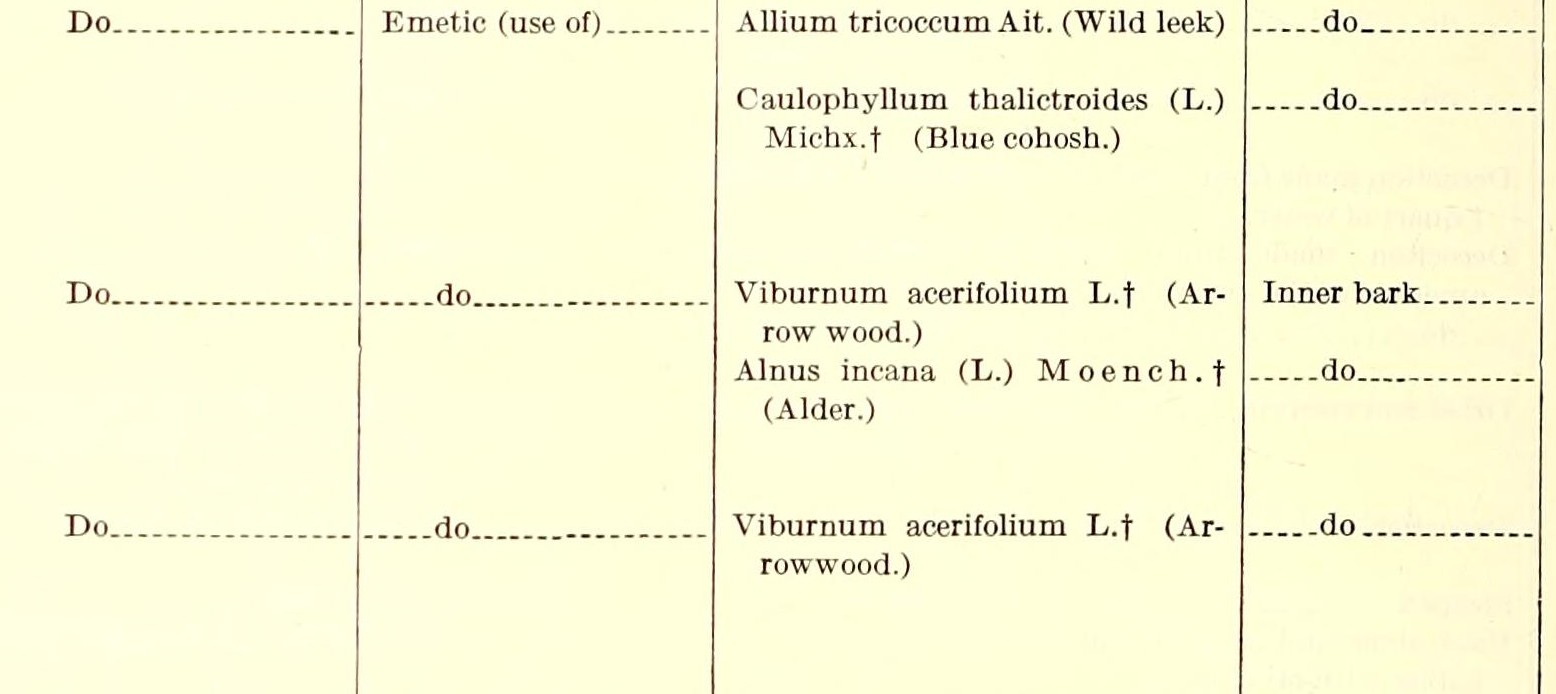


Chippewa Emetics: Wild Leek Root, and the Green Bark of Arrowwood and Alder (Densmore, 1928)
Chippewa (Ojibwe) emetics recorded by Frances Densmore: one wild leek root boiled for a dose, quick in its effect; the green inner bark of arrowwood and alder scraped from the stalks and boiled; and arrowwood bark squeezed in a cloth in hot water until the water turns green, cooled, and taken with plenty of water. Recorded use, not medical advice.
Olùbẹ̀rẹ̀
Half an hour
Ìlànà
1
1
Read Densmore
Read Densmore
Rows under "Emetic (use of)". Recorded use, not medical advice.
2
2
Wild leek root
Wild leek root
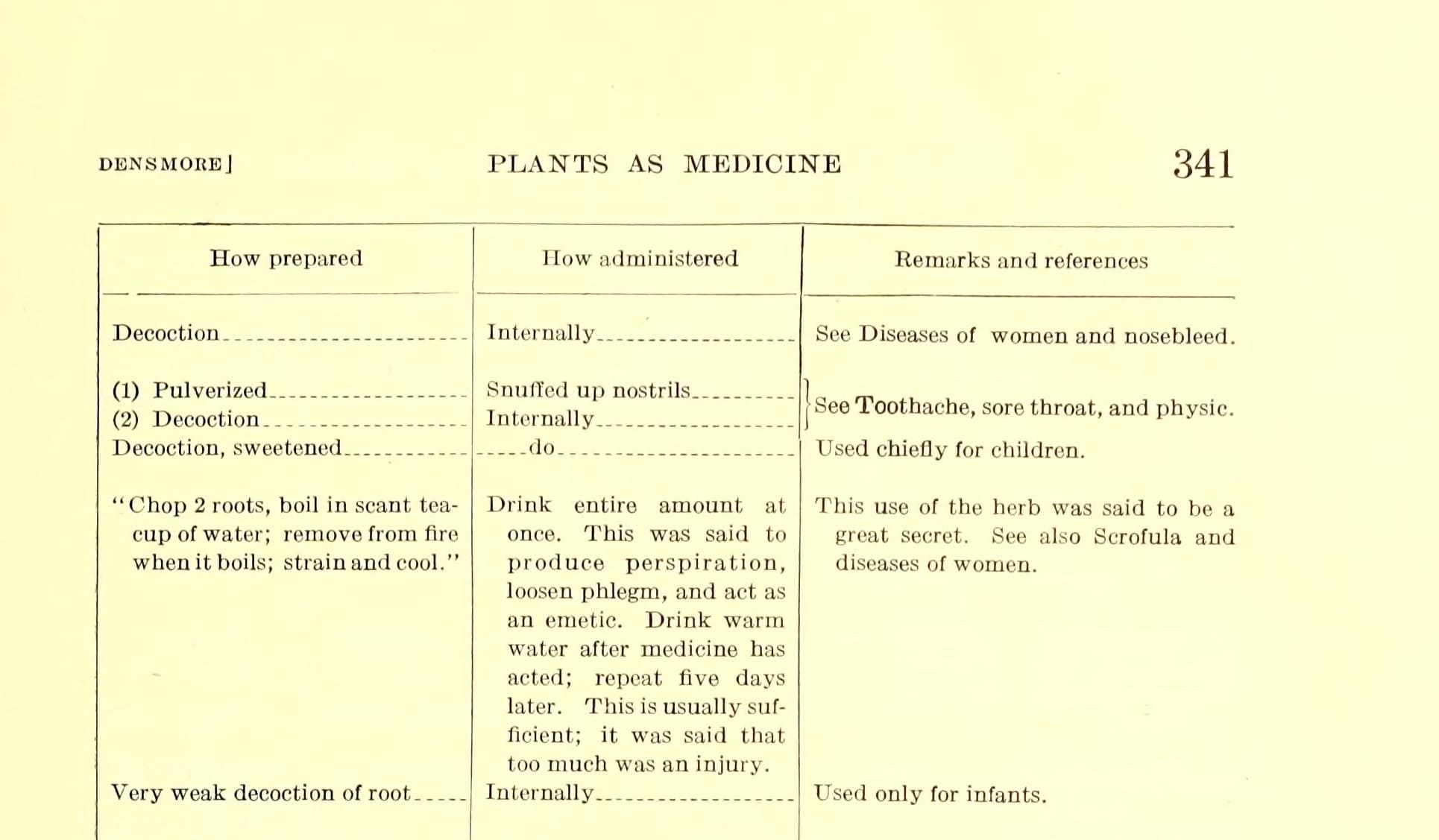
Boil the root; "1 root proper amount for a dose; quick in its effect."
Àwọn ohun èlò fún ìgbésẹ̀ yìí:
 Wild Leek Root1 ẹyọ
 Omi1 ẹyọ
Àwọn irinṣẹ́ tí a nílò:
 Ọ̀pá ìwalẹ̀
 Ìkòkò amọ̀
 Ihò iná
3
3
Arrowwood and alder green bark
Arrowwood and alder green bark
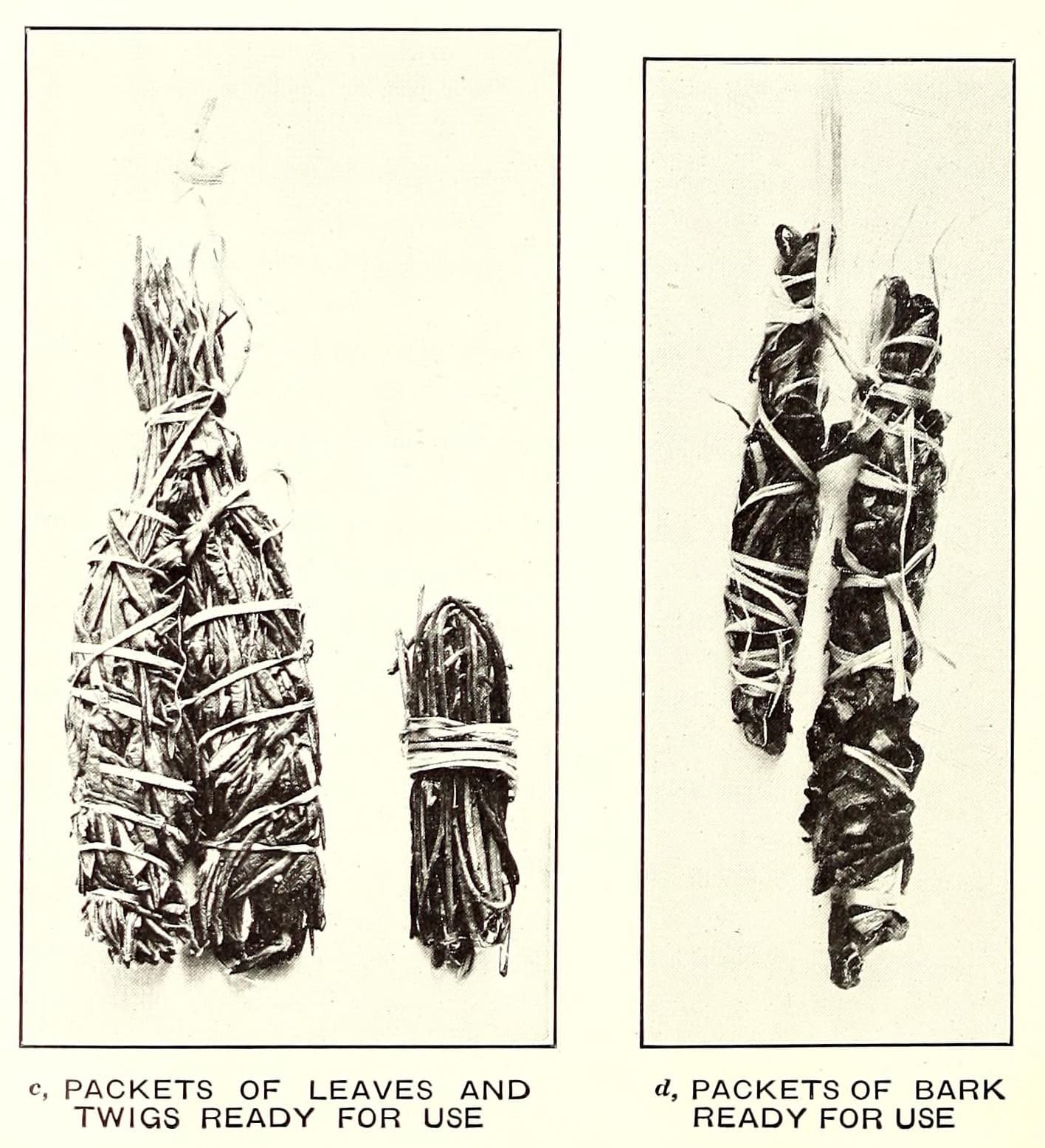
"Scrape the stalks carefully, removing only the thin outer covering and using the green part underneath. Put the scrapings of this green bark from both trees in boiling water to make decoction."
Àwọn ohun èlò fún ìgbésẹ̀ yìí:
 Arrowwood Inner Bark1 ẹyọ
 Alder Inner Bark1 ẹyọOmi1 ẹyọ
Àwọn irinṣẹ́ tí a nílò:
 Ọ̀bẹÌkòkò amọ̀Ihò iná
4
4
Arrowwood squeezed in a cloth
Arrowwood squeezed in a cloth
"Break up the bark, put it in a cloth and put the cloth in hot water, squeeze it until the water is green. Let it cool and take it with plenty of water."
Àwọn ohun èlò fún ìgbésẹ̀ yìí:
Arrowwood Inner Bark1 ẹyọOmi1 ẹyọÀwọn irinṣẹ́ tí a nílò:
Ọ̀bẹ Aṣọ wàrà-dídìÌkòkò amọ̀Ihò iná
5
5
Troubleshooting
Troubleshooting
Emetic safety.
Flow
Loading...
6
6
History and honest limits
History and honest limits
From Frances Densmore, *Uses of Plants by the Chippewa Indians*, **44th Annual Report of the Bureau of American Ethnology** (1928), pp. 346-347 (checked on the archive.org scan usesofplantsbych00dens). Chippewa remedies were mostly Midewiwin knowledge, shared so a record would survive. Left out: a blue cohosh emetic (toxic plant). Safety lines are ours. Recorded use, not medical advice.
Àwọn ohun-èlò
4- 1 ẹyọÀyè
- 3 ẹyọÀyè
- 1 ẹyọÀyè
- 1 ẹyọÀyè
Ìtọ́nisọ́nà yìí ń ṣe
Blueprint tó jọra
Àwọn blueprint wọ̀nyí pín ìmọ̀ — ọ̀nà, ohun-èlò tàbí ìlànà
CC0 Àgbègbè Gbogbogbò
Blueprint yìí ti jáde lábẹ́ CC0. O lè ṣe àdàkọ, yí padà, pín, àti lò láìsí ìyọ̀ǹda.
Ṣàtìlẹ́yìn Olùṣẹ́dá nípa rírà àwọn ọjà nipasẹ̀ Blueprint wọn Ẹ̀san Olùṣẹ́dá tí àwọn Olùtajà gbé kalẹ̀, tàbí ṣẹ̀dá àtúnṣe tuntun ti Blueprint yìí kí o sì fi sínú Blueprint rẹ gẹ́gẹ́ bí ìsopọ̀ láti pín owó-wíwọlé.