IṢẸ́ ỌNÀ
ẸWÀ ÀTI ÌLERA
IṢẸ́ ỌWỌ́
ÀṢÀ ÀTI ÌTÀN
ÌṢERÉ
ÀYÍKÁ
OÚNJẸ ÀTI OHUN MÍMU
REVERSE ENGINEERING
SÁYẸ́ǸSÌ
ERÉ ÌDÁRAYÁ
ÌMỌ̀-Ẹ̀RỌ
ÀWỌN OHUN WÍWỌ̀
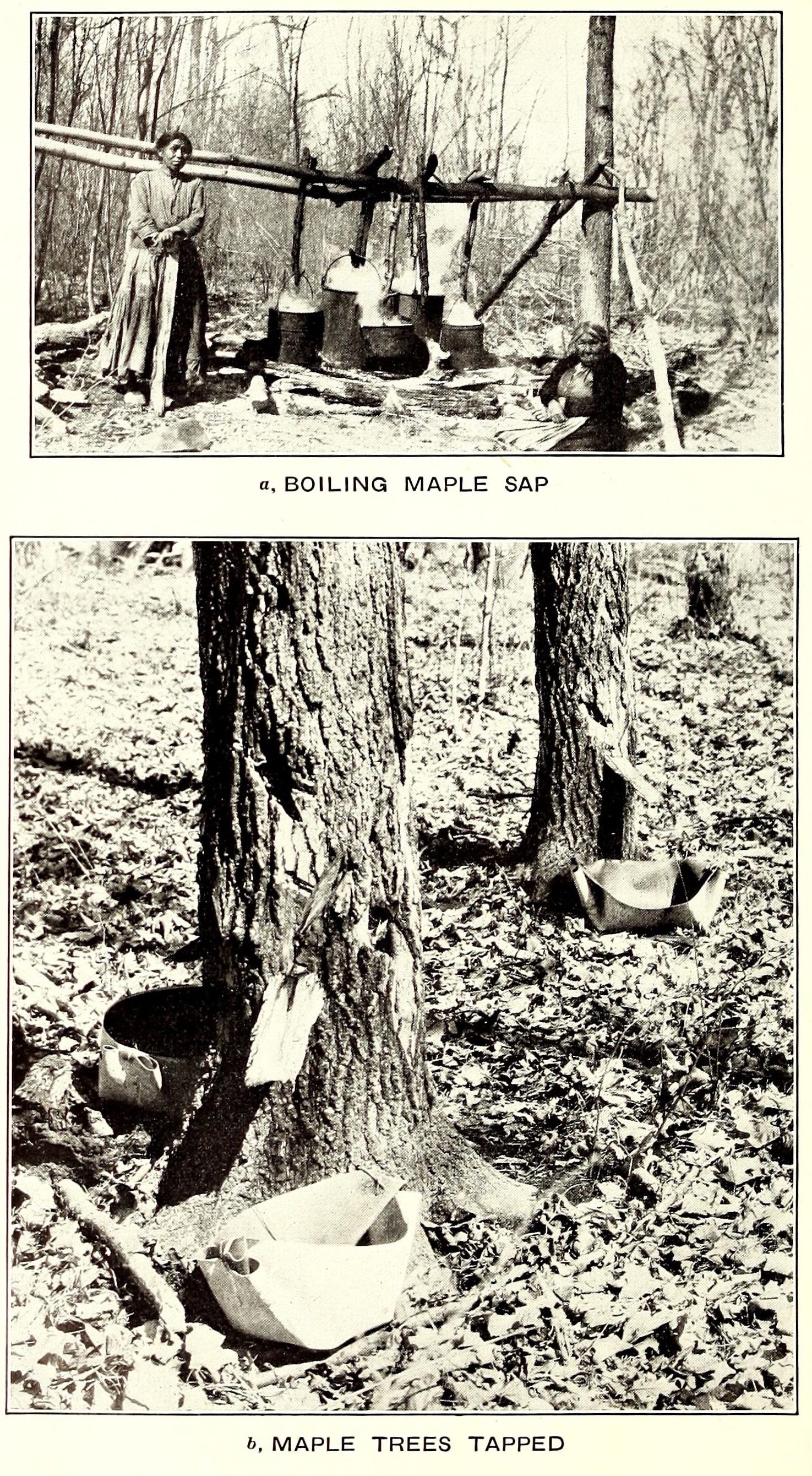


Chippewa Maple Sugar Camp: Spiles Below a Diagonal Cut, Kettles Boiled All Night, Sugar Worked in a Trough (Densmore, 1928)
How the Chippewa (Ojibwe) made the year's sugar, from Frances Densmore's account: maples tapped in mid-March with a diagonal cut and a curved slippery-elm spile, sap caught in birch-bark dishes, boiled all night in kettles and strained by morning, then on a stormy day reboiled with a little deer tallow and worked in a trough with a ladle until it grained.
Àárín
A month-long season; a night to boil, a day to sugar off
Ìlànà
1
1
Her measures
Her measures
Ń ṣí ìwé Jupyter…
2
2
Read Densmore
Read Densmore
"The season of sugar making began about the middle of March and lasted about a month." The first run of sap was the best.
3
3
Tap the trees
Tap the trees
About 3 ft (90 cm) up, make a diagonal cut about 3 1/2 in. (9 cm) long with an ax. Below its lower end strip the bark in a straight line down for about 4 in. (10 cm). Below that, cut a slot with the ax and drive in a wooden spile: hers were slippery elm, about 6 in. (15 cm) long and 2 in. (5 cm) wide, curved underneath. How far below depends on the grain and hardness of the wood: too near the cut and the wood may split. Big trees take two or three taps.
Àwọn ohun èlò fún ìgbésẹ̀ yìí:
 Tube igi (ẹnu omi igi)1 ẹyọ
Àwọn irinṣẹ́ tí a nílò:
 Àáké
4
4
Gather the sap
Gather the sap
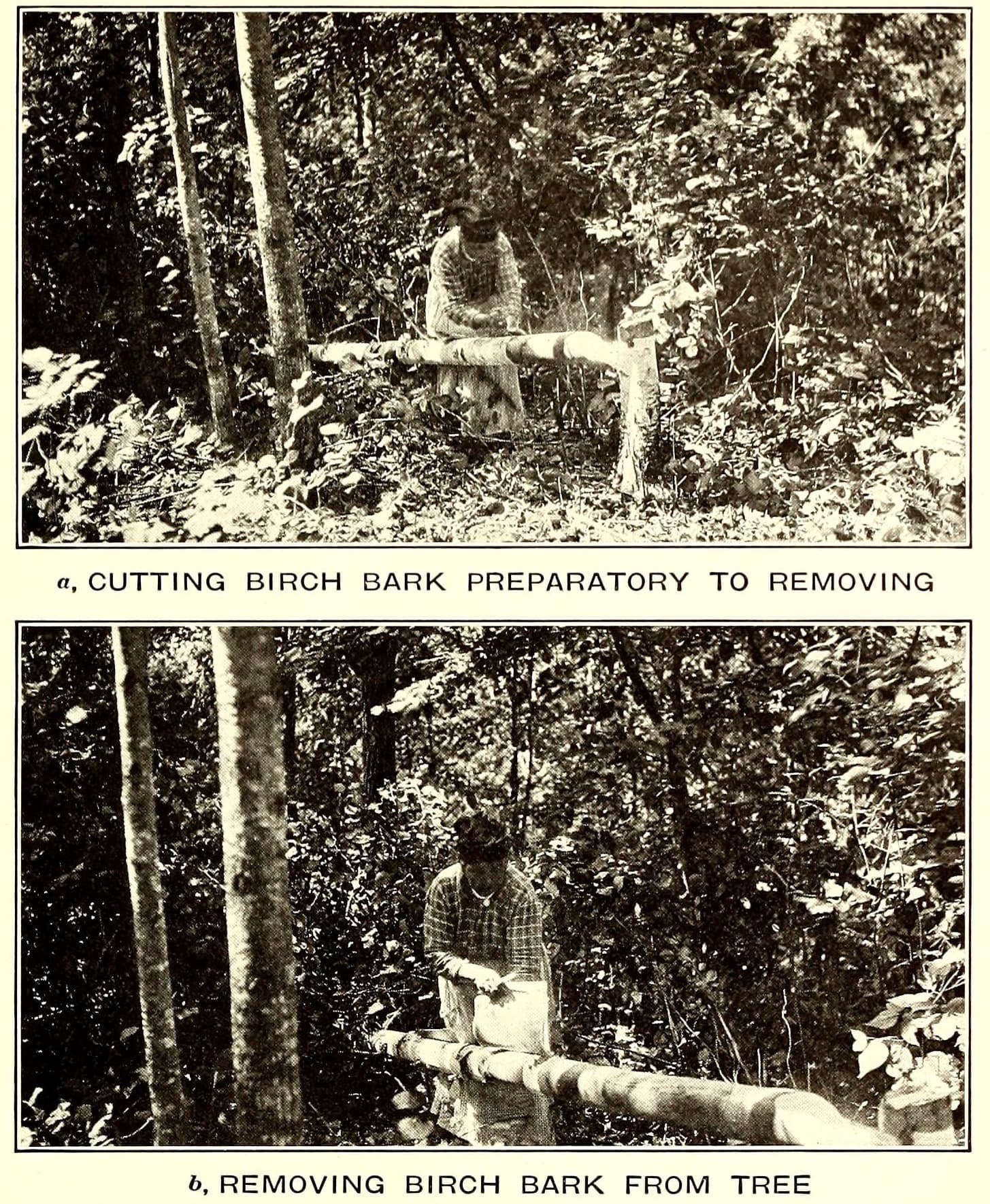
In the early morning set a birch-bark dish (about 12 in., 30 cm long) on the ground or snow under each tap. When the sap stops running in the late afternoon, pour the dishes into bark pails or buckets.
Àwọn ohun èlò fún ìgbésẹ̀ yìí:
 Oje mápù tútù1 ẹyọ
Àwọn irinṣẹ́ tí a nílò:
 Ohun-èlò Èèpo Betula
5
5
Boil all night
Boil all night
Heat sap in smaller kettles at the ends of the fire and empty it into the large kettles, only part-filled at first, where the real boiling is done. Keep the fires going all night, taking turns. If a kettle boils up too fast, brush the froth with a spruce branch on a stick and it settles.
Àwọn irinṣẹ́ tí a nílò:
 Kẹ́tù Irin
 Ihò iná
6
6
Strain the syrup
Strain the syrup
By early morning the syrup is slightly thick. Dip it with large wooden spoons and strain it slowly through burlap into a clean kettle (in old days a mat of narrow basswood-bark strips; sometimes a threadbare clean white blanket). This is the syrup.
Àwọn irinṣẹ́ tí a nílò:
 Ṣíbí Igi
 Aṣọ àpò / hessianKẹ́tù Irin
7
7
Sugar off
Sugar off
Wait for a stormy day or the end of sap boiling. Scour the kettles with bunches of stiff rushes and wash everything. Heat the syrup slowly; when thick add small pieces of deer tallow to keep the sugar soft, not brittle. Stir with a maple paddle, then pour it quickly into the granulating trough, stir again and work it with the back of a ladle (or by hand) until it grains, fast, before it cools. Pour the warm sugar into makuks.
Àwọn ohun èlò fún ìgbésẹ̀ yìí:
 Ọ̀rá Ẹranko1 ẹyọ
Àwọn irinṣẹ́ tí a nílò:
 Ọ̀pá esùsú gbígbẹKẹ́tù IrinIhò iná
 Ọ̀pá ìrú igi
 Ìbùjẹ ẸranṢíbí IgiOhun-èlò Èèpo Betula
8
8
Troubleshooting
Troubleshooting
Maple sugar troubleshooting.
Flow
Loading...
9
9
History and honest limits
History and honest limits
From Frances Densmore, *Uses of Plants by the Chippewa Indians*, **44th Annual Report of the Bureau of American Ethnology** (1928), pp. 308-313, Plates 33-35 (checked on the archive.org scan usesofplantsbych00dens). An average bush had 900 taps; a good worker made 300 a day. Thick syrup was also hardened in birch-bark cones, little dishes and greased wooden molds of animals, men, moon and stars; gum sugar was syrup poured on snow just before it grained. Where maples are few, birch sap was boiled the same way. Metric figures are ours.
Àwọn ohun-èlò
3- Àyè
- 1 ẹyọÀyè
- 1 ẹyọÀyè
Ìtọ́nisọ́nà yìí ń ṣe

Blueprint tó jọra
Àwọn blueprint wọ̀nyí pín ìmọ̀ — ọ̀nà, ohun-èlò tàbí ìlànà


CC0 Àgbègbè Gbogbogbò
Blueprint yìí ti jáde lábẹ́ CC0. O lè ṣe àdàkọ, yí padà, pín, àti lò láìsí ìyọ̀ǹda.
Ṣàtìlẹ́yìn Olùṣẹ́dá nípa rírà àwọn ọjà nipasẹ̀ Blueprint wọn Ẹ̀san Olùṣẹ́dá tí àwọn Olùtajà gbé kalẹ̀, tàbí ṣẹ̀dá àtúnṣe tuntun ti Blueprint yìí kí o sì fi sínú Blueprint rẹ gẹ́gẹ́ bí ìsopọ̀ láti pín owó-wíwọlé.