IṢẸ́ ỌNÀ
ẸWÀ ÀTI ÌLERA
IṢẸ́ ỌWỌ́
ÀṢÀ ÀTI ÌTÀN
ÌṢERÉ
ÀYÍKÁ
OÚNJẸ ÀTI OHUN MÍMU
REVERSE ENGINEERING
SÁYẸ́ǸSÌ
ERÉ ÌDÁRAYÁ
ÌMỌ̀-Ẹ̀RỌ
ÀWỌN OHUN WÍWỌ̀
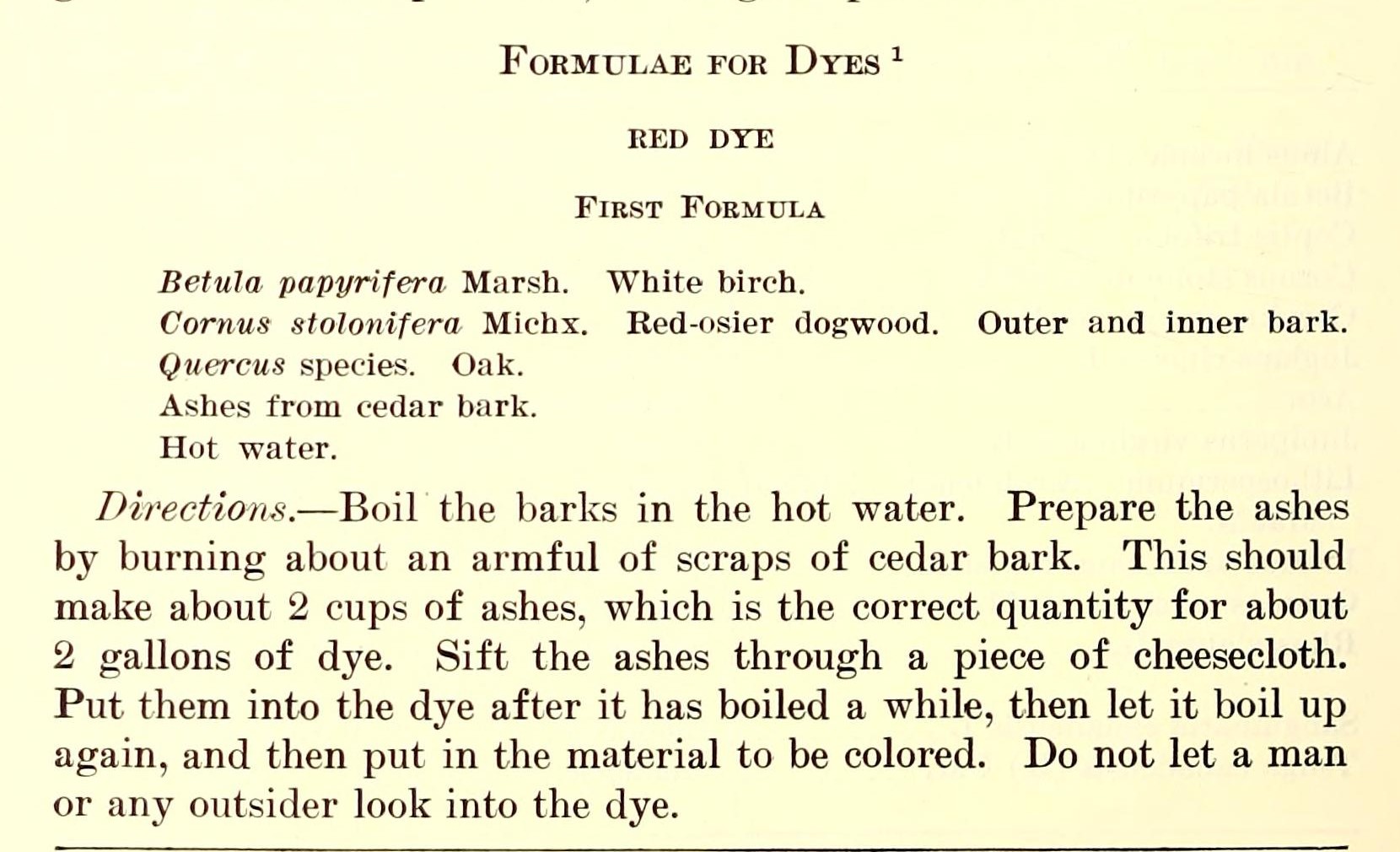

Chippewa Red Dyes: Seven Formulae from Dogwood, Puccoon, Bloodroot, Hemlock and Red Cedar Bark (Densmore, 1928)
The seven Chippewa (Ojibwe) red dyes Frances Densmore recorded: barks boiled with sifted cedar-bark ash; puccoon root with a spoon of ochre; bloodroot with wild plum for scarlet and dark red; hemlock with grindstone dust or red cedar inner bark for mahogany; dogwood and alder for a light red. The material is boiled in the dye.
Olùbẹ̀rẹ̀
Half a day
Ìlànà
1
1
Her measures
Her measures
Ń ṣí ìwé Jupyter…
2
2
Read Densmore
Read Densmore
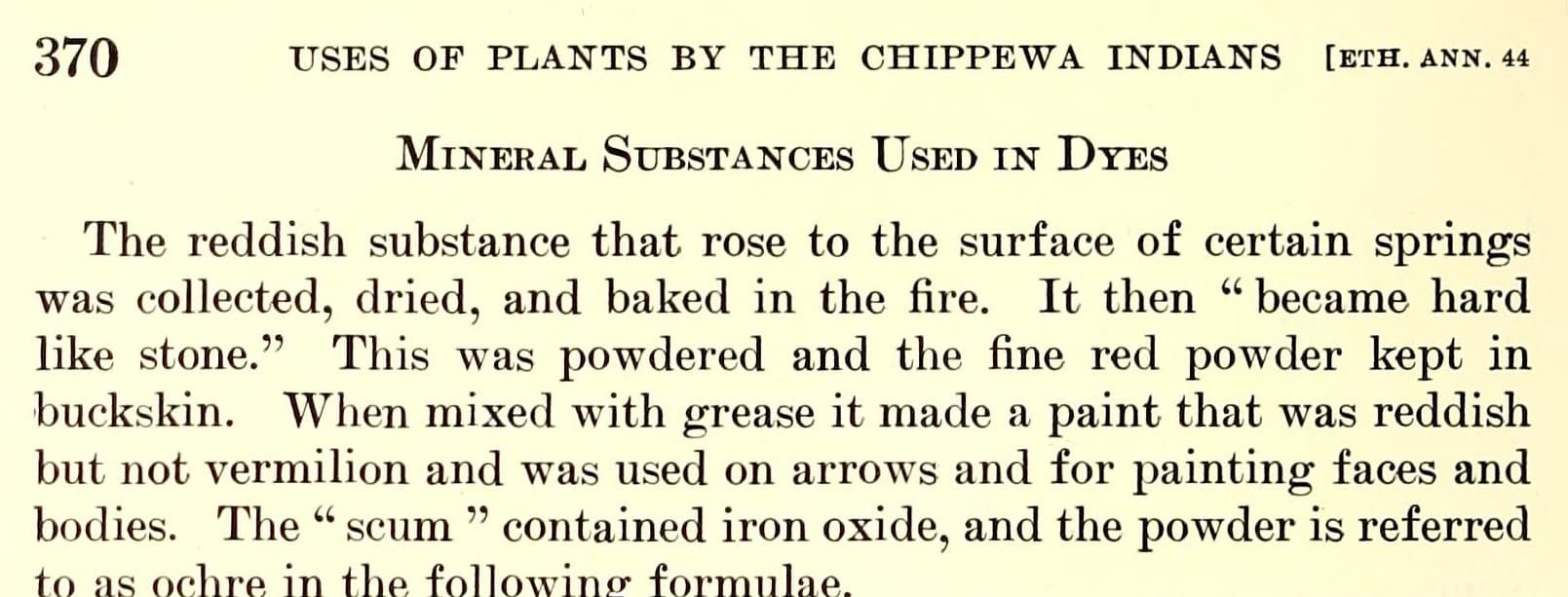
"Unless otherwise stated, the portion of the tree used in dye was the inner bark." Grindstone dust, the usual thing "to set the color", was silt with iron in it.
3
3
Formula 1: barks with cedar-bark ash
Formula 1: barks with cedar-bark ash
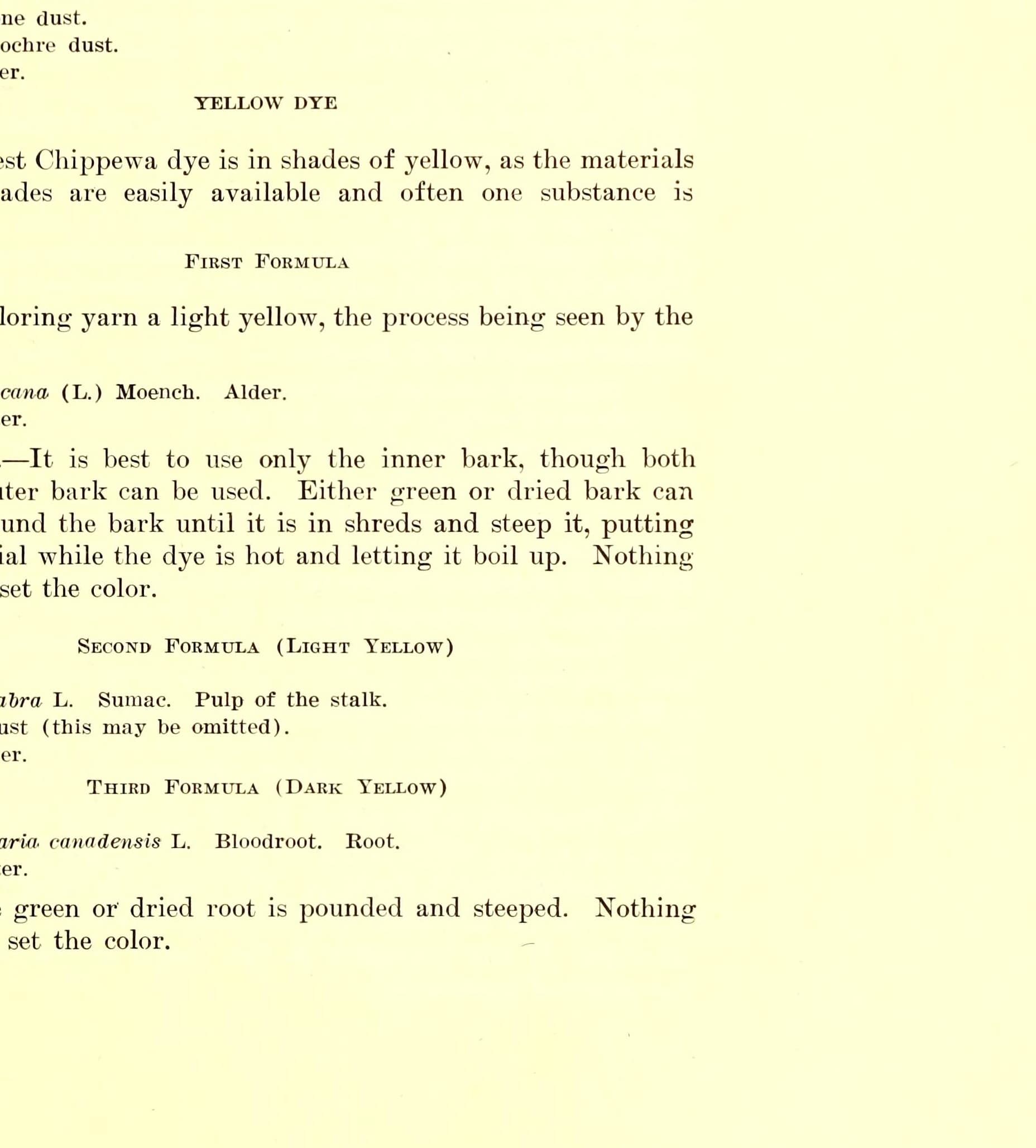
Boil white birch, red-osier dogwood (outer and inner bark) and oak bark in hot water (amounts not given). Burn about an armful of cedar-bark scraps: about 2 cups of ash, right for about 2 gallons (7.6 L) of dye. Sift the ash through cheesecloth, add it after the dye has boiled a while, let it boil up again, then put in the yarn. She records the rule: do not let a man or any outsider look into the dye.
Àwọn ohun èlò fún ìgbésẹ̀ yìí:
 Ìwé Èèpo Igi Birch1 ẹyọ
 Red-osier Dogwood Bark1 ẹyọ
 Epo igi oaku gbígbẹ1 ẹyọ
 Cedar Bark Ash1 ẹyọ
 Omi1 ẹyọ
 Okùn irun àgùntàn tí a kò dá aró sí1 ẹyọ
Àwọn irinṣẹ́ tí a nílò:
 Ihò iná
 Ìkòkò aró ńlá
 Aṣọ wàrà-dídì
4
4
Formula 2: puccoon
Formula 2: puccoon
Nine inches (23 cm) of dried puccoon root, or as much pulverised, 1 quart (0.95 L) hot water and 1 teaspoon of ochre. Let it boil up a little, put in the material after it has stood a while in hot water, boil half an hour to an hour with the kettle covered, then take it off the fire and leave it in the dye several hours. Not bright enough: dye again the same way. She gives it for porcupine quills, "substantially the same" for other materials.
Àwọn ohun èlò fún ìgbésẹ̀ yìí:
 Puccoon Root1 ẹyọ
 Okuta ochre tútù1 ẹyọOmi1 ẹyọOkùn irun àgùntàn tí a kò dá aró sí1 ẹyọ
Àwọn irinṣẹ́ tí a nílò:
 Odó àti Ọmọ Odó ÒkútaIhò ináÌkòkò aró ńlá
5
5
Formulae 3 and 4: bloodroot with wild plum
Formulae 3 and 4: bloodroot with wild plum
Scarlet (3): 2 handfuls bloodroot root, 1 handful each of wild plum, red-osier dogwood and alder inner bark, 1 quart hot water; boil all before the material goes in. Mrs. Razer dyed quills a brilliant scarlet with it. Dark red (4): 1 handful bloodroot root, 1 handful wild plum, 1 quart hot water.
Àwọn ohun èlò fún ìgbésẹ̀ yìí:
 Gbòngbò bloodroot (gbígbẹ)1 ẹyọ
 Wild Plum Bark1 ẹyọRed-osier Dogwood Bark1 ẹyọ
 Èèpo igi alder (gbígbẹ)1 ẹyọOmi1 ẹyọOkùn irun àgùntàn tí a kò dá aró sí1 ẹyọ
Àwọn irinṣẹ́ tí a nílò:
 Òkúta ÌlùIhò ináÌkòkò aró ńlá
6
6
Formulae 5 and 6: mahogany
Formulae 5 and 6: mahogany
(5) Hemlock bark with a little grindstone dust in hot water. (6) A decoction of the dark red inner bark of red cedar; Chippewa women in Ontario boiled the cedar strips for their mats in it.
Àwọn ohun èlò fún ìgbésẹ̀ yìí:
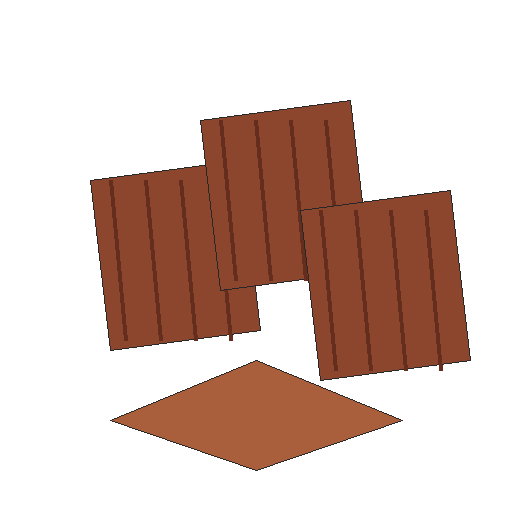 Hemlock Bark1 ẹyọ
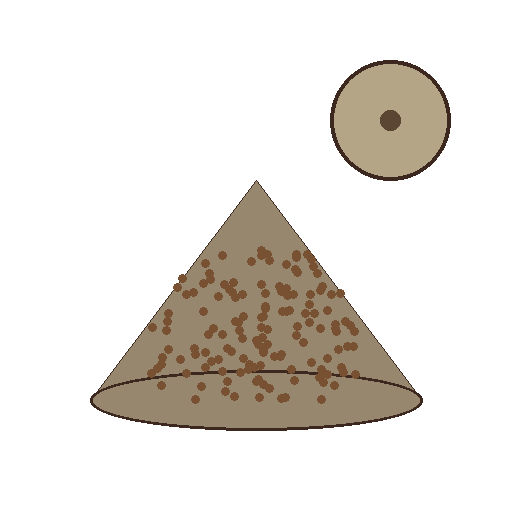 Grindstone Dust1 ẹyọ
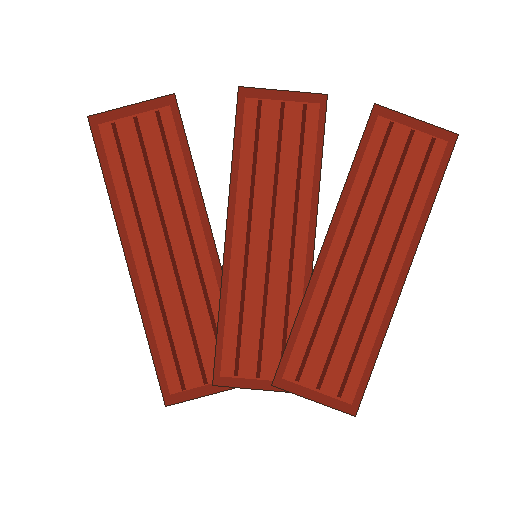 Red Cedar Inner Bark1 ẹyọOmi1 ẹyọOkùn irun àgùntàn tí a kò dá aró sí1 ẹyọ
Àwọn irinṣẹ́ tí a nílò:
Òkúta ÌlùIhò ináÌkòkò aró ńlá7
7
Formula 7: light red
Formula 7: light red
Red-osier dogwood and alder bark in equal parts, boiled in hot water. Mrs. Razer dyed white blanket a pretty light red with it; left out in the weather for several weeks it changed only slightly. Rinse and dry (ours).
Àwọn ohun èlò fún ìgbésẹ̀ yìí:
Red-osier Dogwood Bark1 ẹyọÈèpo igi alder (gbígbẹ)1 ẹyọOmi1 ẹyọOkùn irun àgùntàn tí a kò dá aró sí1 ẹyọÀwọn irinṣẹ́ tí a nílò:
Òkúta ÌlùIhò ináÌkòkò aró ńlá8
8
Troubleshooting
Troubleshooting
Red dye troubleshooting.
Flow
Loading...
9
9
History and honest limits
History and honest limits
From Frances Densmore, *Uses of Plants by the Chippewa Indians*, **44th Annual Report of the Bureau of American Ethnology** (1928), pp. 370-372 (checked on the archive.org scan usesofplantsbych00dens). Mrs. Razer made formulae 3 and 7 for her. Bark amounts in formulae 1 and 5-7 are not given; using yarn throughout, metric figures and rinsing are ours.
Àwọn ohun-èlò
14- 1 ẹyọÀyè
- Àyè
- 1 ẹyọÀyè
- 1 ẹyọÀyè
- 5 ẹyọÀyè
- 1 ẹyọÀyè
- 1 ẹyọÀyè
- Àyè
- 1 ẹyọÀyè
- Àyè
- 1 ẹyọÀyè
- 1 ẹyọÀyè
- 1 ẹyọÀyè
Ìtọ́nisọ́nà yìí ń ṣe

Blueprint tó jọra
Àwọn blueprint wọ̀nyí pín ìmọ̀ — ọ̀nà, ohun-èlò tàbí ìlànà
CC0 Àgbègbè Gbogbogbò
Blueprint yìí ti jáde lábẹ́ CC0. O lè ṣe àdàkọ, yí padà, pín, àti lò láìsí ìyọ̀ǹda.
Ṣàtìlẹ́yìn Olùṣẹ́dá nípa rírà àwọn ọjà nipasẹ̀ Blueprint wọn Ẹ̀san Olùṣẹ́dá tí àwọn Olùtajà gbé kalẹ̀, tàbí ṣẹ̀dá àtúnṣe tuntun ti Blueprint yìí kí o sì fi sínú Blueprint rẹ gẹ́gẹ́ bí ìsopọ̀ láti pín owó-wíwọlé.