IṢẸ́ ỌNÀ
ẸWÀ ÀTI ÌLERA
IṢẸ́ ỌWỌ́
ÀṢÀ ÀTI ÌTÀN
ÌṢERÉ
ÀYÍKÁ
OÚNJẸ ÀTI OHUN MÍMU
REVERSE ENGINEERING
SÁYẸ́ǸSÌ
ERÉ ÌDÁRAYÁ
ÌMỌ̀-Ẹ̀RỌ
ÀWỌN OHUN WÍWỌ̀
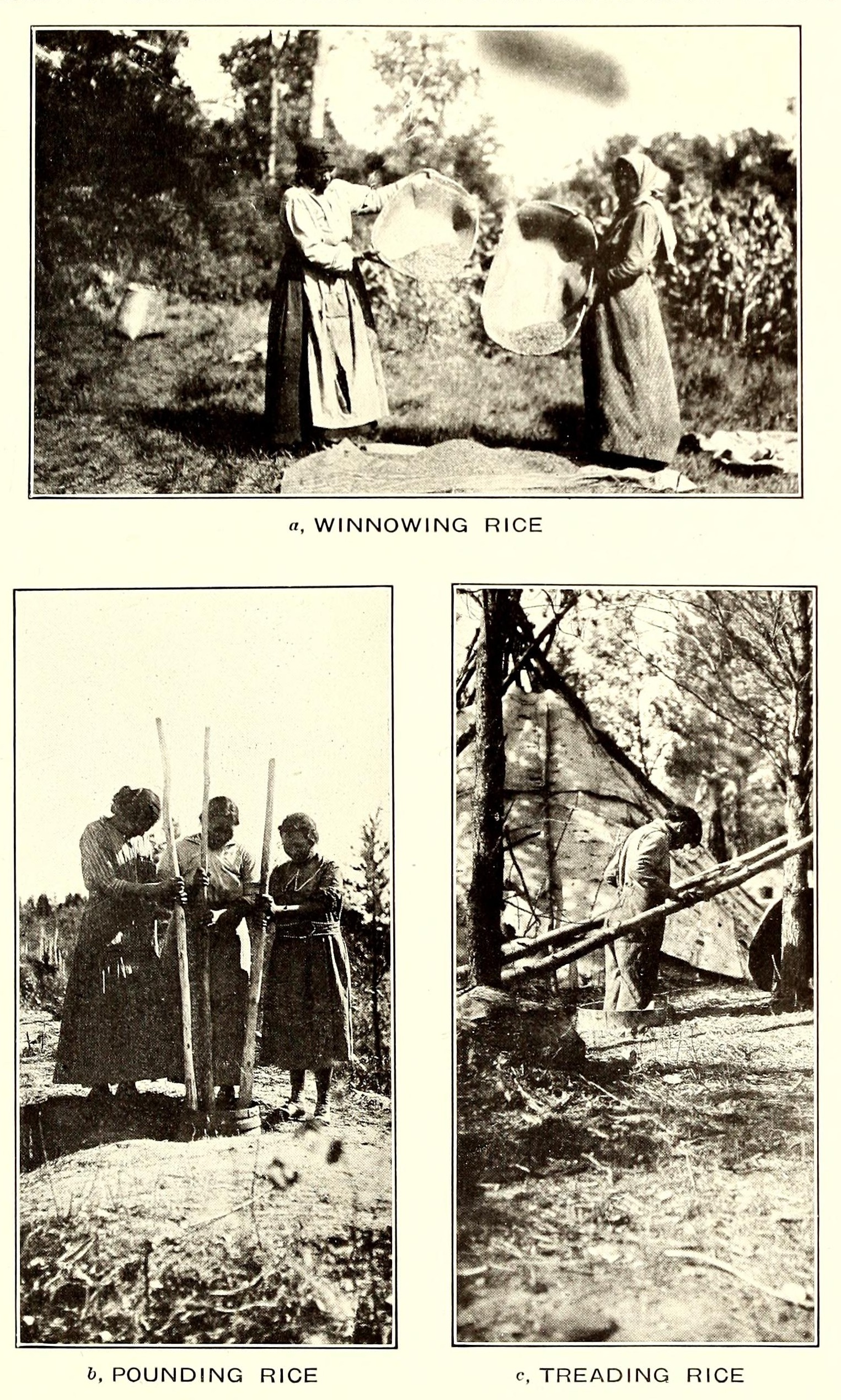

Chippewa Wild Rice: Knocked into the Canoe with Two Sticks, Parched, Pounded, Winnowed and Trodden (Densmore, 1928)
How the Chippewa (Ojibwe) harvested and finished wild rice, from Frances Densmore's account: the ripe kernels knocked into a poled canoe with two rice sticks, dried a day on birch bark, parched a peck at a time in a slanting kettle, pounded with dropped pestles, winnowed in the breeze and trodden in a sunken tub to free the last husk.
Àárín
A day to gather a canoeful; a day and a half to finish it
Ìlànà
1
1
Her measures
Her measures
Ń ṣí ìwé Jupyter…
2
2
Read Densmore
Read Densmore
"Wild rice constitutes the chief cereal food of the Chippewa."
3
3
Knock the rice
Knock the rice
In warm, still weather, pole a canoe into the rice (a pole forked at the end). From the stern, bend a few stalks over the canoe with one stick and free the kernels with a sweeping, gentle stroke of the other, on both sides. Take only the ripe kernels and come back in a few days for more; leave some to fall as seed. A canoeful is a day's gathering.
Àwọn irinṣẹ́ tí a nílò:
 Ọkọ̀ Ìtukọ̀
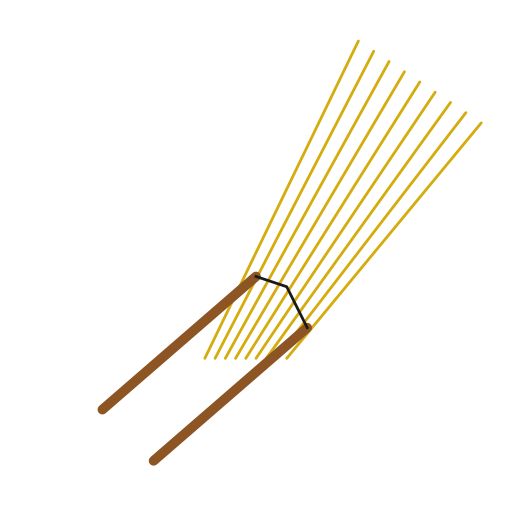 Igi ìdìmú ìpakà ìrẹsì
4
4
Dry a day
Dry a day
Spread the rice on sheets of birch bark in the sun, but not so hot that it heats, and stir it often. Allow about 24 hours.
Àwọn ohun èlò fún ìgbésẹ̀ yìí:
 Ìwé Èèpo Igi Birch1 ẹyọ
Àwọn irinṣẹ́ tí a nílò:
 Ọ̀pá ìrú igi
5
5
Parch it
Parch it
Prop a large kettle slanting over a carefully kept fire and stir about a peck (9 L) at a time with a slender paddle for about an hour, without burning it. This loosens the husk and gives the flavour. (Oldest way, "hard rice": spread it about 3 in., 8 cm, deep on hay over a frame above a slow fire: greenish black, keeps indefinitely and can be sown.)
Àwọn ohun èlò fún ìgbésẹ̀ yìí:
 Koríko gbígbẹ1 ẹyọ
Àwọn irinṣẹ́ tí a nílò:
 Kẹ́tù Irin
 Ihò ináỌ̀pá ìrú igi
 Àká Ìgbẹ
6
6
Pound it
Pound it
Put the rice in a barrel or a wooden mortar with sloping sides. Work wooden pestles about 5 1/2 ft (1.7 m) long up and down near the edge, letting them drop of their own weight, never forcing them, so the husk loosens and the kernel stays whole.
Àwọn irinṣẹ́ tí a nílò:
 Àgbá igi
 Ọmọ odó igi
7
7
Winnow
Winnow
Where a breeze blows, toss the rice in a winnowing tray, or pour it slowly from the tray onto birch bark on the ground; the wind takes the chaff.
Àwọn irinṣẹ́ tí a nílò:
 Àwo ìdanu
8
8
Tread it
Tread it
Sink a small wooden tub of about a bushel partly into the ground, with a stout pole either side fixed to a tree about 4 ft (1.2 m) up. In clean moccasins, lean on the poles and tread lightly, like dancing, to free the last bits of husk. Winnow again. Keep the chaff: it cooks like rice. Store the rice in bags with straw on top, sewn shut with basswood twine.
Àwọn ohun èlò fún ìgbésẹ̀ yìí:
 Kóríko gbígbẹ1 ẹyọ
 Okùn1 ẹyọ
Àwọn irinṣẹ́ tí a nílò:
Àgbá igi Bàtà awọ rírọ̀ ẹyọ kanÀwo ìdanu
9
9
Troubleshooting
Troubleshooting
Wild rice troubleshooting.
Flow
Loading...
10
10
History and honest limits
History and honest limits
From Frances Densmore, *Uses of Plants by the Chippewa Indians*, **44th Annual Report of the Bureau of American Ethnology** (1928), pp. 313-316 (checked on the archive.org scan usesofplantsbych00dens). A woman could also claim her rice about 10 days before it ripened by tying it in small sheaves with basswood fiber, drawn to her with a rice hoop; tied rice tasted slightly different and needed longer boiling. In old times the treading pit was lined with deerskin. Metric is ours.
Àwọn ohun-èlò
4- 1 ẹyọÀyè
- 1 ẹyọÀyè
- 1 ẹyọÀyè
- 1 ẹyọÀyè
Ìtọ́nisọ́nà yìí ń ṣe
Blueprint tó jọra
Àwọn blueprint wọ̀nyí pín ìmọ̀ — ọ̀nà, ohun-èlò tàbí ìlànà
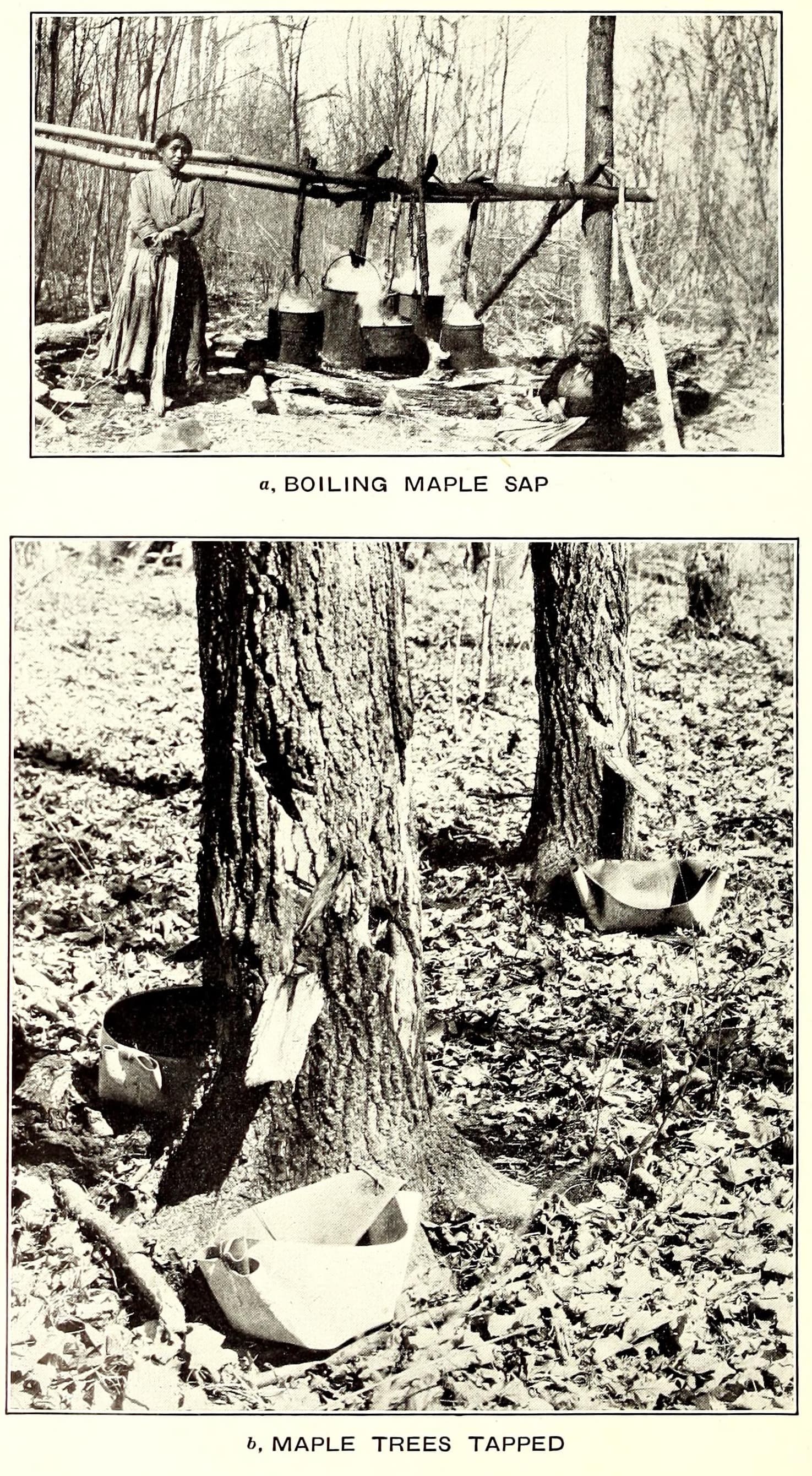
Chippewa Maple Sugar Camp: Spiles Below a Diagonal Cut, Kettles Boiled All Night, Sugar Worked in a Trough (Densmore, 1928)
láti ọwọ́ TheChef
OÚNJẸ ÀTI OHUN MÍMU
5
0
0
0
0
0
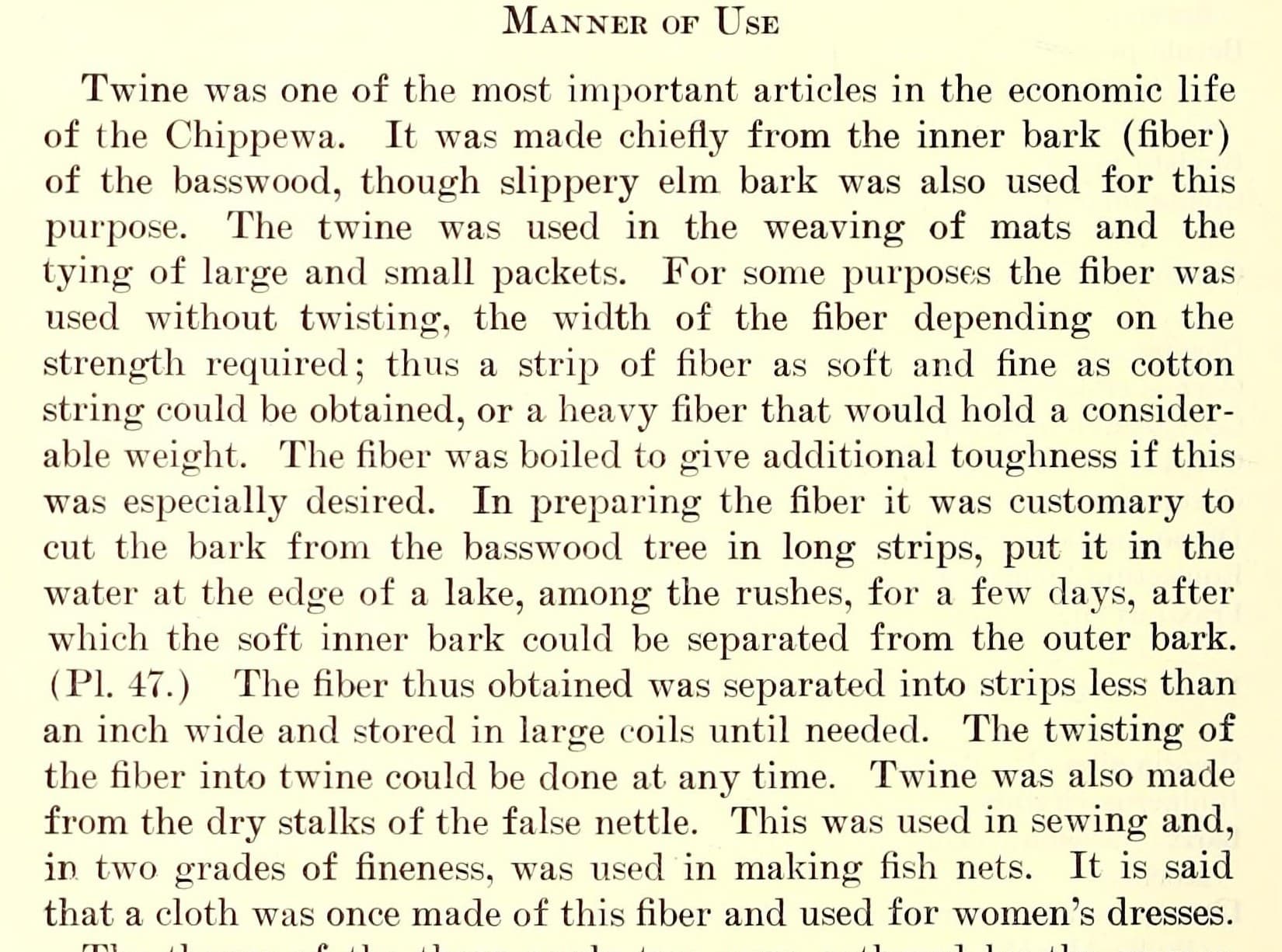
Chippewa Basswood Fiber and Twine: Bark Strips Soaked at the Lake Edge, Inner Bark Peeled and Coiled (Densmore, 1928)
láti ọwọ́ Tex
Iṣẹ́ Okùn
4
0
0
0
0
0
CC0 Àgbègbè Gbogbogbò
Blueprint yìí ti jáde lábẹ́ CC0. O lè ṣe àdàkọ, yí padà, pín, àti lò láìsí ìyọ̀ǹda.
Ṣàtìlẹ́yìn Olùṣẹ́dá nípa rírà àwọn ọjà nipasẹ̀ Blueprint wọn Ẹ̀san Olùṣẹ́dá tí àwọn Olùtajà gbé kalẹ̀, tàbí ṣẹ̀dá àtúnṣe tuntun ti Blueprint yìí kí o sì fi sínú Blueprint rẹ gẹ́gẹ́ bí ìsopọ̀ láti pín owó-wíwọlé.