IṢẸ́ ỌNÀ
ẸWÀ ÀTI ÌLERA
IṢẸ́ ỌWỌ́
ÀṢÀ ÀTI ÌTÀN
ÌṢERÉ
ÀYÍKÁ
OÚNJẸ ÀTI OHUN MÍMU
REVERSE ENGINEERING
SÁYẸ́ǸSÌ
ERÉ ÌDÁRAYÁ
ÌMỌ̀-Ẹ̀RỌ
ÀWỌN OHUN WÍWỌ̀

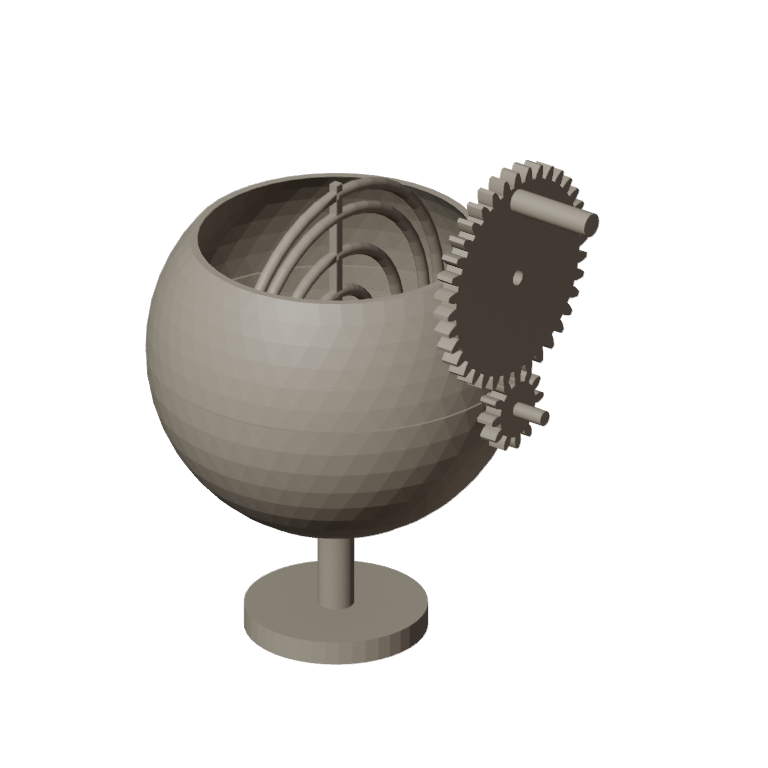
Closed-Globe Egg Beater: Concentric Rings in a Shut Sphere
Beaten in an open bowl, egg spatters and the air is not forced into it.
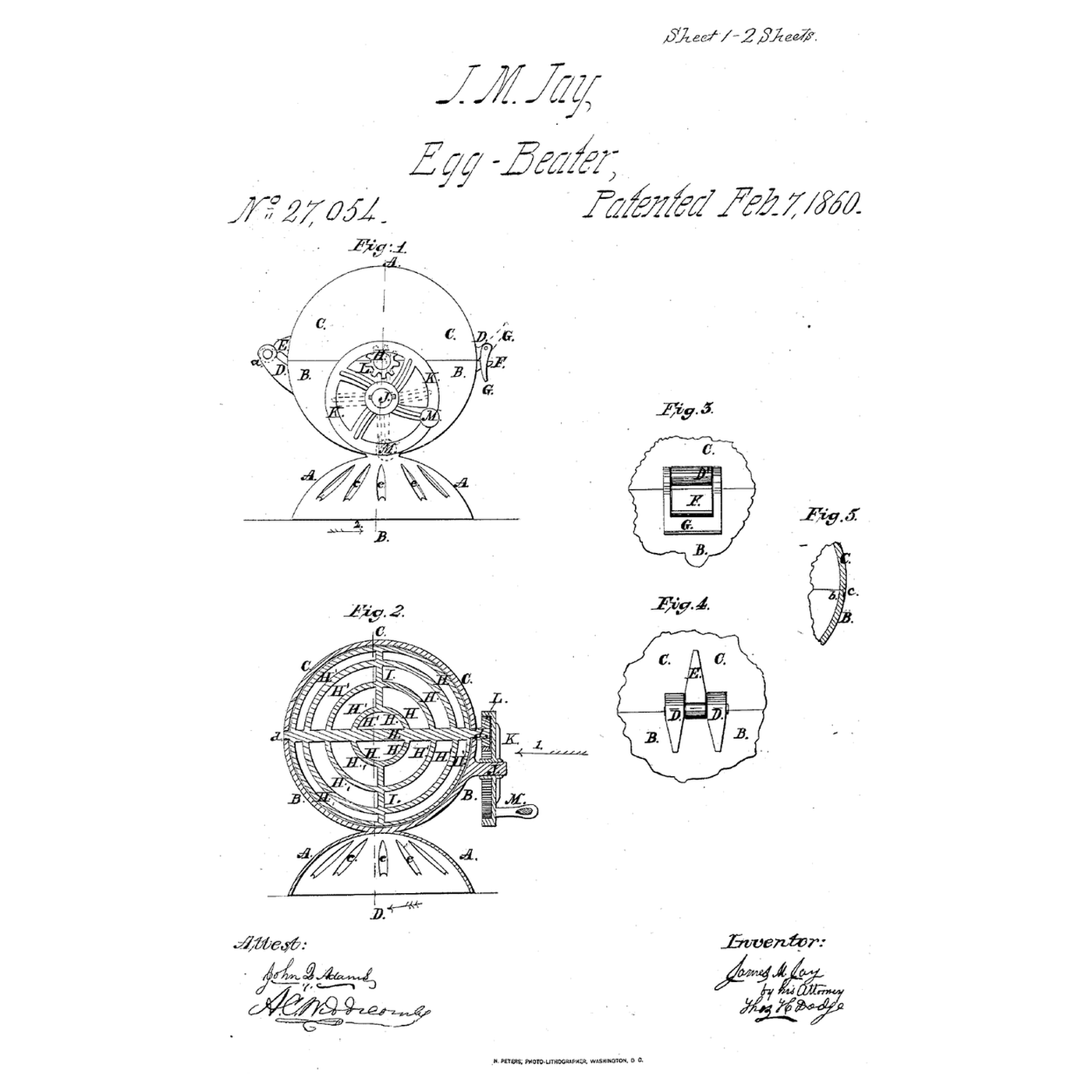
James M. Jay of Canton, Ohio, received US 27,054, dated 7 February 1860, for an egg beater whose case is a hollow globe of two halves hinged and caught together; a horizontal shaft through it carries concentric rings, the outer one close to the inside so it sweeps the bottom, turned by a wheel and gear on a stand. "The air which occupies the upper part ... is so closely confined that it can not escape during the operation of beating the eggs, consequently it is carried down and mixed thoroughly with the eggs."
This rung works out the air-to-egg ratio, then prints the ring dasher and gears, closes it in two bowls, and times a beating.
Àárín
About 5 hours, plus printing
Ìlànà
1
1
Air shut in with the eggs
Air shut in with the eggs
Ń ṣí ìwé Jupyter…
2
2
A dasher in a closed box before it
A dasher in a closed box before it
The embedded blueprint spins a dasher in a square box. Jay shuts the eggs in a globe so the air is driven into them.
3
3
Read US 27,054
Read US 27,054
"In my egg beater the air which occupies the upper part of the hollow bottom B, together with that which fills the cover or cap C, is so closely confined that it can not escape during the operation of beating the eggs, consequently it is carried down and mixed thoroughly with the eggs by the rings or dashes H', while the eggs are carried up and through the air in the cap or case C, so that a perfect mixture of the air and eggs is effected."
4
4
Print the rings and gears
Print the rings and gears
Print the concentric-ring dasher (/uploads/blueprints/closed-globe-egg-beater-rings.stl), the 36-tooth wheel (/uploads/blueprints/closed-globe-egg-beater-wheel-36.stl) and the 12-tooth gear (/uploads/blueprints/closed-globe-egg-beater-gear-12.stl). Print in PETG at 0.2 mm layers, 30 % infill, 4 walls.
Àwọn ohun èlò fún ìgbésẹ̀ yìí:
 Okùn PETG1 ẹyọ
Àwọn irinṣẹ́ tí a nílò:
 Ẹ̀rọ ìtẹ̀ 3D oníwàyà (FDM)
5
5
Make the globe
Make the globe
Take two matching bowls 120 mm across from the set. Drill both rims at opposite points for the shaft, 5.5 mm, so the shaft lies on the joint.
Àwọn ohun èlò fún ìgbésẹ̀ yìí:
 Ìdìpọ̀ abọ́ ìdàpọ̀1 ẹyọ
Àwọn irinṣẹ́ tí a nílò:
 Ẹ̀rọ Ìlùkòkò Aláìlókùn
 Àkójọ Orí Ìlùkòkò
 Òṣùwọ̀n Kálípà Díjítà Ìnṣì 6
6
6
Shaft, rings and stand
Shaft, rings and stand
Pass a 5 mm rod through one bowl's holes and the dasher's hub, and epoxy the hub at the centre. Epoxy the 12-tooth gear on the rod outside. Mount the 36-tooth wheel with a crank on an M5 screw on a hardwood upright so it meshes, and stand the lower bowl in a plywood ring.
Àwọn ohun èlò fún ìgbésẹ̀ yìí:
 Ọ̀pá Róbótó Irin Rírọ̀1 ẹyọ
 Ẹpọ́ksì Ẹ̀yà Méjì1 ẹyọ
 Ìṣù Igi Líle1 ẹyọ
 Àwo igi tí a lẹ̀ pọ̀1 ẹyọ
 Skurú ẹ̀rọ1 ẹyọ
 Wáṣà Pẹrẹsẹ1 ẹyọ
 Nọ́ọ̀tì Onígun Mẹ́fà1 ẹyọ
 Ìsúrù igi #8 x 1"1 ẹyọ
Àwọn irinṣẹ́ tí a nílò:
 Ayùn Irin
 Ayùn KópìngìẸ̀rọ Ìlùkòkò AláìlókùnÀkójọ Orí Ìlùkòkò
 Kọ́kọ́rọ́ tí a lè ṣàtúnṣe
 Ìṣù àwọn ohun ìyí skurú
7
7
The patent drawing
The patent drawing
US 27,054 drawing sheet, public domain (expired patent).
8
8
Closed against open
Closed against open
Beat two egg whites with the top bowl clamped on and time them to stiff peaks; then again with the top off. Compare the times and the volume of foam.
Àwọn ohun èlò fún ìgbésẹ̀ yìí:
 Ẹyin4 ẹyọ
Àwọn irinṣẹ́ tí a nílò:
 Aago Ìdúró
 Òṣùwọ̀n Díjítà Ilé Ìdáná
9
9
A globe that leaks, rings that scrape
A globe that leaks, rings that scrape
Closed-globe egg beater troubleshooting.
Flow
Loading...
10
10
History and honest limits
History and honest limits
**James M. Jay** of Canton, Ohio, assignor to himself and John Danner, received US 27,054, dated 7 February 1860. The halves are turned to break joints and fit tight; a hook on the cover hangs on a pivot between lugs, and a swinging catch holds the cover down; the shaft's bearings are in the lower half's edge, the cover cut to fit over them. He wrote that it does not matter whether one or more eggs are beaten.
**Honest limits.** FDM prints hold food in their layer lines, so wash well and replace when worn. Two bought bowls stand in for his turned halves, without a hinge. Your times are the result.
Àwọn ohun-èlò
11- 1 ẹyọÀyè
- 1 ẹyọÀyè
- Àyè
- 1 ẹyọÀyè
- 1 ẹyọÀyè
- 1 ẹyọÀyè
- 1 ẹyọÀyè
- 1 ẹyọÀyè
- 1 ẹyọÀyè
- 1 ẹyọÀyè
- 4 ẹyọÀyè
Àwọn irinṣẹ́ tó nílò
10- 1 vendor sell this, none ship to you yetÀyè
- Àyè
- Àyè
- Àyè
Ìtọ́nisọ́nà yìí ń ṣe
Blueprint tó jọra
Àwọn blueprint wọ̀nyí pín ìmọ̀ — ọ̀nà, ohun-èlò tàbí ìlànà
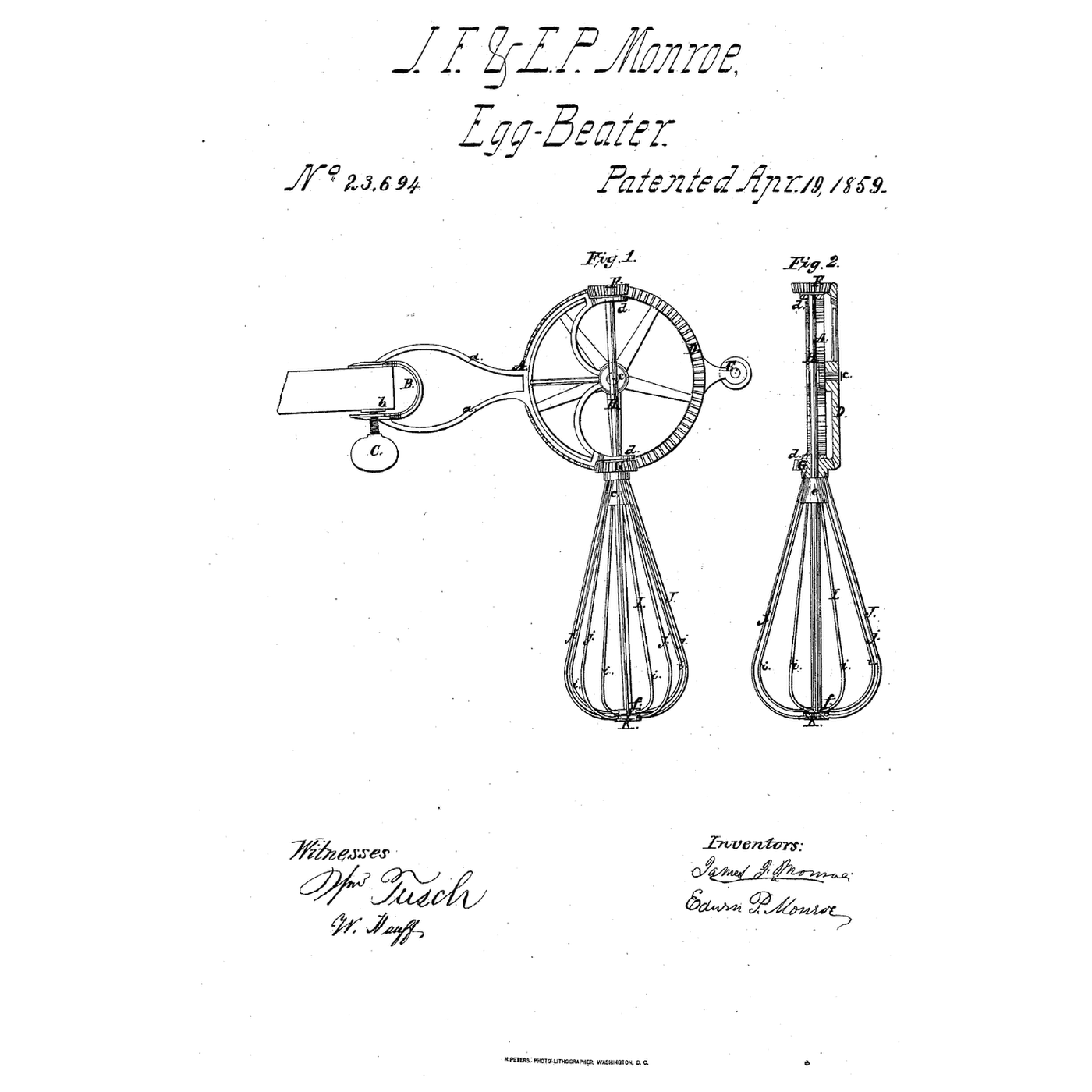
Counter-Rotating Egg Beater: One Wheel, Two Beaters Turning Opposite Ways
láti ọwọ́ Martin
OÚNJẸ ÀTI OHUN MÍMU
29
0
0
0
0
0
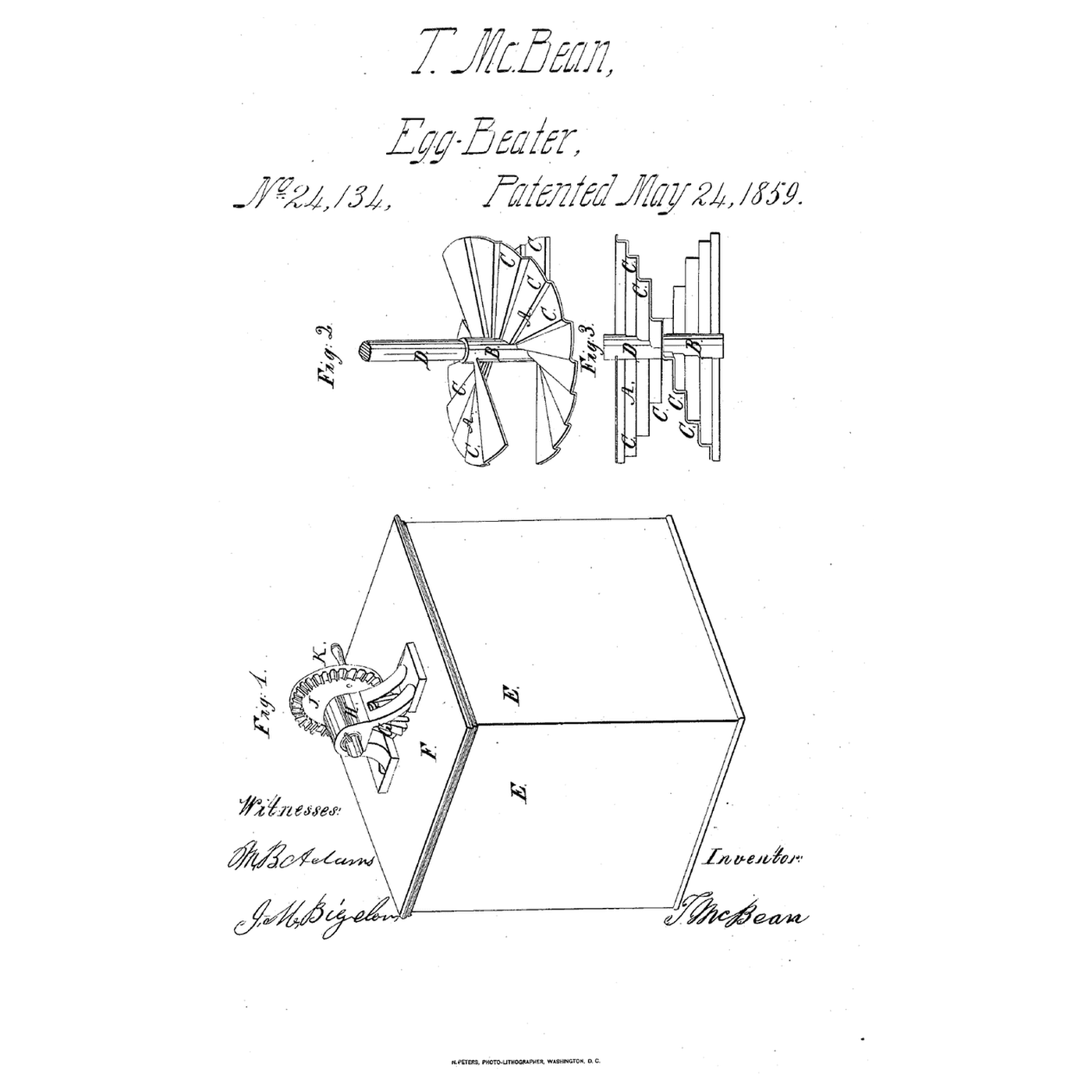
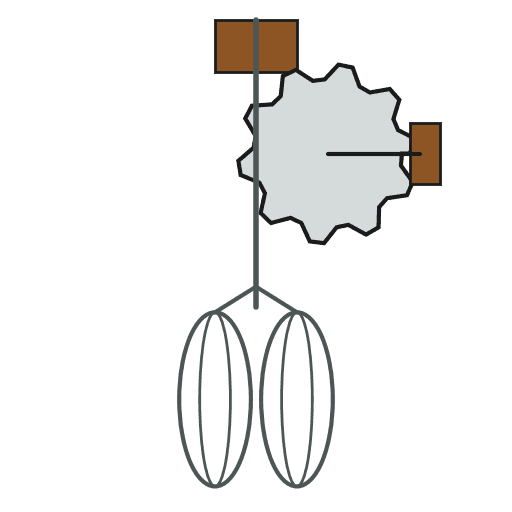
Stepped Spiral Egg Beater: A Stepped Dasher Spun in a Square Box
láti ọwọ́ Martin
OÚNJẸ ÀTI OHUN MÍMU
22
0
0
0
0
0
Gear Trains: Idlers, Compounding and Hitting a Given Ratio
láti ọwọ́ Martin
Ìmọ̀ Ẹ̀rọ
38
0
0
0
0
0
CC0 Àgbègbè Gbogbogbò
Blueprint yìí ti jáde lábẹ́ CC0. O lè ṣe àdàkọ, yí padà, pín, àti lò láìsí ìyọ̀ǹda.
Ṣàtìlẹ́yìn Olùṣẹ́dá nípa rírà àwọn ọjà nipasẹ̀ Blueprint wọn Ẹ̀san Olùṣẹ́dá tí àwọn Olùtajà gbé kalẹ̀, tàbí ṣẹ̀dá àtúnṣe tuntun ti Blueprint yìí kí o sì fi sínú Blueprint rẹ gẹ́gẹ́ bí ìsopọ̀ láti pín owó-wíwọlé.