IṢẸ́ ỌNÀ
ẸWÀ ÀTI ÌLERA
IṢẸ́ ỌWỌ́
ÀṢÀ ÀTI ÌTÀN
ÌṢERÉ
ÀYÍKÁ
OÚNJẸ ÀTI OHUN MÍMU
REVERSE ENGINEERING
SÁYẸ́ǸSÌ
ERÉ ÌDÁRAYÁ
ÌMỌ̀-Ẹ̀RỌ
ÀWỌN OHUN WÍWỌ̀
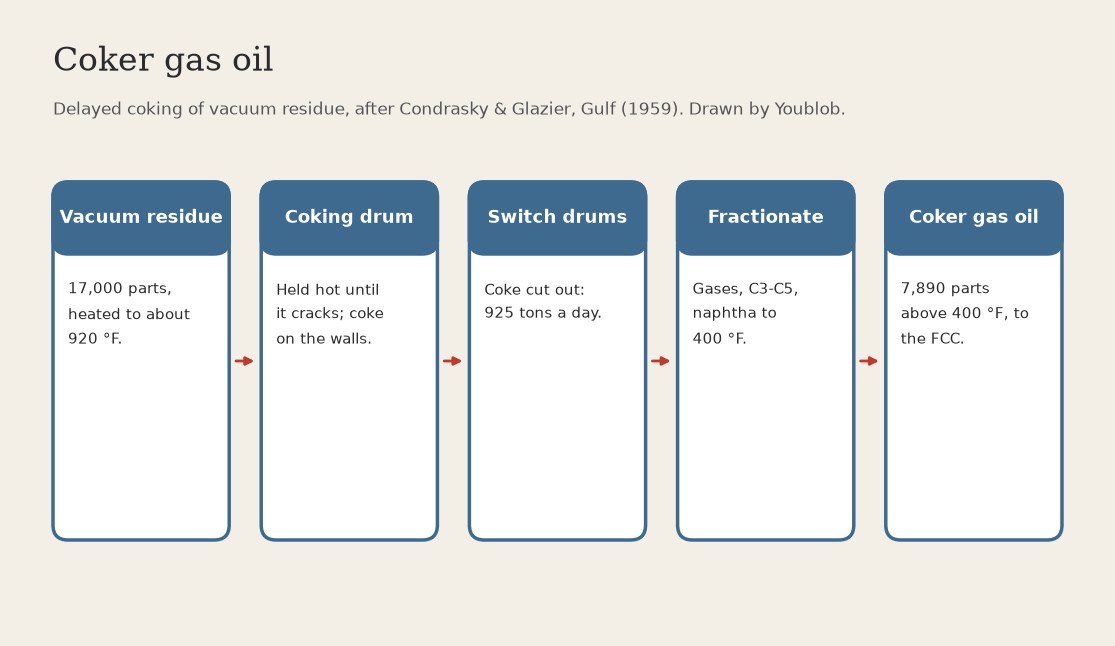


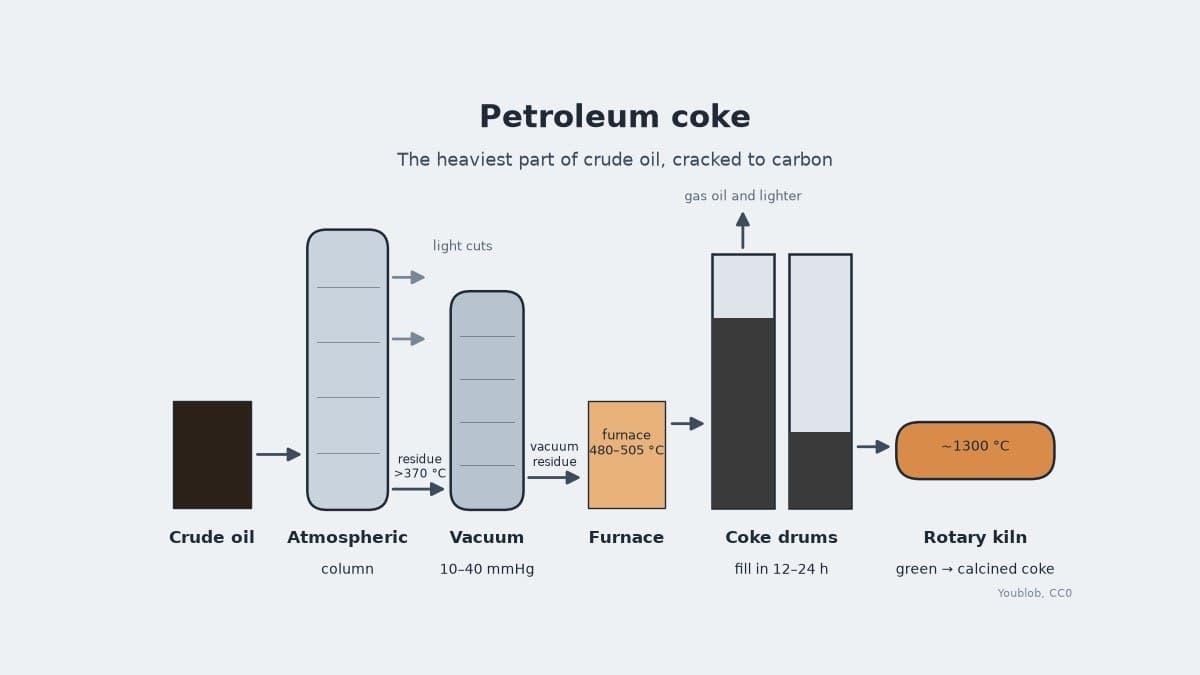
Coker Gas Oil and Petroleum Coke: Vacuum Residue Delayed-Coked at about 920 °F (Gulf, US 3,071,535)
The black residue from the bottom of the vacuum tower still holds gas oil. Heated to about 920 °F and held in a coking drum, it cracks into lighter oils and coke; the coke stays on the drum walls and the oils go to a fractionator.
Result (Gulf's example, per day): from 17,000 barrels of vacuum bottoms, 7,890 barrels of coker gas oil boiling above 400 °F, 4,354 of coker naphtha, light gases and 925 tons of petroleum coke.
Source: Condrasky & Glazier, US 3,071,535 (Gulf, filed 1959), Table I. Not given: drum size, pressure, cycle time. Hot oil: fire risk. Picture drawn by Youblob.
Ògbóǹtarìgì
1 day
Ìlànà
1
1
Heat the vacuum residue to about 920 °F
Heat the vacuum residue to about 920 °F
Heat the vacuum reduced crude to a high temperature, about 920 °F in Gulf's example. Gulf charged 17,000 barrels per day.
Àwọn ohun èlò fún ìgbésẹ̀ yìí:
 Ìyókù àìsí afẹ́fẹ́17000 parts by volume
Àwọn irinṣẹ́ tí a nílò:
 Táńkì ìtọ́jú epo
 Pọ́ǹpù ìgbé omi
 Ẹ̀rọ èédú tí ó falẹ̀
 Pirómítà
2
2
Hold it in a coking drum until it cracks
Hold it in a coking drum until it cracks
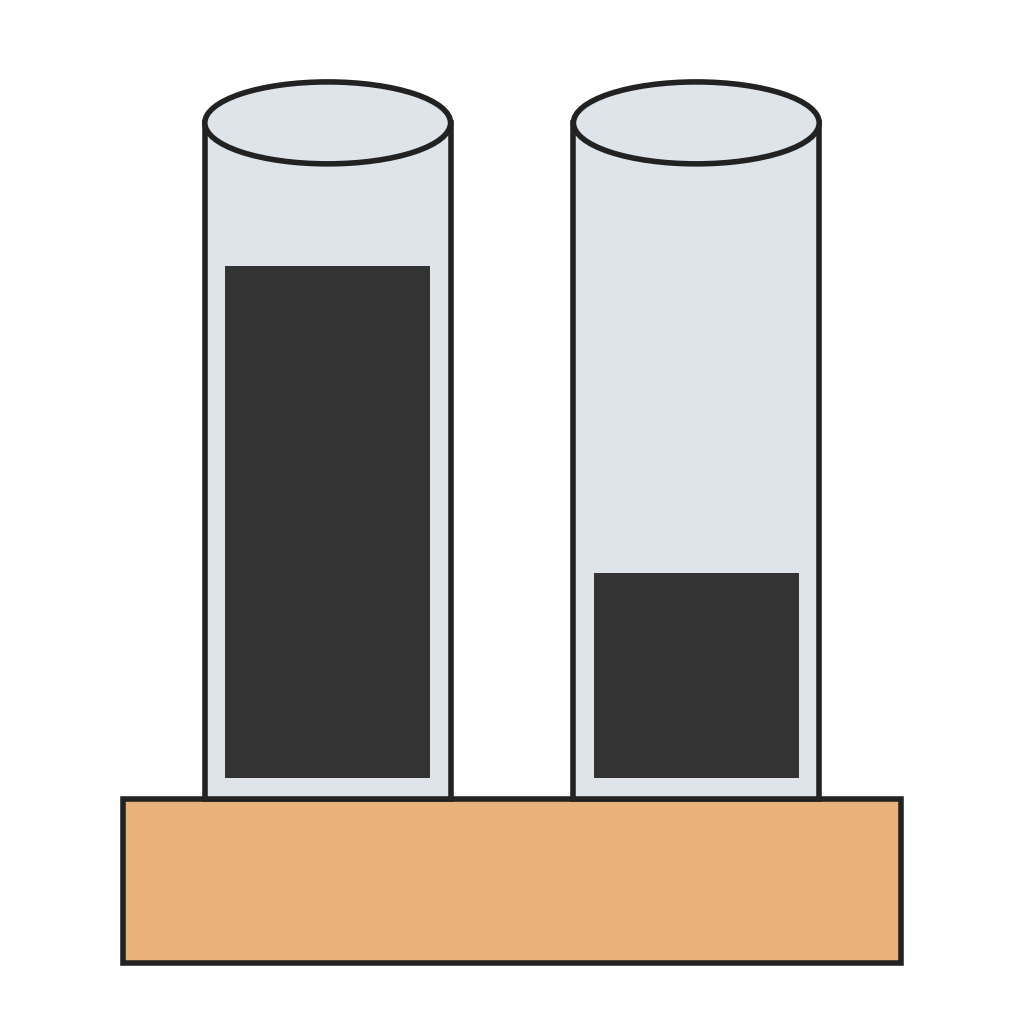
Pass it into a coking drum and keep it hot long enough to crack it into lighter hydrocarbons and coke. The coke forms on the walls of the drum.
Àwọn irinṣẹ́ tí a nílò:
Ẹ̀rọ èédú tí ó falẹ̀Pirómítà3
3
Switch drums and cut out the coke
Switch drums and cut out the coke
When one drum is full of coke, switch to another and remove the coke from the first, mechanically or hydraulically. Gulf made 925 tons of coke a day.
Àwọn irinṣẹ́ tí a nílò:
Ẹ̀rọ èédú tí ó falẹ̀4
4
Fractionate the cracked vapours
Fractionate the cracked vapours
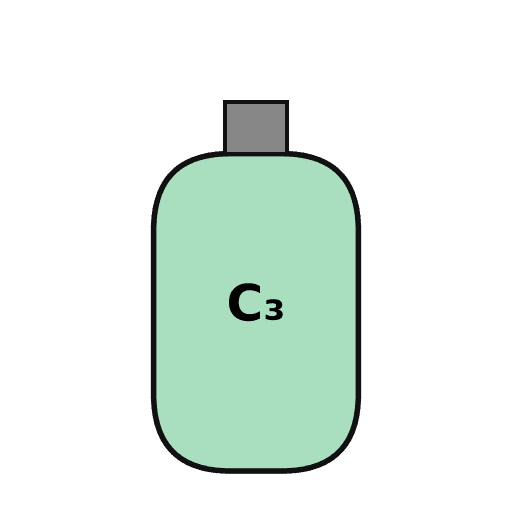
Fractionate the hydrocarbons from the drum: fuel gas, a propylene-rich C3 fraction (621), a C4 fraction (488), a C5 fraction (177), coker naphtha to about 400 °F (4,354) and coker gas oil above 400 °F (7,890). Gulf does not describe the fractionator. Ours: a fractionating still.
Àwọn irinṣẹ́ tí a nílò:
 Ohun ìsun tí ó pín
5
5
Send the coker gas oil to the catalytic cracker
Send the coker gas oil to the catalytic cracker
The coker gas oil, all the liquid boiling above about 400 °F, is the charge Gulf sends to the fluid catalytic cracker.
Àwọn irinṣẹ́ tí a nílò:
Táńkì ìtọ́jú epoÀwọn ohun-èlò
1- 17000 parts by volumeÀyè
Ìtọ́nisọ́nà yìí ń ṣe

Blueprint tó jọra
Àwọn blueprint wọ̀nyí pín ìmọ̀ — ọ̀nà, ohun-èlò tàbí ìlànà
CC0 Àgbègbè Gbogbogbò
Blueprint yìí ti jáde lábẹ́ CC0. O lè ṣe àdàkọ, yí padà, pín, àti lò láìsí ìyọ̀ǹda.
Ṣàtìlẹ́yìn Olùṣẹ́dá nípa rírà àwọn ọjà nipasẹ̀ Blueprint wọn Ẹ̀san Olùṣẹ́dá tí àwọn Olùtajà gbé kalẹ̀, tàbí ṣẹ̀dá àtúnṣe tuntun ti Blueprint yìí kí o sì fi sínú Blueprint rẹ gẹ́gẹ́ bí ìsopọ̀ láti pín owó-wíwọlé.