IṢẸ́ ỌNÀ
ẸWÀ ÀTI ÌLERA
IṢẸ́ ỌWỌ́
ÀṢÀ ÀTI ÌTÀN
ÌṢERÉ
ÀYÍKÁ
OÚNJẸ ÀTI OHUN MÍMU
REVERSE ENGINEERING
SÁYẸ́ǸSÌ
ERÉ ÌDÁRAYÁ
ÌMỌ̀-Ẹ̀RỌ
ÀWỌN OHUN WÍWỌ̀


Crank-Point Can Opener: A Bent Point to Turn On, a Knife Set in a Slot
A can opened with a lever knife leaves a jagged hole of any size.
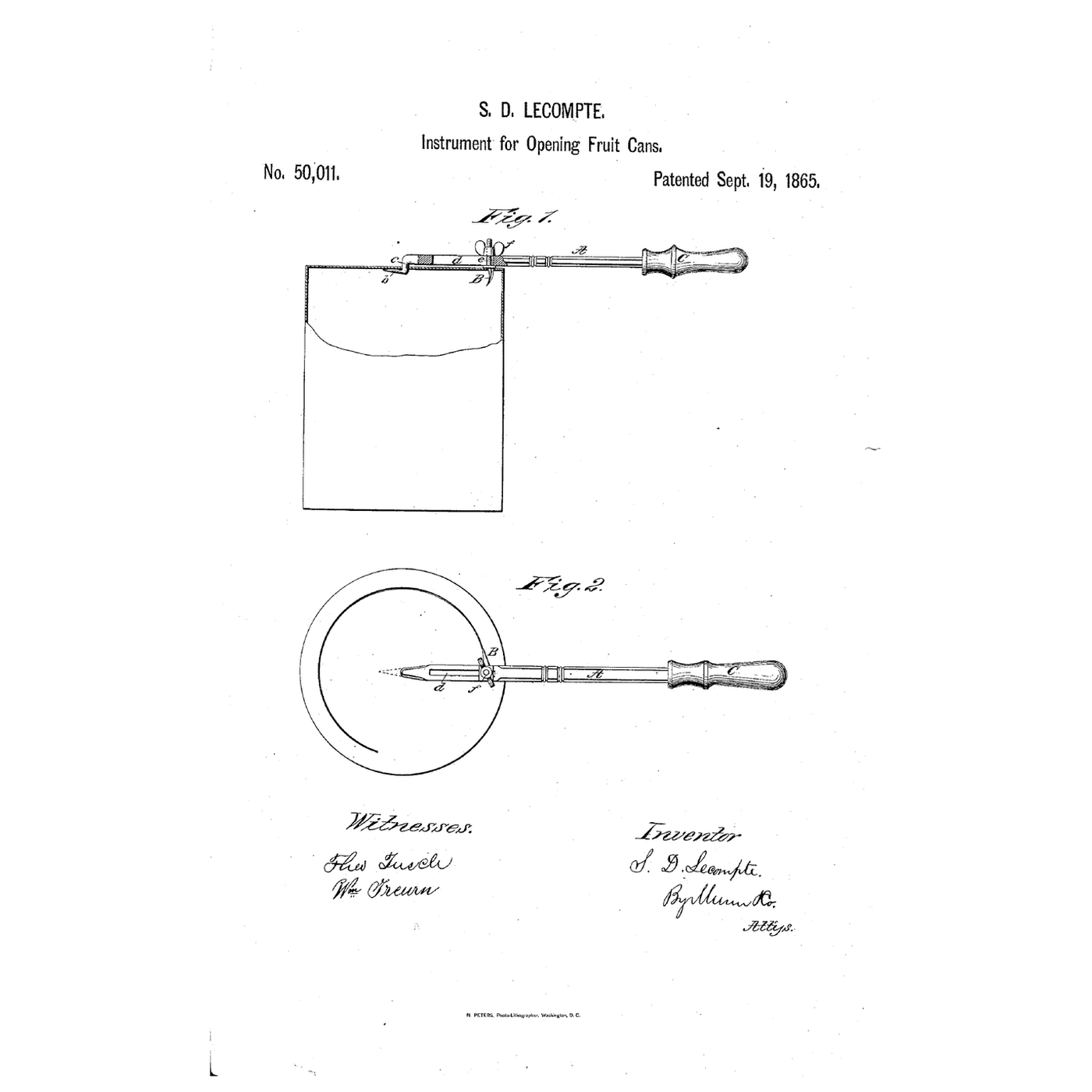
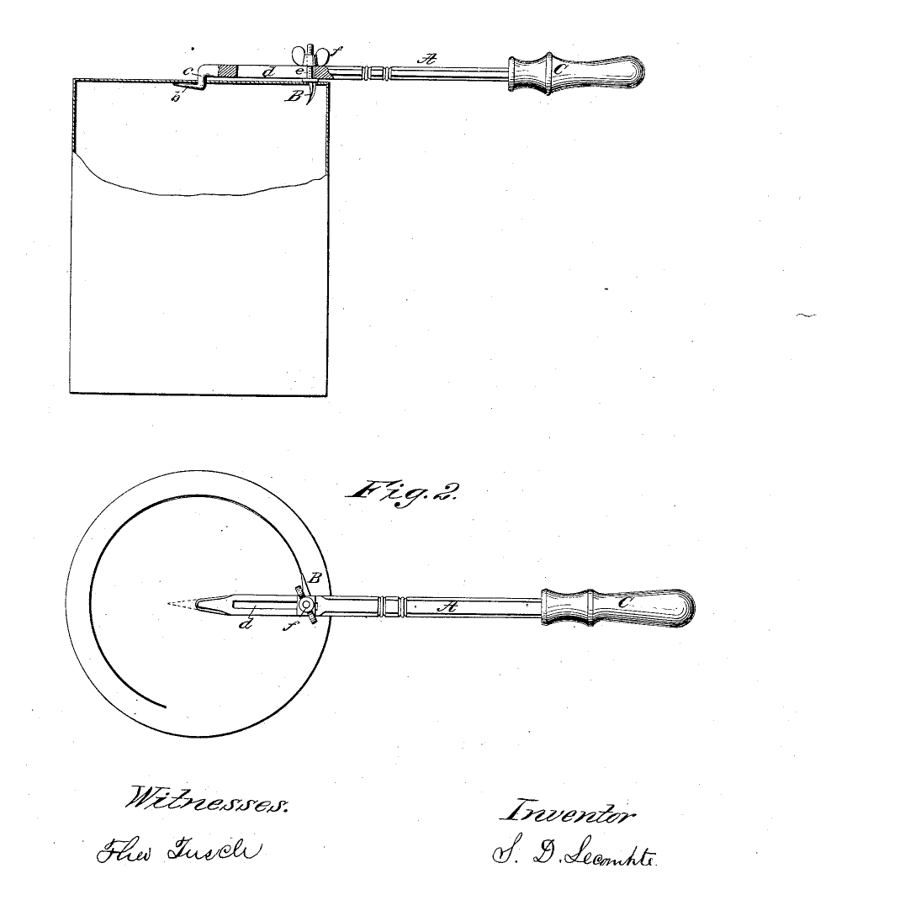
Samuel D. Lecompte of Leavenworth, Kansas, received US 50,011, dated 19 September 1865, for an instrument for opening fruit and other sealed cans: a bar with a handle, its end bent like a crank and pointed so that, thrust through the top, the bent part is held by the edges of the hole as a bearing; a knife slides along a slot in the bar on a set screw, and the instrument is turned round to cut.
This rung works out where to set the knife for each can, then forges the bar, crank and knife and cuts a round opening.
Àárín
About 3 hours
Ìlànà
1
1
Knife position for each can
Knife position for each can
Ń ṣí ìwé Jupyter…
2
2
A lever opener before it
A lever opener before it
The embedded blueprint saws round a can with a lever knife. Lecompte gives the knife a centre to turn about and a slot to set its radius.
3
3
Read US 50,011
Read US 50,011
"The end of the instrument is bent somewhat in the form of a crank, and pointed, as shown by the letters b c in Fig. 1. This enables the instrument to be thrust into the top of the can in such manner that the part c, which is bent at right angles to the bar A, will be encircled by the edges of the hole made in the top of the can, thus insuring a good and sufficient bearing to enable the instrument to be operated."
4
4
Slot the bar
Slot the bar
Cut 170 mm of 25 × 3 mm flat bar. Drill a row of 5 mm holes along its centre from 25 to 70 mm from one end and file them into a slot.
Àwọn ohun èlò fún ìgbésẹ̀ yìí:
 Ọ̀pá Pẹrẹsẹ Irin Pẹ́lẹ́1 ẹyọ
Àwọn irinṣẹ́ tí a nílò:
 Ayùn Irin
 Ìdìmú Tábìlì
 Igi Àmì Àárín
 Ẹ̀rọ Ìlùkòkò Aláìlókùn
 Àkójọ Orí Ìlùkòkò
 Àkójọ Ìfá Kékeré
 Ìdíwọ̀n
5
5
Forge the crank point
Forge the crank point
File the bar's slotted end down to 6 mm wide for its last 30 mm. Bend it down 15 mm, along 10 mm, and down again 15 mm in the vice, and file the end to a sharp point.
Àwọn irinṣẹ́ tí a nílò:
 Àwọn Ìfá (Ìfá Ọwọ́)Ìdìmú Tábìlì
 Òòlù
Òòlù Gílásì Ààbò Tí Ó Mọ́
6
6
Make the knife
Make the knife
Cut a 6 × 25 mm knife from 1 mm steel sheet with a pointed lower end and a 5 mm hole at the top. Hone its edge.
Àwọn ohun èlò fún ìgbésẹ̀ yìí:
 Ìwé Irin Pẹ́lẹ́1 ẹyọ
Àwọn irinṣẹ́ tí a nílò:
 Ìlàǹkàn irinẸ̀rọ Ìlùkòkò AláìlókùnÀkójọ Orí ÌlùkòkòÀwọn Ìfá (Ìfá Ọwọ́)
 Òkúta ìpọ́n
7
7
Fit the knife and handle
Fit the knife and handle
Bolt the knife under the slot with an M5 screw, washer and nut as the set screw. Fit a hardwood handle to the bar's other end with epoxy.
Àwọn ohun èlò fún ìgbésẹ̀ yìí:
 Skurú ẹ̀rọ1 ẹyọ
 Wáṣà Pẹrẹsẹ1 ẹyọ
 Nọ́ọ̀tì Onígun Mẹ́fà1 ẹyọ
 Àwọn dowel igi líle1 ẹyọ
 Ẹpọ́ksì Ẹ̀yà Méjì1 ẹyọ
Àwọn irinṣẹ́ tí a nílò:
 Kọ́kọ́rọ́ tí a lè ṣàtúnṣeẸ̀rọ Ìlùkòkò AláìlókùnÀkójọ Orí Ìlùkòkò
8
8
The patent drawing
The patent drawing
US 50,011 drawing sheet, public domain (expired patent).
9
9
Cut a round opening
Cut a round opening
Set the knife for the can and tighten it. Stand a sealed can on the kitchen scale, thrust the point through the top's centre, press the knife in and turn round; read the peak load, time it, and measure the hole.
Àwọn ohun èlò fún ìgbésẹ̀ yìí:
 Ìgò irin1 ẹyọ
Àwọn irinṣẹ́ tí a nílò:
 Òṣùwọ̀n Díjítà Ilé Ìdáná
 Aago Ìdúró
 Òṣùwọ̀n Kálípà Díjítà Ìnṣì 6
 Ìbọ̀wọ́ Iṣẹ́ Awọ
10
10
A point that tears out, a knife that slips
A point that tears out, a knife that slips
Crank-point can opener troubleshooting.
Flow
Loading...
11
11
History and honest limits
History and honest limits
**Samuel D. Lecompte** of Leavenworth, Kansas, received US 50,011, dated 19 September 1865, for cans used for fruits, preserves and oysters. He did not limit himself to one knife shape, having adopted various styles. The patent was reissued on 4 February 1868 (No. 2,851). F. S. Wyman's 1868 patent names it as the circular opener he added a side knife to.
**Honest limits.** A bolt and nut stand in for his set screw, and the knife is unhardened. Your loads and times are the result.
Àwọn ohun-èlò
8- Àyè
- 1 ẹyọÀyè
- 1 ẹyọÀyè
- 1 ẹyọÀyè
- 1 ẹyọÀyè
- 1 ẹyọÀyè
- 1 ẹyọÀyè
- 1 ẹyọÀyè
Àwọn irinṣẹ́ tó nílò
17- Àyè
- Àyè
- 1 vendor sell this, none ship to you yetÀyè
- Àyè
- Àyè
- Àyè
- Àyè
- Àyè
Ìtọ́nisọ́nà yìí ń ṣe
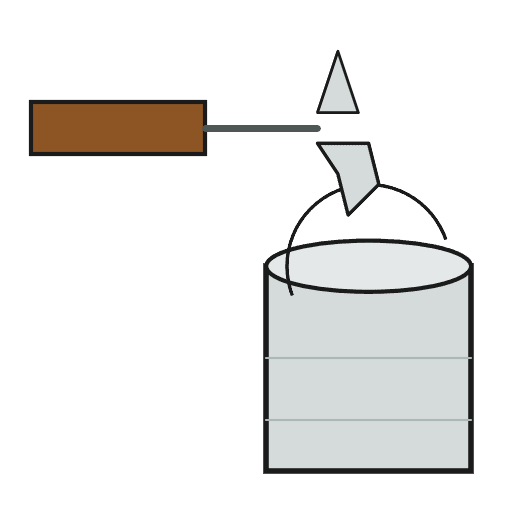
Blueprint tó jọra
Àwọn blueprint wọ̀nyí pín ìmọ̀ — ọ̀nà, ohun-èlò tàbí ìlànà



CC0 Àgbègbè Gbogbogbò
Blueprint yìí ti jáde lábẹ́ CC0. O lè ṣe àdàkọ, yí padà, pín, àti lò láìsí ìyọ̀ǹda.
Ṣàtìlẹ́yìn Olùṣẹ́dá nípa rírà àwọn ọjà nipasẹ̀ Blueprint wọn Ẹ̀san Olùṣẹ́dá tí àwọn Olùtajà gbé kalẹ̀, tàbí ṣẹ̀dá àtúnṣe tuntun ti Blueprint yìí kí o sì fi sínú Blueprint rẹ gẹ́gẹ́ bí ìsopọ̀ láti pín owó-wíwọlé.