IṢẸ́ ỌNÀ
ẸWÀ ÀTI ÌLERA
IṢẸ́ ỌWỌ́
ÀṢÀ ÀTI ÌTÀN
ÌṢERÉ
ÀYÍKÁ
OÚNJẸ ÀTI OHUN MÍMU
REVERSE ENGINEERING
SÁYẸ́ǸSÌ
ERÉ ÌDÁRAYÁ
ÌMỌ̀-Ẹ̀RỌ
ÀWỌN OHUN WÍWỌ̀



Cyanoacrylate Adhesive
Harry Coover first met cyanoacrylates in 1942 while looking for a clear plastic for gun sights, and rejected them because they stuck to everything. In 1951 at Eastman Kodak he and Fred Joyner met them again - and this time saw a glue that set in seconds with no heat or pressure. It was sold from 1958.
**US 2,794,788**, "Adhesive compositions containing alkyl esters of cyanoacrylic acid", Coover and Shearer, Eastman Kodak, filed 1. November 1952, granted 4. June 1957, claims the monomeric alkyl α-cyanoacrylate adhesive. **US 2,768,109**, "Alcohol-catalyzed alpha-cyanoacrylate adhesive compositions", Coover, filed 2. June 1954, granted 23. October 1956, claims "strongly bonding wood having an acidic surface character" by first moistening it with an alcohol of 1 to 8 carbon atoms.
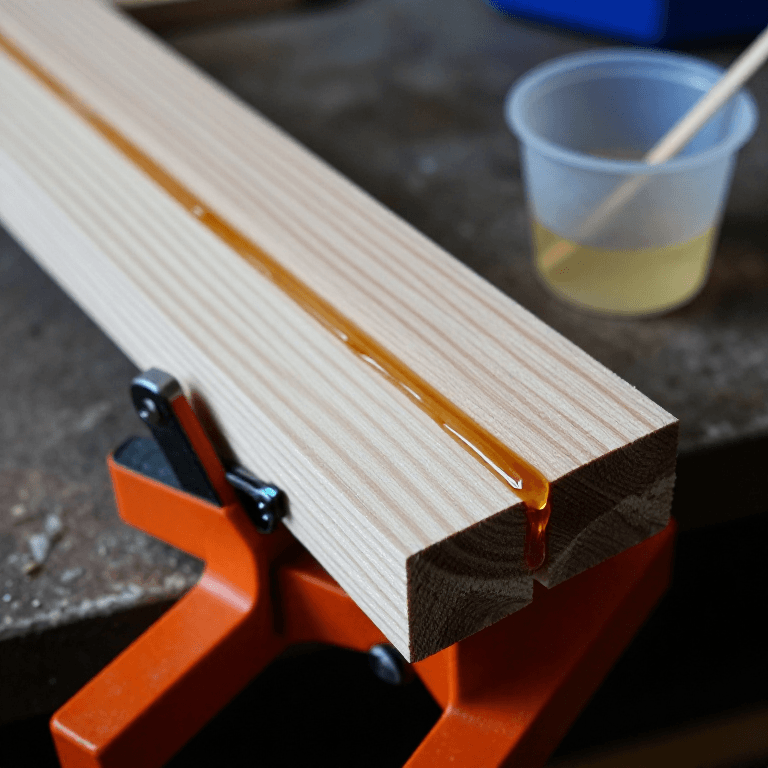
**You test that second claim on oak**, an acidic wood: dry, wiped with isopropyl alcohol, and misted with water.
Olùbẹ̀rẹ̀
1 hour plus 24 h
Ìlànà
1
1
Cut the strips
Cut the strips
Saw eighteen oak strips 80 x 20 mm, about 5 mm thick. Sand one end face of each with 180 grit and dust off. Pencil-mark three groups: dry, IPA, water.
Àwọn ohun èlò fún ìgbésẹ̀ yìí:
 Pátákò oak funfun1 ẹyọ
 Bébà Ìfá1 ewé
Àwọn irinṣẹ́ tí a nílò:
 Ayùn Ọwọ́
2
2
Prepare the surfaces
Prepare the surfaces
Leave the first group dry. Wipe the ends of the second with isopropyl alcohol on a towel and use them within a minute. Give the third one light mist of water and blot. Note the room humidity.
Àwọn ohun èlò fún ìgbésẹ̀ yìí:
 Ọtí Isopropyl 99 %10 ml
 Bébà ìnukàn2 ewé
Àwọn irinṣẹ́ tí a nílò:
 Ìgò ìfọn omi
 Òǹwọ̀n ọ̀rinrin
3
3
Glue and time
Glue and time
Gloves and glasses on. One drop of CA on one end, overlap a partner strip by 20 mm, press 5 seconds and start the stopwatch. Every 10 seconds hang the spring scale from the free strip and pull to 2 N: record when it first holds. Three joints per group.
Àwọn ohun èlò fún ìgbésẹ̀ yìí:
 Líìmù Kíákíá (cyanoacrylate)1 ẹyọ
Àwọn irinṣẹ́ tí a nílò:
 Aago Ìdúró
 Ẹ̀rọ Ìwọ̀n Agbára (Òṣùwọ̀n Ìsúnkì)
 Ìbọ̀wọ́ Nítírílì
 Gílásì Ààbò Tí Ó Mọ́
4
4
Break them tomorrow
Break them tomorrow
After 24 hours clamp one strip of each joint in the vise and tap the free end sideways with the mallet until it breaks. Estimate how much of the bond area is torn wood.
Àwọn irinṣẹ́ tí a nílò:
 Ìdìmú Tábìlì
 Òòlù rọ́bàGílásì Ààbò Tí Ó Mọ́
5
5
Set times and joints
Set times and joints
Ń ṣí ìwé Jupyter…
6
6
History & Context
History & Context
**What the patents specify:** a monomeric alkyl α-cyanoacrylate adhesive held liquid by an acid inhibitor, and, for acidic surfaces, a prior wipe with a C1–C8 alcohol. **Modern build (derived):** hardware-store CA glue on oak.
CA spread from industry to every workshop, and in the Vietnam War medics used a CA spray to seal wounds; purpose-made medical grades followed. Its limits: brittle joints that fail in peel and impact, poor gap filling, and it bonds skin instantly - acetone releases it.

Àwọn ohun-èlò
5- 1 ẹyọÀyè
- 1 ewéÀyè
- 10 mlÀyè
- 2 ewéÀyè
- Àyè
Àwọn irinṣẹ́ tó nílò
9- Àyè
- Àyè
- Àyè
- Àyè
- Àyè
Blueprint tó jọra
Àwọn blueprint wọ̀nyí pín ìmọ̀ — ọ̀nà, ohun-èlò tàbí ìlànà

CC0 Àgbègbè Gbogbogbò
Blueprint yìí ti jáde lábẹ́ CC0. O lè ṣe àdàkọ, yí padà, pín, àti lò láìsí ìyọ̀ǹda.
Ṣàtìlẹ́yìn Olùṣẹ́dá nípa rírà àwọn ọjà nipasẹ̀ Blueprint wọn Ẹ̀san Olùṣẹ́dá tí àwọn Olùtajà gbé kalẹ̀, tàbí ṣẹ̀dá àtúnṣe tuntun ti Blueprint yìí kí o sì fi sínú Blueprint rẹ gẹ́gẹ́ bí ìsopọ̀ láti pín owó-wíwọlé.