IṢẸ́ ỌNÀ
ẸWÀ ÀTI ÌLERA
IṢẸ́ ỌWỌ́
ÀṢÀ ÀTI ÌTÀN
ÌṢERÉ
ÀYÍKÁ
OÚNJẸ ÀTI OHUN MÍMU
REVERSE ENGINEERING
SÁYẸ́ǸSÌ
ERÉ ÌDÁRAYÁ
ÌMỌ̀-Ẹ̀RỌ
ÀWỌN OHUN WÍWỌ̀
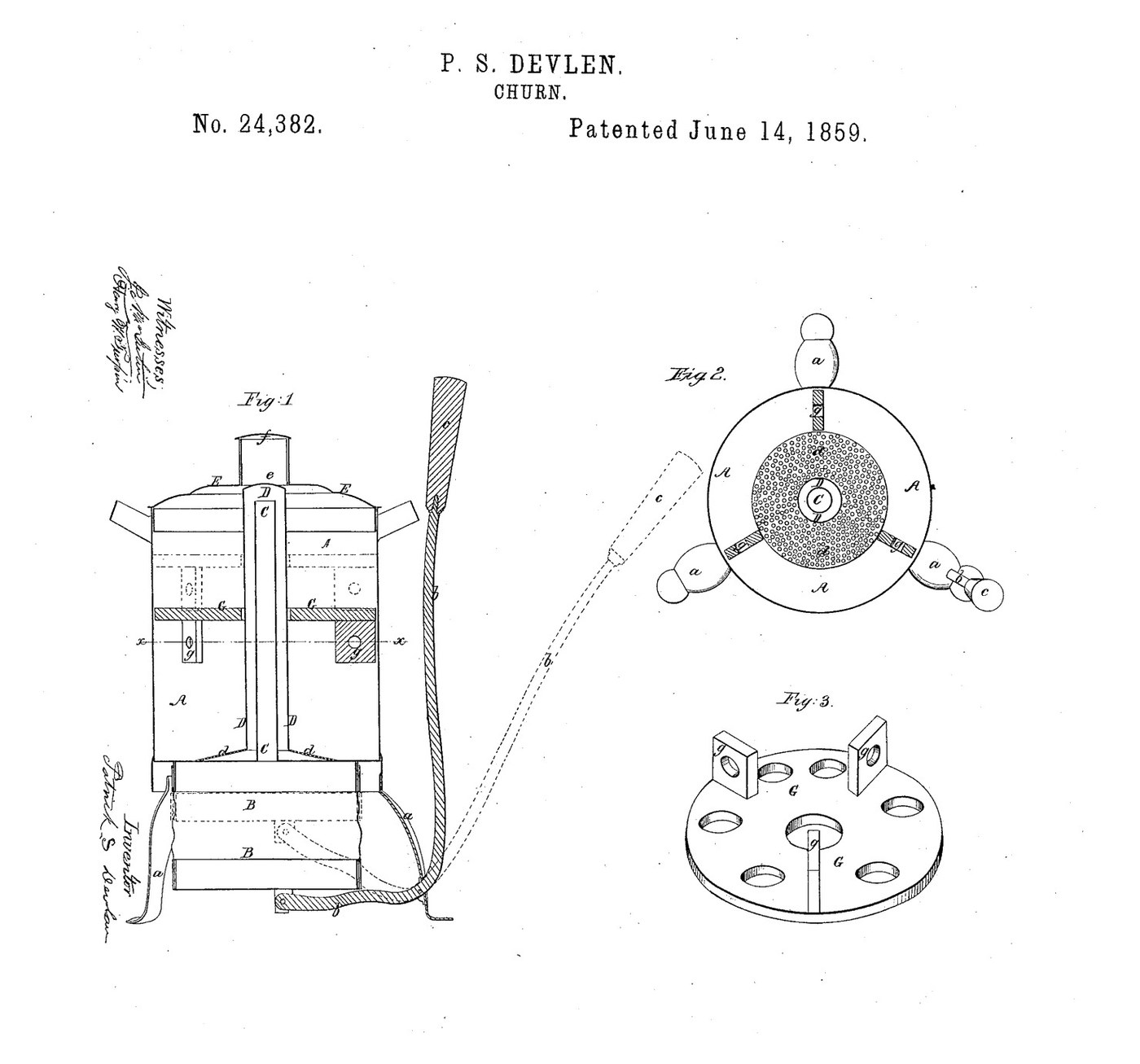

Bellows-and-Float Atmospheric Churn: Blasts of Air Through a Water-Jointed Pipe, a Float Gathers the Butter
Patrick S. Devlan of Reading, Pennsylvania, received US 24,382, dated 14 June 1859, for a churn worked by blasts of air only. A bellows under the body, worked by a lever, blows up a pipe that opens inside a wider tube; the air goes down between them and out through a perforated disk across the bottom, so it is spread through the whole cream. The cream standing in the tube makes a water joint, so no valves are needed. A perforated float with projections rides up and down on the bubbling cream and gathers the butter as it forms.
This rung builds it with a 20-litre bucket on legs and a bellows below.
Àárín
About 1 day, plus printing
Ìlànà
1
1
The water joint
The water joint
Ń ṣí ìwé Jupyter…
2
2
Air drawn into the cream, before it
Air drawn into the cream, before it
Wicks drew air in with turning funnels and a dasher. Devlan blows it in with a bellows and has no dasher at all.
3
3
Read US 24,382
Read US 24,382
"... this pipe or tube, C, is open at its upper end, but is entirely surrounded to within a short distance of its base by another tube D, of greater diameter which tube D, is connected at its base to the center of the convex perforated disk d."
4
4
Print the teat e
Print the teat e
The hollow teat for the lid's middle, over tube D's top. PETG, 0.2 mm layers, 40 % infill, 4 walls; wash before first use.
5
5
Print the collar
Print the collar
The collar that seals tube D into the disk's middle. PETG, 0.2 mm layers, 40 % infill, 4 walls; wash before first use.
6
6
Stand and bellows
Stand and bellows
Cut three legs a from 44 mm square timber 650 mm long and set them 120 degrees apart round a 350 mm circle. Screw a plywood seat ring 400 mm across, with a 60 mm hole, between them 482 mm up to carry the bucket, a band 600 mm up round the bucket, and a plywood shelf 150 mm up for the bellows. Screw a bellows about 260 x 120 mm to the shelf.
Àwọn ohun èlò fún ìgbésẹ̀ yìí:
 Igi rírọ̀ 70x70 mm2 ẹyọ
 Àwo igi tí a lẹ̀ pọ̀2 ẹyọ
 Ìṣó igi24 ẹyọ
 Ìdìpọ̀ Igi1 ẹyọ
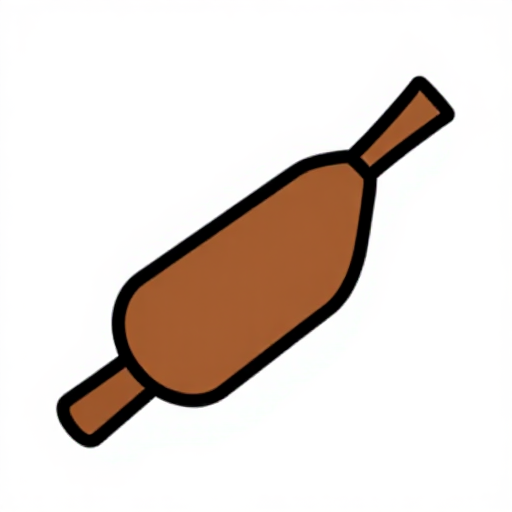 Ẹ̀rọ Ìfẹ́ Afẹ́fẹ́1 ẹyọ
Àwọn irinṣẹ́ tí a nílò:
 Ayùn Ọwọ́
 Ayùn Jígísò
 Ẹ̀rọ Ìlùkòkò Aláìlókùn
 Àkójọ Orí Ìlùkòkò
 Okùn Ìdíwọ̀n
7
7
Pipe C, tube D and disk d
Pipe C, tube D and disk d
Drill the middle of the bucket's floor 16.5 mm and seal a 16 mm stainless pipe C through it with silicone so it stands 400 mm up. Drill 24 holes of 4 mm in two rings in a stainless bowl about 260 mm across and a 32.5 mm hole in its middle, and stand it upside down on the floor round the pipe as disk d. Push a 32 mm stainless tube D 360 mm long through the printed collar into the bowl's middle hole, sealed with silicone, so it surrounds pipe C down to 56 mm above the floor. Run silicone tubing from the bellows' nozzle to pipe C's foot under the floor.
Àwọn ohun èlò fún ìgbésẹ̀ yìí:
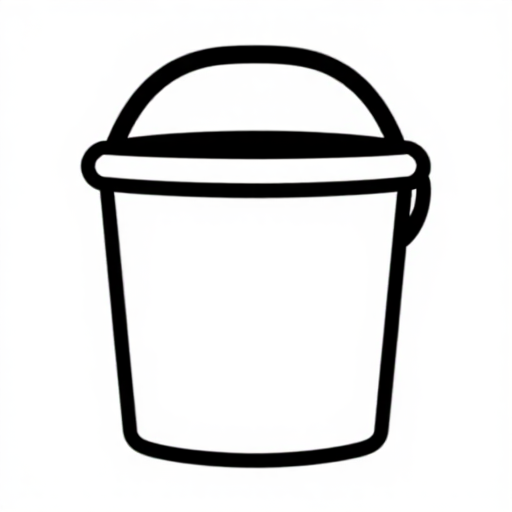 Bàkẹ́ẹ̀tì Lítà 201 ẹyọ
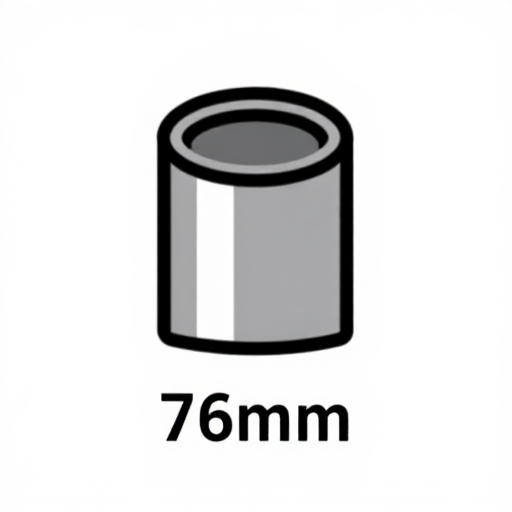 Tọ́ọ̀bù irin tí kò ń yá2 ẹyọ
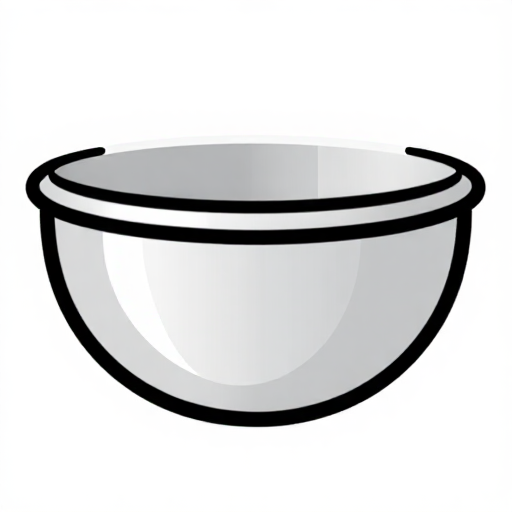 Àwo ìdàpọ̀ ńlá ti irin tí kò ń yá1 ẹyọ
 Ìdílẹ̀ Silikoni1 ẹyọ
 Okùn PETG1 ẹyọ
 Ọ̀pọ̀n Sílíkọ́nì1 ẹyọ
Àwọn irinṣẹ́ tí a nílò:
 Ẹ̀rọ ìtẹ̀ 3D oníwàyà (FDM)Ẹ̀rọ Ìlùkòkò AláìlókùnÀkójọ Orí Ìlùkòkò
 Ìṣètò ayùn ihò
 Ohun èlò ìgé òpó
 Àwọn Ìfá (Ìfá Ọwọ́)
8
8
Lid, float and lever
Lid, float and lever
Cut a 45 mm hole in the middle of the bucket's lid and glue the teat e over it, with its cap f. Cut float G from 15 mm plywood, 250 mm across with a 48 mm hole for tube D and eight 22 mm holes, and glue 10 mm dowel pegs 25 mm long into both faces as the projections g. Bolt a hardwood lever b to the outside of one leg 360 mm up, running up beside the bucket to a handle c above the lid, and join it to the bellows' top board with a hardwood link.
Àwọn ohun èlò fún ìgbésẹ̀ yìí:
Okùn PETG1 ẹyọÌdìpọ̀ Igi1 ẹyọÀwo igi tí a lẹ̀ pọ̀1 ẹyọ Àwọn dowel igi líle1 ẹyọ
 Pátákó Igi Líle2 ẹyọ
 Àkójọ bọ́ọ̀lù onígun mẹ́fà3 ẹyọ
 Wáṣà Pẹrẹsẹ6 ẹyọ
 Ẹ̀kù Ìdìmú Onínáílọ́ọ̀nù3 ẹyọ
Àwọn irinṣẹ́ tí a nílò:
Ìṣètò ayùn ihòAyùn JígísòẸ̀rọ Ìlùkòkò AláìlókùnÀkójọ Orí ÌlùkòkòAyùn Ọwọ́ Bébà Ìfá
 Kọ́kọ́rọ́ tí a lè ṣàtúnṣe
9
9
The build in 3D
The build in 3D
FreeCAD model of this build, the near half of the body cut away: the stand with its seat, band and shelf, the bellows and hose, pipe C inside tube D, the drilled bowl as disk d, the float with its pegs, the lid with its teat and cover, and the lever with its link.
10
10
Churn
Churn
Fill the bucket about one third full: about 6.5 litres of heavy cream at about 15 °C, checked with the thermometer. Drop the float in over tube D and put the lid on. Work the lever steadily and time it: each stroke blows a burst of air up the pipe, down the tube and out through the bowl's holes. When the butter has gathered on the float, lift it out, pour off the buttermilk, wash the butter in cold water until it runs clear, work in a pinch of salt and weigh it.
Àwọn ohun èlò fún ìgbésẹ̀ yìí:
 Ọ̀rá wàrà tó nípọn6.5 l
 Iyọ̀ Òkun Rúkèrúdò1 ẹyọ
 Omi1 ẹyọ
Àwọn irinṣẹ́ tí a nílò:
 Ẹ̀rọ ìwọ̀n ooru oníhun tí ó dúró sí inú
 Aago Ìdúró
 Òṣùwọ̀n Díjítà Ilé ÌdánáÀwo ìdàpọ̀ ńlá ti irin tí kò ń yá
11
11
Troubleshooting
Troubleshooting
Atmospheric churn troubleshooting.
Flow
Loading...
12
12
History and honest limits
History and honest limits
**Patrick S. Devlan** of Reading, Berks County, Pennsylvania (the drawing spells it Devlen), US 24,382, 14 June 1859. Earlier blast churns, he wrote, blew the air in one place, needed valves and did not collect the butter; he claimed the float in a churn worked by blast only. His only quantity is "say one third full". His pipe C rises straight from the bellows and his disk d spans the floor; our hose, drilled bowl, pegs and every size are ours.
Àwọn ohun-èlò
19- 2 ẹyọÀyè
- 2 ẹyọÀyè
- 24 ẹyọÀyè
- 2 ẹyọÀyè
- 1 ẹyọÀyè
- 1 ẹyọÀyè
- Àyè
- 1 ẹyọÀyè
- 2 ẹyọÀyè
- 1 ẹyọÀyè
- 1 ẹyọÀyè
- 2 ẹyọÀyè
- Àyè
- 6 ẹyọÀyè
- Àyè
- 6.5 lÀyè
- 1 ẹyọÀyè
- 1 ẹyọÀyè
Àwọn irinṣẹ́ tó nílò
15- Àyè
- 1 vendor sell this, none ship to you yetÀyè
- 1 vendor sell this, none ship to you yetÀyè
- 1 vendor sell this, none ship to you yetÀyè
- Àyè
- Àyè
Àwọn fáìlì àpẹrẹ
3Ìtọ́nisọ́nà yìí ń ṣe
Blueprint tó jọra
Àwọn blueprint wọ̀nyí pín ìmọ̀ — ọ̀nà, ohun-èlò tàbí ìlànà
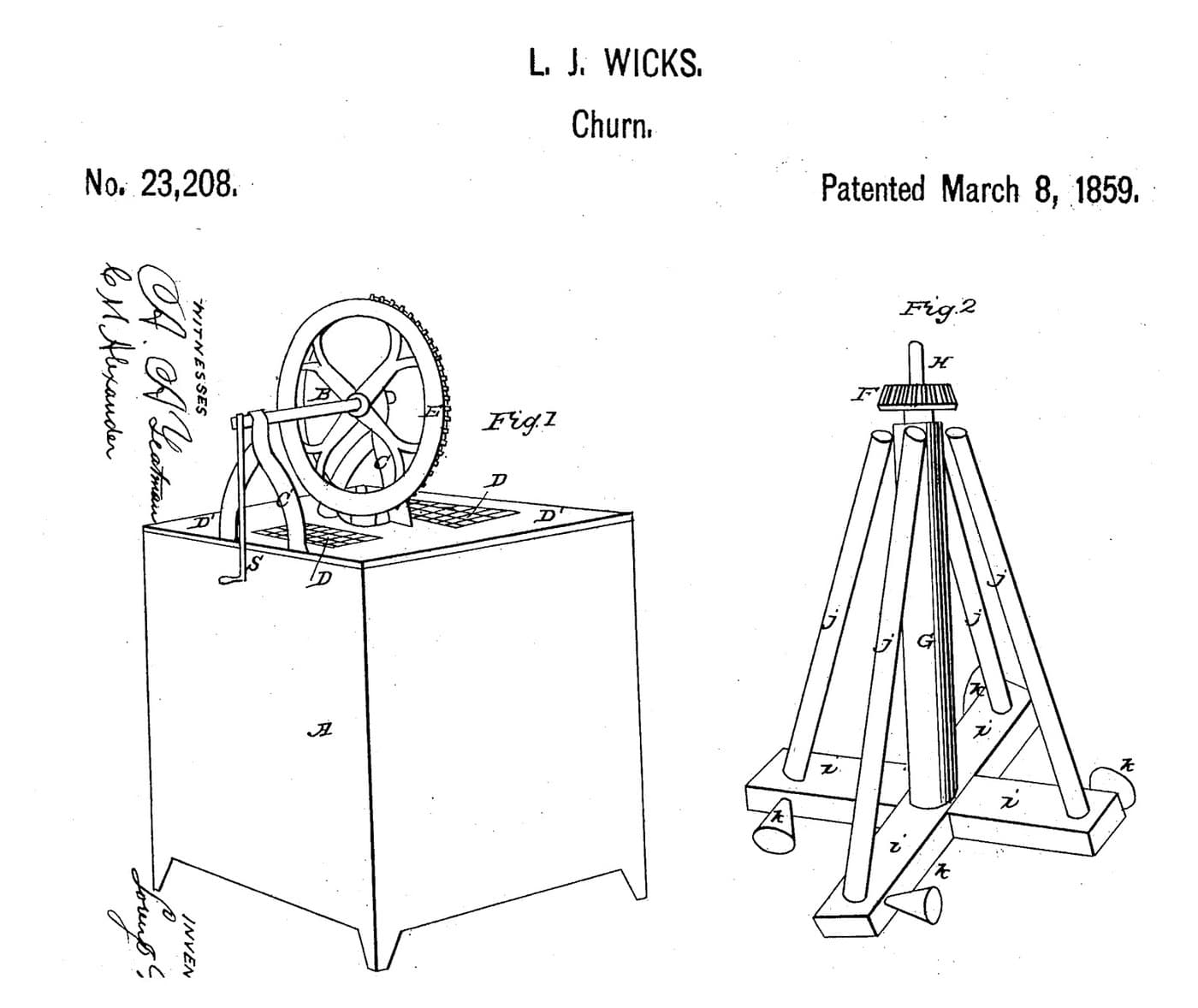
Funnel-Tube Atmospheric Churn: Trailing Funnels on a Fast Cross Draw Air Down Slanting Tubes Into the Cream
láti ọwọ́ Buttercup
OÚNJẸ ÀTI OHUN MÍMU
6
0
0
0
0
0
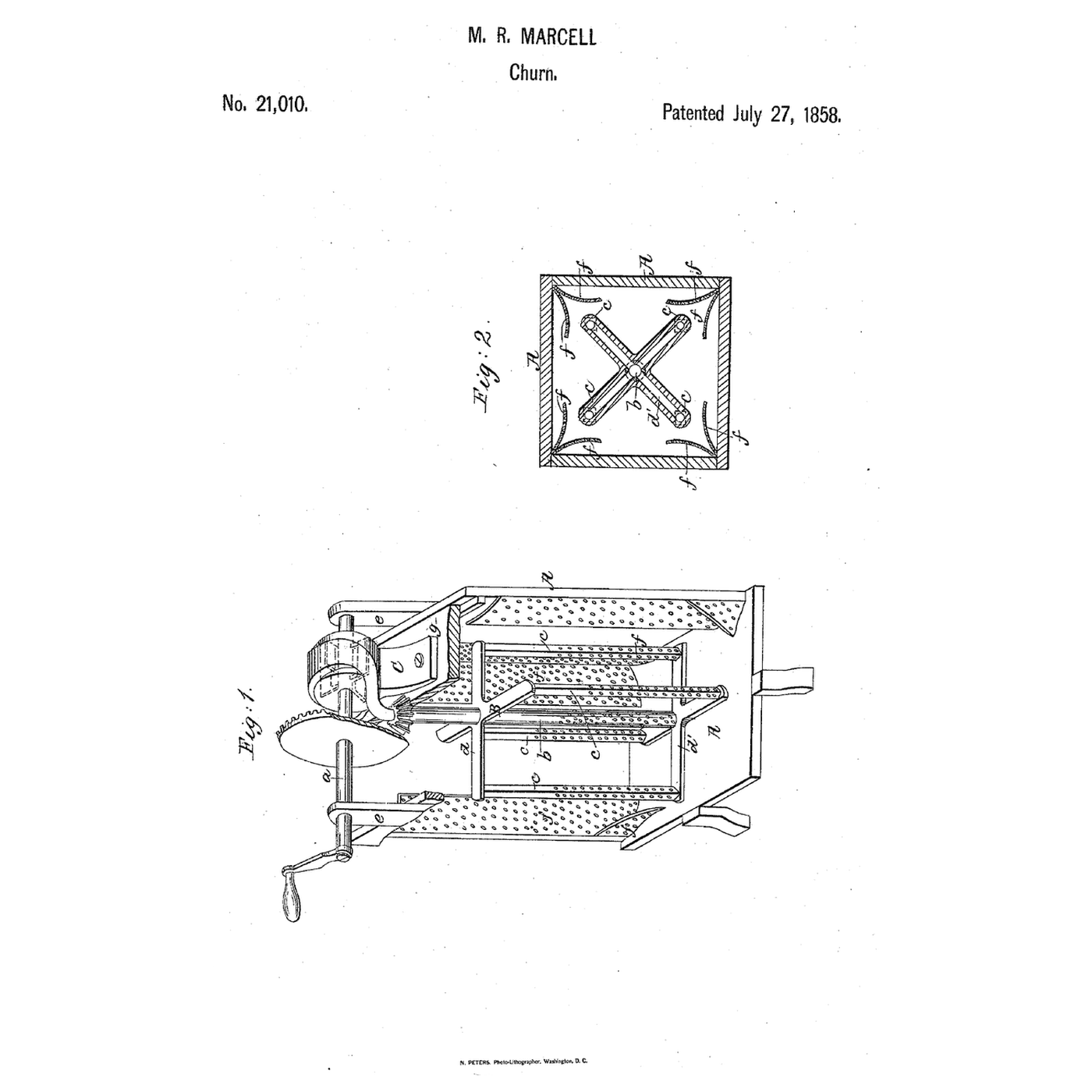
Fan-Blown Jet Dasher Churn: A Fan on the Crank Shaft Blows Air Out Through the Dasher Below the Cream
láti ọwọ́ Buttercup
OÚNJẸ ÀTI OHUN MÍMU
43
0
0
0
0
0
Churning Butter from Cream — The 5,000-Year-Old Fat Separation
láti ọwọ́ TheChef
IṢẸ́ ỌWỌ́
63
0
0
0
0
0
CC0 Àgbègbè Gbogbogbò
Blueprint yìí ti jáde lábẹ́ CC0. O lè ṣe àdàkọ, yí padà, pín, àti lò láìsí ìyọ̀ǹda.
Ṣàtìlẹ́yìn Olùṣẹ́dá nípa rírà àwọn ọjà nipasẹ̀ Blueprint wọn Ẹ̀san Olùṣẹ́dá tí àwọn Olùtajà gbé kalẹ̀, tàbí ṣẹ̀dá àtúnṣe tuntun ti Blueprint yìí kí o sì fi sínú Blueprint rẹ gẹ́gẹ́ bí ìsopọ̀ láti pín owó-wíwọlé.