IṢẸ́ ỌNÀ
ẸWÀ ÀTI ÌLERA
IṢẸ́ ỌWỌ́
ÀṢÀ ÀTI ÌTÀN
ÌṢERÉ
ÀYÍKÁ
OÚNJẸ ÀTI OHUN MÍMU
REVERSE ENGINEERING
SÁYẸ́ǸSÌ
ERÉ ÌDÁRAYÁ
ÌMỌ̀-Ẹ̀RỌ
ÀWỌN OHUN WÍWỌ̀
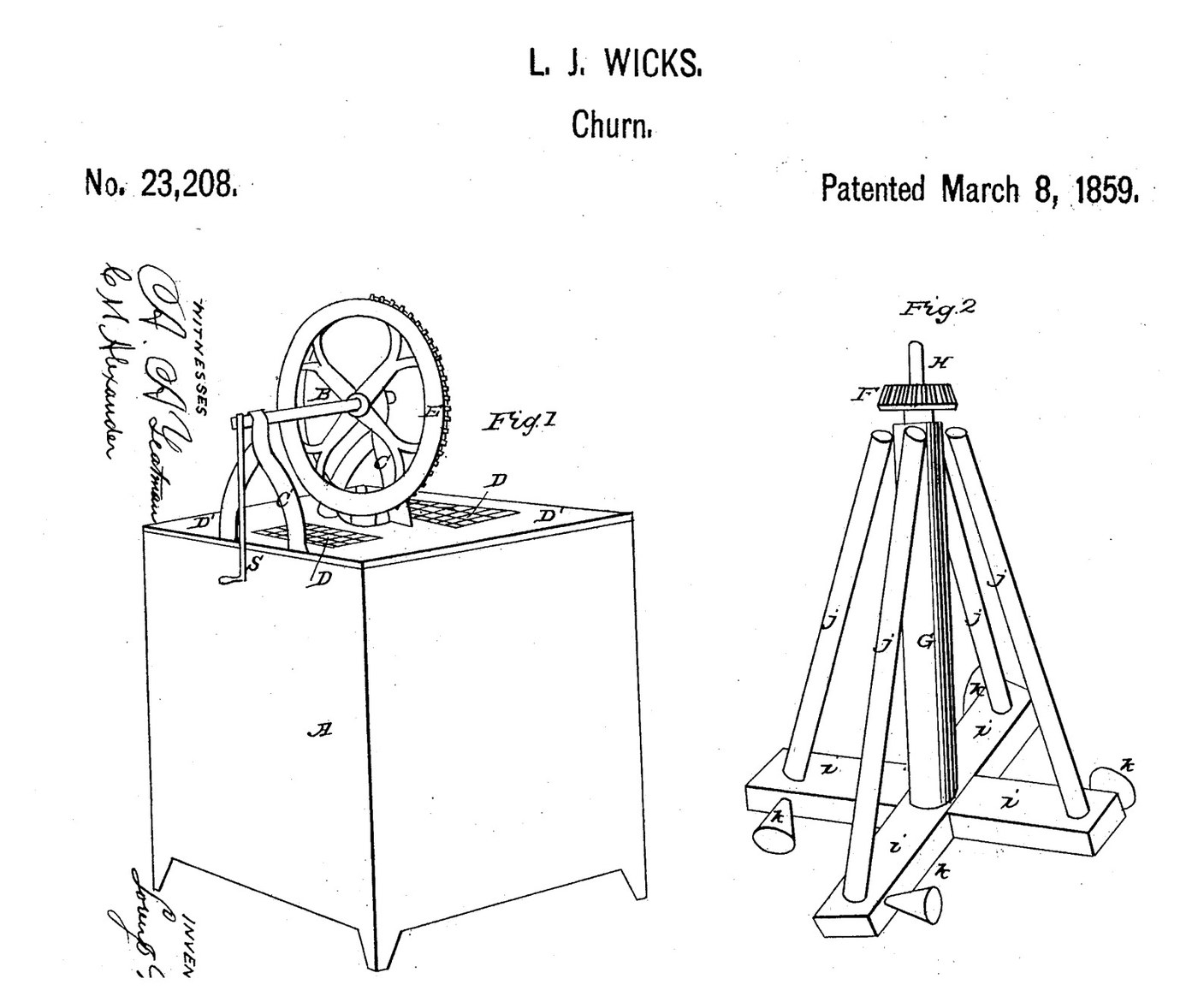

Funnel-Tube Atmospheric Churn: Trailing Funnels on a Fast Cross Draw Air Down Slanting Tubes Into the Cream
Loren J. Wicks of Racine, Wisconsin, received US 23,208, dated 8 March 1859, for an atmospheric churn. A crank turns a wheel cogged on its side, which spins an upright shaft fast. Near its foot the shaft carries a cross with a funnel on each arm, mouth trailing; four slanting tubes run from the funnels up to the shaft near its top. As the funnels draw away from the cream, air is sucked down the tubes and bubbles up through it. The top has gauze-covered openings for air and for watching the cream.
This rung builds it in a square food container with printed gears and cross.
Ilọsíwájú
About 6 hours, plus printing
Ìlànà
1
1
Speeds at the tubes' two ends
Speeds at the tubes' two ends
Ń ṣí ìwé Jupyter…
2
2
Air into the cream, before it
Air into the cream, before it
Bump pumped air in with a hollow dasher. Wicks lets turning funnels draw it in with no valve.
3
3
Read US 23,208
Read US 23,208
"As the funnels recede from the cream or milk a vacuum is produced in the tubes j, j, j, j, and the external air rushes in immediately at the tops of the tubes and is conveyed through them to the bottom of the churn, where it escapes and rises through the cream to the top of the churn again."
4
4
Print the cross i
Print the cross i
The cross with four slanting tube sockets and the funnels k on the arms' sides. PETG, 0.2 mm layers, 40 % infill, 4 walls; wash before first use.
5
5
Print the collar
Print the collar
The collar that holds the tubes' tops round the shaft. PETG, 0.2 mm layers, 40 % infill, 4 walls; wash before first use.
6
6
Print the socket
Print the socket
The foot bearing for shaft G. PETG, 0.2 mm layers, 40 % infill, 4 walls; wash before first use.
7
7
Print the pinion F
Print the pinion F
The 12-tooth pinion for the top of shaft G. PETG, 0.2 mm layers, 40 % infill, 4 walls; wash before first use.
8
8
Print the wheel E
Print the wheel E
The 204 mm wheel with 60 teeth on its side. Print it flat, teeth up. PETG, 0.2 mm layers, 40 % infill, 4 walls; wash before first use.
9
9
Body A and the ventilating top
Body A and the ventilating top
Use a square food-grade container about 300 x 300 x 320 mm. Cut a 12 mm plywood top 320 mm square with a 13 mm hole in the middle and two openings 70 x 80 mm beside it; staple wire mesh over the openings (gauze D) and screw two hardwood cleats underneath so the top sits square on the rim. Screw the socket to the middle of the container's floor with an M4 screw and lock nut.
Àwọn ohun èlò fún ìgbésẹ̀ yìí:
 Àgọ́ ìtọ́jú ti ìpele oúnjẹ1 ẹyọ
 Àwo igi tí a lẹ̀ pọ̀1 ẹyọ
 Àwọ̀n okùn irin1 ẹyọ
 Pátákó Igi Líle1 ẹyọ
 Ìṣó igi8 ẹyọ
 Skurú ẹ̀rọ1 ẹyọ
 Ẹ̀kù Ìdìmú Onínáílọ́ọ̀nù1 ẹyọ
 Okùn PETG1 ẹyọ
Àwọn irinṣẹ́ tí a nílò:
 Ẹ̀rọ ìtẹ̀ 3D oníwàyà (FDM)
 Ayùn Jígísò
 Ẹ̀rọ Ìlùkòkò Aláìlókùn
 Àkójọ Orí Ìlùkòkò
 Ìlàǹkàn irin
 Ìṣù àwọn ohun ìyí skurú
 Okùn Ìdíwọ̀n
10
10
Shaft G, cross, tubes and collar
Shaft G, cross, tubes and collar
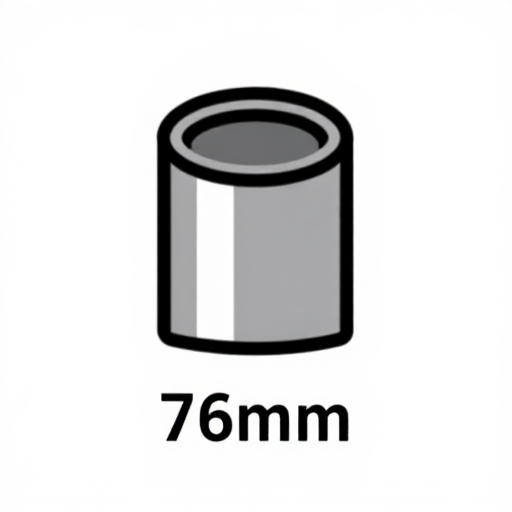
Cut a 12 mm stainless rod 373 mm long for shaft G. Fix the cross on it 20 mm above its foot and the collar 258 mm above its foot, each with an M4 screw across. Cut four 10 mm stainless tubes about 250 mm long, deburr them, and push each into its cross socket and up into the collar. Check that every funnel mouth points the same way round: they must trail as the shaft turns.
Àwọn ohun èlò fún ìgbésẹ̀ yìí:
 Ọ̀pá irin tí kò ń yá1 ẹyọ
 Tọ́ọ̀bù irin tí kò ń yá1 ẹyọSkurú ẹ̀rọ2 ẹyọẸ̀kù Ìdìmú Onínáílọ́ọ̀nù2 ẹyọ
Àwọn irinṣẹ́ tí a nílò:
 Ayùn Irin
 Ohun èlò ìgé òpó
 Àwọn Ìfá (Ìfá Ọwọ́)Ìṣù àwọn ohun ìyí skurú
11
11
Uprights, wheel E and crank S
Uprights, wheel E and crank S
Stand shaft G in its socket, put the top on and fix the pinion on G's top. Screw two hardwood uprights C 44 x 30 x 158 mm to the top, either side of the wheel's place, bored 12.5 mm at 128 mm up. Run a 12 mm stainless rod through them and the wheel's hub as shaft B so the wheel's teeth mesh with the pinion, fix the wheel with an M4 screw, and fix a hardwood crank S 132 mm long with a dowel handle on B's end.
Àwọn ohun èlò fún ìgbésẹ̀ yìí:
Pátákó Igi Líle1 ẹyọÌṣó igi4 ẹyọỌ̀pá irin tí kò ń yá1 ẹyọSkurú ẹ̀rọ2 ẹyọẸ̀kù Ìdìmú Onínáílọ́ọ̀nù2 ẹyọ Àwọn dowel igi líle1 ẹyọ
 Ìdìpọ̀ Igi1 ẹyọ
Àwọn irinṣẹ́ tí a nílò:
 Ayùn Ọwọ́Ẹ̀rọ Ìlùkòkò AláìlókùnÀkójọ Orí ÌlùkòkòAyùn IrinÌṣù àwọn ohun ìyí skurú
12
12
The build in 3D
The build in 3D
FreeCAD model of this build, the near quarter of the container and top cut away: the shaft on its socket with the cross, funnels, slanting tubes and collar, the meshed top with its uprights, wheel E and pinion F, and the crank.
13
13
Churn
Churn
Pour in about 10 litres of heavy cream at about 15 °C, checked with the thermometer, and put the top on. Turn the crank fast the way that makes the funnels trail, and time it; watch through the gauze for bubbles rising. When the butter comes it gathers between the tubes at the bottom. Lift out the top and shaft, pour off the buttermilk, wash the butter in cold water until it runs clear, work in a pinch of salt and weigh it.
Àwọn ohun èlò fún ìgbésẹ̀ yìí:
 Ọ̀rá wàrà tó nípọn10 l
 Iyọ̀ Òkun Rúkèrúdò1 ẹyọ
 Omi1 ẹyọ
Àwọn irinṣẹ́ tí a nílò:
 Ẹ̀rọ ìwọ̀n ooru oníhun tí ó dúró sí inú
 Aago Ìdúró
 Òṣùwọ̀n Díjítà Ilé Ìdáná
 Àwo ìdàpọ̀ ńlá ti irin tí kò ń yá
14
14
Troubleshooting
Troubleshooting
Atmospheric churn troubleshooting.
Flow
Loading...
15
15
History and honest limits
History and honest limits
**Loren J. Wicks** of Racine, Wisconsin, US 23,208, 8 March 1859, "Churn". He held that the tubes' feet, moving much faster than their tops, upset the balance and draw air in quickly, and that the butter, heavier than the cream, settles between the tubes. He claimed the shaft, slanting tubes, cross pieces and funnels in a square churn with a ventilating top. He gave no sizes or materials, and drew F as a bevel wheel; our pinion is straight-cut, and every size and material is ours.
Àwọn ohun-èlò
15- Àyè
- 1 ẹyọÀyè
- 1 ẹyọÀyè
- 1 ẹyọÀyè
- 12 ẹyọÀyè
- 5 ẹyọÀyè
- Àyè
- 1 ẹyọÀyè
- 1 ẹyọÀyè
- Àyè
- 1 ẹyọÀyè
- 1 ẹyọÀyè
- Àyè
- 1 ẹyọÀyè
- 1 ẹyọÀyè
Àwọn irinṣẹ́ tó nílò
15- 1 vendor sell this, none ship to you yetÀyè
- 1 vendor sell this, none ship to you yetÀyè
- Àyè
- 1 vendor sell this, none ship to you yetÀyè
- Àyè
- Àyè
- Àyè
Àwọn fáìlì àpẹrẹ
6Ìtọ́nisọ́nà yìí ń ṣe

Blueprint tó jọra
Àwọn blueprint wọ̀nyí pín ìmọ̀ — ọ̀nà, ohun-èlò tàbí ìlànà
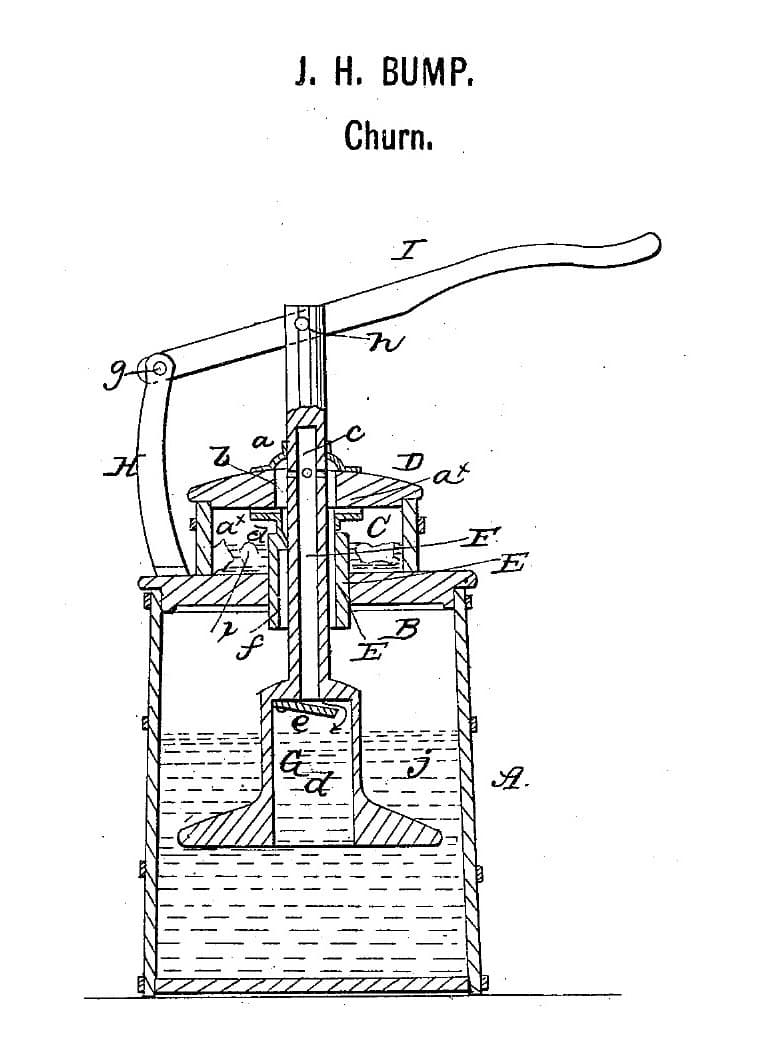
Ice-Chamber Air Churn: The Hollow Dasher Pumps the Same Air Round Through Ice and Cream
láti ọwọ́ Buttercup
OÚNJẸ ÀTI OHUN MÍMU
8
0
0
0
0
0
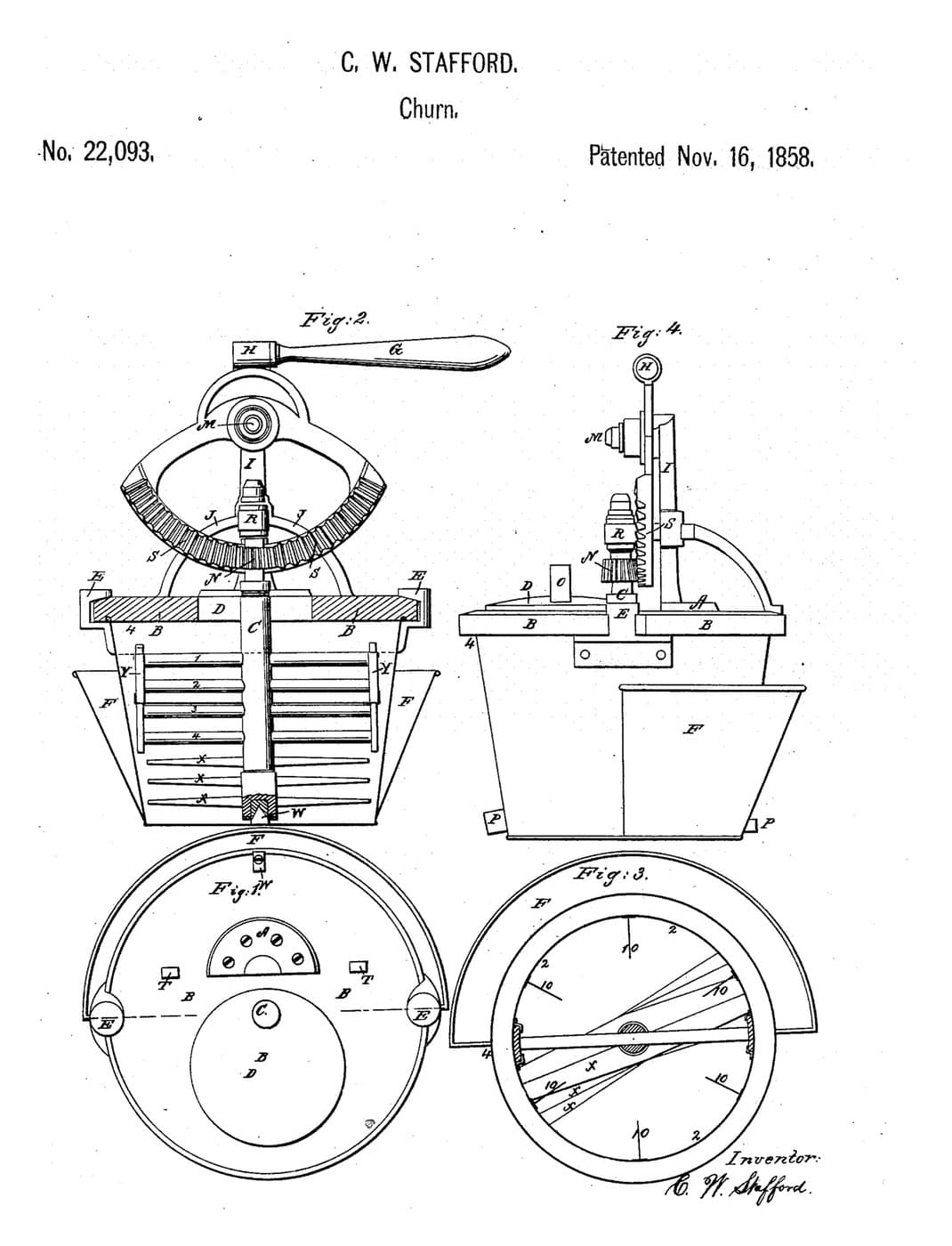
Segment-Rack Zone Churn: A Lever Rocks the Dasher Shaft, a Toothed Tin Band Gathers the Butter at the Surface
láti ọwọ́ Buttercup
OÚNJẸ ÀTI OHUN MÍMU
9
0
0
0
0
0
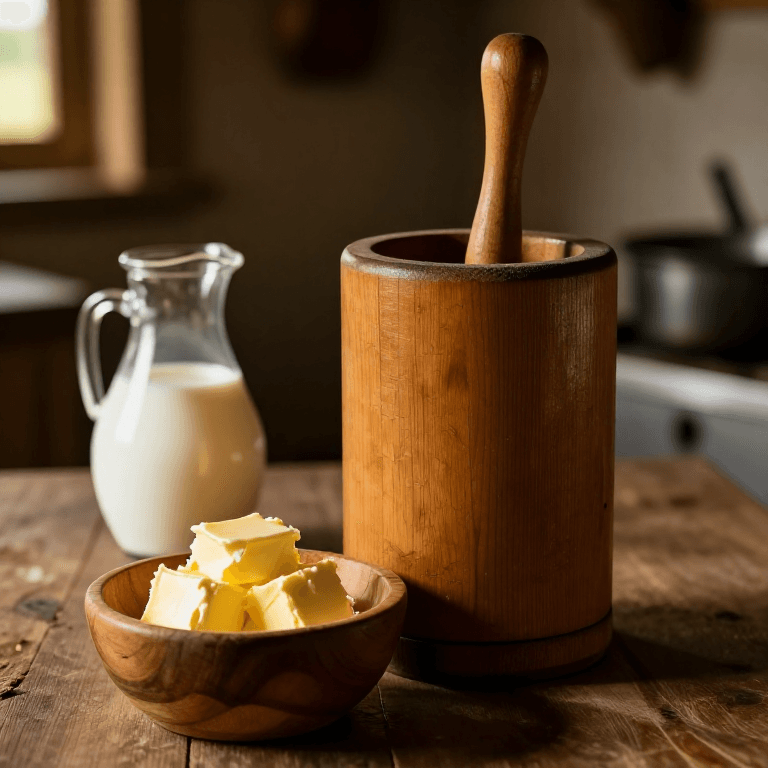
Churning Butter from Cream — The 5,000-Year-Old Fat Separation
láti ọwọ́ TheChef
IṢẸ́ ỌWỌ́
63
0
0
0
0
0
CC0 Àgbègbè Gbogbogbò
Blueprint yìí ti jáde lábẹ́ CC0. O lè ṣe àdàkọ, yí padà, pín, àti lò láìsí ìyọ̀ǹda.
Ṣàtìlẹ́yìn Olùṣẹ́dá nípa rírà àwọn ọjà nipasẹ̀ Blueprint wọn Ẹ̀san Olùṣẹ́dá tí àwọn Olùtajà gbé kalẹ̀, tàbí ṣẹ̀dá àtúnṣe tuntun ti Blueprint yìí kí o sì fi sínú Blueprint rẹ gẹ́gẹ́ bí ìsopọ̀ láti pín owó-wíwọlé.