
Dyeing Orange with Annatto — The Seed Coat Dye of Tropical America
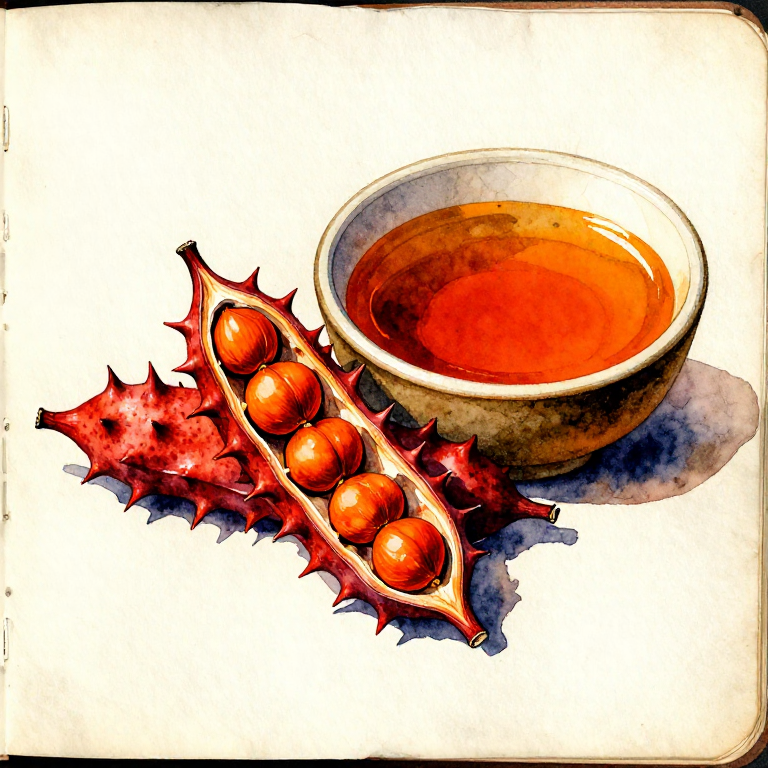
Annatto (Bixa orellana) is a small tropical tree native to Central and South America. Its spiky seed pods contain 40-60 seeds, each coated in a bright orange-red pigment called bixin — a carotenoid that dissolves readily in fats and alkaline water. Indigenous peoples of the Americas have used annatto for body paint, food colouring, and textile dyeing for thousands of years. The Taíno, Maya, and Tupí peoples all used annatto extensively — the word 'annatto' itself comes from the Taíno language of the Caribbean.
Annatto's primary modern use is as a food colourant — it gives the orange colour to cheddar cheese, butter, margarine, and many processed foods. The textile dye use is less well-known internationally but remains important in Latin America. Annatto produces a warm, vivid orange on cotton and wool. On alum-mordanted wool, the colour ranges from bright golden-orange to deep tangerine depending on concentration.
As a textile dye, annatto has moderate lightfastness — better than turmeric but not as permanent as madder. The colour is warm and distinctive, filling a gap in the natural dye palette between the yellows (weld, turmeric, marigold) and the reds (madder, cochineal). Annatto is easy to extract, widely available in spice markets as whole seeds, and produces immediate, vivid results that make it especially satisfying for beginners.
Ìlànà
Weigh the annatto seeds
Weigh the annatto seeds
Use 50-100% WOF of whole annatto seeds. For 100 g of wool, weigh out 50-100 g of seeds. Annatto seeds are sold in spice markets and Latin American grocery stores — small, hard, angular seeds coated in a bright orange-red pigment. The coating rubs off easily, staining fingers and surfaces orange. Buy whole seeds, not ground annatto powder (achiote paste), which often contains other spices. Higher quantities give deeper, more saturated orange.
Àwọn ohun èlò fún ìgbésẹ̀ yìí:
 Irúgbìn annatto80 g
Àwọn irinṣẹ́ tí a nílò:
 Òṣùwọ̀n Díjítà Ilé Ìdáná
Soak the seeds overnight in warm alkaline water
Soak the seeds overnight in warm alkaline water
Place the seeds in the dye pot with 4 litres of warm water. Add 5 g of sodium carbonate (washing soda) to make the water mildly alkaline — bixin dissolves more readily in alkaline conditions. Stir and soak overnight (8-12 hours). The water will turn a deep, opaque orange during soaking as the bixin dissolves from the seed coats. Without the alkaline addition, extraction is slower and less complete because bixin is only sparingly soluble in neutral water.
Àwọn ohun èlò fún ìgbésẹ̀ yìí:
 Kábónéètì Sódíọ̀mù (eérú sódà)5 g
Àwọn irinṣẹ́ tí a nílò:
 Ìkòkò Ọbẹ̀ Ńlá
Simmer the seeds for 30 minutes
Simmer the seeds for 30 minutes
Bring the pot to a gentle simmer (80°C) and hold for 30 minutes, stirring occasionally. Annatto releases its dye faster than bark or wood dyes — 30 minutes is sufficient after the overnight soak. Excessive heat and prolonged simmering can shift the colour from bright orange toward muddy brown. The liquid should be a vivid, opaque orange. The seeds will have lost most of their colour coating and will appear dark brown or black.
Àwọn irinṣẹ́ tí a nílò:
 Ṣíbí Igi Ìrúwé
 Ẹ̀rọ Ìwọ̀n Ooru Ìdáná
Strain out the seeds
Strain out the seeds
Strain the dye liquor through a fine mesh strainer into a clean pot. The seeds can be discarded or composted — they have given up their dye coating. The strained bath should be a clear, vivid orange. If the bath looks brownish rather than orange, the simmering may have been too hot or too long.
Àwọn irinṣẹ́ tí a nílò:
 Ajọ Kékeré
Dye alum-mordanted wool at 80°C for 45 minutes
Dye alum-mordanted wool at 80°C for 45 minutes
Pre-wet the alum-mordanted wool, squeeze out excess, and lower it into the annatto dye bath at room temperature. Slowly raise to 80°C and hold for 45 minutes. Turn gently every 10 minutes. The alum mordant bonds with the bixin to produce a warm, vivid orange on wool. Without mordant, annatto gives a paler, less permanent colour. The bath will pale gradually as the pigment transfers to the fibre.
Àwọn ohun èlò fún ìgbésẹ̀ yìí:
 Ìdìpọ̀ Ọ̀wú Irun Àgùntàn100 g
 Ọ̀ṣẹ Alumu (Alumu Potáṣíọ̀mù)10 g
Cool overnight, rinse, and dry
Cool overnight, rinse, and dry
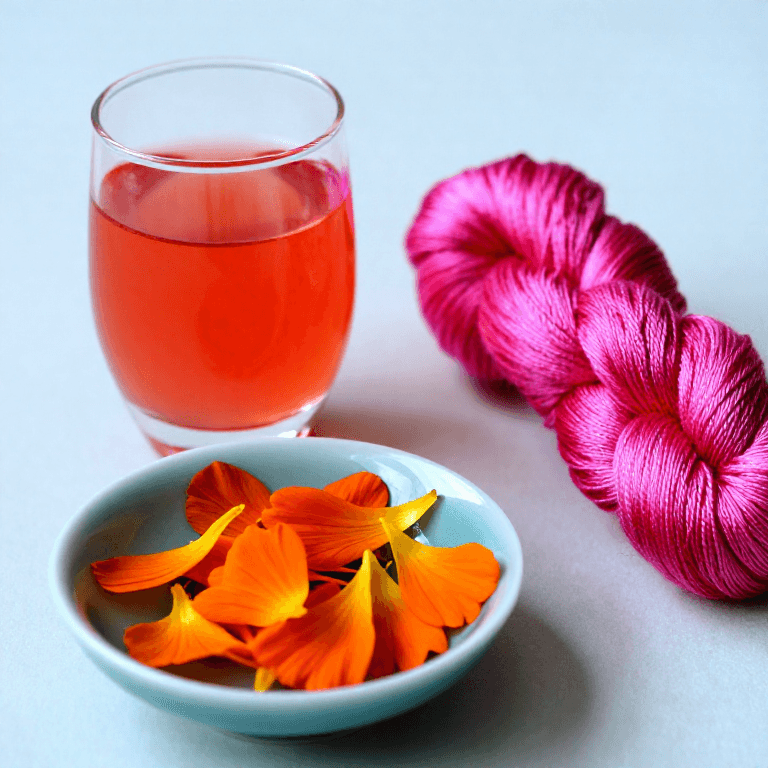
Turn off the heat and let the wool cool in the dye bath overnight. Remove, squeeze gently, and rinse in lukewarm water until the runoff is mostly clear. The final colour is a warm, vivid orange — somewhere between marigold yellow and paprika, a distinctive hue that no other common natural dye produces at this saturation. Annatto orange has moderate lightfastness — better than turmeric yellow but it will fade noticeably over months in direct sunlight. Excellent for items stored or displayed indoors. Dry in shade.
Àwọn ohun-èlò
4- 80 gÀyè
- Àyè
Àwọn irinṣẹ́ tó nílò
5- Àyè
Àwọn Ohun Èlò Ìtọ́nisọ́nà Tí A So Pọ̀
Mordanting Wool with Alum — The Foundation of Natural Dyeing
láti ọwọ́ Tex
Aṣọ àti Awọ
Dyeing Red-Orange with Bloodroot — The Sacred Dye of Pre-Columbian America
láti ọwọ́ Tex
Aṣọ àti Awọ
Dyeing Pink with Avocado — The Surprising Blush from Pits and Skins
láti ọwọ́ Tex
Aṣọ àti Awọ
Ìtọ́nisọ́nà yìí ń ṣe

Blueprint tó jọra
Àwọn blueprint wọ̀nyí pín ìmọ̀ — ọ̀nà, ohun-èlò tàbí ìlànà
CC0 Àgbègbè Gbogbogbò
Blueprint yìí ti jáde lábẹ́ CC0. O lè ṣe àdàkọ, yí padà, pín, àti lò láìsí ìyọ̀ǹda.
Ṣàtìlẹ́yìn Olùṣẹ́dá nípa rírà àwọn ọjà nipasẹ̀ Blueprint wọn Ẹ̀san Olùṣẹ́dá tí àwọn Olùtajà gbé kalẹ̀, tàbí ṣẹ̀dá àtúnṣe tuntun ti Blueprint yìí kí o sì fi sínú Blueprint rẹ gẹ́gẹ́ bí ìsopọ̀ láti pín owó-wíwọlé.