IṢẸ́ ỌNÀ
ẸWÀ ÀTI ÌLERA
IṢẸ́ ỌWỌ́
ÀṢÀ ÀTI ÌTÀN
ÌṢERÉ
ÀYÍKÁ
OÚNJẸ ÀTI OHUN MÍMU
REVERSE ENGINEERING
SÁYẸ́ǸSÌ
ERÉ ÌDÁRAYÁ
ÌMỌ̀-Ẹ̀RỌ
ÀWỌN OHUN WÍWỌ̀
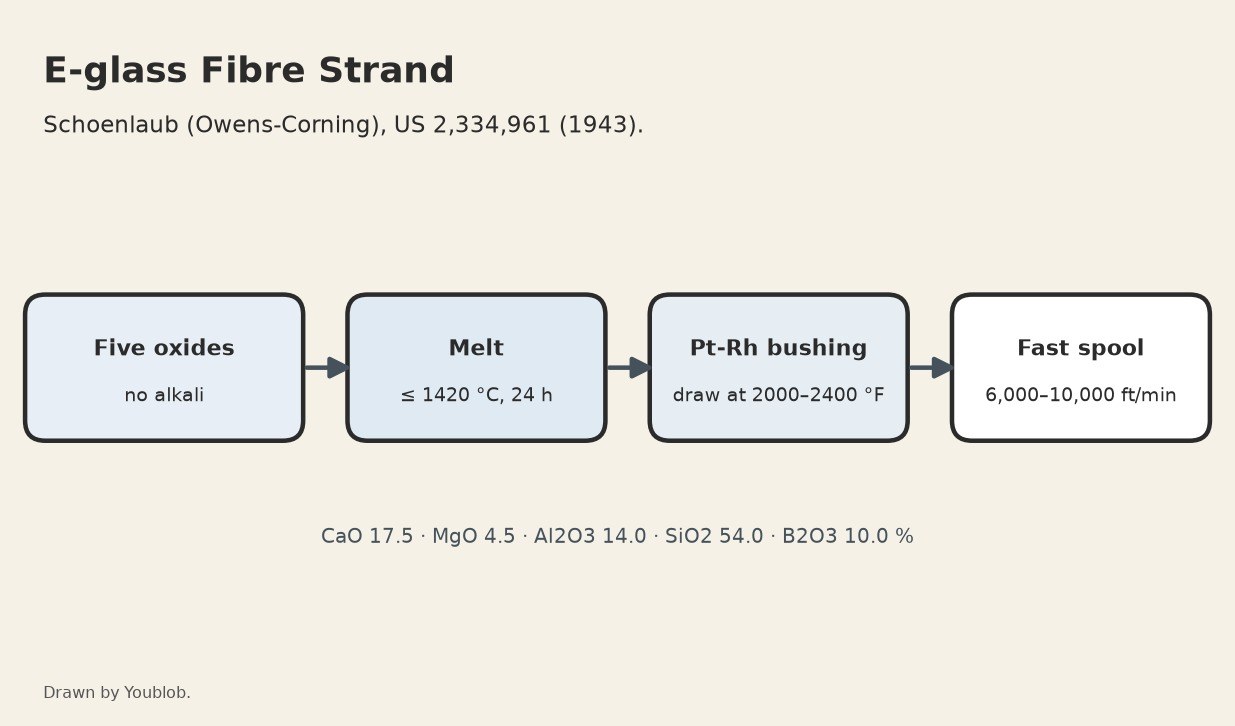


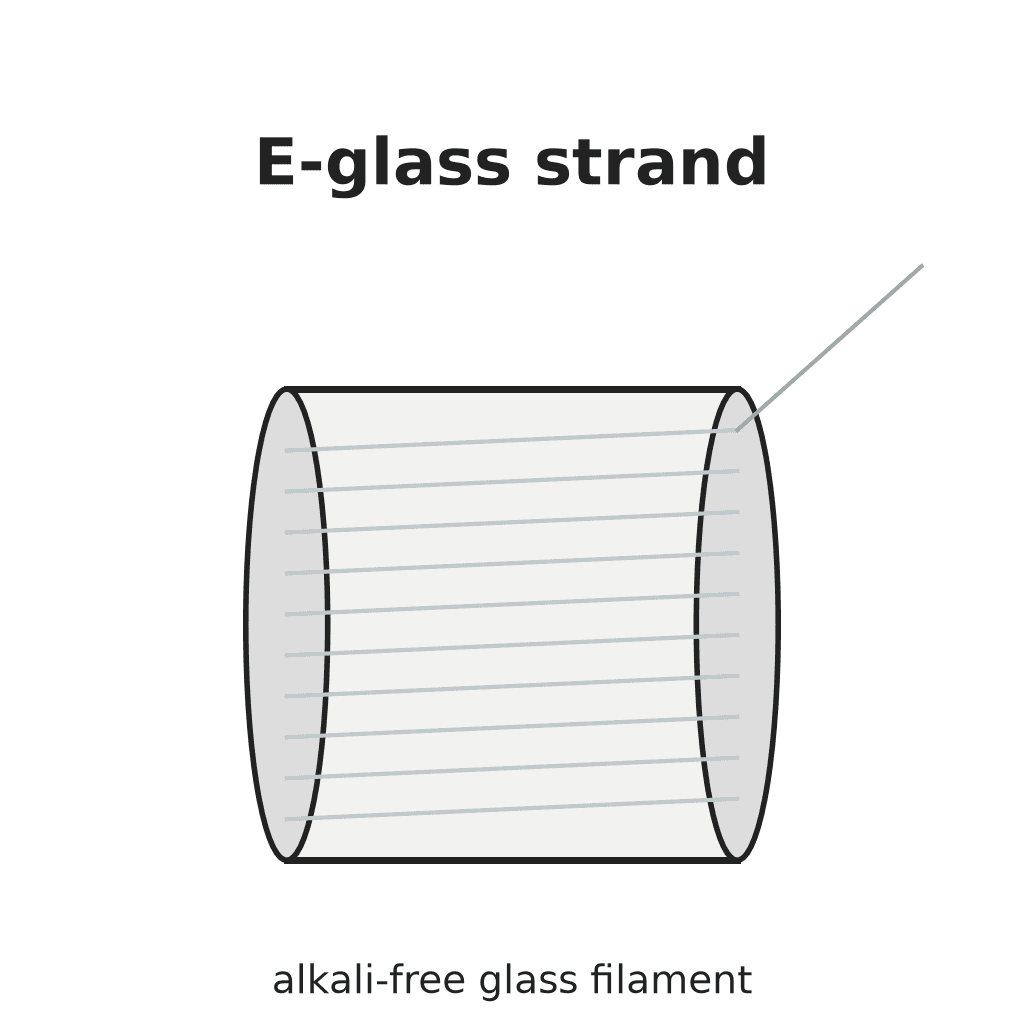
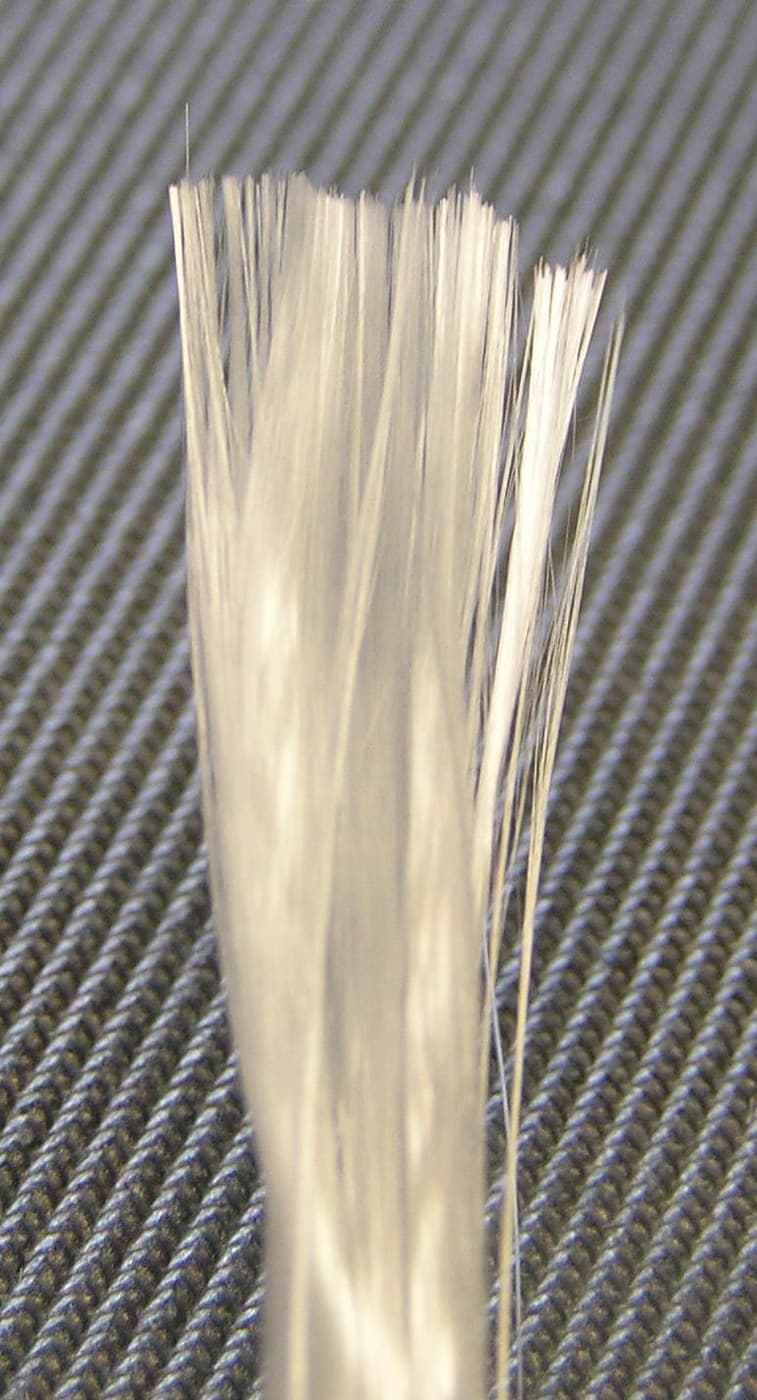
E-glass Fibre Strand: Alkali-Free Lime-Alumina-Borosilicate Glass Drawn to Filament
Fibre from ordinary glass carries alkali on its huge surface; it takes up water from the air and slowly destroys itself, and it conducts electricity. Schoenlaub's Owens-Corning glass (US 2,334,961, 1943) has no alkali at all: lime, magnesia, alumina and silica fluxed with boric oxide. It was made to be drawn into fibres for insulation and textiles. It is melted at up to 1420 °C and drawn into continuous filaments on a fast spool.
The picture: our diagram.
Ilọsíwájú
2 days
Ìlànà
1
1
Weigh out the batch
Weigh out the batch
The patent's example glass: lime (CaO) 17.5 %, magnesia (MgO) 4.5 %, alumina 14.0 %, silica 54.0 %, boric oxide 10.0 %. Ours: weigh those five oxides in those proportions and mix them. Keep within the patent's limits; small changes make this glass devitrify.
Àwọn ohun èlò fún ìgbésẹ̀ yìí:
 Ẹ̀fun tí a kò tíì pa17.5 parts
 Ọ́sáídì magnesium4.5 parts
 Ìyẹ̀fun alumina (oxide aluminium)14 parts
 Iyanrìn Kuátsì54 parts
 Oxide bórọ́ọ̀nù10 parts
Àwọn irinṣẹ́ tí a nílò:
 Òǹwọ̀n ìdọ́gba
 Gíláàsì ààbò
2
2
Melt at no more than 1420 °C
Melt at no more than 1420 °C
Melt the batch in a glass tank furnace without going above 1420 °C; the patent's day tanks ran on a 24-hour cycle.
Àwọn irinṣẹ́ tí a nílò:
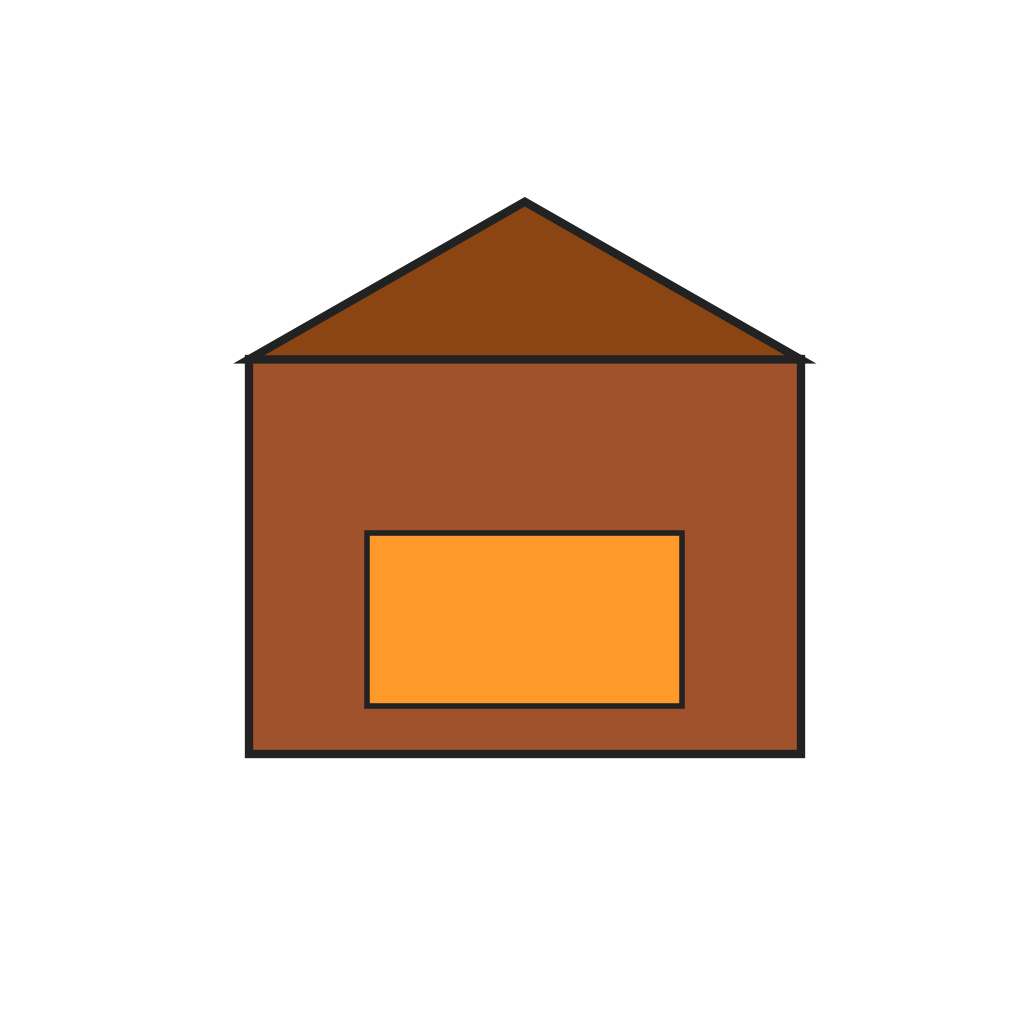 Ìléru ìyọ́ dígí
 Pirómítà
 Ìbọ̀wọ́ Tí Ń Fara Da OoruGíláàsì ààbò
3
3
Feed the platinum bushing
Feed the platinum bushing
Draw from a platinum-rhodium bushing like Slayter and Thomas's, heated by an adjustable current. The drawing range of this glass is about 2000–2400 °F (1090–1320 °C). A blower below the nozzles sets each filament.
Àwọn irinṣẹ́ tí a nílò:
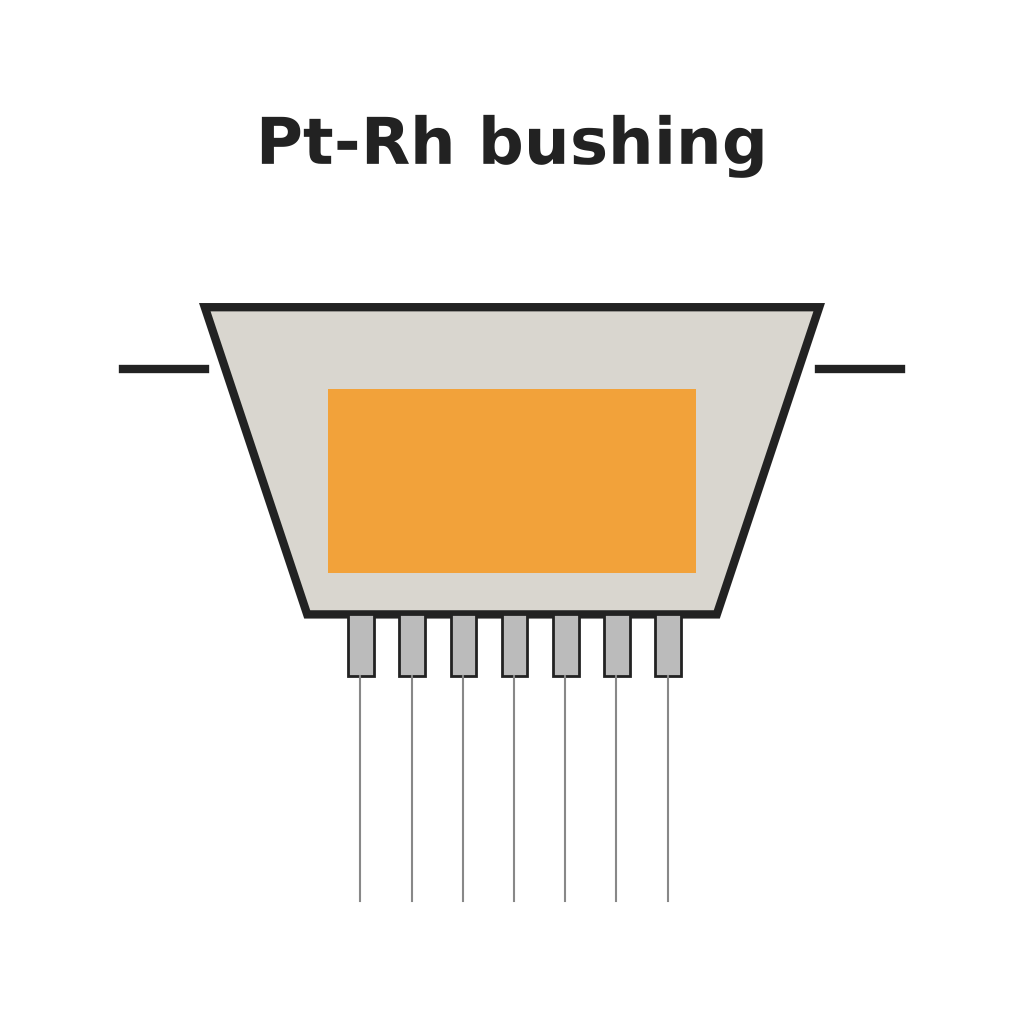 Àpótí Platinum-Rhodium
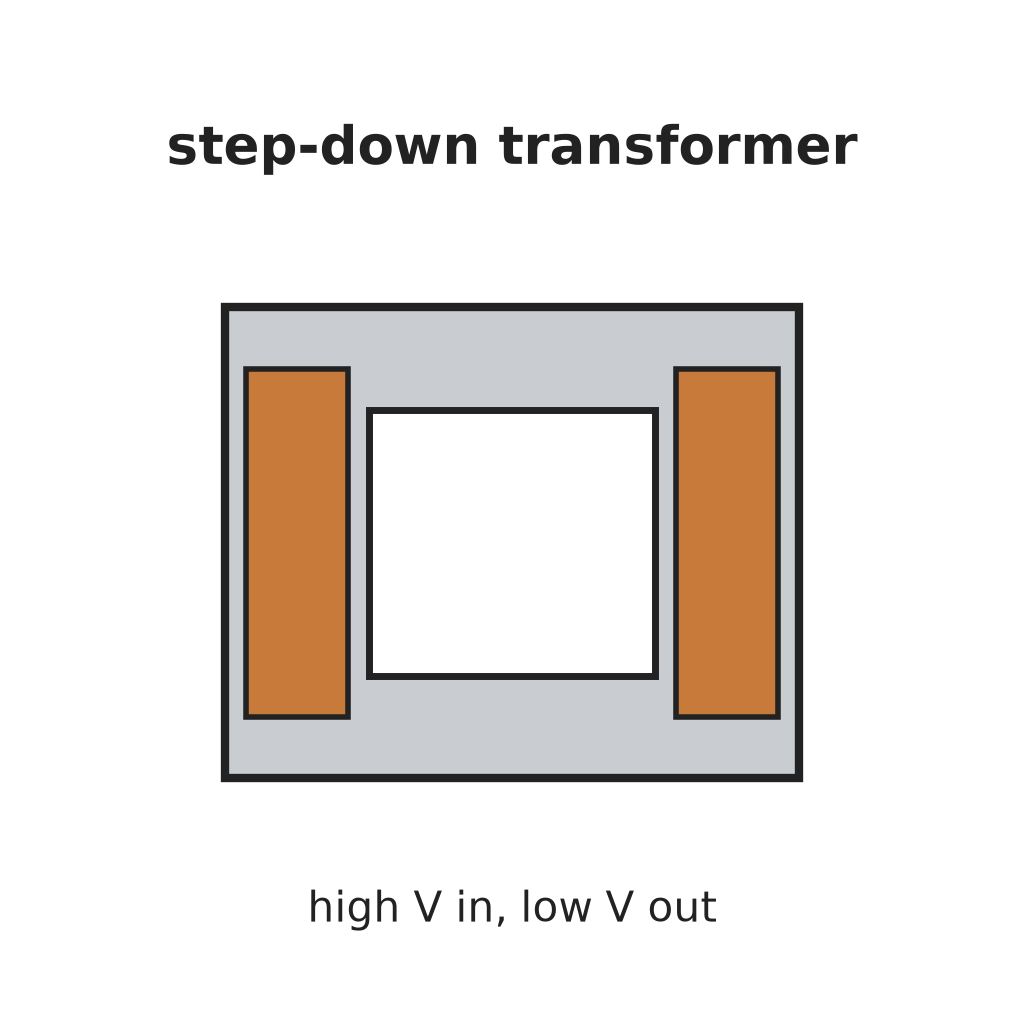 Ẹ̀rọ Ìdínkù FóltéèjìPirómítà
 Ẹ̀rọ afẹ́fẹ́Ìbọ̀wọ́ Tí Ń Fara Da Ooru
4
4
Wind on a fast spool
Wind on a fast spool
Gather the filaments into a strand and wind it on a spool running as fast as 6,000–10,000 ft per minute (30–50 m/s). Filaments come out about .0001–.0003 in (2.5–7.6 µm) thick. The strand can then be twisted and plied into yarn.
Àwọn irinṣẹ́ tí a nílò:
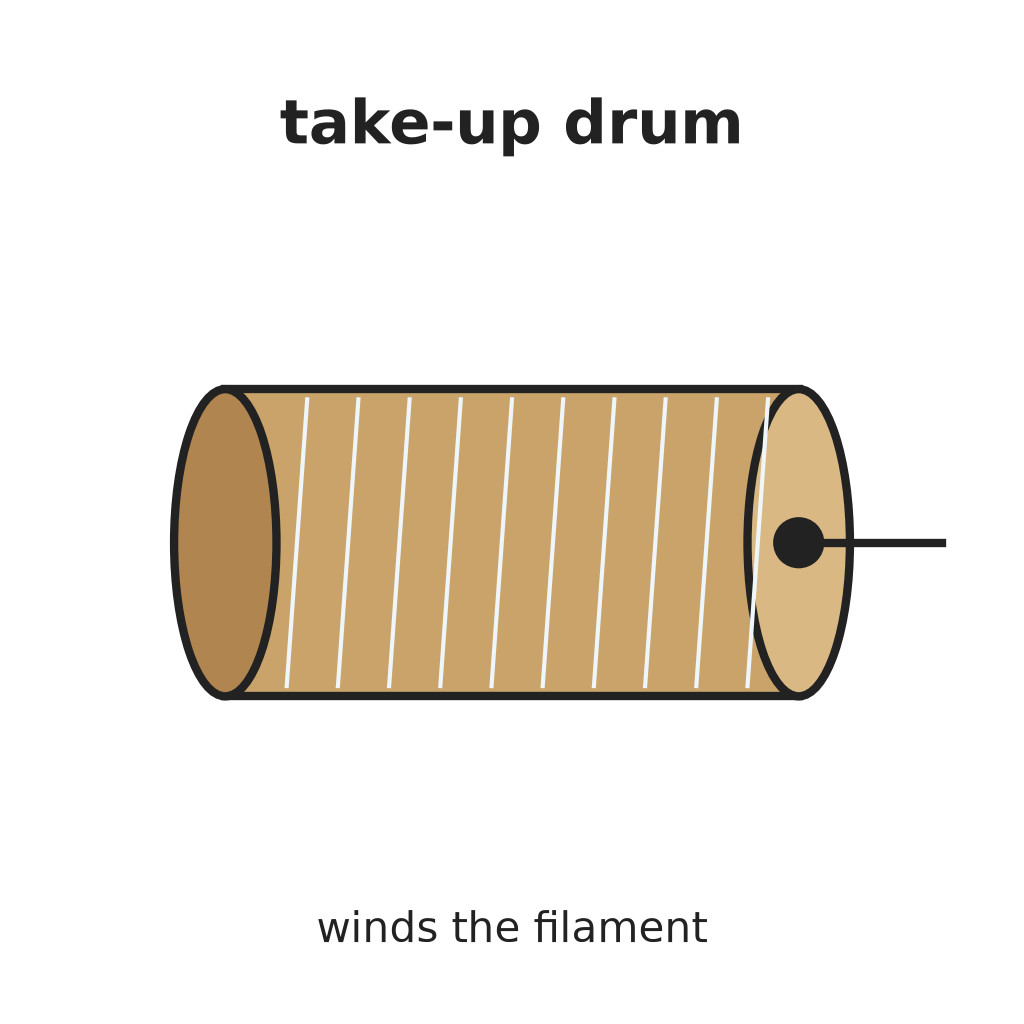 Ìlù Ìgbàwọ̀n Òwú
Àwọn ohun-èlò
5- 17.5 partsÀyè
- 4.5 partsÀyè
- Àyè
- 54 partsÀyè
- 10 partsÀyè
Àwọn irinṣẹ́ tó nílò
9- Àyè
- Àyè
- Àyè
Ìtọ́nisọ́nà yìí ń ṣe
Blueprint tó jọra
Àwọn blueprint wọ̀nyí pín ìmọ̀ — ọ̀nà, ohun-èlò tàbí ìlànà
CC0 Àgbègbè Gbogbogbò
Blueprint yìí ti jáde lábẹ́ CC0. O lè ṣe àdàkọ, yí padà, pín, àti lò láìsí ìyọ̀ǹda.
Ṣàtìlẹ́yìn Olùṣẹ́dá nípa rírà àwọn ọjà nipasẹ̀ Blueprint wọn Ẹ̀san Olùṣẹ́dá tí àwọn Olùtajà gbé kalẹ̀, tàbí ṣẹ̀dá àtúnṣe tuntun ti Blueprint yìí kí o sì fi sínú Blueprint rẹ gẹ́gẹ́ bí ìsopọ̀ láti pín owó-wíwọlé.